

 SHARE:
Last week I went to a screening of The Russian Ark. Released in 2002, the experimental historical drama has an odd pertinence to current events, with Russian military forces busily sabre-rattling European nations, invading Estonian and Polish airspace.
Watching the film in the darkness and peace of the Cinematheque in Vancouver, I contemplated the strange nature of the game being played between global superpowers, and how it found an odd echo in the art world.
Art is always political. Sometimes it’s hard to see the social, cultural and economic currents that underpin paintings and sculptures, but it’s always there.
The Russian Ark screening was organized by Griffin Art Projects in partnership with the Cinematheque. It was the first of a three-part series running in tandem with a new exhibition called The Collectors.
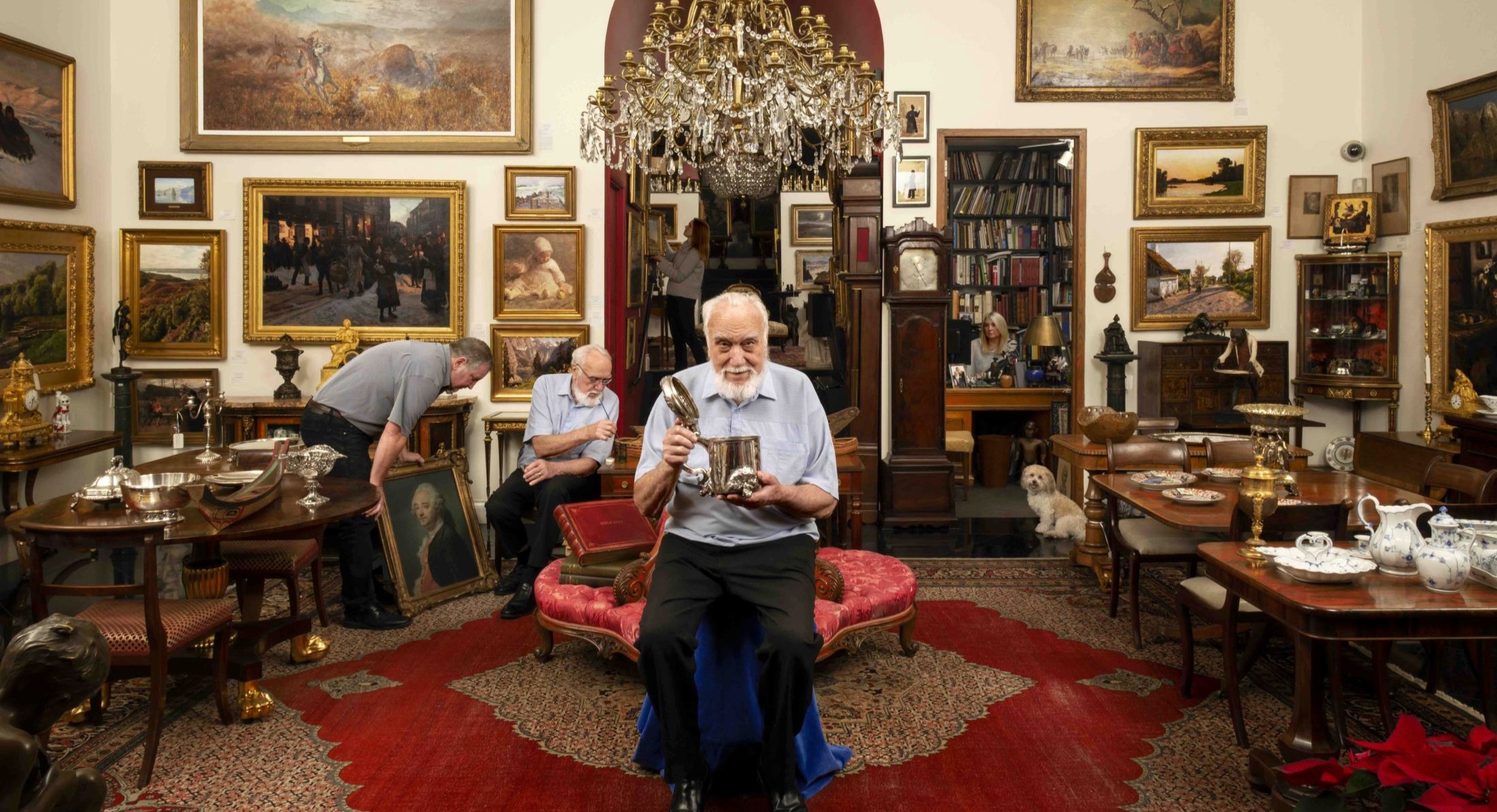
Curated by the Griffin’s director Lisa Baldiserra, the show is a series of photographic portraits created by Christos Dikeakos, working in conjunction with photographer Barry Jones, of different art collectors in their natural habitats.
In their homes and studios, surrounded by the items that they have gathered, each image is dense, packed so full of detail and information that one is forced to stop and look closely to take in all of the narrative twists and turns, as well as secrets, tucked up inside.
The individual photographs are a world unto themselves, whether it’s Uno Langmann carefully composited into a large-scale recreation of his shop Limited Fine Art, or Gerd Metzdorff in his West End apartment, demonstrating for the camera the size of the first Warhol in his collection.
The Langmann image is emblematic of the artists’ approach. Akin to a Rembrandt painting, it is carefully and precisely orchestrated to lead the eye to certain things.
Aside from the central figure of Langmann seated centre stage, other workers and family members are busily engaged in the business of art and objects. A small brown and white dog snags attention, as does a stuffed monkey in a formal frock coat.
Assembled like magnificent magpies, these wide-ranging collections draw and hold the eye, opening up a wellspring of emotions, desire, fascination, envy and appreciation.
They all denote the same thing: the need for beauty.
Glittering treasure troves or midden pile: the heaping-up of things is an innately human habit.
We’ve been doing it since there have been humans. I do it myself, collecting more coats and jackets than I could wear in one lifetime. But the impulse also makes me a feel a little odd sometimes, as it speaks to money, time, privilege.
What does the impulse to collect mean on a larger (read: global) scale? Back to The Russian Ark for a moment.
Alexander Sokurov’s film, famous for being one of the first unbroken single-shot narratives, winds and wends its way through the State Hermitage Museum, formerly the site of the Winter Palace, in St. Petersburg, Russia.
The Hermitage is an immense, almost overwhelming collection of different gallery spaces that house artwork from around the globe, from Italian sculpture to Flemish paintings.
Accrued over 300 years, the collections chart the course of human history from prehistoric art to the high Renaissance and beyond.
The scale alone is hard to take in, much less the ornate details of the place itself. Luxury is too measly a word to fully summon the level of ornamentation. The place beggars description. The film’s main protagonists provide a tour of sorts, wandering from room to room, taking in the art, but also re-creations drawn from history.
The narrator, invisibly voiced by Russian Ark director Sokurov himself, appears to be something of a time traveller, unclear on where and how he ended up in the middle of a 19th-century grand ball.
The other main character is a courtly gentleman, referred to as the European, based upon a French writer named the Marquis de Custine, who wrote a travelogue about Russia entitled La Russie en 1839.
Together, they offer a discourse in Russian history, touching upon Catherine the Great, Emperor Alexander I, and Tsar Nicholas II and his family (in the happier days before they were all slaughtered).
All of these historical figures played a role in the creation of the collections of work depicted on camera, but the real star of the show is the Hermitage itself. Ornate and enormous, its staggering collection of art and objects is a reminder of imperial power at its most towering heights.
This is the interesting part. As the film implies, a painting isn’t just a painting — it’s also a demonstration of cultural validity and importance.
The Marquis de Custine was particularly scathing when describing Russian aristocracy, likening them to “trained bears,” and opining that Russians couldn’t create their own art, but simply coveted and collected the more sophisticated cultures of France and Italy.
In this aspect, the struggle between Russia and Europe then finds parallels in the current situation, as Putin’s naked grab for power is understood by many to be a means of restoring imperial Russia.
The idea that art is reflective of a nation or a person’s identity and arguably, importance, hasn’t gone away. Rather, it has metastasized into a condition that affects just about the entire world.
Art is never just a picture on a wall. It is place, history, meaning, all framed up and brimming with import.
Across Vancouver, Richmond, Burnaby and North Vancouver, this idea kept trotting out in different manifestations.
The intricate web that holds culture together
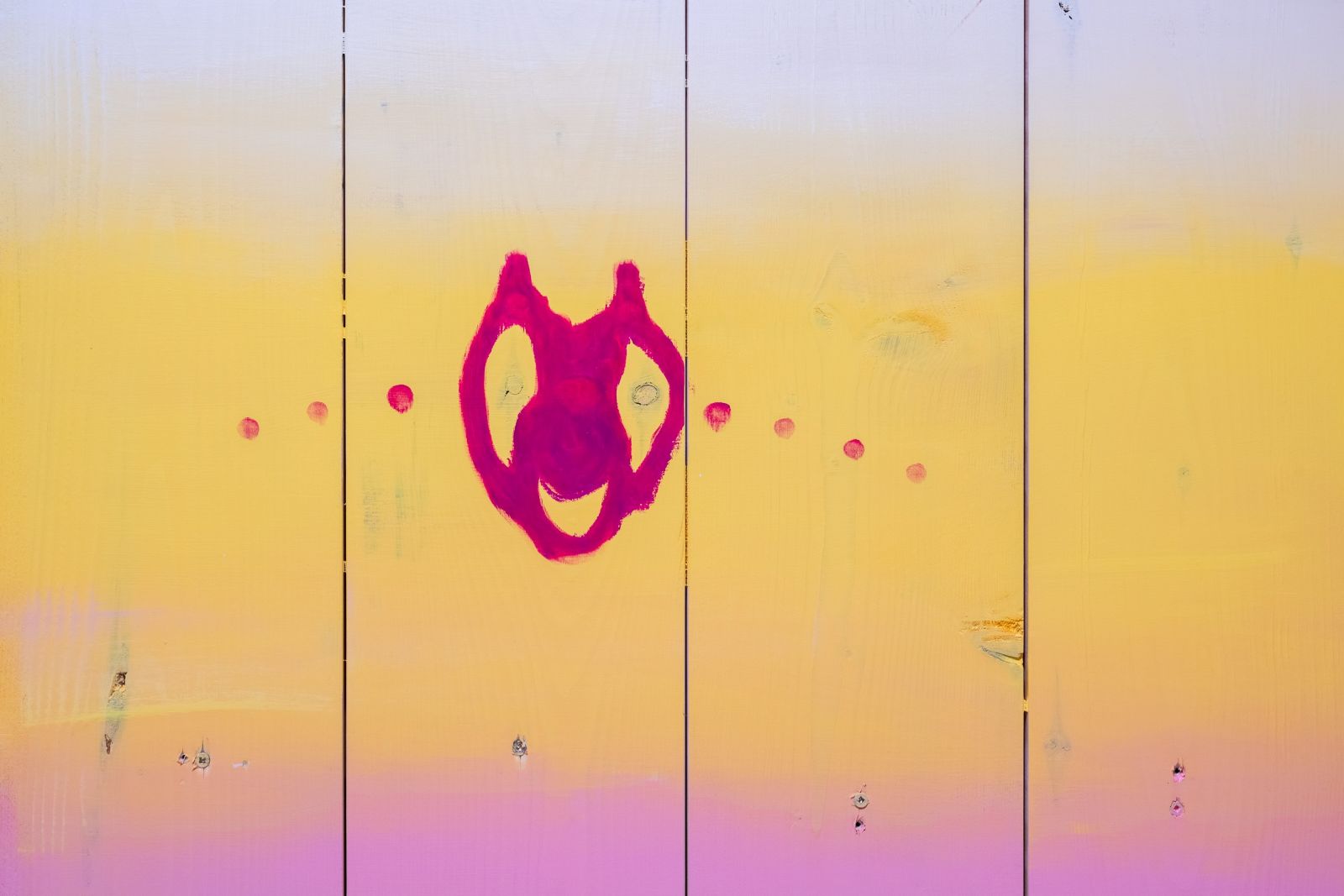
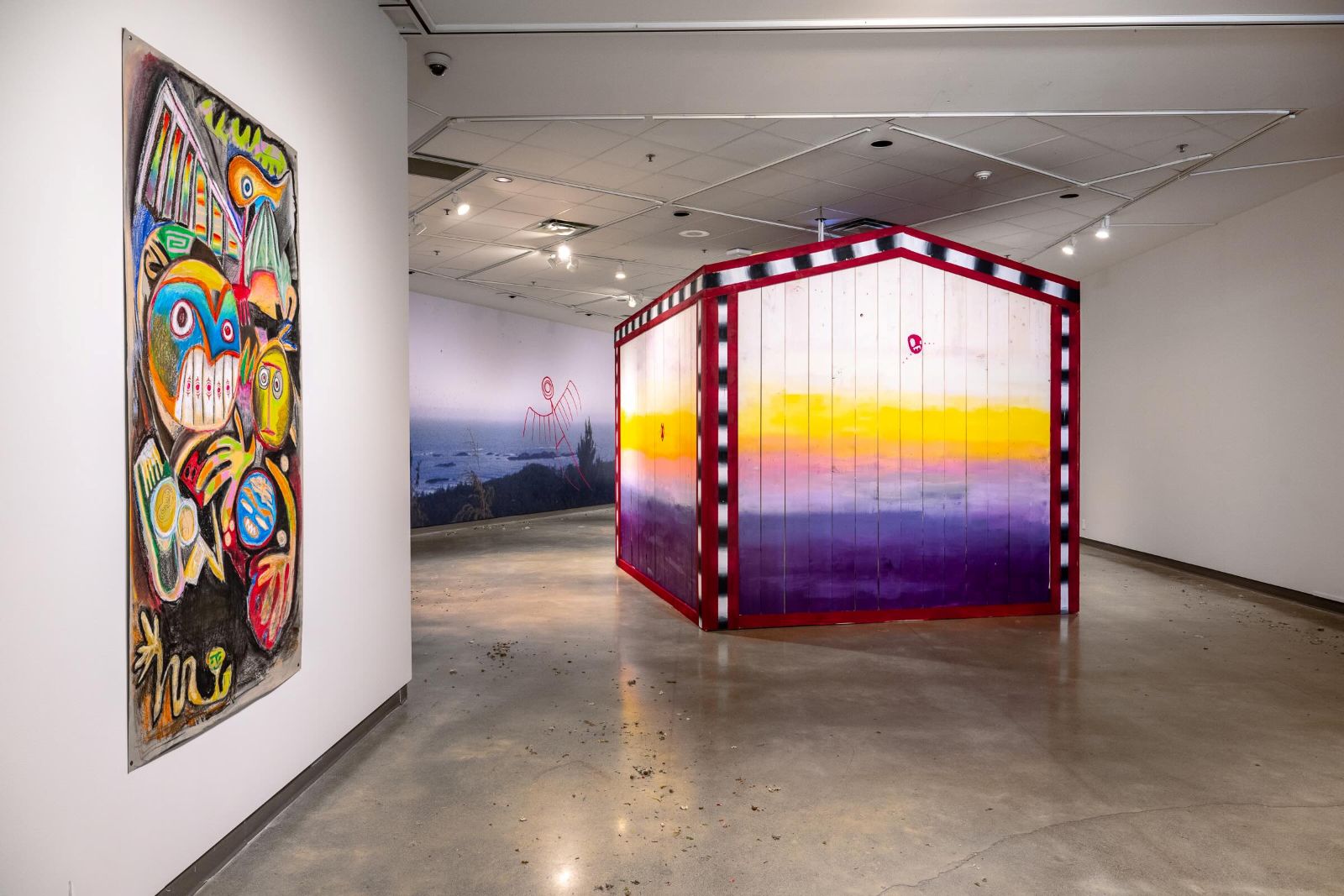
At the Richmond Art Gallery, Manuel Axel Strain’s work, installations, drawings, photographs and video make up a new exhibition xʷən̓iwən ce:p kʷθəθ nəw̓eyəł ((((Remember your teachings)))) that examines colonial forces that have shaped Indigenous culture for the better part of a century in Canada.
In the centre of the gallery, a longhouse presides over the space, offering a site for visitors to sit and watch what do you know, a video work that features the artist’s mother, brother, niece and nephew sharing poetry that speaks to the past and the present, as well as the intricate web of connections that hold culture together.
As the press materials for the show explains, the central longhouse installation is a tribute to “the collective life of the Musqueam people and used as a gathering place for culturally significant events, such as marriages and potlatches.... Before their attempted erasure by colonial powers, longhouses were once found all along the coast.”
It’s a reminder that as much as art can create culture, it can also be used to destroy one as well. The repercussions of the concentrated will to eradicate any and all forms of Indigenous artmaking — songs, dances, ceremonial objects and regalia — are still playing out, not just in museums and galleries, but in individual families.
The obliteration of Indigenous people in Canada was orchestrated by the destruction of their art, but also by its purloining by colonialist culture. The first thing I saw when I visited the British Museum in London was a Haida totem pole.
It’s a testimony that many prominent artists and creators have talked about. In director Chris Auchter’s film Now Is the Time , Haida carver Robert Davidson talks about seeing photographs of Old Massett Village with a forest of totem poles facing the sea, but when he returned home, there was nothing left.
As the film states: “Imagine a world without art. Now imagine if you were the one to help bring it back.”
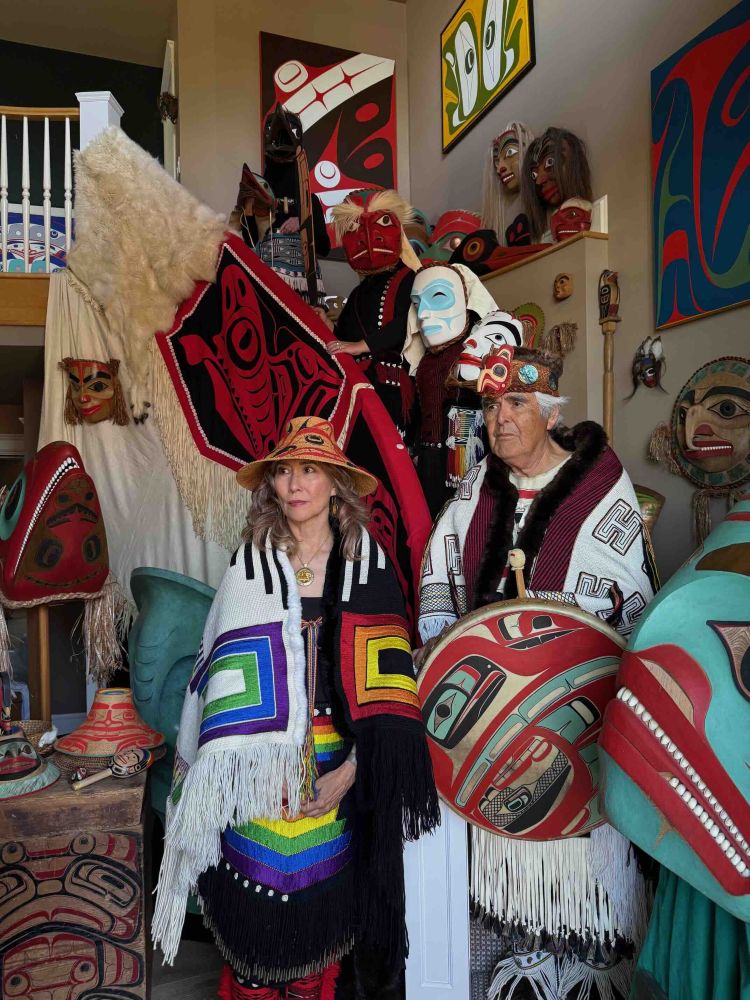
Davidson and his family are also featured in the Collectors exhibition at the Griffin, in full Haida ceremonial masks and regalia. This is art put into action with the artist and his wife caught in mid-song.
It is an image brimming over with boldly defiant joy and power.
Art, a benediction
A similar feeling of joy and beauty occurred in a brand new gallery that opened this past week.
The Gibson Art Museum opened on Sept. 20 on top of Simon Fraser University’s Burnaby Mountain campus. From the outset of the project, the Gibson was conceived as a welcoming and deeply democratic space, designed to offer a place to simply exist in. It is open, airy, welcoming. A place you want to just hang out in.
The Gibson’s director Kimberly Phillips explained the ethos of the inaugural exhibition, Edge Effects, as drawing from its surroundings where the Fraser River Delta meets the Pacific Ocean. It also reflects the meeting of different ideas, cultures and people giving rise to new forms of experience.
Art is the ultimate manifestation of this newness, whether in repurposing old materials into novel forms or daylighting new ways to see the city.
There’s an almost tidal heft apparent in the work on offer from 15 artists working across a dizzying array of media, from Liz Magor to Cindy Mochizuki to Jin-me Yoon.
Curiously enough, as I took transit across the city, travelling from Burnaby Mountain to North Vancouver to Richmond, the fulsome number of shows, from the epically expansive Culture Days to more humble yet beautiful offerings at Duct Tape Gallery, this abundance felt a like a benediction of sorts, a richness that throws open the doors and invites everyone inside. Art is for all of us. ![[Tyee]](/design-article.thetyee.ca/ui/img/yellowblob.png)
Read more: Indigenous, Politics, Art, Film








Tyee Commenting Guidelines
Please note that email notifications for replies are not currently working due to a software issue which may be resolved in a future update.
Comments that violate guidelines risk being deleted, and violations may result in a temporary or permanent user ban. Maintain the spirit of good conversation to stay in the discussion and be patient with moderators. Comments are reviewed regularly but not in real time.
Do:
Do not: