


 SHARE:
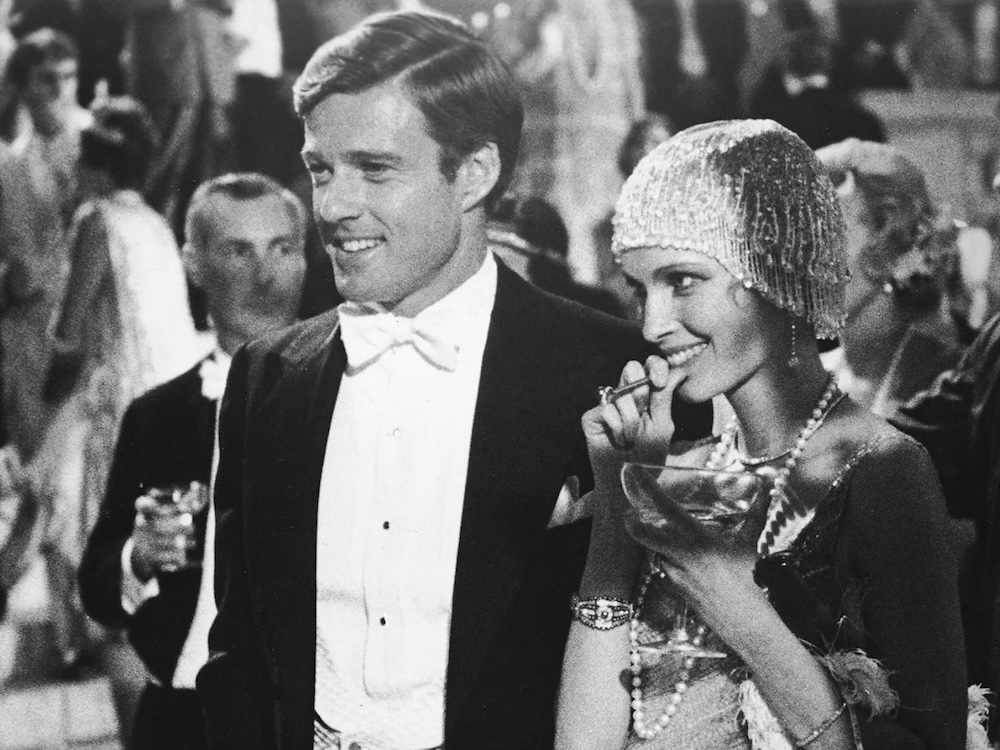
Movies affect us in ways we don't always understand.
Years ago in Paris, I bought a shirt with vertical blue stripes. Later, strolling the waterfront in Marseille in my blue-striped garment, I was gripped by the conviction that I had become the very essence of style and urbanity. I swanned down the promenade like a movie star. Something odd was at work, I realized. Why would this particular piece of clothing have such an effect on me?
Some years later, I rewatched The Great Gatsby, with Robert Redford, Mia Farrow and Bruce Dern. I had not seen the movie since I was 15, when it first came out. And there it was, midway through — the same blue-striped shirt, worn by Robert Redford as Jay Gatsby.
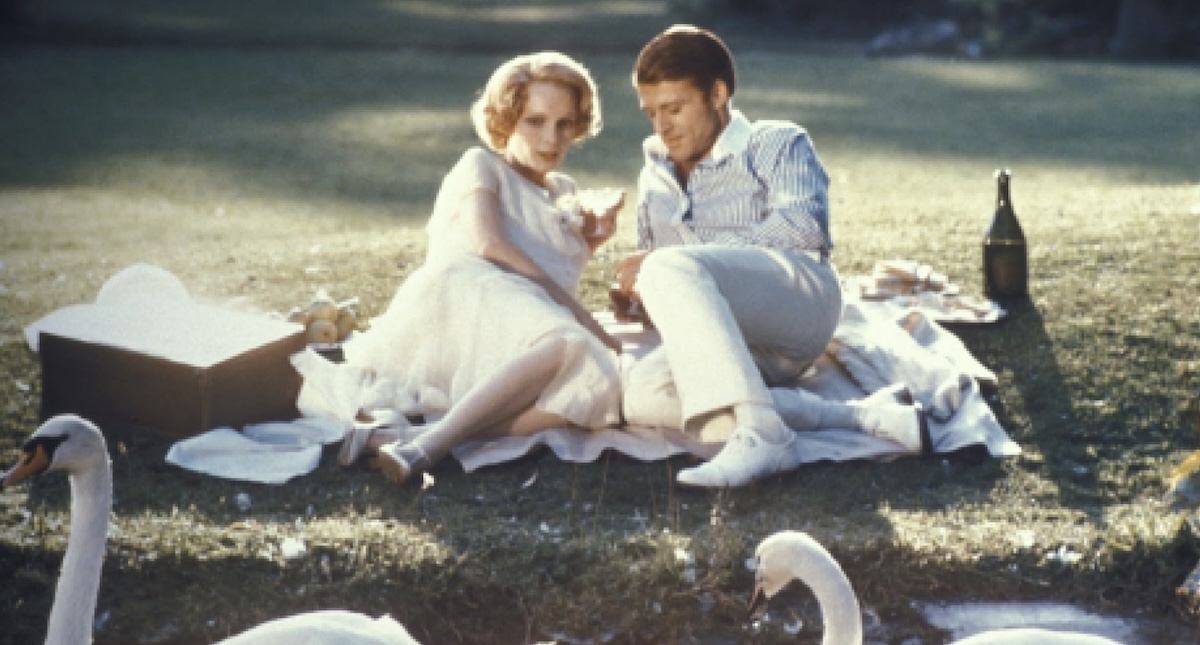
My own version, while basically identical, was by comparison like the flickering shadows on the wall of Plato's cave. Yet I had clearly tapped into that youthful cinematic memory as I strutted along the Marseille harbourfront decades later.
Only upon rewatching did I realize the effect that movie had had on my teenage self. Redford had defined cool for me. Not that I ever had the courage to dress like his Gatsby — in 1974 I was a scruffy, pot-smoking freak with friends to match, and that tribal reality dictated my daily costume. But Redford’s Gatsby had imprinted on me then as the definitive fashion icon.

Redford’s death this week at age 89 brought that memory back, and, with it, consideration of how movies can plant ideas, and ideals, in our minds.
I’d made that discovery before, courtesy of a 1973 film, The Day of the Jackal. As with Gatsby, decades passed between my initial viewing and a subsequent screening just a few years ago. As I once again watched the Jackal (played by Edward Fox) going from Paris to Genoa to the Italian Riviera, I realized with a shock that my own European travel itineraries had been remarkably similar, and moreover that my initial impressions of Paris had largely been shaped by scenes from that movie, first viewed when I was 14.
Other travel destinations too had been selected, more consciously, in darkened theatres — I had chosen to visit Florence after seeing A Room with a View, and Monument Valley after who knows how many John Ford westerns.
A gentleman in his own right
Redford seemed to understand the influence movies could exert. He was a star who leveraged his fame wisely. In addition to boosting independent film via the Sundance festival, he often chose projects with care. It was Redford who purchased the rights to the book All the President's Men by Bob Woodward and Carl Bernstein, eventually co-starring with Dustin Hoffman in the 1976 film that cemented in the public mind the ideal of the investigative journalist, an image with a far more important impact than any blue-striped shirt. (Redford and Hoffman spent time in the Washington Post offices to prepare for their roles as journalists standing against a criminal president. Considering the recent trajectory of the Post, that strategy wouldn’t work so well today, unless the resulting film was All the President's Toadies.)
Movies have long shaped public discourse, politics and events in ways good, bad and indifferent. In 1986, Top Gun boosted naval recruitment by a reported eight per cent.
The movie was also blamed in part for the subsequent Tailhook sexual abuse scandal. Investigators heard from senior officers who believed a “Top Gun” mentality had affected the behaviour of junior officers involved in the scandal.
Nor is the journey from screen to popular culture always a straight one. Right-wing extremists seized upon the red pill/blue pill terminology of The Matrix, perhaps because of the film’s tremendous influence on gamer culture. Considering the fact that the film’s creators, Lilly and Lana Wachowski, are both trans women and supporters of Bernie Sanders, it’s unlikely their films were intended as fascist entertainments.
But once a cultural product is released into the world, there is no predicting the uses to which it will be put.
Right-wing politicians have long railed against Hollywood as a purveyor of liberal ideology. Robert Redford is unlikely to have disagreed.
Films like The Candidate, All the President’s Men, Three Days of the Condor, The Milagro Beanfield War and A Walk in the Woods conveyed distrust of misinformation and authoritarianism, while advocating for environmentalism and a philosophy of inclusion.
And if along the way Redford presented an ideal image of male beauty, well, he couldn’t really help that. All he had to do was show up.
Buying the same shirts, alas, was not enough to achieve the same effect. But there are worse examples a young person could follow. ![[Tyee]](/design-article.thetyee.ca/ui/img/yellowblob.png)












Tyee Commenting Guidelines
Please note that email notifications for replies are not currently working due to a software issue which may be resolved in a future update.
Comments that violate guidelines risk being deleted, and violations may result in a temporary or permanent user ban. Maintain the spirit of good conversation to stay in the discussion and be patient with moderators. Comments are reviewed regularly but not in real time.
Do:
Do not: