

 SHARE:
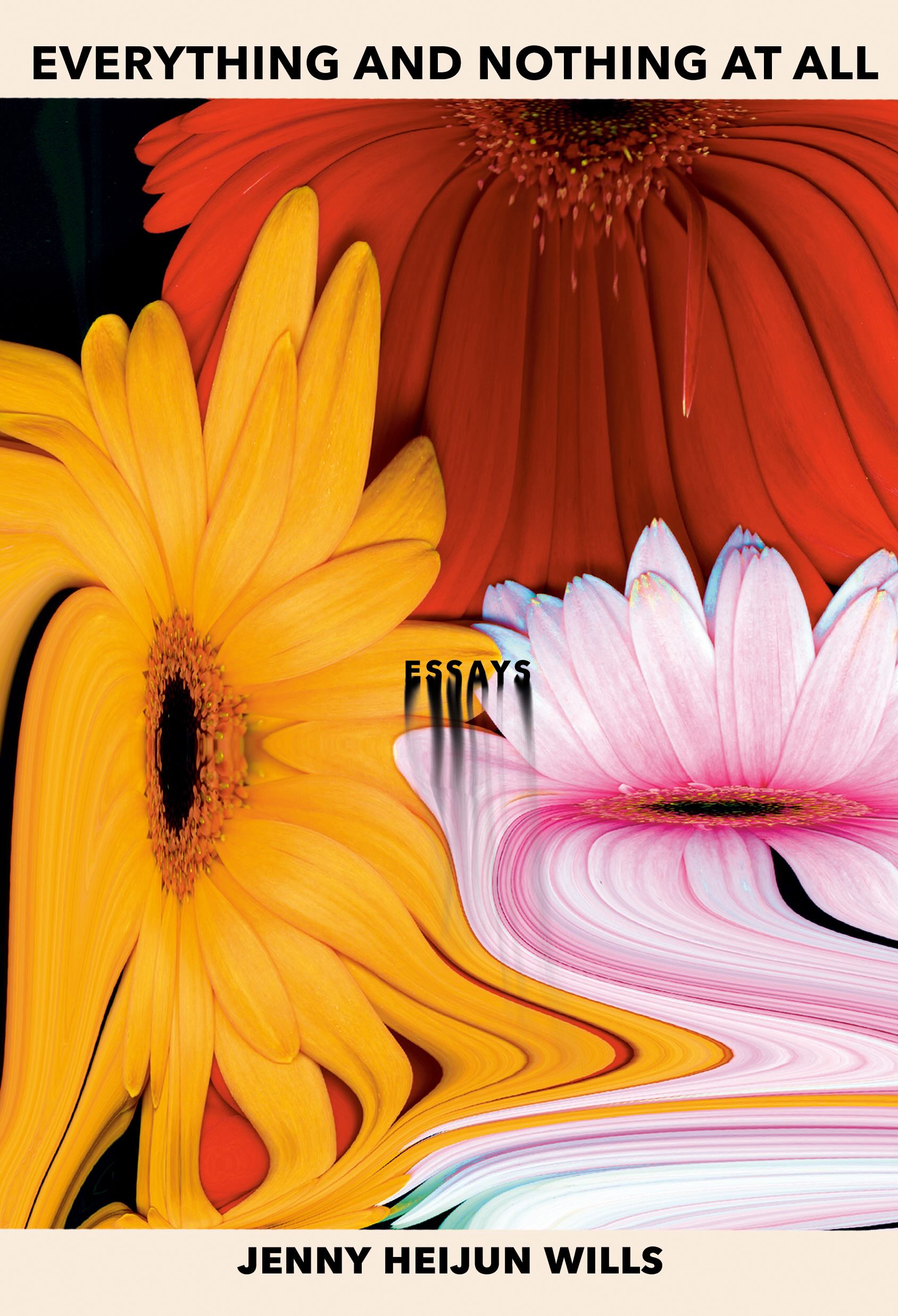
- Everything and Nothing At All: Essays
- Knopf Canada (2024)
[Editor’s note: This essay includes depictions of self-harm.]
Writing a memoir is a complicated and often fraught business.
It’s one thing to write about one’s own memories and experiences, but everyone who participated in those same experiences has their own version of events. Sometimes the divergence between recollections or interpretations, even within immediate family, is startling.
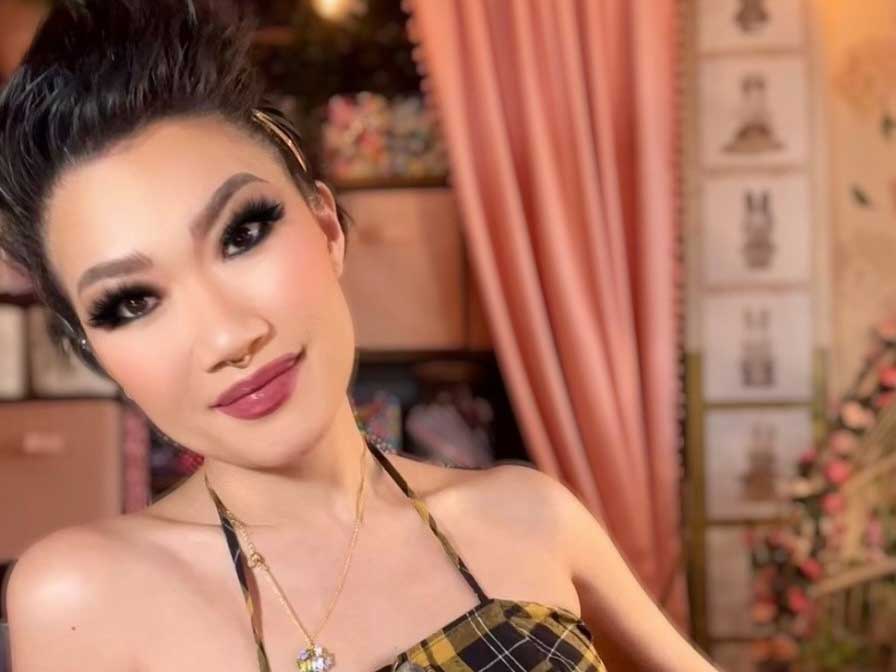
In a new collection of personal essays, Winnipeg author Jenny Heijun Wills takes great care to convey the reality of her life, even when it’s profoundly painful.
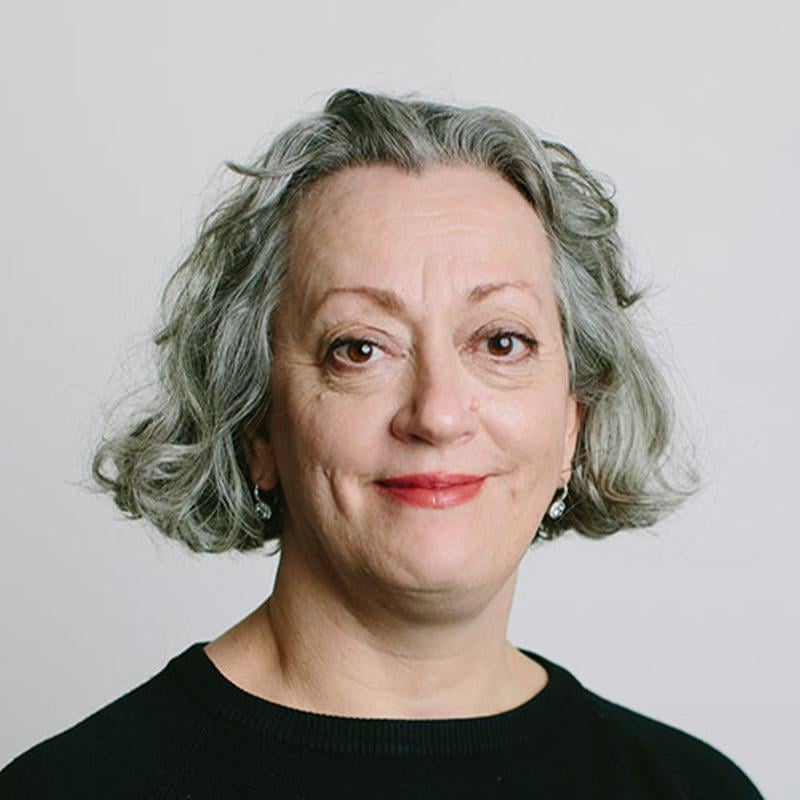
Born in Seoul, Korea, Heijun Wills was adopted by a white Canadian family. She grew up in a small town in southern Ontario, and currently teaches creative writing and critical race studies at the University of Winnipeg. Her 2021 book, Older Sister, Not Necessarily Related, is also a memoir. It won the Eileen McTavish Sykes Award for Best First Book (a Manitoba book award) and was a finalist for the Hilary Weston Writers’ Trust Prize for Nonfiction.
Heijun Wills was in her twenties when she connected with her Korean birth family. Following Older Sister, Everything also explores the politics of transnational adoption and the sticky, tricky stuff of how we come to understand identity. It expands to explore other pertinent items in the author’s landscape, including the complicated relationship between parents and children, the politics of beauty, pop culture’s cultural obsession with Asian women, diasporic literature, the care taken in navigating polyamorous relationships, the history of Korea and Wuthering Heights. At its heart, it is a deeply personal work, a bodily lens through which to understand the world and oneself.
Two essays, appropriately titled “Departure” and “Landing,” bookend the collection. Throughout the book, Heijun Wills charts the course of her life. Essays like “Pretty, Love Language” and “Nightingale” are reflective not only of what the author has experienced, but also her long-standing areas of academic study and writerly investigation.
Beauty is one of these. The concept threads its way through her life. The work is in concrete details like makeup for mono-lids, hair colour, eyelashes and body image before leaping into beauty’s more theoretical implications, like the unspoken language of competition between women. Those tense relational dynamics run in spikey fashion across the author’s life, from her entry into childhood beauty pageants to a succession of jobs that required her to look a certain way, including a service industry job in which an exoticizing dynamic placed her in direct, unfair competition with another Asian woman.
Heijun Wills considers the role of beauty as a form of social currency and agency, a way into identity and as a vehicle through which to create a sense of a valued self. But she demonstrates how there’s a cost to this, extractive and ongoing.
When she meets with her birth mother in Korea, her mother notes that she is prettier than her photograph and offers to get her daughter cosmetic eye surgery so that they look more similar to each other.
Heijun Wills smartly explores how the pervasive imperative for beauty in contemporary mainstream Korean culture hold extraordinary power over the way women act towards each other.
One dark outcome: South Korea has one of the highest rates of cosmetic surgery in the world. And there are darker consequences to this. Heijun Wills cites Rachel H. Park’s work in the Archives of Plastic Surgery that posits people in Korea who fail to attain beauty standards are assumed to be “lazy, anti-social, deliberately non-assimilating, and unintelligent.”
A ferocious site of internal conflict
Underneath many of the essays is the pain of searching and finding, only to discover what you’d wished for isn’t quite what you thought. Through it all, Heijun Wills is never less than utterly forthcoming, even brutal, in her analysis, both of herself and of the larger social, academic and cultural currents in which she lives. The intent is not to disinter suffering for its own sake, but to find a better way forward. After becoming a mother, this disruption of patterns is even more critical: how do you break the behaviours that were passed onto you, before you in turn pass them along?
When asked if she shared her essays with her family, Heijun Wills is matter-of-fact about the process.
“Depends on which people,” she says. “If it’s youth, then absolutely, we talk about what’s going on.” But she’s not interested in having everyone in her life vet her work, particularly those who may have caused harm.
“In life writing, the basic rule is nuance and balance,” she noted. “It’s all about balance.”
Heijun Wills credits her editors with helping her navigate the challenging work of writing memoir. “I never felt cornered or coerced. Whenever I felt itchy about something, my editors reminded me of my boundaries,” she said.
In explaining how she contends with internal conflict so ferocious that it threatens to overwhelm, both physically and on the page, there are number of visceral passages that sink deep.
In one essay, Heijun Wills describes her rituals of body modification through piercings. In one instance, she recalls dumping coffee mugs of blood collected from a new industrial piercing into the sink for hours. Many of the experiences that Wills relates are difficult to take in. The prose style is reflective of this. Sentences often feel chopped off abruptly, like the writer had taken a cleaver to them.
There’s a disturbing undercurrent of dissonance when Heijun Wills relates her complicated relationship with food, which is perhaps connected to the beauty standards of Korea that demand a compulsive thinness and self-denial that seeps into how people treat themselves.
She writes of how she regularly denies herself food, at times to the point of organ failure. Yet she dedicates hours to making food for others. She cuts meat into tiny flowers, bakes more than 70 different kinds of Christmas cookies and meticulously picks conifer needles for handmade songpyeon, a rice cake garnished with pine needles.
The needle collection scene seems particularly emblematic. Sneaking into a neighbour’s yard, she is sensitive that passersby might think her behaviour odd. When startled by a passing jogger, she drops all the prickly cuttings and is forced to start over. The needles cut into her palms.
After all this effort, she doesn’t even eat the pastry.
Radioactive pain
It’s strange for a writer to be thrust into the public spotlight upon the release of a book that has been the necessary product of long periods of solitary effort and deeply personal excavation. In a work as intimate and profoundly personal as Everything, the experience of suddenly having to chat up the book on morning talk shows, where the vast swathes of difficult experience are squashed into sound bites, seems even more disconcerting.
Heijun Wills is philosophical about this part of the process. She says that it allows her to gauge which pieces readers are reacting to. “I’m proud of the things I’ve accomplished,” she says.
I asked Heijun Wills if she had recommendations on how readers could take in the essay collection, particularly in consideration of the visceral, often challenging subject matter at the heart of the work.
“I’m honoured if people are reading it,” she says, adding, “although I’m astounded that people are often reading it one sitting.”
Everything is not a book that should be read at a gallop. I read it once, then re-read again.
The issues explored are hard, dense, radioactive with pain. And they require care when reading.
Everything is a challenging work. But it is also honest, brave, and bracingly intelligent.
Heijun Wills will be attending the Vancouver Writers Festival on Thursday as part of ‘What I’ve Done For Writing,’ a panel discussion on the pain and pleasure of writing. ![[Tyee]](/design-article.thetyee.ca/ui/img/yellowblob.png)
Read more: Health, Books, Gender + Sexuality





Tyee Commenting Guidelines
Comments that violate guidelines risk being deleted, and violations may result in a temporary or permanent user ban. Maintain the spirit of good conversation to stay in the discussion and be patient with moderators. Comments are reviewed regularly but not in real time.
Do:
Do not: