


 SHARE:
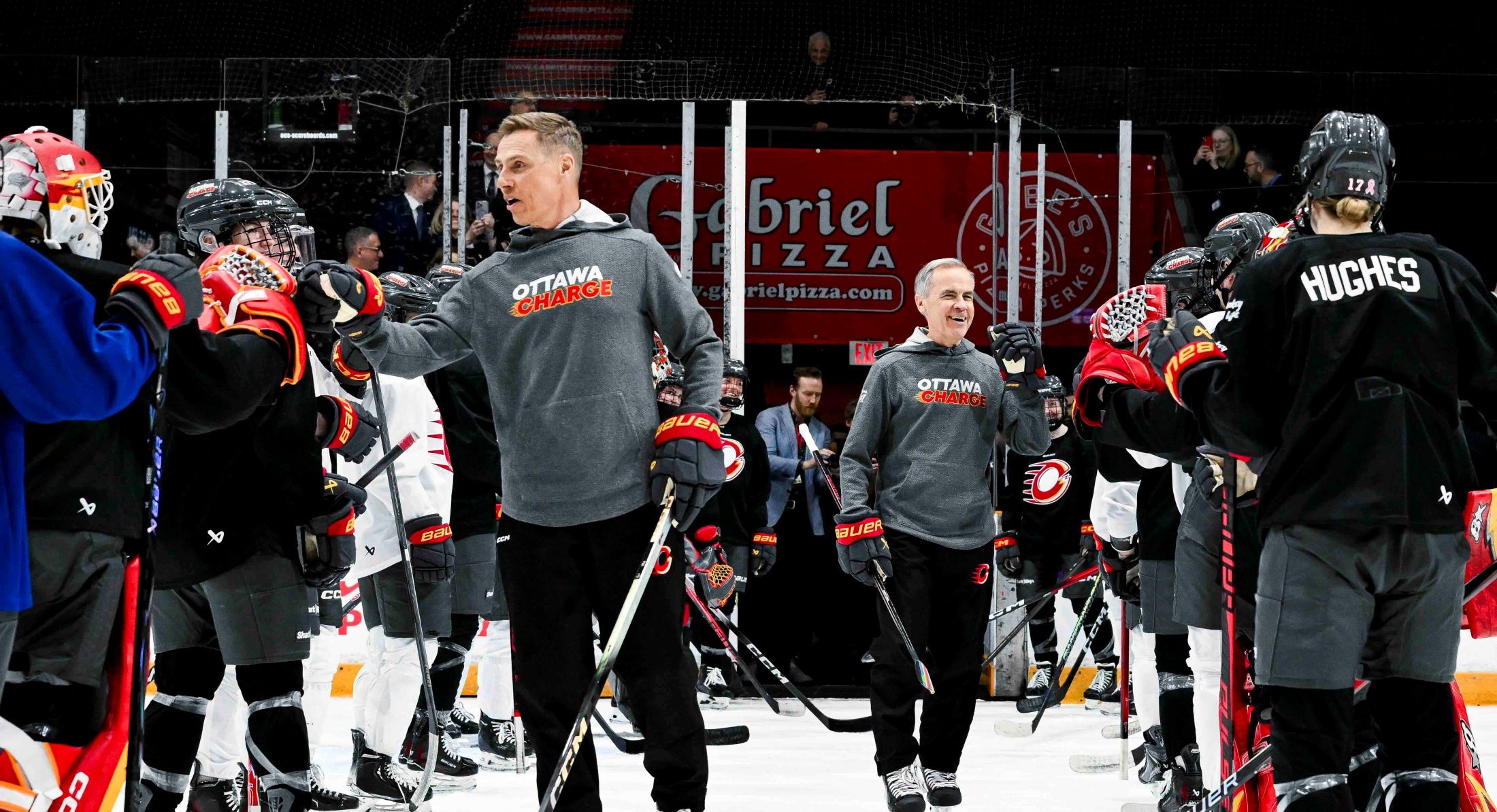
- The Triangle of Power: Rebalancing the New World Order
- Columbia Global Reports (2026)
Alexander Stubb, currently the president of Finland, starts this book by describing how, three days into the Russian invasion of Ukraine, he texted Russian Foreign Minister Sergey Lavrov.
“Please, please stop this madness,” Stubb typed into his phone. “You are the only one who can stop him.”
Lavrov texted back, sarcastically asking if Stubb meant Ukrainian President Volodymyr Zelensky or then-president of the U.S. Joe Biden.
The next exchanges, Stubb tells us, got him nowhere. “I quit after the sixth fruitless message,” he recalls in his book, The Triangle of Power: Rebalancing the New World Order.
“I feel angry and disappointed. More than that, I feel the tectonic plates of history shifting.”
Stubb then briefly describes playing golf in Florida with Donald Trump and spending seven hours discussing world issues. Stubb tried to persuade Trump that Putin couldn’t be trusted and Ukraine must win the war.
He’s still unsure whether he’s been any more effective than he’d been with Lavrov.
“His presidency,” Stubb writes, “will change the way we conduct diplomacy across the Atlantic. More than that: it will accelerate the transition from the existing international order to something new.”
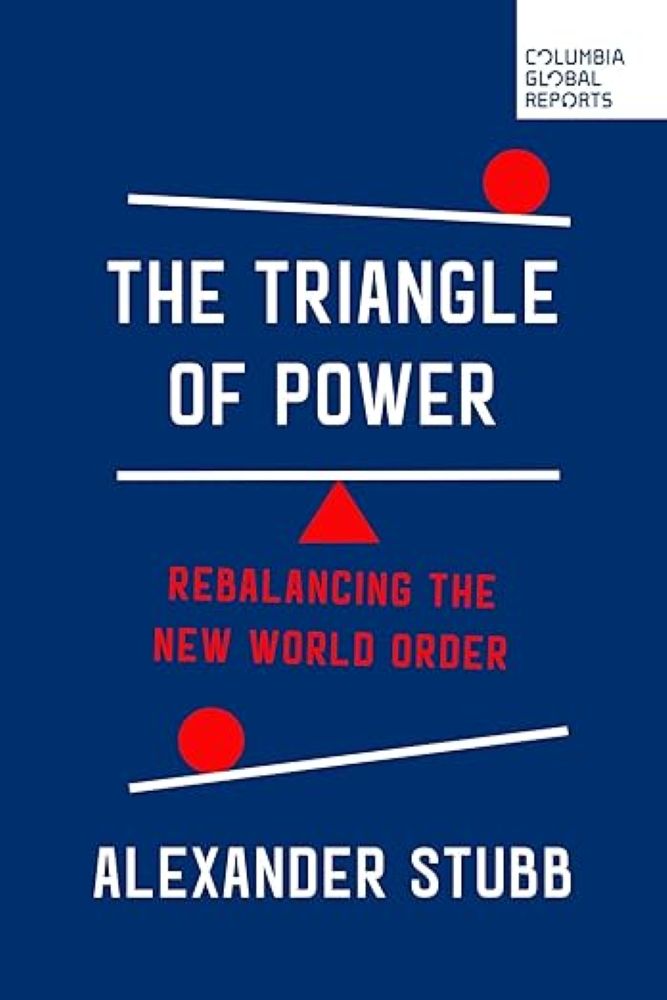
As a writer, I admire Stubb’s splendid hook. It’s clearly written and full of fascinating gossip about people deciding, as Stubb puts it, “about life and death.” What kind of guy can text Sergey Lavrov and lobby Donald Trump for seven hours? And then know that those anecdotes perfectly set the theme and style of a book on global geopolitics?
Stubb originally wanted to be a pro golfer, but a university course in political science turned him to international politics and diplomacy.
He’s been a member of the European Parliament, Finland’s minister of foreign affairs, of European affairs and trade and of finance. From 2014 to 2015, he was Finland’s prime minister. He’s also served as vice-president of the European Investment Bank and director and professor at the European University Institute’s school of transnational governance. He was elected president of Finland in 2024.
Somehow Stubb also found time to write 16 books, hundreds of English-language columns for Finnair’s in-flight magazine and articles for the Financial Times.
Three forces shape an emerging new world
In The Triangle of Power, Stubb sets out to prove that the bipolar world of the Cold War, the struggle between the U.S. and the Soviet Union, is gone. So is the world that emerged from the collapse of the Soviets. He believes an entirely new world order is possible, and even it will be transient.
Stubb argues that Feb. 24, 2022, when Russia invaded Ukraine, marked the end of the post-Cold War era, over 30 years in which, he says, “The U.S. was the undisputed superpower. The markets and freedom won. The West won. The liberal world order — with its rules, norms and institutions — won.”
But it was a short-lived victory. Stubb says, “In the first decade of this century, the world started drifting toward disorder.” China’s power began to grow. The economic crash of 2008 made global markets seem like a very shaky world order.
And the old bipolar world of the U.S. and the Soviet Union, competing for advantage in what we called the “Third World,” was gone forever. We are now, Stubb argues, in “an interregnum, an in-between period where disruption rules.”
We face a choice between two systems, multilateralism and multipolarity. He defines the first as “a system of global cooperation based on international institutions and common rules…. Its key principles apply equally to all countries, irrespective of size.”
That’s not true of multipolarity, Stubb writes. “A multipolar world runs on several, often competing nodes of power, or poles.… The concern is that a multipolar world leaves small and medium-sized countries out — bigger countries make deals over their heads. Whereas multilateralism leads to order, multipolarity leads toward disorder and conflict.”
Multipolarity is clearly preferred by U.S. President Trump, president of Russia Vladimir Putin and Xi Jinping, president of the People’s Republic of China. Each sees his country as dominant within its own sphere of interest, supported by an entourage of client states and subordinate allies.
Multilateralism, of course, is what Canada’s prime minister Mark Carney proposed in his famous Davos speech in January.
“The core argument of this book,” Stubb writes, “is that the forces molding our emerging world represent a Triangle of Power — the Global West, Global East and Global South — and the interplay among these three will decide the shape of the world to come.
“These are not traditional blocs or poles, but despite their internal diversity they share similar values and interests. The Global West and East are at the two extremes. The Global South, in the middle, holds the power to decide in which direction the pendulum will swing.”
Just a pleasant fiction?
Canada is part of the Global West, endorsing the “rules-based international order” that the U.S. created and led after the Second World War. We are still trying to process the idea Carney proposed at Davos — that the order was “a pleasant fiction.”
The Global East is led by China and includes Belarus, North Korea and Iran. It wants to change the rules-based order and to create spheres of influence in which major regional powers control their neighbours.
President Trump clearly sees the western hemisphere as his sphere of influence, and seems happy to let Putin have Ukraine and perhaps all Europe. For his part, Xi is building his own sphere of influence in the western Pacific and may decide on a violent reunion of Taiwan with China.
East and West are also contending for control and influence over the Global South, which Stubb defines as “countries from Asia, Africa, the Middle East and Latin America.” They are highly diverse, including rich and poor nations, democracies and autocracies.
“They are all under-represented in the current world order,” Stubb says. “They lack sufficient agency and want a redistribution of power in their favour. And as everyone who wants to shape the new world order should understand, they are likely to get what they want.”
Stubb argues, “Our path to a steadier future starts with seeing the world as it is. And defining a way to hold our liberal values while working humbly and respectfully with those who do not share them. I call this approach ‘values-based realism,’ and it represents a critical evolution for the Global West.”
A best-before date for values-based realism?
In his Davos speech in January, Carney credited Stubb with coining the term “values-based realism.” Presumably Carney also agrees that it’s a temporary measure: “For me,” Stubb writes, “it is an instrument of foreign policy used for a limited time, and that time is now.”
This helps to explain Carney’s openings to China and India, and his recent speech in New York in which he said “Canada strong will help make America great again.”
That sounded like caving in to Trumpism, but it echoed Stubb’s observation that the world’s problems “will not be solved with like-minded countries alone.”
So middle powers like Finland and Canada must deal with their adversaries when it’s in their interest to do so, but they must not lock themselves into becoming just client states.
Stubb’s perspective of the global power triangle is a useful one. He argues, for example, that the Global West expects the world to focus on western problems but it pays little attention to problems elsewhere, like the war in Sudan. In return, countries like India continue to buy Russian oil because the war against Ukraine is not India’s problem.
Similarly, the Global South, as it catches up with the industrialized nations made rich by fossil fuels, is not eager to be denied faster progress fuelled by fossil energy.
By the 1990s, Stubb says, the Global West had failed its chance to promote democracy in Russia and we have been living with the consequences ever since: “an international devolution,” he writes, “that drove fragmentation, not consolidation, and accelerated the slide from multilateral order to multipolar disorder.”
So we now live with wars of choice, the failure of the U.S. as a reliable ally and the breaking of supply chains. We are beginning to form new regional organizations, like the expansion of NATO, which in turn provoke their neighbours.
Talk of Canada joining the European Union, or some Nordic-Baltic association, sounds more reasonable than it did even a couple of years ago.
No revolution required
And yet, for all the animosity and distrust between East, West and South, Stubb believes a new world order is possible not through war or revolution, but the renewing of the United Nations, the narrowing of income gaps and ensuring that the Global West can offer the Global South more growth and equity than it would enjoy if it joined the entourage of China, Russia and Iran.
“Whether the West likes it or not,” Stubb writes, “the Global East is a powerful force that works transactionally with others, and we must understand and dance with its interests if we are to counterbalance their disregard for democracy in the new world order.”
In Stubb’s world, cheap electric vehicles from China are a low price to pay for good relations with Xi Jinping and his successors. And reform of the UN and other international groups like the G7 will be the price of good relations with the Global South.
He offers an excellent idea for the UN: “Any Security Council member that violates the UN Charter should have its voting rights suspended. It is telling that in a room of UN ambassadors from around the world, my proposals received a hearty applause. Well, at least from 188 members out of 193.”
Reform of the U.S. will also be essential: “As a firm believer in Nordic welfare capitalism,” Stubb says, “I have seen up close that the American system is good at creating wealth but poor at distributing it fairly.… Without radical change toward a basic welfare state, the political polarization will continue.”
In the meantime, Stubb sees the Trump regime as a “big plot twist” in the American narrative.
“Through tariffs, treaty cancellations and claims on other countries’ territory,” he writes, “the U.S. has moved dramatically toward transactionalism. The ultimate duration and impact of this trend remain to be seen. If it continues, however, it could make global cooperation more patchwork, interest-based, and à la carte. With the U.S. out of the game, the EU would have to seek more bilateral deals with the rest of the world.”
Three scenarios
Stubb concludes with three possible scenarios for the next decade.
He calls the first scenario “disorder,” and it resembles the current state of things: “The capacity to solve major challenges would remain limited,” he notes. “But at least the world would not devolve into greater chaos.”
Stubb calls the second scenario “collapse.” “The world would move closer to chaos without a clear nexus of power or the capacity to solve acute crises such as famines, pandemics or conflicts,” he writes. “Stability and predictability would be the exception, not the norm.”
The third scenario is a “rebalanced world order based on a new symmetry of power among the Global West, East and South.” This scenario could “nudge the world toward cooperation on climate, security and technology — critical challenges that none of us can solve alone.”
Notably, Stubb does not offer a description of how we would achieve his third scenario, except to say that it will involve modest, respectful negotiation between sharply different societies and systems.
But we are certainly now in his first scenario, if not in his second.
It will require wisdom and nerve to divert us from global chaos to cooperation. We will soon see if leaders like Stubb and Carney can get us there, and if it’s the real thing or just another pleasant fiction. ![[Tyee]](/design-article.thetyee.ca/ui/img/yellowblob.png)
Read more: Books, Rights + Justice, Federal Politics








Tyee Commenting Guidelines
Please note that email notifications for replies are not currently working due to a software issue which may be resolved in a future update.
Comments that violate guidelines risk being deleted, and violations may result in a temporary or permanent user ban. Maintain the spirit of good conversation to stay in the discussion and be patient with moderators. Comments are reviewed regularly but not in real time.
Do:
Do not: