
 SHARE:

When I first moved to Ayjoo Mixw, the area currently known as Westview in Powell River where I now live, I could garden in a grassy yard for the first time in decades.
My partner Will has always been great at nurturing indoor plants. But since the opportunity hadn’t presented itself until now, he was a bit surprised to learn that I, too, was interested in what we’d come to refer to as the “Less grass, more garden” project.
semi-related, anyone want to see less-grass more-garden progress pics? first is september 2019, second is march 21, third is today. (i think we're done de-grassing the backyard for now.) pic.twitter.com/aajXX3vdM5
— andrea bennett (@akkabah) April 21, 2020
Will’s interests include cacti, succulents, trees and shrubs. I like to grow things that I can eat, and things that support things I can eat, such as pollinator plants that bring bees and other insects to our yard.
But our desires do sometimes overlap. For example: did you know you can grow citrus trees in B.C.?
My first purchase was a yuzu tree, a hardy variety of citrus that withstands coastal B.C. winters, especially when kept in a greenhouse. Originally developed in central China, yuzu is now quite popular in culinary applications in Japan.
“I find a lot of plants that do well in certain parts of Japan do well here,” Peter Janes, owner/operator of TreeEater Nursery on Denman Island, tells me during a phone conversation.
“Citrus is a spectrum,” he adds. “A lot of people will try to grow lemons and limes, and then they’ll die as soon as the cold comes.”
“The hardiest plants have the most sour and bitterest fruit. Flying dragon is hardy until about -20 C. But the fruit is small, sour, bitter and not super edible. In my experience, yuzu is in middle of the spectrum — yummy but hardy.”
Janes has planted his yuzu in the ground, in a greenhouse, where it’s thriving.

Janes says that if you don’t have a greenhouse, a yuzu will most likely survive planted close to a building, in well-drained soil, somewhere it’s sheltered from winter winds (and, I’d add, benefits from the ambient heat given off by buildings).
If you live in an apartment building, a yuzu will mostly likely survive potted and tucked next to the building. In cold snaps, you can string up some Christmas lights to turn on at night and add a bit of welcome warmth.
(The tree will not enjoy an indoor winter, Janes points out. Yuzus enjoy moisture, a condition most of us are attempting to avoid in our homes.)
We keep our yuzu potted. It lives outdoors in the summer, and in Will’s hoophouse in the winter. Will tends to it — keeping it disease and pest-free, watering and fertilizing, and, every couple years, root pruning it and changing up its soil.
My job is to harvest its fruits and use them in dinners and baked goods. They have more seeds, and their flavour is slightly more complex than your average lemon or lime.
For the New Yorker, Helen Rosner, who received a “priceless gift” of yuzus from a friend, describes them thus: “more floral than an orange and nearly as tart as a lime, with a scent that is dense and disarming, the Froot-Loops-y honey of a lemon blossom wrapped around an astringent armature of industrial floor cleaner (which is somehow exquisite), then magnified tenfold, then mailed to the moon.”
I can’t improve upon the New Yorker. But while Rosner opted to make citrus koshō, a salty and spicy flavour enhancer used in Japanese cuisine (and allowed the rest of her yuzu gift to go mouldy in her crisper drawer), I opted for what we could generously refer to as “fusion” cuisine: yuzu curd pie.
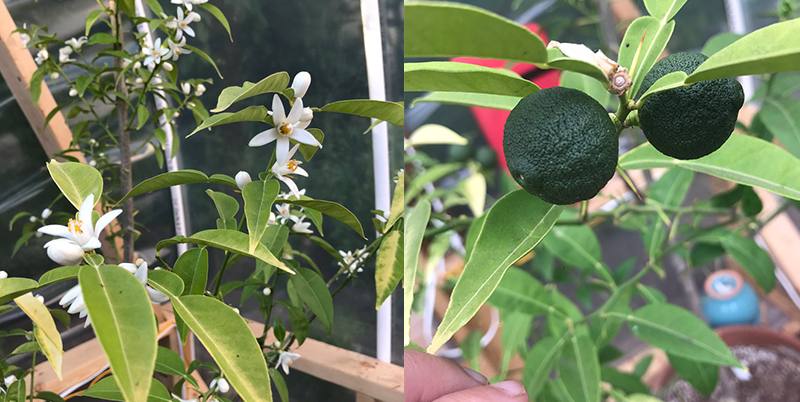
Yuzus, like most citrus, come into season in the late fall and early winter here in B.C. I picked my first-ever satsumas from a new-this-year tree in mid-November; my yuzus were ready to go by mid-December.
The timing of citrus ripening in the northern hemisphere makes their fruits perfect for holiday treats — and is probably why many of my fondest Christmas memories revolve around some combination of orange and chocolate.
With his yuzu, Janes has made candied yuzu, and citrus koshō, and “salted them, Persian-style,” for use in cooking, such as with lamb.
These are all great ideas. To them, I add this recipe for pie.
Yuzu curd pie
Time:
Prep and baking takes from an hour and 10 minutes to an hour and a half; the pie needs to chill at least four hours, but preferably overnight in the fridge.
Tools:
- 9-inch pie plate
- Hand-held electric mixer or stand mixer (preferable). A whisk and some patience will work too.
- Digital thermometer (optional)
Substitutions:
I don’t like pastry all that much, so I opt for a graham crumb crust here. You could easily crush ginger biscuits instead of graham crackers, or substitute your favourite pastry crust — a shortcrust pastry case could be nice. If you, like me, are using gluten-free graham crumbs, it can really help to toss a couple tablespoons of oat flour in with the crumbs to help everything stick together nicely.
Ingredients:
Graham cracker crust
- 1 and 1/2 cups (150 g) graham cracker crumbs
- 5 tbsp (72 g) unsalted butter, melted
- 1/3 cup (67 g) granulated sugar
Yuzu curd
- 3 large egg yolks, at room temperature*
- 1/2 cup (100 g) granulated white sugar
- 1/4 cup (58 g) yuzu juice (approximately three yuzus)
- 1/4 cup (56 g) butter, cut into chunks
Meringue
- 3 egg whites at room temperature*
- 1/4 tsp (1.42 g) cream of tartar
- 1/4 cup (50 g) granulated sugar
Directions:
- Preheat the oven to 300 F. Grease a 9-inch pie dish with butter.
- Mix the graham cracker crumbs, melted butter and granulated sugar together in a medium bowl until combined. If you’re using gluten-free graham crumbs, you may want to use less butter, and add some oat flour — they’re not as absorbent as regular graham crumbs.
- Press the mixture into the bottom, and up the sides, of the pie plate. Compress the mixture so it’s nice and firm in the pan.
- Bake the crust for 10 minutes at 300 F. Then set it aside to cool down.
- Bump the oven temperature up to 425 F (you’ll need it hotter for the meringue step).
- Next, make your yuzu curd. Add a cup of water to a medium saucepan and bring it just to a simmer.
- In a medium-size heatproof bowl, whisk together the egg yolks and sugar until they’re well-combined. Add the yuzu juice to the bowl and whisk until it’s well-combined.
- Place the bowl on top of the saucepan. Whisk until the mixture reaches a thick, pudding-like consistency. The mixture will look light yellow and be able to coat the back of a spoon. A digital thermometer can be a good tool: the curd will thicken when it reaches 170 F. This should take about 10 minutes, but it can take longer if you’re being cautious with your stovetop temp — better a slow curd than one that looks like scrambled eggs.
- Remove the pot from the heat. Slowly incorporate butter, a few chunks at a time, until all the butter has been added.
- Spoon curd into the pie crust and allow to rest on the countertop while you’re making your meringue. (You will want to make your meringue directly after making the curd; dolloping the meringue onto the curd while the curd is warm will allow the two to fuse together, avoiding a situation where the meringue slides off the curd while you’re eating your pie.)
- Make the meringue: start by beating the egg whites until they’re frothy.
- Add the cream of tartar and beat until soft peaks form.
- In 1 tbsp increments, gradually beat in sugar until it has dissolved and the egg whites form stiff, glossy peaks.
- Spoon the curd into the pie crust.
- Spread the meringue over the curd into dollops and swirls.
- Place the pie into the 425 F oven until the tips of your meringue are golden brown. This will take about four or five minutes; keep your oven light on and closely watch the pie as if you are a The Great British Bake Off contestant.
- Allow the pie to cool at room temperature for an hour. Then place it in the fridge and let it fully chill — for at least four hours and up to 24 hours — before slicing and serving.
* Note: It’s easier to separate eggs when they’re cold and allow them to come to room temperature separated.
Happy holidays, readers. Our comment threads will be closed from Friday, Dec. 23 until Tuesday, Jan. 3 to give our moderators a well-deserved break. See you in 2023! ![[Tyee]](/design-article.thetyee.ca/ui/img/yellowblob.png)
Read more: Food, Environment