

 SHARE:
If we have learned anything in the past decade of Donald Trump, it’s that everything — everything — is fragile, unstable, precarious.
In his first term, Trump shook the world’s faith in U.S. institutions: the judicial system, the free press, education at all levels, science in general and medical science in particular.
Even while out of office, Trump kept subverting the foundations of democracy with false claims of rigged elections and biased judges. And once back in power after winning the 2024 election, he converted the Department of Justice into an agency dedicated to attacking his political enemies.
He put Robert F. Kennedy Jr., previously a fringe figure and a science skeptic, in charge of the Health and Human Services Department, and by sharply reducing funding for the U.S. Agency for International Development, Trump condemned an estimated three million people a year to premature death.
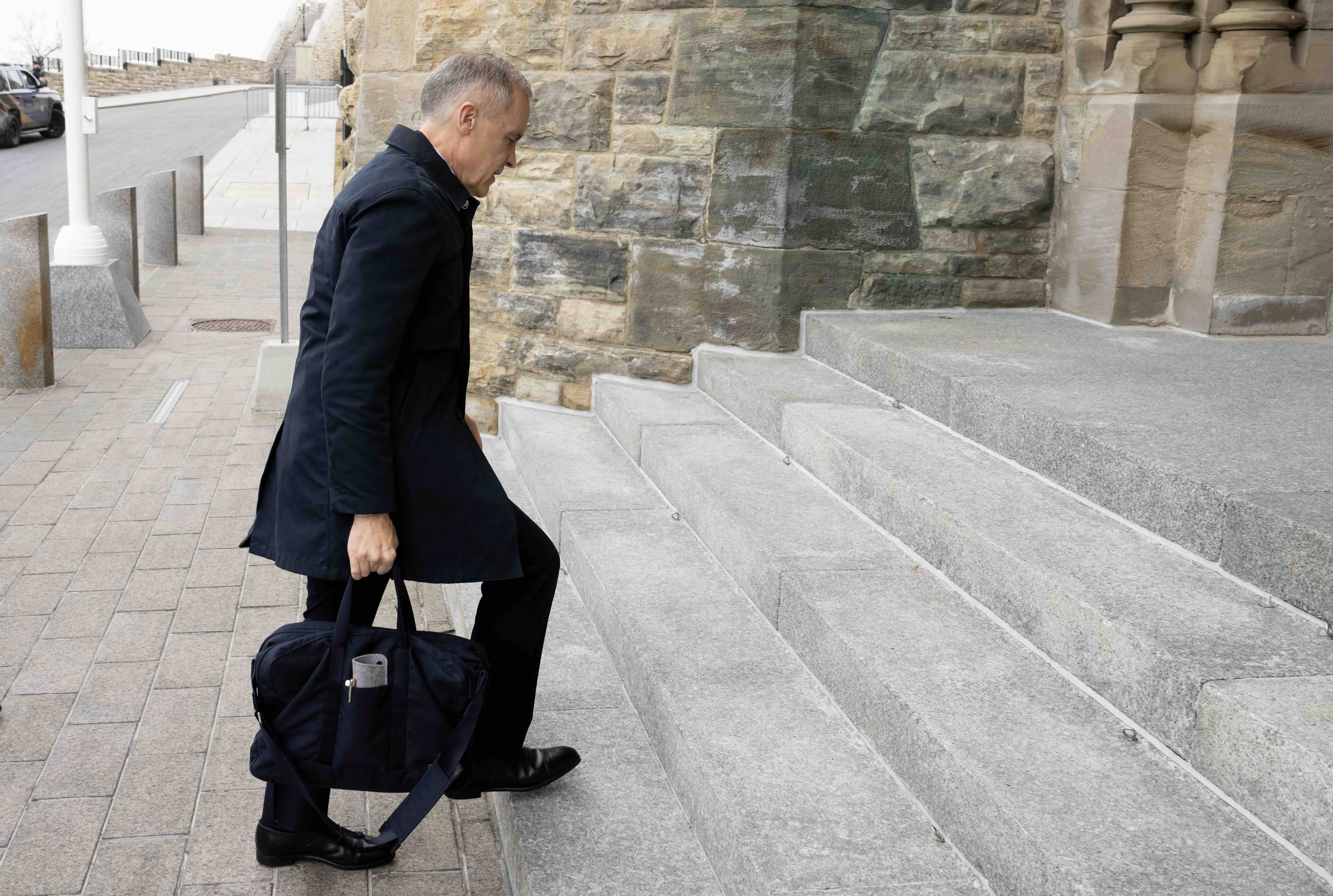
Trump made it look unnervingly easy, as if those institutions had been what Prime Minister Mark Carney said about the rules-based international order, a “pleasant fiction.”
Clearly, the United States and its institutions had become frail and feeble.
Maybe they always had been, and the rules-based order had been not just a fiction but a gigantic bluff.
‘It is the difference between hunger and vertigo’
Precarity, as a term, came into widespread use at the turn of the century when it became clear that many people in North America and Europe were coping with unstable jobs and living conditions — just like populations in less developed countries.
People with university degrees couldn’t find the work they were trained for. Underemployed academics were lucky to find part-time work as “adjunct” professors, always hoping to be rehired in the next semester.
Home ownership became out of the question for most. Even renting was painfully expensive, especially for those trying to pay off their university loans.
Here in Canada, pollster David Coletto and his colleague Eddie Sheppard of Abacus Data have created a website titled the Precarity Mindset.
Coletto and Sheppard argue that we have shifted from a scarcity mindset to precarity: “Scarcity is about not having enough,” they write. “Precarity is about not knowing whether the ground beneath you will hold. It is the difference between hunger and vertigo.”
Coletto and Sheppard go on to report that, on Maslow’s hierarchy of needs, two out of three Canadians are on the two lowest levels — basic needs, such as food and shelter, and safety and security.
They also argue that in precarity people are afraid they’ll lose what little they have and feel less desire to gain more.
Collectively, Coletto and Sheppard say, we are less interested in solutions and resources than in reassurance and stability.
Precarity worldwide
And after a quarter-century, precarity has spread worldwide. Trump’s and Netanyahu’s wars against Iran and Lebanon have shown us how dependent the whole planet is on conditions in a narrow stretch of water called the Strait of Hormuz. Without it, everyone from Kenyan farmers to B.C. trucking firms face higher costs for fertilizer, diesel and natural gas.
So we want reassurance from government that current price spikes will be brief, and everything will settle down soon.
But the best Carney and the provincial premiers can do is knock a few cents off fuel taxes — which will also mean cutting social services or running up debt. Other countries will be exporting fossil fuels, but they are unlikely in the next few months to make up for the fuel bottled up in the Persian Gulf.
Sensible governments will rush their transition to renewable energy, but that will take years. The global economy could collapse in weeks.
Current disputes in B.C. over the Declaration on the Rights of Indigenous Peoples Act can be seen as precarity in action.
Homeowners want reassurance that their property really belongs to them. Politicians want reassurance that they won’t be subject to lawfare.
And the First Nations want reassurance that their rights are permanent, not to be discarded as an inconvenience to some “nation-building” project.
The ‘good old days’ never existed
Carney has famously told the world that the old order is dead, and “nostalgia is not a strategy.” But nostalgia is precisely what precarity encourages, a painless return to the so-called “good old days.”
Pollsters Coletto and Sheppard find that six out of 10 Canadians would rather have been born in 1950. (I was born in 1941, and I remember 1950 very well. It was OK for white males, but not for anyone else.)
To end precarity, Carney would have to find a way to meet the basic needs of a quarter of all Canadians, and to make two out of five Canadians feel safe and secure.
Then those two-thirds of Canadians could begin to build better personal relationships and a sense of community and start to rise through the hierarchy of needs.
Coletto and Sheppard present Canadian precarity as a management problem. Carney as prime minister likely sees it the same way. But short of bringing in universal basic income, precarity can’t be managed.
Instead, those in precarity must climb their own way up the hierarchy: to build and thrive through personal relationships, through forming political communities whose purpose is to flatten out Maslow’s hierarchy into a more egalitarian society.
Such communities should meet all basic needs, keep themselves safe and secure and strive to make everyone feel they belong.
Get that far, and the whole community should find it easy to gain esteem through achievement and growing purposefully.
That is, if you think Maslow’s hierarchy of needs really defines us. Maslow appeals to the managerial mindset because it is easy to understand, but people are complicated. Our needs usually overlap. We can seek housing, work as part of a community and feel proud of that work, all at the same time.
Reassurance from politicians is a temporary comfort when precarity looms. But precarity is also part of the human condition, and drives us not just to seek stability but to invent it in new forms and institutions, and new politics.
Carney was right: nostalgia is not a strategy, and hope is not a plan.
We must understand the causes of our precarity, and then we — not Carney — can build a new stability. ![[Tyee]](/design-article.thetyee.ca/ui/img/yellowblob.png)
Read more: Rights + Justice, Politics









Tyee Commenting Guidelines
Please note that email notifications for replies are not currently working due to a software issue which may be resolved in a future update.
Comments that violate guidelines risk being deleted, and violations may result in a temporary or permanent user ban. Maintain the spirit of good conversation to stay in the discussion and be patient with moderators. Comments are reviewed regularly but not in real time.
Do:
Do not: