

 SHARE:
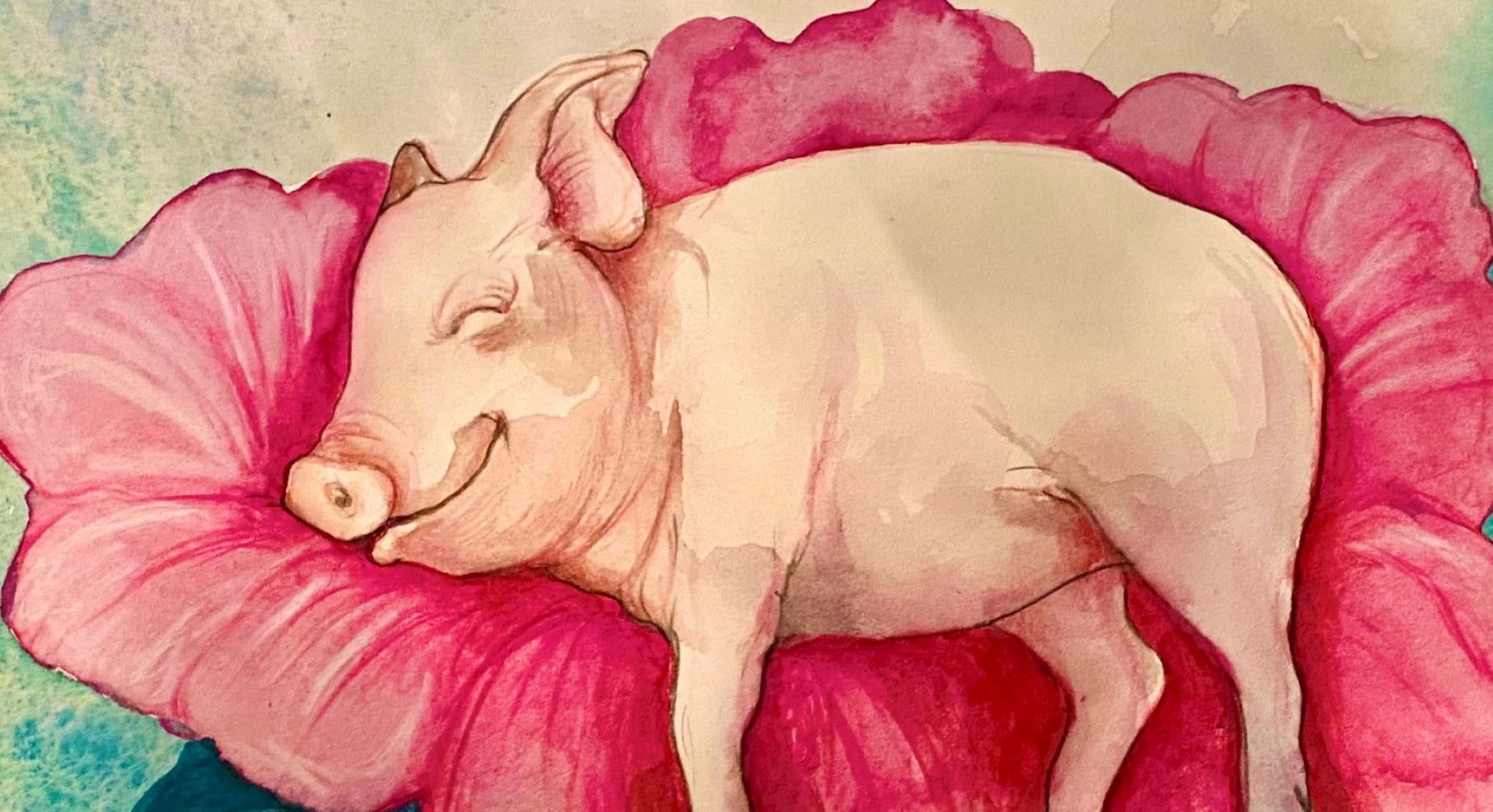
At some point in the future, humans might look back at this period and sadly shake their heads. If we’re still around, that is. Maybe some new species will have taken the lead. I’d be happy to see cephalopods or elephants in charge for a while.
It’s hard to look at the current state of the world and wonder how we managed to cock things up as badly as we have. Especially when other options are right there, waving their hands wildly in the air, trying to attract attention.
One of the most overlooked of these ideas is universal basic income, a social policy intervention that proposes a guaranteed income for every person, regardless of employment status or income level.
It’s well worth revisiting today, but it’s also worth noting that universal basic income is not a new concept. It’s extremely old.
Earlier this week, humanities professor Will Glovinsky authored an essay in the Conversation tracing the origins of basic income. The closing of the commons in England from 1604 to 1914, he notes, gave rise to some of the very first guaranteed income actions.
The idea originated with an act of grand theft on the part of the leadership class.
“In the early 1770s, the magistrates of Newcastle attempted to enclose the town’s common land and keep its rental income for themselves,” Glovinsky writes. “The struggle inspired a young Newcastle schoolmaster named Thomas Spence to develop the world’s first basic income proposal.”
“The English enclosures were designed to fence most people out from the very resources they needed to survive, rendering them dependent,” Glovinsky continues. “‘If grass or nettles they could eat,’ Spence joked, landowners would fence them off, too.”
Inspired by Indigenous land practices, Spence advocated for the idea of basic income with a variety of methodologies including pamphlets, ballads and other publications. For his efforts, he was sent to prison and died in abject poverty.
Since Spence’s time, variations of the idea have been tried in countries around the world, often with remarkable success.
The idea resurfaced recently in Ireland, with a pilot program dedicated to supporting artists. Instituted in 2022 as a means to help support the cultural sector as it emerged from the venue closures of the pandemic shutdowns, the initiative proved so successful that it has been made permanent.
Basic income works: Lessons from Dauphin, Manitoba
Reading about Ireland’s program reminded me of a documentary about universal basic income from a few years ago. Free Lunch Society from Austrian filmmaker Christian Tod was released in 2017, but is perhaps even more relevant today.
Many of the ideas broached in the film have greater import than they did almost a decade ago, a development helped along by a bevy of issues including political instability, cavernous inequality, climate breakdown, a global pandemic, the rise of AI.
Add in a war for oil, the looming spectre of nuclear obliteration and heya! Might be time for a change.
At the time of the film’s making, some of these issues were already taking shape like thunderheads forming on the horizon. But the storm is well upon us now.
In his documentary, Tod takes an expansive approach and examines how different basic income programs were instituted around the world. One of these was Mincome. A basic income program implemented in the community of Dauphin, Manitoba, under the auspices of Prime Minister Pierre Trudeau and then-NDP premier Ed Schreyer between 1974 and 1978, the results proved extraordinary.
Naysayers who predicted that giving people free money meant that citizens would fall into lives of sloth and laziness had to eat their words. The success of Mincome allowed people to try new things, get dental care for their kids, start small businesses and generally live in a way that was governed less by fear and more by hope.
Naturally, the successive Conservative government killed the program, but the experience endured in the citizens of Dauphin.
Many of the folks interviewed in the film attest to the brief respite from economic precarity that marked their lives.
What’s in the way? Old fears. And a lack of political will
A similar program was enacted in Namibia to even greater effect. Under the direction of then-Minister for Poverty Eradication and Social Welfare Zephania Kameeta, the small town of Otjivero was chosen for a pilot program. The residents were provided with a card that allowed them to withdraw a financial stipend every month.
Unemployment plunged and crime rates also fell precipitously. Community members started small businesses that were amply supported by the fact that people had more disposable income to spend.
Because residents could afford to dedicate more resources to everything from education to medicine, childhood malnutrition declined by an extraordinary amount. School attendance doubled, and dropout rates plummeted from 40 per cent to less than five per cent in two years.
You might think that with such positive indicators, nationwide rollout for the program would have galloped along. But you would have been wrong.
A lack of political will and old fears about dependency meant that the pilot program was allowed to die.
Some initiatives that are akin to basic income, however, have been running for years. In countries like Norway, the profits from the oil and gas industry have allowed the country to share the wealth with its population. In Alaska, a similar program means that the state shares a percentage of resource-based largesse with its residents.
In Austria, a lottery system created by a philanthropic organization gives away financial support to a few lucky folks.
Economic freedom begets more freedom
The idea of free money attracts vitriol from both sides of the political spectrum, with the right viewing it as welfare on steroids and the left leery about universal basic income’s potential impact on labour rights and unions.
But even if it feels impossible to implement on a large scale, the concept had been lauded by everyone from Richard Nixon to economist Milton Friedman to Martin Luther King Jr.
Those interviewed in Free Lunch Society speak to the breadth of this idea: from billionaires to anti-poverty activists, everyone seems to agree that basic income ameliorates a variety of social ills.
Politicians, academics and scholars including social scientist Frances Fox Piven, French economist Emmanuel Saez, Canadian economist Evelyn Forget, activist/entrepreneur Michael Bohmeyer, futurist Marshall Brain and famed economist Thomas Piketty all weigh in.
But it’s the ordinary people whose voices and experiences carry more weight, whether it’s an elderly Manitoban woman or a Namibian grandmother.
As one person after another explains, basic income didn’t bring on a golden age of laziness; it did the opposite.
With even a little more economic wiggle room, people did things they’d always wanted to. Whether they ran for political office or started a side business, people worked more than ever and actively engaged with their communities. Economic freedom turned into all kinds of other freedoms: time, pleasure, joy and connection.
The benefits of universal basic income are well-established and documented. So why don’t we choose another path other than the well-trodden one on which we’re all currently slogging away? That’s the bigger question.
Keeping people in poverty may be about control. It’s also worse than that. That the pursuit of money could come at the price of all life on earth, I cannot begin to understand. Yet here we are.
As the U.S. continues to rattle sabres in the Middle East and oil prices creep upwards, threatening not only things like energy production, but also food and water, at what point does change become not obvious, but critical to our continued existence?
AI is threatening mass unemployment and the divide between the rich and the poor is continuing to deepen, bringing with it profound social instability. Maybe the very concept of money needs to be re-examined.
It is curious that in Ireland, artists were one of the groups identified to receive universal basic income. It’s also potentially galvanizing.
If there is any one group of humans who when freed from the constraints of economic considerations are capable of envisioning new ways of existing in the world, it is artists.
Take the money, please, and fashion a new world! ![[Tyee]](/design-article.thetyee.ca/ui/img/yellowblob.png)
Read more: Federal Politics, Labour + Industry, Film










Tyee Commenting Guidelines
Please note that email notifications for replies are not currently working due to a software issue which may be resolved in a future update.
Comments that violate guidelines risk being deleted, and violations may result in a temporary or permanent user ban. Maintain the spirit of good conversation to stay in the discussion and be patient with moderators. Comments are reviewed regularly but not in real time.
Do:
Do not: