


 SHARE:
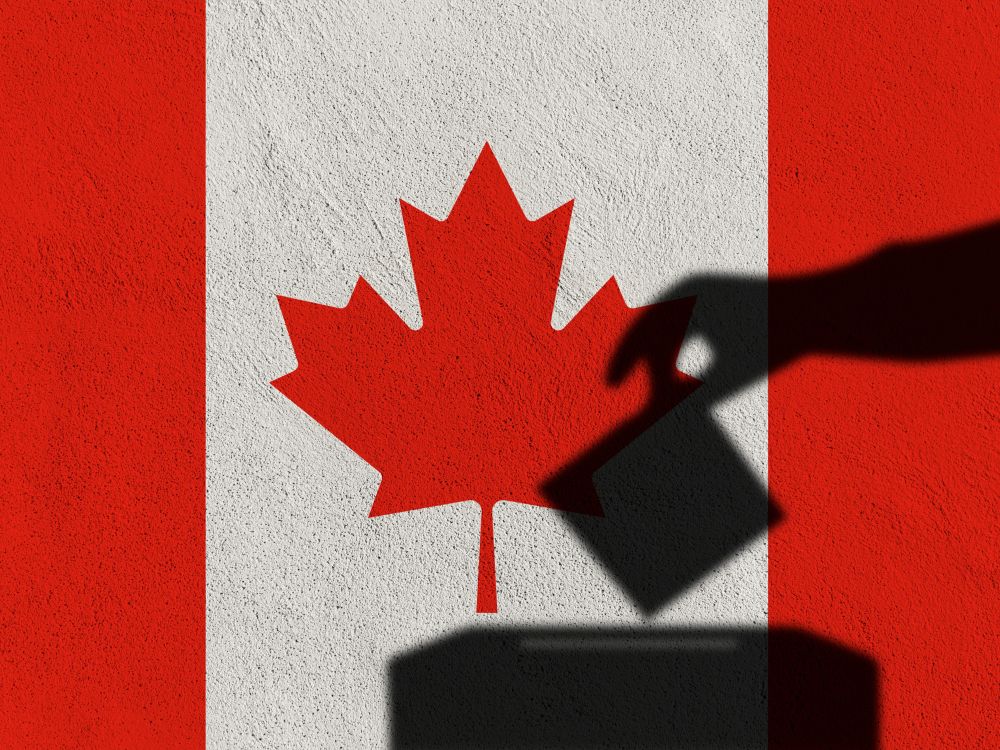
We often talk about democracy as if it were a single monolithic system. But the term covers a wide range of political systems. Even North Korea honours the term by calling itself, with a straight face, a “democratic people’s republic.”
But several groups have tried to measure the level of democracy in various countries, using different metrics. In a time when nations are toppling into authoritarianism or outright fascism, Canadians should be checking the health of our own democracy.
At the University of Gothenburg, Sweden, the Varieties of Democracy Institute, or V-Dem, publishes an annual report on the state of democracy. The 2026 report, the 10th edition, is outright discouraging. But it also gives countries like Canada a way to measure the health of their own democracy — and perhaps improve it.
The report’s executive summary is almost all bad news, a litany of democracies in retreat and autocracies advancing over the past quarter-century.
But the report itself offers a way to diagnose the illnesses of our own democracy and to work towards cures for them.
In an article on V-Dem’s methodology, members of the institute define democracy by seven principles:
- Electoral: Citizens can periodically vote and rulers must respond to their voters.
- Liberal: Civil liberties protect minorities from the tyranny of the majority, the rule of law is strong and executive power must deal with checks and balances.
- Participatory: Beyond voting, citizens are free to participate in civil society organizations.
- Deliberative: “Respectful and reason-based dialogue” is key to political decisions, rather than emotional appeals, group identity, or coercion.
- Egalitarian: “Gross inequalities of health, education or income are understood to inhibit the exercise of political power and the de facto enjoyment of political rights.”
- Majoritarian: “A majority of the people must be capacitated to rule and implement their will in terms of policy.”
- Consensual: Political minorities should be both represented and respected.
A wide spectrum
The 2026 V-Dem report groups democracies and autocracies into five types:
1. Liberal democracies have free and fair elections, checks and balances on the executive, respect for civil liberties and the rule of law. Australia and Belgium are examples. (The Civil Liberties Union for Europe recently condemned five EU nations — Bulgaria, Croatia, Hungary, Italy and Slovakia — as “dismantlers” of the rule of law. No doubt V-Dem will mention this in its 2027 edition.)
2. Electoral democracies have elections, but their liberal traits are eroding — especially freedom of expression, checks on the executive and respect for civil rights. Canada and Brazil are electoral democracies, but very close to liberal democracies. The United States is an electoral democracy, the report says, but has “autocratized” more in the past year than Hungary’s Viktor Orbán did in the past eight years.
3. Electoral autocracies hold elections, but the elections are often rigged or the opposition leader is jailed on dubious charges. The courts and media are under government control. This is the largest group of nations in V-Dem’s analysis and includes Hungary, Russia, Ukraine and Egypt.
4. Closed autocracies make little pretence of democracy. Elections are rigged or non-existent, freedom of expression is non-existent, and the executive has no checks or balances. They include China, Eritrea and Saudi Arabia.
5. Grey zone countries share the traits of both electoral democracies and electoral autocracies. Examples include Honduras, Kenya and Nigeria.
But the V-Dem report makes it clear that these countries are on a very wide spectrum. Most of them are currently autocratizing, some are democratizing and a few are doing U-turns from one to the other. The report labels many countries as experiencing an “episode of autocratization” in 2025, with far fewer countries going through an episode of democratization.
This can be confusing at times. Canada appears as an electoral democracy, but as an “ED-plus” it might be defined as a liberal democracy. The United States is also an ED-plus, but it experienced dramatic autocratization in 2025 and lost its liberal-democracy status for the first time since the 1960s.
Grey zone countries are all ED-minus, meaning they could slide easily into autocracy.
Use torture? Not a liberal democracy
Autocracies, electoral or closed, are easier to recognize. Their governments censor the media or encourage it to self-censor. They put limits on freedom of academic and cultural expression, harass journalists, repress civil society organizations like trade unions and civil rights advocates, and rig elections. The report also notes that “governments in 33 countries are increasingly resorting to political torture to suppress political opposition.”
In comparing the most autocratizing nations, the V-Dem report lists the top five as Hungary, Serbia, India, the United States and Mexico. “In only one year,” the report notes, “the U.S.A. already ranks fourth in magnitude of deteriorations — just behind the top three most flagrant cases who have been autocratizing for over a decade.”
The report concludes with a chapter detailing the autocratization of the United States. “By magnitude of decline on the LDI [Liberal Democracy Index], the 2025 plunge is the largest one-year drop in American history going back to 1789 — that is, in the entire period covered by V-Dem data.”
Looking at V-Dem’s table of the top 50 per cent of countries, as ranked by the LDI, we find Canada ranking 23rd, just below South Korea and just above Japan. (The top of the chart is, predictably, the Nordic countries, plus Switzerland, Estonia, Ireland, Costa Rica and France.)
Canada has a lot of room for improvement
But on various components of the LDI, Canada ranges from 16th on the electoral democracy index to 62nd on the egalitarian component index (Denmark is first on that index). By V-Dem’s standards, we have room for a lot of improvement.
And if we assessed ourselves by V-Dem’s standards, we could do a great deal to strengthen our democracy.
Suppose we decided that every new bill, as it went through committees and readings in Parliament, would require a “democracy impact assessment.” The assessment would have to show that the measure would strengthen democracy, or at least not weaken it.
So a bill to extend the vote to age 16 would be more democratic than our present voting laws. A law like Quebec’s Bill 21, forbidding the display of religious symbols by public servants, limits free expression and freedom of association, so it would be less democratic.
Much of what we now call hate speech would be permissible as free expression, unless its effect was to reduce freedom of speech and association in the persons or groups being attacked. Tax laws would have to apply to all in a strongly proportional way, to maintain economic equality. Equal access to public health and education would also respect the egalitarian principles of a strong democracy.
We would spend a long, loud time just deciding to adopt the V-Dem principles. Then we could have another fight defining what a “fair” election is, especially in a country where a minority of votes, efficiently distributed, can produce a majority government.
We could follow the examples of the Nordic countries, which tend to form multi-party coalition governments or at least, after an election with no majority winners, allow a run-off between the two top vote-getters.
Educating citizens, not just consumers
Improving Canadian democracy would have to start early in each Canadian’s life. We would have to teach kids not just about parliamentary government but about the fact that they are among the owner-proprietors of a democratic nation. As such, they have duties as well as responsibilities.
Civics — the formal study of Canadian democratic institutions — would be mandatory from Grade 5 or 6 through Grade 12. So would courses in history, political science, media literacy, critical thinking applied to social media and the scientific method — how science studies the world and comes to reliable conclusions. We would teach our kids that some people and organizations regard them as prey, and how to defend themselves against such predators.
We would try to make it absolutely clear that their education is to make them competent citizens, not just skilled workers or savvy consumers. And as citizens they should know they have rights and powers in respect to the work they do and the goods they consume.
The owner-proprietors of a functional democracy will know they have to take care of business. That means keeping one’s BS detector fine-tuned at all times, and ceding power to politicians very carefully. That also means politicians and advocacy groups staying in close touch with citizens, explaining laws and programs clearly — and supporting or rejecting those laws, at least in part, on whether they strengthen or weaken democracy and its institutions.
How to measure our democracy and how to improve it are certain to be contentious topics, debated from the kitchen table to the House of Commons.
But we are eyewitnesses to the autocratization of our neighbours, the Americans. A key reason for the two elections of Donald Trump is the now-obvious frailty of U.S. institutions.
If those institutions had been functional, a different outcome for Trump would have taken shape right after the Capitol riots of Jan. 6, 2021 — or he would never have been elected at all.
We have no reason to suppose our own institutions are any stronger, unless we make them so. As U.S. politician Alfred Smith observed a century ago, “The cure for the evils of democracy is more democracy.” ![[Tyee]](/design-article.thetyee.ca/ui/img/yellowblob.png)











Tyee Commenting Guidelines
Please note that email notifications for replies are not currently working due to a software issue which may be resolved in a future update.
Comments that violate guidelines risk being deleted, and violations may result in a temporary or permanent user ban. Maintain the spirit of good conversation to stay in the discussion and be patient with moderators. Comments are reviewed regularly but not in real time.
Do:
Do not: