

 SHARE:
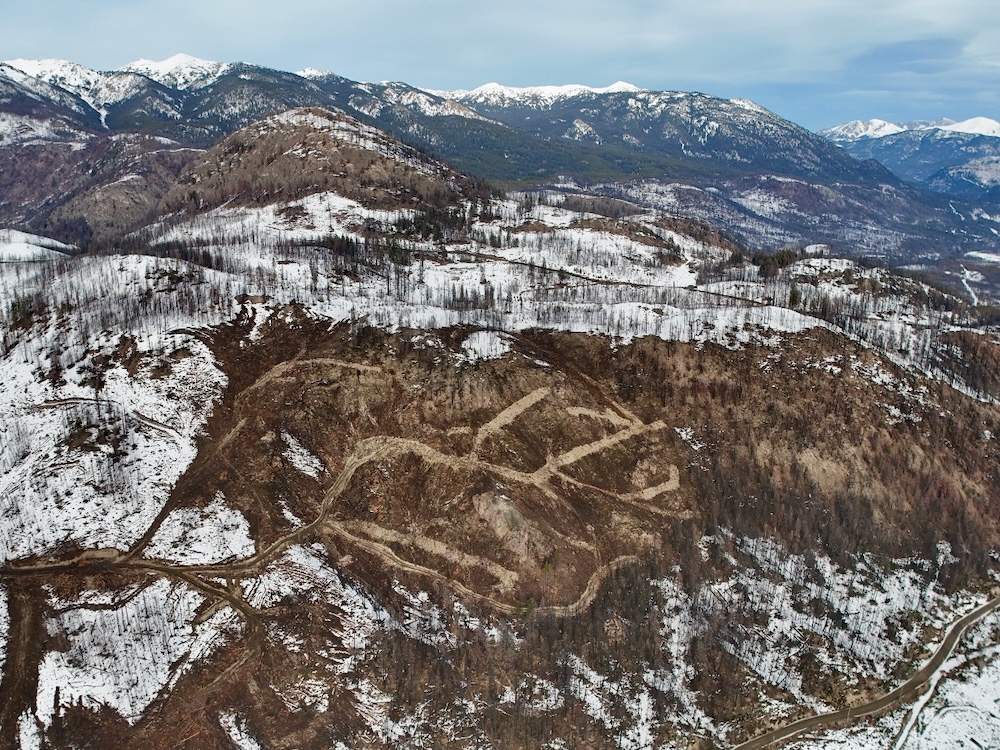
It didn’t take long for the smoke to clear following 2017’s horrendous wildfires for the British Columbia government to respond with a plan to log more forests and plant more trees.
The scale of what had just happened exceeded anything on record. Fires burned more than 12,000 square kilometres of the province’s forests and grasslands. No wildfire season over the previous half century had come remotely close.
Yet, it would take just one more year for a new record to be set.
In its 2017 post-fire response plan, B.C.’s Ministry of Forests promised to replant the forests that had burned.
“Reforestation will play a large role in not just ensuring the replacement of burned forests but also in the opportunity to contribute to future carbon sequestration,” the plan declared.
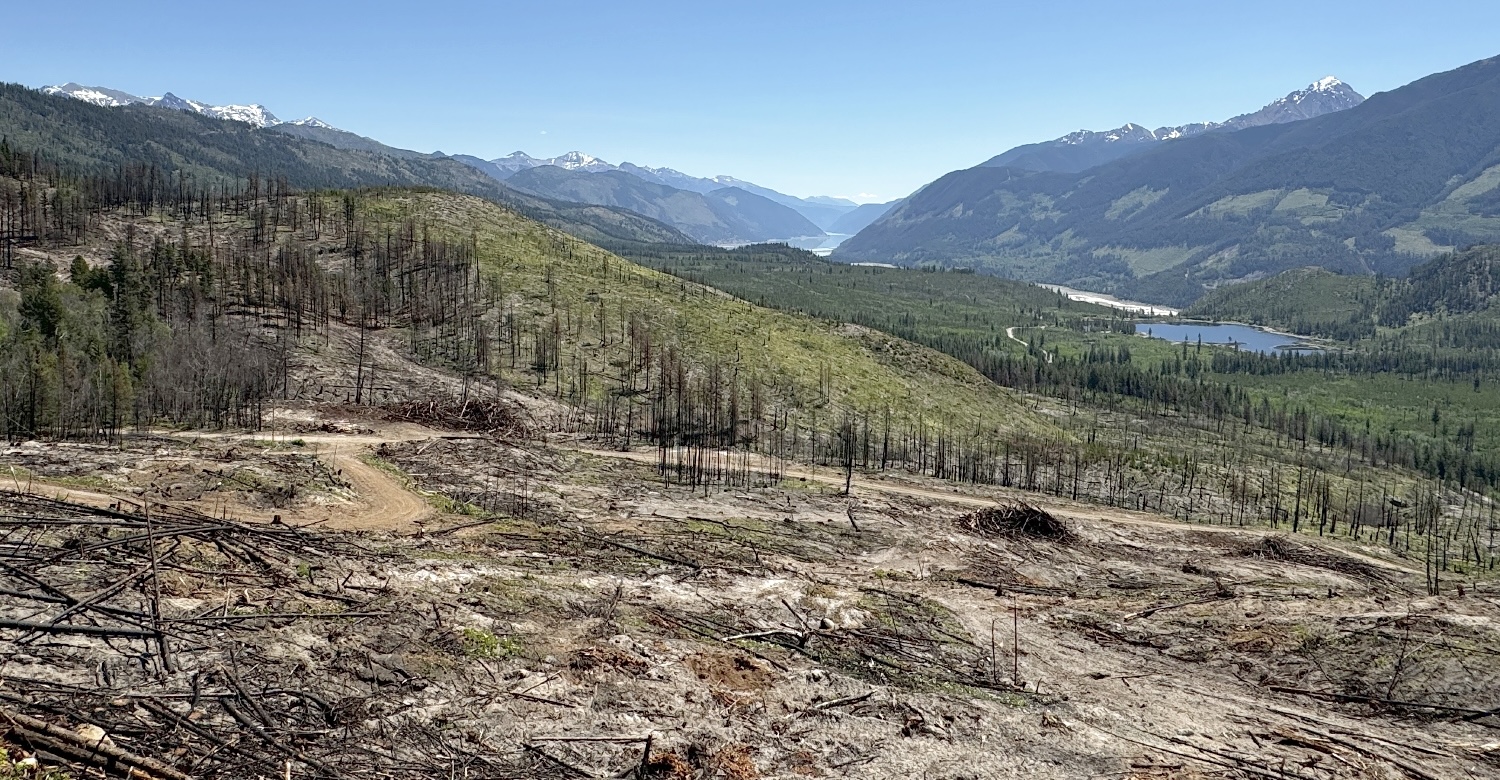
But a look at what actually burned in the worst fires of 2017 suggests that aggressive logging and “reforestation” — essentially just tree-planting — sets the stage for even more frequent wildfires to come.
The three largest wildfires of 2017 were the Plateau fire west of Quesnel, the Hanceville-Riske Creek fire west of Williams Lake and the Elephant Hill fire south of 100 Mile House.
All of those massive fires tore across lands where extensive logging and tree-planting had previously occurred. Colour-coded maps accompanying the ministry’s report showed many of the burned trees were under 60 years of age.
Science shows that young stands of trees, with their branches lower to the ground, are more vulnerable to burning in catastrophic fires. Adding to the fuel risk, many tree plantations are densely stocked, providing continuous, uninterrupted sources of fuel.
In the Klamath Mountains in northwestern California and southwestern Oregon, scientists looked at the fate of Douglas fir trees following wildfires and found that trees 10 to 32 years old were three times more likely to be severely burned than those 75 years old or older.
In the same region, scientists studying the fate of young trees planted in clearcuts noted similar outcomes.
“Protected stands of mixed conifer forest in the western USA burnt at lower severity than logged forests,” wrote David Lindenmayer, one of the world’s most cited forest ecologists and Phil Zystra, a leading fire behaviour scientist, in 2023. “The odds of high-severity fire in young even-aged and intensively managed industrial Californian forests were significantly greater than on public land where forestry practices were less intensive.”
Yet in the aftermath of wildfires in California, both state and federal authorities pushed aggressively to proactively log unburned forests with dead trees or snags in them. They declared that such trees were “hazardous fuels” that must be removed.
B.C. Forests Minister Ravi Parmar advocates much the same approach. He has recently announced changes to the issuance of logging approvals through BC Timber Sales, a timber-auctioning program run by his ministry.
The streamlined process would see more logging of forests with dead trees in them — including forests where fires previously burned, where beetles killed trees or where windstorms knocked trees down. All this would be in the name of fire protection, even though dead trees are a natural and ecologically essential feature of older forests.
“This will provide more fibre and create more opportunities for contractors while reducing wildfire risk and contributing to healthier forest conditions,” a ministry news release asserted. “New salvage licences are expected to deliver up to an additional 500,000 cubic metres of fibre (approximately 11,000 truck loads) to market.”
B.C.’s chief forester, Shane Berg, has also advocated for proactive logging to reduce fire risks. Berg was part of a panel to speak in the community of Clearwater in February after a documentary film, B.C. is Burning, aired at the local secondary school. The documentary contends that older forests are at heightened risk of burning and therefore must be logged.
“We are not talking about clearcutting parks, we are not talking about harvesting commercially in parks, we’re talking about making the fringes of parks, where they butt up against commercial forest, where they butt up against communities, less susceptible to the ravages of wildfire,” Berg said.
The film was produced and written by Murray Wilson, a retired registered professional forester who once worked in a senior position for Interior lumber maker Tolko Industries. The film was funded by Kalesnikoff Lumber, Padoin Reforestation, Skyline Helicopters and Homestead Foods.
In an interview on Kelowna Now, Wilson expressly linked wildfires to older forests, arguing that such forests need to be made young again by cutting them down.
“We have to change our policy to focus on forest management by reducing age and density of our forests. Make our forests younger, not as thick. We’ll have less fires. We’ll create wealth for the province,” Murray said.
Lindenmayer says he’s heard similar arguments from industrial foresters in his native Australia and elsewhere.
“The industry is using supposed fire management as a cover to keep logging forests,” Lindenmayer told The Tyee. “Generally, we need far more protected forests where fire risks are lower.”
Oregon-based forest ecologist and conservation biologist Dominick DellaSala says there is no evidence that proactively logging older forests — where dead trees are vital components of ecosystems — reduces wildfire risks. The opposite is true, he said. That includes both forests where wildfires may have burned and forests where insect outbreaks may have occurred.
“A substantial body of evidence shows that such large-scale tree removals will have cumulative and mostly negative ecosystem and climate consequences,” DellaSala, Lindemayer, and other scientists wrote last year.
Those negative consequences include degraded ecosystems, surging greenhouse gas emissions from logging, and increased risks of both future wildfires and floods.
“Put simply, the wholesale removal of dead trees will make the fast-fire situation worse,” the scientists warned.
In another study that underscored the wildfire risk associated with rapid logging and replanting of logged sites, researchers looking at fire activity in California found that logged private lands were nearly twice as prone to burning as older forests on adjacent public lands. They found there was increased risk that fires from industrially logged lands would spread into neighbouring forests.
“High-severity fire incidence was greater in areas adjacent to private industrial land,” wrote the authors of the 2022 study, which was led by plant community ecologist Jacob Levine. “The clear relationship between private forest management and increased high severity fire suggests that forest management practices… contribute to increased fire severity.”
This, Lindenmayer warns, may be pushing heavily industrialized landscapes to a dangerous tipping point where more frequent wildfires become the norm because so much natural forest is gone and there is a preponderance of tree plantations that may be at increased risk of burning for 40 to 70 years.
Lindenmayer and Zystra called this the “landscape trap.”
“The rarity of less flammable older forest in the landscape means that the remaining more widespread and more flammable young forest is at increased risk of repeatedly re-burning at high severity,” the scientists warned.
They concluded that getting out of such traps may be possible by limiting further logging in existing older forests, protecting young tree plantations from burning as much as possible so that they become older and less prone to burning, and through early fire-detection and fire suppression efforts in older forests.
That could also help foster the greatest diversity of animal and plant life, which is plummeting the world over as older forests are lost.
“Old forests are important and increasingly rare,” Lindenmayer said. “They have high biodiversity value, store the most carbon, and are generally the least fire prone. Dead trees are not a fire risk in cool, wet old forests.”
The Tyee asked B.C.’s Wildfire Service, which co-ordinates the response to wildfires in the province, whether recently harvested forests are more susceptible to burning.
In an emailed response, the Wildfire Service said:
“There are several factors that can impact whether plantations are more susceptible to burning than older forests. Currently, BCWS and research partners are examining plantations to better understand which silviculture treatments may improve resilience and resistance to wildfire, and under what conditions.”
Silviculture treatments typically include logging, tree-planting and tree-thinning, a process where individual trees are removed and others left standing. Some thinning operations take down far more trees than others.
The Wildfire Service statement said fighting fires in tree plantations varies in complexity depending on the age and number of trees, among other factors.
Tree plantations typically have far more trees per hectare than primary or natural forests because plantations are intended to produce wood fibre for the forest industry down the road.
But the density and young age of trees in plantations is precisely what makes them vulnerable, making it difficult to see how more logging and tree-planting today will not sow the seeds of more fires tomorrow. ![[Tyee]](/design-article.thetyee.ca/ui/img/yellowblob.png)
Read more: Environment






Tyee Commenting Guidelines
Please note that email notifications for replies are not currently working due to a software issue which may be resolved in a future update.
Comments that violate guidelines risk being deleted, and violations may result in a temporary or permanent user ban. Maintain the spirit of good conversation to stay in the discussion and be patient with moderators. Comments are reviewed regularly but not in real time.
Do:
Do not: