


 SHARE:
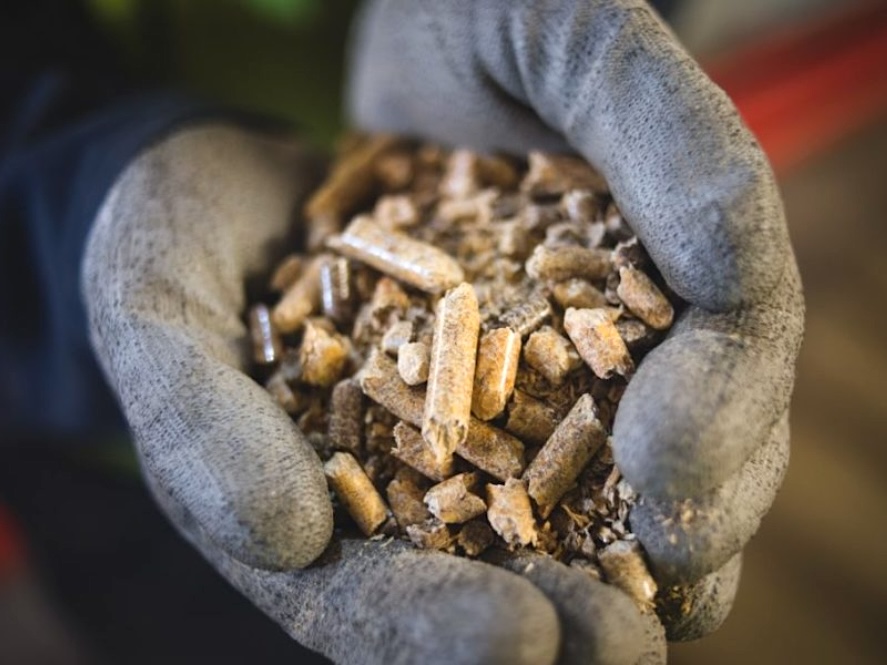
A company building two of Canada’s largest wood pellet mills says it will rely on a steady diet of trees logged in forests recently burned by wildfires.
Roughly five million trees will have to come down each year to feed the two northern Alberta mills, which Powerwood Canada Corp. plans to build near the communities of La Crête and High Level.
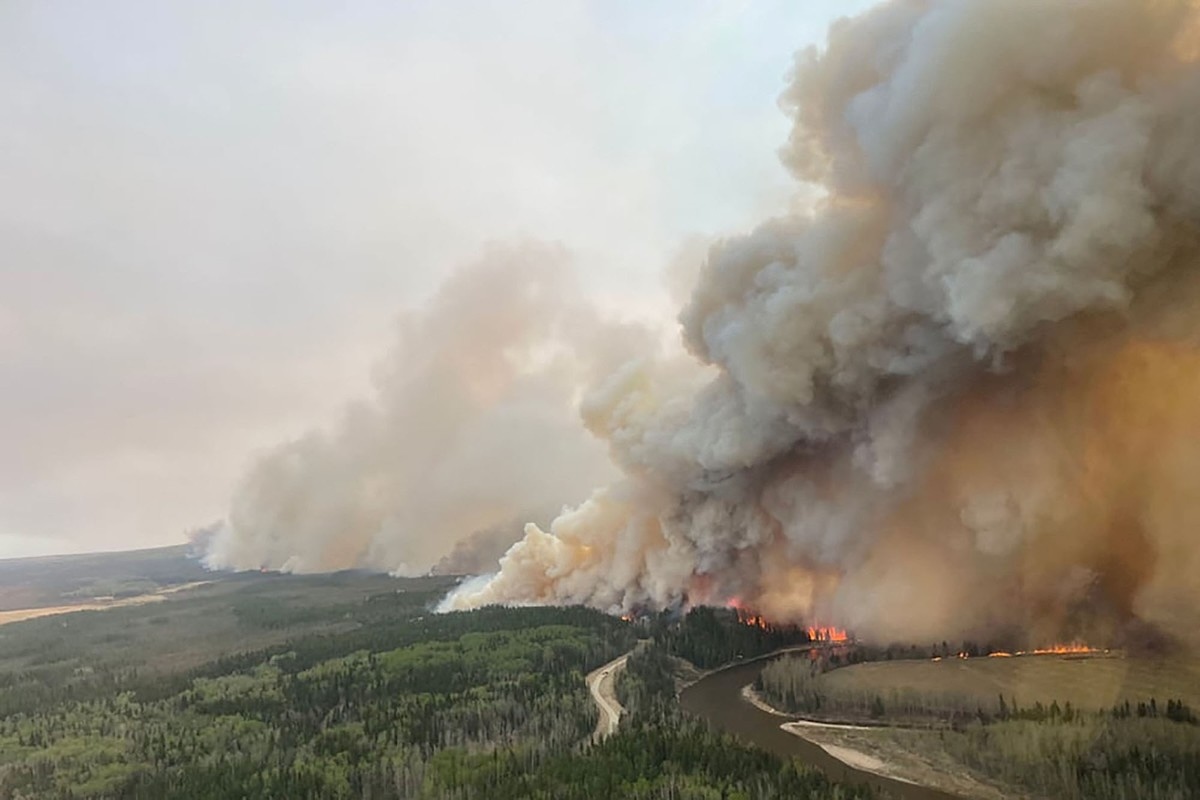
The company claims that wildfires create nightmarish landscapes and that logging such forests as fast as possible is key to restoring their health.
But scientists counter that burned forests are important for biodiversity and that aggressively logging them spells disaster for plants and animals that rely on burned landscapes to flourish.
Powerwood CEO David Peters told The Tyee that in addition to northern Alberta the company is eyeing other “brownfield” logging opportunities in British Columbia and in Eastern Canada due to the significant number of wildfires in both jurisdictions in recent years. (Powerwood is a subsidiary of U.K.-based CoAlternative Energy Ltd., where Peters is chairman.)
Peters said that if such forests are not logged, it will take up to 25 years for “natural reforestation” to occur, during which time those forests have little to no economic value.
“We see this as an environmental nightmare,” Peters said in an email. “The removal and processing of dead wood into a coal replacement product... is an environmental win-win.”
The rise in wood-fired power
Until 50 years ago, most thermal electricity plants used coal or oil. But during the global energy crisis in the 1970s, the first wood pellets were fed into a Swedish thermal plant. Demand for wood pellets grew, translating into increased logging.
More recently, the European Union encouraged pellet-burning on the grounds that it was “low-carbon, renewable energy” and therefore a climate solution. Proponents of such plants claim that burning wood is a climate-friendly alternative to burning coal, oil or natural gas because any greenhouse gas emissions associated with burning wood are later offset by newly planted, carbon-storing trees.
It’s an assertion that many scientists say is incorrect. When burned, wood emits more carbon per kilowatt hour than does coal, one 2022 study concluded. The authors noted it is far from certain that those emissions will later be clawed back by carbon stored in new trees.
Logging and burning dead trees also has an impact on the climate because of all the accumulated carbon stored in the trees. Dead trees continue to hold stored carbon for lengthy periods of time, including carbon that becomes locked in in forest soils as the dead trees decay.
Increased use of coal and wood around the world complicates matters further, with the potential for a massive surge in usage due to the U.S. and Israeli attack on Iran and the subsequent increase in oil and natural gas prices.
Today, the world’s largest, single-source consumer of wood fibre is a giant thermal electricity plant in England owned by the Drax Group. The U.K. government has provided billions of British pounds in subsidies to convert the plant from burning coal to burning wood.
In 2024, the plant burned nearly 7.6 million tonnes of wood pellets, which the company asserts are both a “sustainable” and a “renewable” source of power.
Pellet-fired thermal electricity production in Japan has also risen sharply as a consequence of the horrific 2011 earthquake and tsunami that devastated a swath of the country’s Pacific shoreline and plunged the country into an energy crisis.
More pellets, more logging
Powerwood has announced that the pellets it produces in northern Alberta will go to Japan to help the country meet its energy needs.
Peters said his company is eyeing aspen forests where many trees were only lightly burned. The fires ran “through the forests very rapidly,” he said, burning “the branches, leaves, bark, grasses and ground,” with the scorched trees remaining standing.
With the fires having burned their roots, the trees become “dead wood, and if left will decay releasing... harmful greenhouse gases,” Peters said.
Rather than letting that happen, Powerwood will log those forests and make wood pellets. It claims that those pellets will “slash carbon emissions by 98.7 per cent,” making them a far better alternative to coal, which Peters called “the dirtiest of all fossil fuels.”
He added that the company’s emission reduction claims actually understate the true benefits because they do “not include the new carbon sink created as a result of reforestation.”
The Alberta government has awarded Powerwood two long-term logging licences that allow the company to log more than 118,000 cubic metres per year. It is in active discussions with the government to increase that number.
Peters said Alberta has a “vast acreage affected by wildfire,” with little demand for that wood fibre, given recent mill closures in the province due to U.S. tariffs.
The Alberta government declined to answer questions from The Tyee on the current licences awarded to Powerwood or any other licences that it is considering issuing.
Burning wood: A 1,000-year climate impact
David Lindenmayer, a renowned Australian forest ecologist and conservation biologist, said he is unaware of any scientific study that finds that burning wood pellets results in anywhere near the kind of reductions in greenhouse gas emissions claimed by Peters.
Linedenmayer, who has studied and written extensively about the impacts of wildfires and logging on forests and tree plantations, said logging and turning aspen trees into pellets “massively contributes to climate change.”
“Trees are mostly carbon,” Lindenmayer told The Tyee in an email. He went on to note that one-fifth to more than one-third of all greenhouse gas emissions associated with burning wood “will still be in the atmosphere” 1,000 years from now.
Because wood has a far lower energy value than coal, “you have to burn a lot of extra wood to meet the same energy level,” Lindenmayer said.
More concerning, Lindenmayer said, is that burning wood does not displace burning coal.
“Often it’s not a substitute of one for another... we end up with both,” Lindenmayer said.
He called Peters’ claim that logging burned forests will bring an environmental nightmare to an end “rubbish.” Instead, the opposite will occur.
Burned aspen forests are remarkably resilient in the face of fire, Lindenmayer said. New tree growth begins almost immediately following fire, not the 25 years claimed by Peters. So logging such forests “has massive, negative impacts on the environment,” the ecologist said.
Numerous studies note the resiliency of aspen-dominated forests following fires, with new saplings sometimes growing several feet within just two years. That can provide vegetation and habitat for moose and other animals.
Last year, Lindenmayer and fellow Australian Brendan Mackey, an ecologist who specializes in climate change, wrote a peer-reviewed paper looking at the logging of forests for biomass and the resulting impact on ecosystems and climate.
They wrote that although the pellet industry’s impacts on forests may seem innocuous at first — with companies saying they use waste wood left on the ground following logging or wood chips and sawdust generated at sawmills to make their pellets — the industry invariably ends up logging forests directly to meet its needs, with “substantial negative consequences for forest ecosystem integrity.”
Smoke, fire and so much more
While wildfires may kill many trees, rendering their wood less valuable to logging companies, such trees retain immense value for critical wildlife, including woodpeckers.
Woodpeckers are a keystone species, a designation given to plants and animals that play an outsize role in their ecosystems.
Woodpeckers are in that group because the holes they bore into trees later serve as homes for numerous other species.
Up to 90 per cent of the cavities excavated by northern flickers, a type of woodpecker, in B.C., Alberta and elsewhere are used by other birds and mammals at some point, according to an article written by a team of scientists in BirdWatch Canada magazine.
“Secondary hosts” that occupy flicker cavities include smaller birds like chickadees, bluebirds and starlings; ducks, including buffleheads, hooded mergansers and Barrow’s goldeneyes; various small mammals, including bats, fishers, martens and red and flying squirrels; and even some species of wasps and bees.
One of the scientists who compiled the report, University of British Columbia conservation professor Kathy Martin, later wrote that when she began her research in B.C.’s Interior in 1995, she quickly learned to appreciate how important aspen trees are for woodpeckers and the myriad species of birds and mammals that depend on them.
“It was immediately obvious to me that aspen, especially decayed trees, were a very important resource for cavity nesters,” Martin wrote in the UBC faculty of forestry publication Branchlines. “Although aspen comprised only 15 per cent of the trees on my study sites, over 95 per cent of 4,850 nests of 32 species of cavity-using birds and mammals were in aspen.”
Science has shown that burned forests are vital habitat for many species of woodpecker.
That’s what happened after fires swept through parts of Yellowstone National Park in 1988. The blazes led some to declare that the park was effectively destroyed, but Yellowstone proved to be the opposite of an environmental apocalypse.
“What looked like a disaster for the park’s wildlife turned out to be a boon for the woodpecker,” Julie Cart reported for the Los Angeles Times in a later feature article.
The burned trees became “bug factories,” with tree-boring, insect-eating birds like the three-toed woodpecker moving in.
The same has been observed in Canadian forests following fires. In 2008, University of Quebec biologists Antoine Nappi and Pierre Drapeau looked at how black-backed woodpeckers responded to a 1999 fire northeast of Quebec City.
The duo found that woodpecker nest density was high in the first year following the fire, with nests still occupied but declining in number in subsequent years. Of the forests burned, woodpeckers favoured older trees over younger trees for their nest cavities, the scientists found.
Their work suggested that for species like the black-backed woodpecker to thrive in forests where fires play an important renewal role, there needs to be enough burned but unlogged forest on the landscape at any one time, along with nearby older unburned forests.
“Wildfire is a major natural disturbance of many North American forest ecosystems, and is increasingly recognized as an important determinant of forest biodiversity,” Nappi and Drapeau noted. “Post-fire logging may pose a serious threat to the persistence of post-fire habitats and their associated biodiversity.”
Firewood means jobs
When its two mills are in operation, Powerwood expects they will produce a combined 700,000 tonnes of wood pellets per year.
Given the average size of trees logged in northern Alberta and published figures on the volume of raw wood used to make pellets, The Tyee estimates that approximately five million aspen trees or their equivalent may need to be logged each year to meet Powerwood’s production targets.
In addition to logging burned stands, Powerwood said it will also target forests where beetles have killed large numbers of trees.
Peters said the company is actively working with Indigenous organizations and First Nations in northern Alberta in an effort to provide jobs in logging, milling and log transport.
“We’re immensely proud to be working alongside local businesses and our Indigenous partners in harvesting this firewood,” Peters told Biomass Magazine in November.
The article noted that a total of 500 jobs would be created “across the company’s entire supply chain” once both Alberta mills are in production. ![[Tyee]](/design-article.thetyee.ca/ui/img/yellowblob.png)
Read more: Labour + Industry, Alberta, Environment









Tyee Commenting Guidelines
Please note that email notifications for replies are not currently working due to a software issue which may be resolved in a future update.
Comments that violate guidelines risk being deleted, and violations may result in a temporary or permanent user ban. Maintain the spirit of good conversation to stay in the discussion and be patient with moderators. Comments are reviewed regularly but not in real time.
Do:
Do not: