


 SHARE:
From the moment he became British Columbia’s forests minister, Ravi Parmar has been under pressure to increase logging rates in the province.
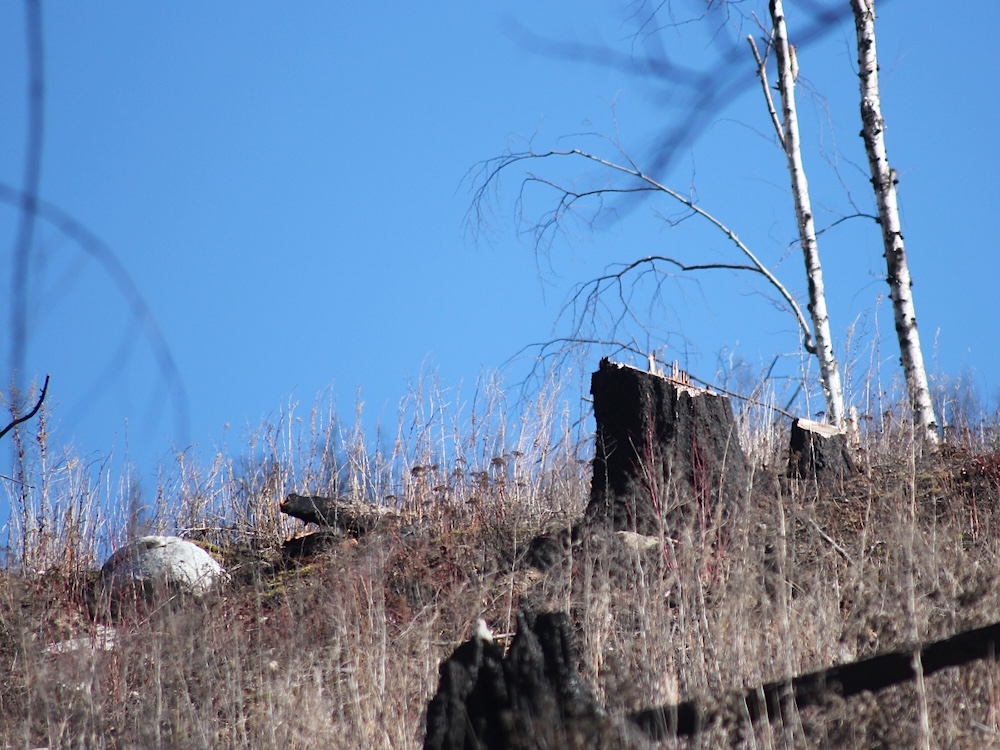
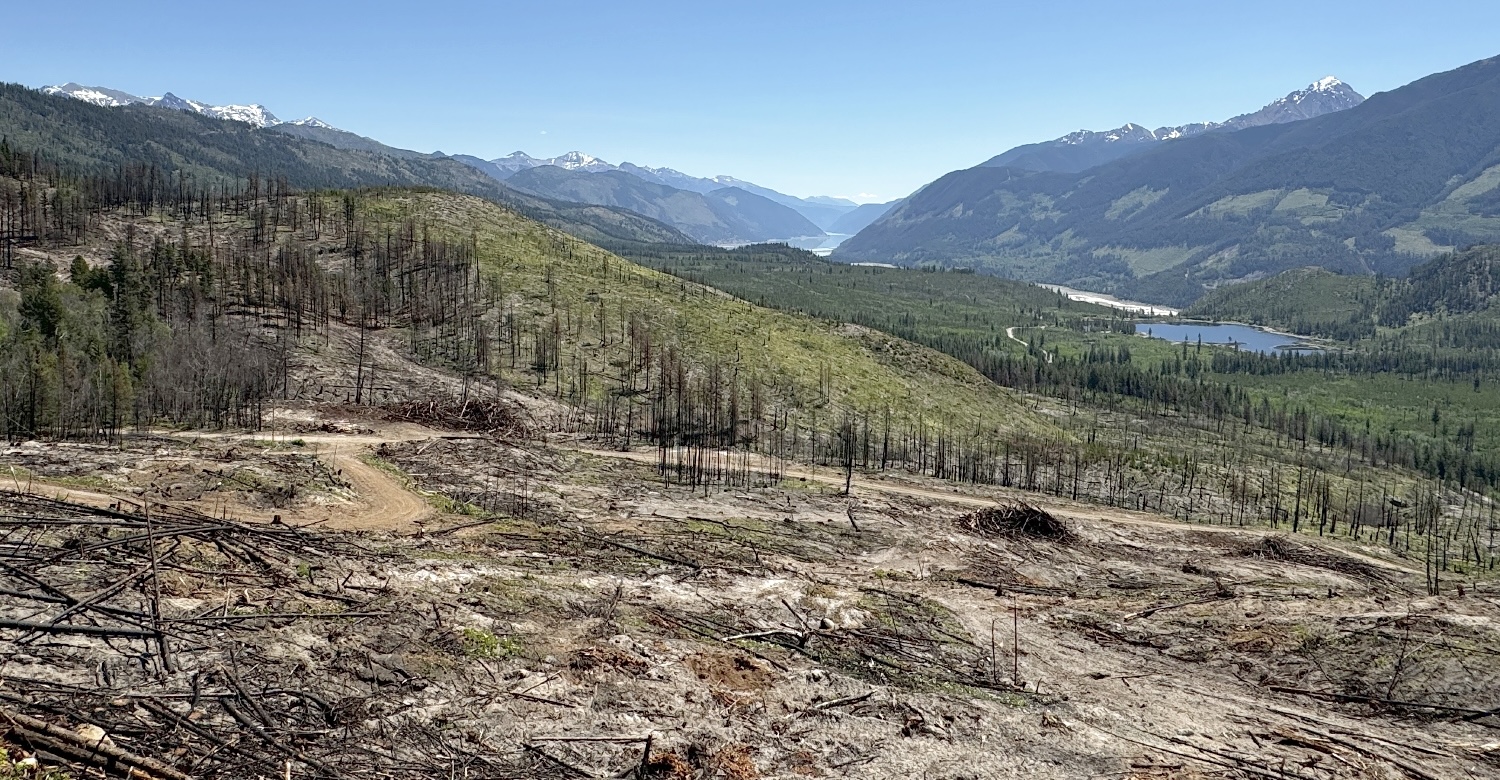
One way he has decided to do that is by expediting the logging of forests burned in recent wildfires.
“We can’t let a single log go to waste in B.C., and that includes logs that have burned in wildfires that can instead be used in local mills,” Parmar said in January. “This is how we protect workers... and [find] new opportunities to keep forestry operations running.”
Later that month, he issued the Fort Nelson First Nation a new licence to log 100,000 cubic metres of trees in burned forests in B.C.’s remote northeast corner.
“They are taking control of their forestry future, recovering value from wildfire-impacted forests,” Parmar wrote in a LinkedIn post after the deal was inked.
Parmar has been encouraged in such thinking by the industry he regulates.
A leaked draft of a letter sent to Parmar last fall and obtained by The Tyee shows that a number of industry associations, including the Council of Forest Industries, asked him to set “definitive, aggressive timelines for completion” of plans to accelerate logging in burned forests.
The letter urged Parmar to issue new wildfire salvage logging approvals in the first quarter of 2026 with priority given to sites where plenty of trees were not badly burned and still had good wood to make lumber.
But there is a big risk to doing so, and both the forest industry and Ministry of Forests know it. By increasing “wildfire salvage” of forests, Parmar is travelling down the same road that has seen B.C.’s logging rates plummet by more than half since the heyday of the 1980s.
One of the main tasks Premier David Eby gave Parmar when he named him forests minister was to find a way to sustain logging rates at 45 million cubic metres of trees per year. A year into his mandate, Parmar has failed to deliver.
There has been a slight decline in the overall number of trees logged in B.C. since Parmar took over, according to logging numbers available on a searchable database and analyzed by The Tyee. The figures show 41.4 million cubic metres of trees were logged in 2025, down from 42.3 million cubic metres in 2024.
Eby’s office did not respond to repeated questions about whether the logging target applies just to Crown lands or also includes private forest lands that largely fall outside Parmar’s authority.
If private lands are excluded, the gap between Eby’s target and B.C.’s recent logging activity widens considerably, with 36.3 million cubic metres logged from public lands in 2024 and 35.9 million cubic metres logged in 2025.
Accelerated logging of burned trees may help bend the curve, but history shows that it is short-lived and comes at the cost of degraded ecosystems and even sharper declines ahead.
Industrial foresters often talk of forests in financial terms. In a balanced “sustained yield” forest, the accumulated tree growth (or interest) is logged each year. In theory, after 80 years one can return to log an area previously harvested. But if you begin logging some of the “principal” as well as that interest, the forest bank account depletes fast. The logging of younger planted trees leads to gaps down the road, especially if living trees along with dead trees are salvaged following insect attacks or fires.
A weaponized response
For more than 40 years, salvage logging has been a staple of B.C.’s forest industry. But until very recently, its focus was on trees killed by beetles, not by fire. The justification for salvage logging was that beetle-killed trees had commercial value, but only if they were quickly harvested.
An early and dramatic example occurred in the early 1980s in central B.C. in response to a spruce bark beetle outbreak in the Bowron Valley. There, a seven-year salvage logging operation resulted in a continuous clearcut more than 100,000 football fields in size.
That gave B.C. the dubious distinction of being home to one of the then-largest clearcuts on Earth.
The logging industry and government would do much the same in the late 1980s in response to a significant mountain pine beetle outbreak on the Chilcotin Plateau west of Williams Lake. More salvage logging followed even bigger pine beetle outbreaks in the 2000s.
The beetle outbreaks were characterized as attacks, and government and the forest industry chose to weaponize logging in response.
There were big differences, however, between the attack and the counterattack.
While the beetles killed millions of trees, they didn’t come remotely close to killing everything. Even in large numbers, dead trees are part of complex ecosystems where the dead and dying feed and shelter the living. With the salvage logging counterattack, all the living trees among the dead trees were also mowed down in clearcuts. They became collateral damage in an ultimately unwinnable war, as the beetles are never going away.
The coming falldown
Another important aspect of the salvage logging was its additive nature. The salvaging came on top of what the companies were already logging.
Ministry of Forests personnel knew this hastened “the falldown effect” — a point at which logging rates fall, sometimes precipitously, because the best, biggest and oldest trees are gone and the trees planted in their place aren’t yet big enough to log.
In emailed responses to questions from The Tyee, ministry officials confirmed this, writing that the declines in logging rates are largely attributable to “the conclusion of salvage harvesting in beetle-affected forests and the transition to harvesting younger stands.”
There was an alternative to this, which was to not accelerate the logging.
In a 2023 lecture, University of Northern British Columbia wildlife ecologist professor Jeff Werner noted that beetles typically attack older trees in spruce-dominated forests. Seen from the air in a helicopter, the grey spires and crowns of attacked trees stand out, suggesting widespread tree death.
But walk into such a forest, and you will find large numbers of younger, living trees primed for a growth spurt when the dead trees’ needles fall and allow more light to reach the ground.
“These are resistant ecosystems to insects,” Werner said. “Within 10 years, you will not even know that an insect hit, because all that secondary structure, those sub-dominant trees which are about the same age as the dominant ones, will be released. That’s resistance.”
However, for many foresters, trees and the valuable wood they contain are all that matters. It’s hard-wired into the profession’s DNA. If fires or beetles threaten that wood, then the response is to log and tree-plant aggressively.
The timber-centric profession will find it difficult to log burned forests at anywhere close to the rate of what happened in response to previous beetle attacks. First, the forest industry is far smaller than it was when logging rates were twice what they are today. Second, the sheer area of forest burned and its dispersal precludes logging anywhere near all of it.
Too much burned to salvage
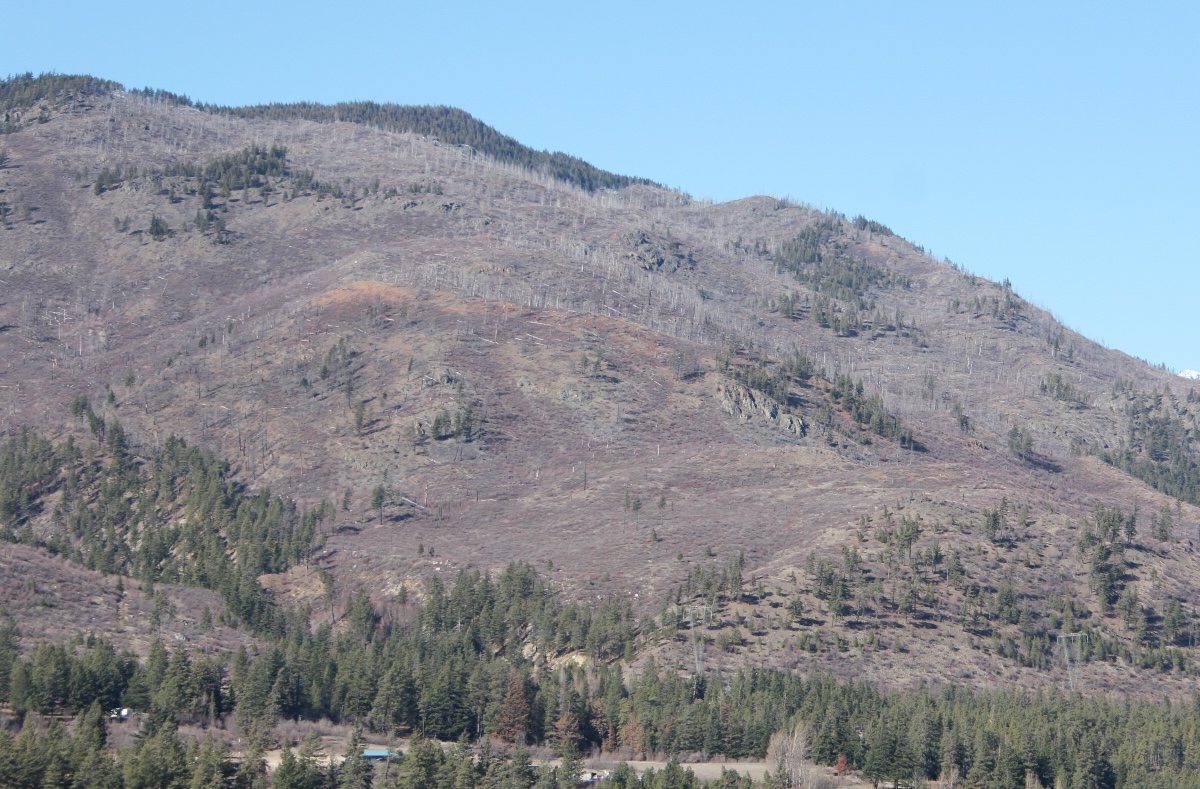
In the Lillooet and Lakes timber supply areas, 15 per cent of the trees in the “timber harvesting land base” have burned, Parmar’s ministry says. The Fort St. John timber supply area is not far behind at 13 per cent, while 11 per cent of forest has burned in the 100 Mile House and Fort Nelson areas.
In all five areas, significant logging occurred long before the uptick in wildfires. In three cases — Lillooet, the Lakes and 100 Mile House — vast tracts of forest were salvage logged in response to the mountain pine beetle. And in all five areas, mills have been closed due to subsequent timber shortfalls.
In many other timber supply areas, including Quesnel, Cassiar, Invermere, Kamloops, Merritt and Williams Lake, more than five per cent of the timber has burned.
All but a small percentage of that burned area is likely to be salvage logged before the trees lose their commercial value.
In the most recent fiscal year, Parmar said, the forest industry processed about one million cubic metres of burned logs, about twice the volume from the year before. That represented about seven per cent of all the logs processed by the industry in 2024-25.
How that number grows remains to be seen. But there are limits. Some companies simply won’t work with burned wood, believing the risks outweigh the benefits.
“We’ve always tried to avoid/minimize processing any burnt wood at our facility. It is hard on the equipment and generally the lumber is lower quality,” Tony Mogus, a senior vice-president and general manager at Dunkley Lumber Ltd., told The Tyee in an email. Dunkley operates the largest lumber sawmill in the province, north of Quesnel.
Words of warning: Log less, leave more
In January 2018, two of the most senior employees in B.C.’s Forests Ministry — chief forester Diane Nicholls and resource stewardship head Tom Ethier — issued a report intended to guide the response to the previous year’s massive wildfires.
In 2017, fires burned one million hectares of forest, a then-record for the province and approximately two per cent of the province’s total forested land base. Another 200,000 hectares of grassland also burned that year.
While Nicholls and Ethier said that it might make sense to log some of the burned forests to recover wood fibre, they said the primary focus should be on what portions of those extensively burned lands were left unlogged.
They noted that salvage logging following fires can degrade forest soils, damage water supplies and alter peak water flows, which increases the risk of severe floods.
They also warned that it might take decades to remediate the damage done by salvage logging in certain watersheds where wildfires had burned and that in the worst-case scenarios the damage done “may be irreversible in the context of forest management time horizons.”
For that reason, Nicholls and Ethier said, logging should be the last consideration in managing burned forests. They said that sustaining forest ecosystems to help restore water quality and wildlife habitat was more important than salvage logging.
They also stressed the need to weigh the cumulative impacts of logging, beetle outbreaks and wildfires, and consider the risk that more salvage logging could push already stressed ecosystems beyond the breaking point, to say nothing of plummeting timber supplies.
Where post-fire salvage logging did occur, Nicholls and Ethier said, every effort should be made to minimize the impacts to timber supplies by shifting logging out of unburned forests into forests that had burned.
Maps accompanying their report vividly highlighted the three biggest fires to burn in 2017 — the Plateau Complex fire near Quesnel, the Hanceville-Riske Creek fire near Williams Lake and the Elephant Hill fire near 100 Mile House. All those fires burned in areas that had earlier been subject to widespread beetle salvage logging.
The colour-coded maps illustrated the average tree age in the forests that had burned. Although many burned trees were more than 140 years old, the fires also affected tree plantations less than 60 years old, with many of the younger forests the result of previous salvage logging.
A new round of salvage logging in response to fires could easily set the stage for more plantations burning down in future years, making Parmar’s job of finding trees to cut down even more of a challenge than it already is. ![[Tyee]](/design-article.thetyee.ca/ui/img/yellowblob.png)
Read more: Labour + Industry, Environment




Tyee Commenting Guidelines
Please note that email notifications for replies are not currently working due to a software issue which may be resolved in a future update.
Comments that violate guidelines risk being deleted, and violations may result in a temporary or permanent user ban. Maintain the spirit of good conversation to stay in the discussion and be patient with moderators. Comments are reviewed regularly but not in real time.
Do:
Do not: