


 SHARE:
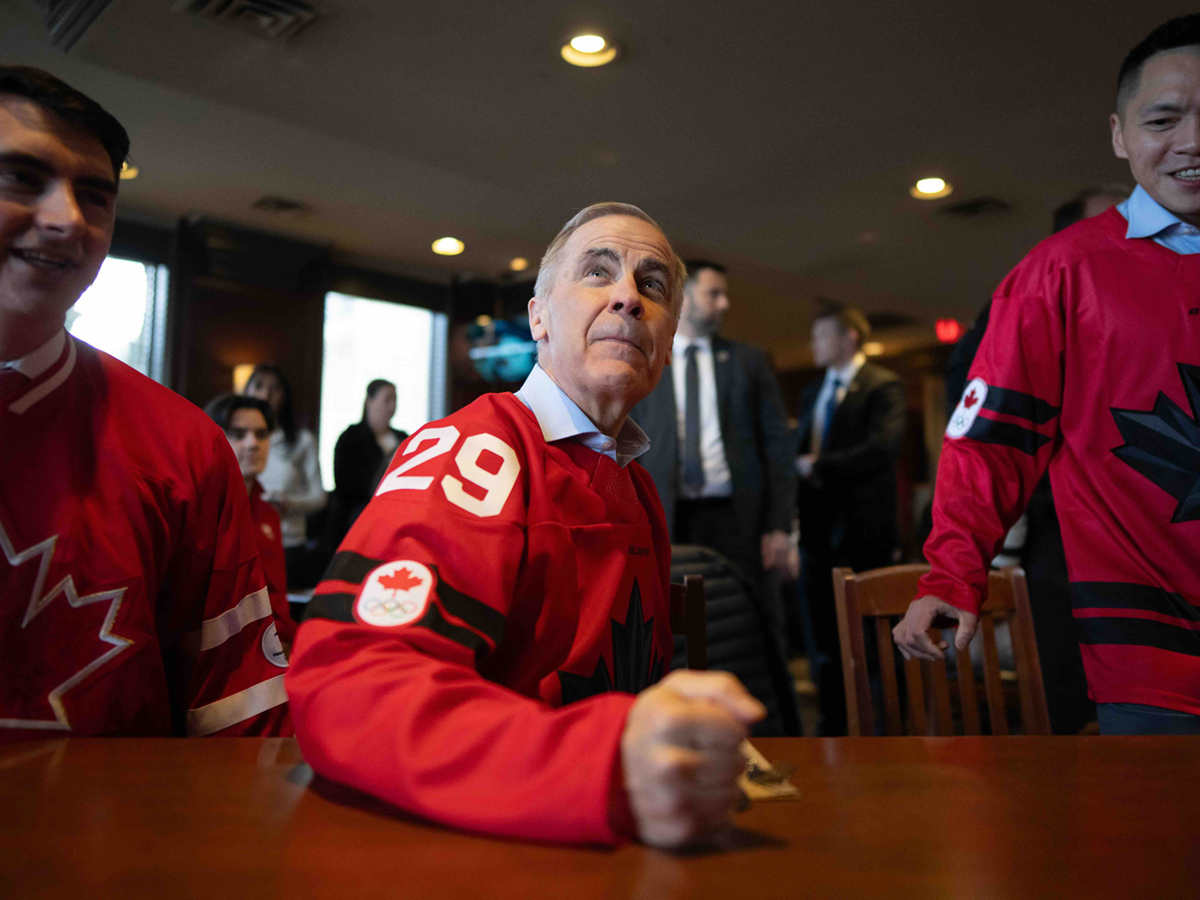
Prime Minister Mark Carney was born in March 1965, when Canada, like the United States and Europe, was still enjoying the “30 glorious years” of prosperity following the Second World War.
As one of the very last baby boomers, Carney was lucky to get to Harvard University, and then to Oxford University, for advanced degrees. Government support for universities and their students had been enormous in the late 1950s and 1960s, but it began to weaken in the 1970s.
By then, the postwar boom was weakening also, and young Mark Carney would have gone through high school in Edmonton during the stagflation of the late 1970s and the bitter recession of the early 1980s. Those experiences doubtless helped shape his views as an economist and central banker.
In his book Value(s): Building a Better World for All, Carney tells us that “the Thatcher-Reagan revolution fundamentally shifted the dividing line between markets and governments. To be clear, this change of direction was long overdue following the steady encroachment of the state into market mechanisms.… After an initial period of adjustment, productivity growth picked up and aggregate incomes rose, but inequality also soared and values changed.”
According to American anthropologist David Harvey, neoliberalism wants to establish a free-market economy that transforms into a free-market state, in which even institutions and resources like education and the environment become subject to market forces. The state’s job is then to leave the market alone.
In his book, Carney supports the market economy but not the market state.
Yet Carney also writes: “More equal societies are more resilient, they are more likely to invest for the many, not for the few, and to have robust political institutions and consistent policies. And few would disagree that a society that provides opportunity to all of its citizens is more likely to thrive than one which favours an elite, however defined.”
Is he neoliberal or egalitarian?
So the question now is whether Carney’s policies will reflect the neoliberalism in which he has thrived all his adult life, or the egalitarianism that he argues promotes real economic growth.
Critics assert that neoliberalism leads to “secular stagnation,” an economy in which growth is low, investment and productivity fail to rise, and income inequality rises all too high.
Canada is now in a “structural trap” making stagnation permanent, according to Simone Zhenting Mao, a graduate student at Harvard. Writing in Perspectives, a publication of the Broadbent Institute, Mao argues that income inequality drives our stagnation through three channels:
1. Reduced household consumption due to top-heavy income distribution;
2. Erosion of labour power weakening wage growth and demand; and
3. A disconnect between rising profits and falling productive investment.
Hard times for the top one per cent
According to Statistics Canada, Canada’s top-earning one per cent received 13 per cent of all Canadian income between 1920 and 1940, peaking at 18 per cent in 1938. Wartime taxation brought this down to 10 per cent by 1944, and by 1978 top earners were scraping by on just under eight per cent of all Canadian income. The 30 glorious postwar years were hard times for Canada’s one per cent.
Neoliberal policies lifted the top one per cent to almost 14 per cent of Canadian income by 2007, and after the economic crisis of 2008 the percentage dropped slightly to about 12 per cent.
Meanwhile, Statistics Canada says, “From 1982 to 2014, the proportion of market income earned by the bottom half of earners fell by 28 per cent. Meanwhile, the share earned by the top half increased by five per cent. The largest gains were made in the highest earning brackets. The top one per cent saw their share of income rise by 53 per cent, the top 0.1 per cent by 90 per cent and the top 0.01 per cent by 133 per cent.”
As dramatic as this sounds, inequality in the United States increased far more. An analysis published in the journal Canadian Public Policy in May 2025 noted that “the average income of the top one per cent in Canada in 2019 was roughly 40 per cent of the United States’ [top one per cent].”
Rather than trickling down from the top one per cent in the form of investments and jobs, the wealth transferred from working- and middle-class Canadians over the past half-century has tended to stay at the top in the form of savings and investments overseas. We just haven’t been robbed quite as thoroughly as our American cousins.
Still, we have indeed been robbed. According to a report from Canadians for Tax Fairness, in 1949 the top income tax bracket, federal and provincial combined, was 84 per cent.
The very rich get the real welfare
Then in 1972, the report says, “a major tax reform significantly reduced income taxes on the very wealthiest — the top marginal rate was cut from 82.4 per cent to 61.1 per cent. The government’s own calculations showed that the largest beneficiaries of this reform would be those with the highest incomes. Further major tax cuts were implemented in 1982 and 1987, cutting the top combined marginal tax rate to 51.1 per cent.”
Furthermore, the report says, “When we look at after-tax incomes, the amount of money in the pockets of the bottom 50 per cent has increased by 254 per cent since 1982, slightly more than the increase in the cost of living.
“But what about the incomes of the other half of the population? Well, excluding the top one per cent, the top half of earners have not done any better, their incomes have increased by 242 per cent. However, the top one per cent have increased their after-tax incomes by 511 per cent and the top 0.01 per cent by 942 per cent.”
The question now is whether Mark Carney’s budget will begin to narrow the income gap between Canada’s rich and poor. And the answer seems to be: not really.
In an article published by BC Policy Solutions, Alex Hemingway writes:
At a time of record income inequality in Canada, the government has shown little interest in ensuring the wealthiest few contribute more to the common good. As our research finds, a moderate wealth tax on less than one per cent of the richest Canadians could raise $39 billion in its first year and half a trillion dollars over a decade.Instead, the government has abandoned an even more modest capital gains tax reform — at a cost of $19.4 billion over five years — that would have partly addressed one of the most unfair elements of Canada’s tax system. Under the status quo, income from capital gains (accrued mostly by the richest Canadians) is taxed at half the rate of income from wages and salaries that most working people earn.
This budget also prioritizes a slew of corporate tax breaks, even as Canada has a marginal effective corporate rate that the Department of Finance estimates was already lower than the U.S. as well as OECD and G7 averages.
51 points is a real tax cut
Meanwhile, RN Mabira Professional Corporation notes that the lowest federal marginal tax rate in 2026 will be 14 per cent on incomes up to about $58,523 — a drop of one whole percentage point from 2025. The next highest bracket, up to $117,045, is 20.5 per cent; then 26 per cent on income up to $181,440, 29 per cent on up to $258,482, and 33 per cent on all incomes above that amount — 51 points less than the top rate of 1949.
So we are not likely to see the equalization that Carney himself says would raise our GDP. In fairness, we are deep enough in the neoliberal abyss that a single budget would not lift us all out of it. Carney has at least paused our descent.
But it would have been encouraging if he had at least taken steps toward building the structures that would help create greater equality: affordable post-secondary and trades training, a larger and better-resourced health-care workforce, more investment in renewable energy and climate resilience.
If Carney does start rebuilding the structures of equality, then more bright young Canadians will rise as Carney did to recognize the value of our great institutions of science, medicine and finance. And they, not Carney, will build a more prosperous and egalitarian Canada.
*Story updated on Feb. 27 at 5 p.m. to reflect that the capital gains tax increase was cancelled in 2025 and will not go into effect in 2026. ![[Tyee]](/design-article.thetyee.ca/ui/img/yellowblob.png)
Read more: Education, Federal Politics











Tyee Commenting Guidelines
Please note that email notifications for replies are not currently working due to a software issue which may be resolved in a future update.
Comments that violate guidelines risk being deleted, and violations may result in a temporary or permanent user ban. Maintain the spirit of good conversation to stay in the discussion and be patient with moderators. Comments are reviewed regularly but not in real time.
Do:
Do not: