




 SHARE:
- No ‘I’ in Team: Party Loyalty in Canadian Politics
- University of Toronto Press (2025)
Across Canada, elected representatives are opting to toe the party line on major discussions about the future of the country — or even to sit out the debates entirely.
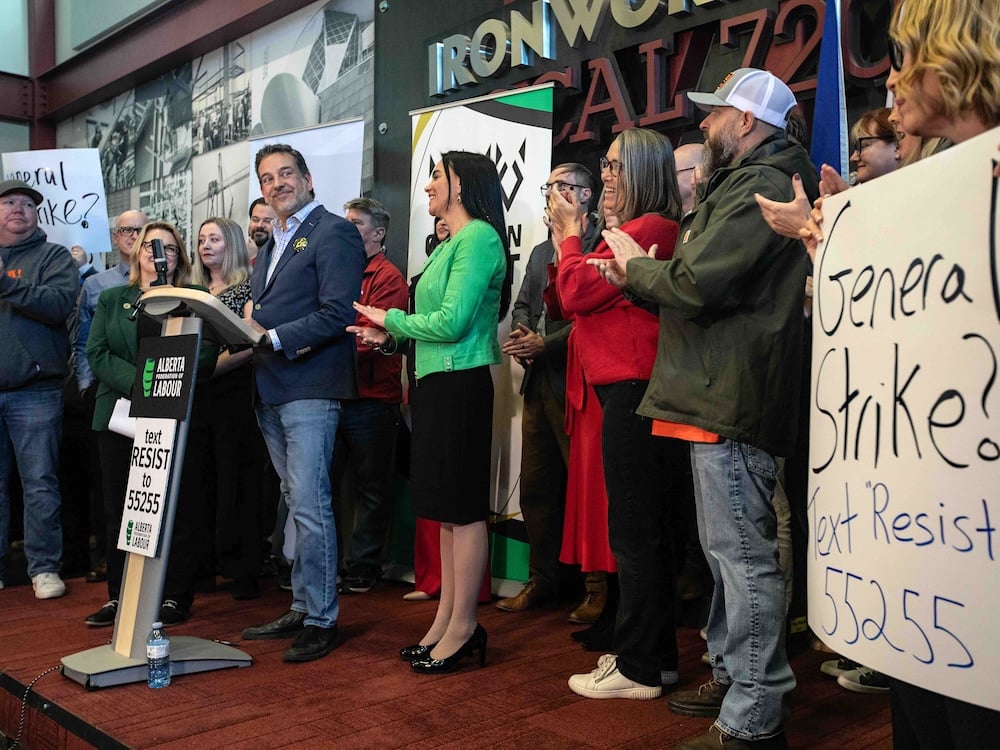
Take recent events in Alberta. Bill 2, or the Back to School Act, ended a provincewide teachers’ strike by imposing a contract and ordering more than 50,000 teachers back to work. Most government MLAs chose to remain silent throughout the entire dispute.
The incident drew national attention because the government also invoked the Charter of Rights and Freedoms’ notwithstanding clause to remove the teachers’ Charter right to strike.
But the other half of the story is the process: party discipline helped push the law through the legislature in record time. For Canadians elsewhere, Bill 2 is a window into how hyper-partisanship and polarization can weaken the checks and balances meant to restrain premiers and prime ministers from acting unilaterally.
Here’s what happened in practical terms: the government moved the bill from first reading to final passage in less than 12 hours, after which teachers were ordered back and a four-year agreement was set in law.
Approved by members of the government caucus, debate windows were cut to just one hour and concluded in the early hours of the morning.
The speed mattered as much as the substance: it limited the chance for MLAs to probe details, air local concerns or test alternatives in public. It also sidestepped an important constitutional responsibility. According to the notwithstanding clause, legislatures — not cabinets or premiers — are charged with removing Canadians’ rights.
Critics of Premier Danielle Smith’s United Conservative Party say that duty is meant to be exercised after meaningful debate.
Why would a legislature — whose members are elected to debate, amend and oversee — vote to shorten its own deliberation on bills, particularly those that affect fundamental freedoms?
Our research in our book No “I” in Team: Party Loyalty in Canadian Politics points to a simple, powerful answer: hyper-partisanship has evolved from traditional “party discipline” (voting together) into “message discipline” (speaking together).
Leaders and their entourages co-ordinate what caucus members say and do, reward conformity and punish dissent.
In that environment, opposing fast-tracked legislation can feel like deserting “the team.”
Where moving quickly is easier than debating in public
Message discipline reshapes everyday incentives inside caucus.
Rather than seeing alternative arguments as quality control, members learn to treat them as obstacles. Rather than pushing for extended committee study or open negotiation, they face heavy pressure to back procedures that guarantee quick passage and limit the ability of opposing parties to weigh in. This means members of the governing caucus sometimes choose to silence themselves to prevent their opponents from engaging.
Over time, MLAs become more willing to trade their own leverage — floor time, clause-by-clause scrutiny, amendments — for the promise of team unity.
Bill 2 shows how those incentives and tools play out in real life. The government framed speed as a virtue and unity as a necessity; caucus members delivered both. The result was swift law-making on a file with broad public impact and limited room for local voices or cross-party problem-solving.
None of this depends on one leader or one issue. Once normalized, the approach can be applied to labour disputes, health-care reforms, school governance or tax changes — any area where moving quickly is easier than debating in public.
But when disagreements are handled through discipline rather than deliberation, conflict doesn’t disappear. It often relocates, sometimes spilling outside the governing caucus. This is made more likely when constituents pressure their representatives to act as delegates rather than partisans.
Symptoms of message discipline at work
Earlier this year, United Conservative Party MLA Peter Guthrie resigned from cabinet and was expelled from caucus after sustained criticism of his party’s ethics record.
He has since emerged as a steady critic of the government, assuming the role as an Independent MLA that Canada’s parliamentary traditions intended all representatives to play: holding the government to account through members’ statements and question period. That he felt unable to do so within cabinet or caucus is a symptom of the hyper-partisanship we cover in our book.
For those beyond Alberta, that’s why Bill 2 matters. The notwithstanding clause justifiably drew the most attention, but it isn’t the whole story. Canadians need to pay attention to how hyper-partisanship pushes parliamentarians into decisions that mute their own roles as delegates of their constituents, overseers of government and trustees of the public good.
When legislatures are organized as team locker rooms first and democratic institutions second, elected representatives are more likely to support rule changes and time limits that make government faster and more centralized, and less likely to insist on the public work that tests ideas before they become law.
In that sense, Bill 2 is a case study, not an outlier. The mechanics are portable.
Watch for the telltale signs in other parts of the country: tight debate clocks, late-night sittings, caucus silence in constituencies and message unity presented as proof of strength. Our research suggests those are the symptoms of message discipline at work — and the reason Canadians across the country should pay attention to what happened in Alberta.
![[Tyee]](/design-article.thetyee.ca/ui/img/yellowblob.png)











Notice about commenting changes
The Tyee’s commenting system will be moving to a new platform on Nov. 12. If you’re already a Tyee commenter you must register with the new system on or after Nov. 12 with your preferred username.More information can be found here.