

 SHARE:
When I was in grad school at Simon Fraser University over 50 years ago, war was very much on my mind.
I had grown up in the Cold War. On the last Friday morning of the month, Santa Monica tested its air-raid sirens. We had done duck-and-cover exercises in school, but by the late 1950s everyone understood how futile they were.
In the early 1960s I volunteered for the draft and went into the U.S. army just before President John F. Kennedy was shot. In 1963, the enemy they taught us about in basic training was somebody named “Charlie,” probably Asian. A year or so later, Charlie was definitely Vietnamese. And pretty soon, whole units at my base were being ordered there.
This was a shock; before then, you had to volunteer and stand in line to get to Vietnam, and those who did were considered idiots. By the end of my hitch, thousands of young Americans were in Vietnam; we stay-at-homes got to watch army movies about “strategic hamlets” where good peasants were protected from marauding Viet Cong.
By the end of my hitch, some soldiers I knew were thinking seriously about deserting if they were ordered to Vietnam.
I wasn’t one of them, because my hitch was almost over. Once out in civilian life, I realized much of my whole generation was bitterly against the war. I spent time marching in enormous demonstrations through the streets of San Francisco and then went home to hear the news on the public radio station KPFA: “Today, B-52 bombers based in Guam attacked targets in North Vietnam,” the broadcaster said.
War as redemption?
Before we knew it, my wife and I were in Vancouver, where college teachers were in such demand that even a novice like me with just a bachelor of arts could get a job — provided I also got the master’s degree as soon as possible.
So there I was at SFU, where one of my profs had written a good book on the First World War in the American novel. I decided to do the same for Canadian novels, with a focus on books published in the war years up to the mid-1920s.
Most of those published between 1915 and 1918 were pretty well straight propaganda: baffled Canadians start to follow the war news and enlist when they’ve read the atrocity stories about mutilated nuns and the famous but fictional Canadian sergeant found dead, crucified with bayonets against a barn. The novels emphasized war as redemption for a lazy, materialistic society, an opportunity for young men to prove their manhood as women were demanding new rights.
The war ended and the troops came home, but Canada’s postwar novels had none of the disillusion of Ernest Hemingway’s A Farewell to Arms or E.E. Cummings’s The Enormous Room.
The Canadians had fought a longer war but still thought it had been worth the horror and carnage.
Not until 1930 would a Canadian novel, Generals Die in Bed, portray the war as a vicious deception in which soldiers were told of fake atrocities and sent out to die trying to avenge them. (The author, Charles Yale Harrison, was an American who fought in the Canadian Army. Canadian reviewers and veterans hated the novel.)
A dramatic change in returning soldiers
But the war novels of the early 1920s did show a dramatic change in the men who came home from the trenches. They would not talk much about their experience with friends and family, people who had only read about the war in newspapers.
For example, in his novel Dennison Grant, Robert J.C. Stead describes how returned veteran Grant sits down with friends eager to hear about his war experiences.
It doesn’t happen:
Grant proved uncommunicative, and perhaps, in a sense, disappointing. He preferred to forget both the glories and the horrors of war; when he drew on his experience at all it was to relate some humorous incident.... He was conscious of a restraint which hedged him about and hampered every mental deployment.
In Basil King’s novel The City of Comrades, his hero Frank Melbury can’t talk about the war either:
Day and night I think of what I saw and heard and did in those two years, but some other language must be coined before I can begin to speak of it.... I have heard returned soldiers on the lecture platform, telling part of the truth and nothing but, but never the whole truth nor the most vital truth. I have talked with some of them when the lectures were over, and a flare in the eye has said, “This is for public consumption; but you and I know that the realities are not to be put into words.”
This is now known to be typical of people with post-traumatic stress disorder, or PTSD. They work hard to avoid anything that might remind them of their trauma.
Other symptoms of PTSD can be physical. In Bertrand Sinclair’s 1924 novel The Inverted Pyramid, his hero Rod Norquay furiously damns the war and its makers with their “wrangling over coal and iron and oil and indemnities, as if that was what we fought for.”
Then he suffers what seems to be a heart attack, in a passage I completely misunderstood. Lying in bed, Rod feels his heart stop:
... by some supreme effort of a body dying if not already dead he twisted himself sideways, set his feet upon the floor, hauled himself erect by a bedpost.... No pulse, scarcely a breath; speechless. He could not utter a sound.
Then, jesting at scars though I’d never felt a wound, I commented: “By an act of will, Rod drives his failing body out of the room, and by stamping down a flight of stairs he manages to ‘pop-start’ himself, so to speak.”
Feeling that one’s heart has stopped, or is about to, is actually a fairly widespread symptom of PTSD, a term that would not be coined until 1980.
Sure, I thought I knew about “shell shock” and “battle fatigue,” but I thought of them as rare cases.
Meanwhile, soldiers were returning from Vietnam in the thousands with similar symptoms, and some of them were Canadians. (It’s a little-known fact that between 20,000 and 40,000 Canadians went south to take part in Vietnam, about the same as the number of Americans who came north to avoid it.)
A thousand-yard stare
In one of my classes I had such a returned veteran. He was a good-looking, intelligent young guy, and he had the first thousand-yard stare I had ever seen. It wasn’t the last.
It’s now estimated that about seven to 13 per cent of U.S. combat veterans experience PTSD during or after their service.
According to Veterans Affairs Canada’s website, about nine per cent of all Canadians experience PTSD, and “certain types of trauma, such as sexual assault and combat, can cause even higher rates of PTSD.”
We now understand that many of our social ills — alcoholism, substance abuse, mental illness and general medical problems — stem from some kind of trauma. One study estimates 27 per cent of all homeless people suffer from PTSD.
PTSD was likely just as prevalent a century ago, even before the First World War, but no one bothered to notice. With the war, though, surviving combatants recognized the yawning gap between the rhetoric of war heroism in newspapers and fiction and the completely unheroic experience of modern war.
Canadian novelists could hint at that gap through the silence of their returned veterans, and Sinclair’s description of Rod Norquay’s terror as he tries to “restart” his heart. But that was the only description I found in dozens of novels.
A nameless scourge
Veterans of the First World War who came home with PTSD had no name for it, no way to deal with it, as they carried on through the 1920s, the Depression and the Second World War. It must have scourged the lives of many and those of their families.
Many younger Canadians, traumatized by the Depression and their own war, no doubt came home in equally bad shape. They and later generations have suffered through an unrecognized public health disaster.
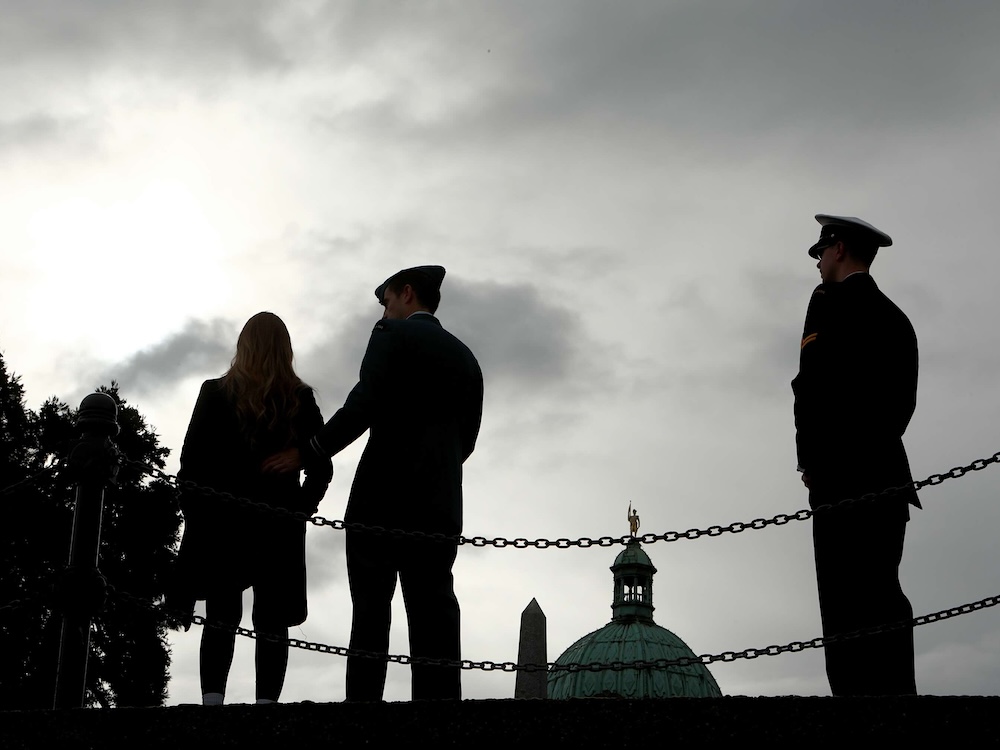
And now, a century later, we plan to spend more billions on the military, to expand our reserves, because yet another war is looming. This time, however, we’ll all know what our soldiers are getting into, and that they won’t come home unscarred down a “Highway of Heroes.”
Wars may end in victory or defeat, but peace will come only when we can truly care for one another. ![[Tyee]](/design-article.thetyee.ca/ui/img/yellowblob.png)





Notice about commenting changes
The Tyee’s commenting system will be moving to a new platform on Nov. 12. If you’re already a Tyee commenter you must register with the new system on or after Nov. 12 with your preferred username.More information can be found here.