


 SHARE:
British Columbia is facing big social and environmental challenges ahead of Budget 2023: sky high rents, health care under enormous strain, a toxic drugs crisis, climate disruption and the need to build and rebuild crucial but eroded public services (to name a few). The good news is that B.C. has more than enough fiscal and economic capacity to increase critical public investments to address these crises, even with a possible recession on the horizon.
The province is closing out the current fiscal year (2022-23) with a multibillion-dollar budget surplus, much of which could be used to pre-fund priority investments under the new premier. While the province’s most recent projections show modest deficits in the following two years, a closer look reveals that these are far more than offset by an estimated $14 billion in "fiscal padding" that is tucked away in the budget over that same period.
If the economy does turn south in 2023, the government must shift its mindset and not be afraid to run a budget deficit both to meet important social objectives and to help stabilize demand. B.C.’s long-running overly cautious budgeting practices are a problem in this regard, with a bias toward debt repayment and against badly needed public spending.
In fact, B.C.’s provincial government operating spending has declined substantially as a share of our total annual economic output or GDP over the past two decades. B.C.’s long-running overly cautious budgeting practices are a problem.
If we want to increase public spending to tackle big challenges, we have the economic capacity to do so. Ambitious public investment can be funded in part by more robust taxes on high incomes, corporations and wealthy landowners, with the dual benefits of raising revenue and reducing extreme inequality.
A promising area for increased investment is housing, where we will be watching to see the details of Premier David Eby’s promised BC Builds program. The key question will be whether its public and non-market housing construction targets and funding match the scale of the crisis, and whether they include enough deeply subsidized homes for those who are living in poverty.
The government has hinted it may finally bring in a promised renters’ rebate as a counter to the unfair home owner grant which now goes to owners of properties worth as much as $2.1 million. Alternatively, the $900 million in home owners' grant revenues could be repurposed as a new housing grant aimed at people with low to medium incomes and applied to renters and owners alike.
Government efforts to address affordability to date have been modest and scatter-shot, including $110 per driver through ICBC and $100 per household through BC Hydro — both of which have gone to lower income and high income households alike. Only a couple of small one-time measures target those with lower incomes: $164 per adult and $41 per child receiving the Climate Action Tax Credit; and $175 per child for those receiving the BC Family Benefit.
The B.C. government needs to think bigger when it comes to addressing poverty in the province. This includes additional investments aimed at housing people living on the street or in parks, but it also means raising shamefully low welfare and disability assistance rates to at least bring these incomes up above the poverty line. While welfare rates were increased modestly during COVID-19, they remain inadequate, especially in the face of higher inflation.
To strengthen the rights of all workers, especially those on low wages and in precarious positions, employment standards should be enhanced and funding increased to enforce them.
An area of impressive progress in recent years has been the unfolding public child-care system, which has seen an increase in $10-a-day spots and a huge across the board fee cut in 2022. But child-care spaces are still scarce and early childhood educators in short supply. Budget 2023 needs to enhance wages for ECEs to support recruitment and retention, increase capital investment in new public spaces, and stop the expansion of the private, for-profit sector in what needs to be a universal public education service.
The B.C. government needs to think bigger when it comes to addressing poverty.
Our health-care system is another area where staffing shortages need to be urgently addressed and public provision expanded in areas like primary care, seniors care and surgical capacity, rather than the encroachment of wasteful and inequitable corporate medicine.
The toxic, unregulated drug supply continues to drive accidental overdose and overdose deaths, killing six B.C. residents a day. We urge the B.C. government to invest in evidence-based, voluntary interventions to stop these wholly preventable deaths and their devastating impact on communities. Specifically, B.C. needs an immediate and drastic expansion of pharmaceutical-grade alternatives to the illegal drug supply (“safe supply”), particularly in regions where residents face multiple barriers to accessing harm reduction services.
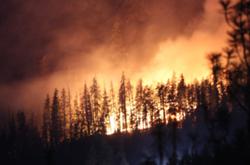
B.C. also needs to step up its action on climate change, energy and natural resources, areas that are highly interconnected. The government’s CleanBC plan lacks the urgency demanded by the times and stands in contradiction to B.C.’s LNG export plans. Accelerated timelines for action accompanied by higher levels of investment in buildings, transportation and clean technology should be a top priority. In addition to reducing our emissions, the 2021 extreme weather disasters (which we estimate cost the province between $10.6 and $17.1 billion) highlight the need for major infrastructure investments in dikes, fire suppression and other adaptation measures to increase B.C.’s resilience. The better our infrastructure is today, the less must be spent to address tomorrow’s climate disasters.
Budgets are always about the choices we make as a society. Failing to go big on public investment now would only weaken our economy in the years ahead, while failing to meet the urgent challenges we face. The good news is that our moral and economic compasses are pointing in the same direction. ![[Tyee]](/design-article.thetyee.ca/ui/img/yellowblob.png)
Read more: BC Politics






Tyee Commenting Guidelines
Comments that violate guidelines risk being deleted, and violations may result in a temporary or permanent user ban. Maintain the spirit of good conversation to stay in the discussion.
*Please note The Tyee is not a forum for spreading misinformation about COVID-19, denying its existence or minimizing its risk to public health.
Do:
Do not: