


 SHARE:
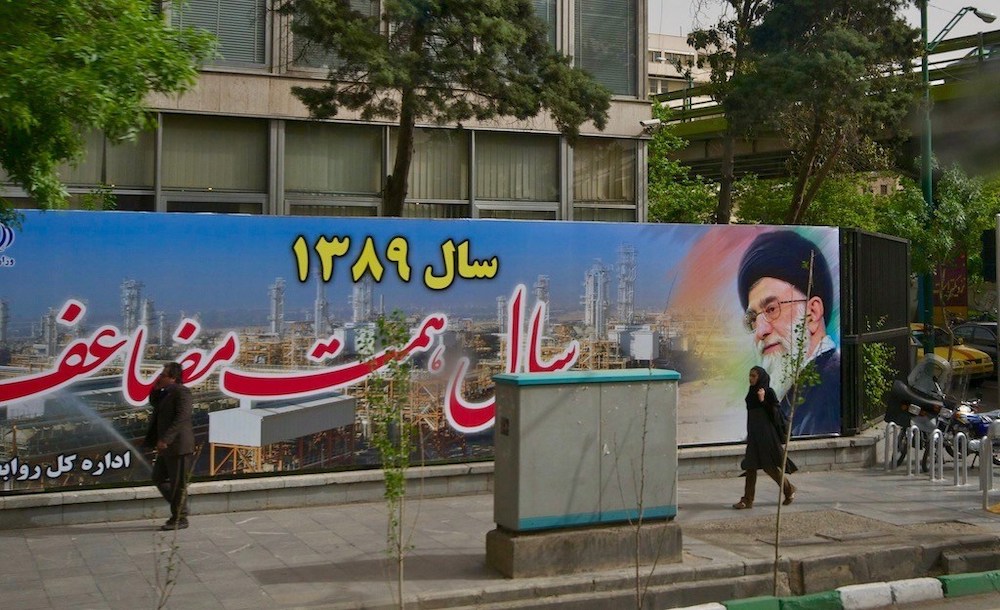
Here we are, a small, northern country far from the nexus of Europe, Asia and Africa that we call the Middle East. We have few strategic links to the region, but for the last 30 years we have been repeatedly pulled into wars there. Now we are on the edge of yet another war, this against the 80 million people of Iran.
But war has changed since Saddam Hussein rolled into Kuwait in 1991, and U.S. president George H.W. Bush rolled him right back. We’re not dealing with massed tanks and carpet bombing. We’re certainly not dealing with George W. Bush’s 2003 invasion of Iraq with all its shock and awe.
We’re dealing with what you might call artisanal warfare: causing death in small but politically dramatic numbers.
It’s quite a change. The Second World War was fought by commanders like U.S. General George S. Patton and Soviet Marshal Georgi Zhukov, masters of vast armies fighting on a vast scale. But it was won by bespectacled scientists who built the first atomic bombs. Nuclear war was obviously, and literally, self-defeating. And so, warfighting evolved.
For half a century we had proxy wars, funded by great powers hiring one or another faction in some strategically useful country. When the great powers themselves got involved, the results were usually disastrous: the U.S. in Korea and Vietnam, the Soviets in Afghanistan.
The rise of asymmetrical warfare
The Second World War had been won with big armies, however, and the victors still cherished them. However awful a big-army war might be, it would be better than the mutually assured destruction of a nuclear exchange. Still, military colleges began to think about “asymmetrical warfare” of the kind that the North Vietnamese had waged against the U.S. and the Afghans against the Soviets. The winners had had outside aid, but they’d won despite the vast military superiority of their adversaries. And it was still state-to-state warfare.
Iran’s theocratic government was a pioneer of artisanal warfare. Even back in 1983, Shiite Islamist terrorists, associated with Iran, had run a truck bomb into a U.S. Marine barracks in Lebanon, killed 241 Marines, and driven Ronald Reagan right out of the country. But it was a sideshow: Iran was also fighting a stupid re-enactment of the First World War against Iraq, losing hundreds of thousands of soldiers, and gained nothing.
But the lesson of Lebanon wasn’t lost on others. In hindsight we can see that the first declaration of artisanal war was made on Sept. 11, 2001. A small group of well-funded, adequately trained, fanatical young men could not inflict strategic harm to the U.S., but they could do plenty of psychological damage. They knocked the world’s greatest superpower off balance, and it has never regained equilibrium.
Instead, the stressed Americans reverted to the Second World War and launched an old-fashioned war against Afghanistan and then Iraq. Tanks and infantry alike ended up in a classic quagmire, and there they remain.
Entrepreneurs of violence
The Americans were still thinking of war as a state-to-state slugfest in which firepower and economic muscle would decide victory. But their real enemies were “non-state agents,” private entrepreneurs of violence working like a swarm of wasps inside Sir Galahad’s shining armour. Artisanal warfare was a logical evolution of asymmetrical war.
Qassem Suleimani fought in the Iran-Iraq war, and learned from it, and became a master of post-9/11 artisanal warfare. While Iran’s theocrats were massacring their people in the 2009 post-election riots, Suleimani was hiring Shiite Iraqi militias to extend Iranian influence in Iraq — and then in Syria after 2011.
When ISIS erupted out of nowhere, Suleimani brought aid to the Kurds and Iraqis when no one else would. He then directed the war (with tacit American cooperation) that defeated ISIS — at least until U.S. President Donald Trump pulled American troops out so the Turks could attack the Kurds and give ISIS time to regroup.
Send in the drones
The Americans, meanwhile, have tried to fight the artisans with technology, notably the drone. It suited their military doctrine, based on the principle that George S. Patton expressed: not to die for one’s country, but to make the other son-of-a-bitch die for his. Artisanal war, by contrast, regards suicide as a useful tactic.
So drones let some kid on a remote U.S. base play war games on a screen, blowing up Muslim terrorists and wedding parties with equal ease. Fewer Americans come home in boxes from the new forever war.
Killing Suleimani was like a computer beating a go master at his own game, the hi-tech murder of an artisanal murderer. But artisans have many apprentices, and we are likely to see what Suleimani’s can do in the near future.
I would expect more wasps inside our armour. Americans overseas might board a Mediterranean cruise ship that explodes and sinks under them. Some American embassy staffer in South Asia or Africa could be kidnapped and forced to post pleas for her release on YouTube. The naked corpse of some defence-company lobbyist or Congressional staffer might be found near the Capitol in Washington, D.C. Yet more embarrassing documents about Donald Trump might be leaked to the media.
Meanwhile, Iran’s enemies in the Gulf like Saudi Arabia and the United Arab Emirates would have to watch for more missile attacks from Yemen on their oil refineries, or the revelation of embarrassing secrets about Saudi Crown Prince Mohammed Bin Salman.
If Trump’s government blamed the Iranians and counter-attacked, whether with drones or cruise missiles, it will likely prove futile. As would larger-scale assaults like those on Afghanistan and Iraq — yet another trillion-dollar fiasco of blood and destruction. Alberta Premier Jason Kenney might briefly rejoice in the rising price of Alberta crude as Middle East oil became very scarce, but the rest of us could face an economic collapse worse than 2008.
Can we in Canada do anything to forestall such a disaster? We fought well state-to-state in the Second World War, but we did even better after the war as peacekeepers and honest brokers. After our Afghan mishaps that role is tarnished, but we still have friends all over the world. We might even use our many American contacts to slow or even stop the worst of Trump’s responses.
Don’t expect Canada’s government to publicly oppose this new war in the making. It fears Trump will deploy against us a different weapon — dismissing us with a tweet. But quiet words behind the scenes, in both Washington and Tehran, might show that Canadian artisanal diplomacy can blunt artisanal warfare. ![[Tyee]](/design-article.thetyee.ca/ui/img/yellowblob.png)
Read more: Politics, Federal Politics










Tyee Commenting Guidelines
Comments that violate guidelines risk being deleted, and violations may result in a temporary or permanent user ban. Maintain the spirit of good conversation to stay in the discussion.
*Please note The Tyee is not a forum for spreading misinformation about COVID-19, denying its existence or minimizing its risk to public health.
Do:
Do not: