


 SHARE:
British Columbians trust our health-care system in our most difficult times. So it would be nice if that system’s administrators extended the public the same courtesy.
Instead, paternalism continues to be the go-to move when health-care and government officials are deciding whether to release potentially distressing information to the public.
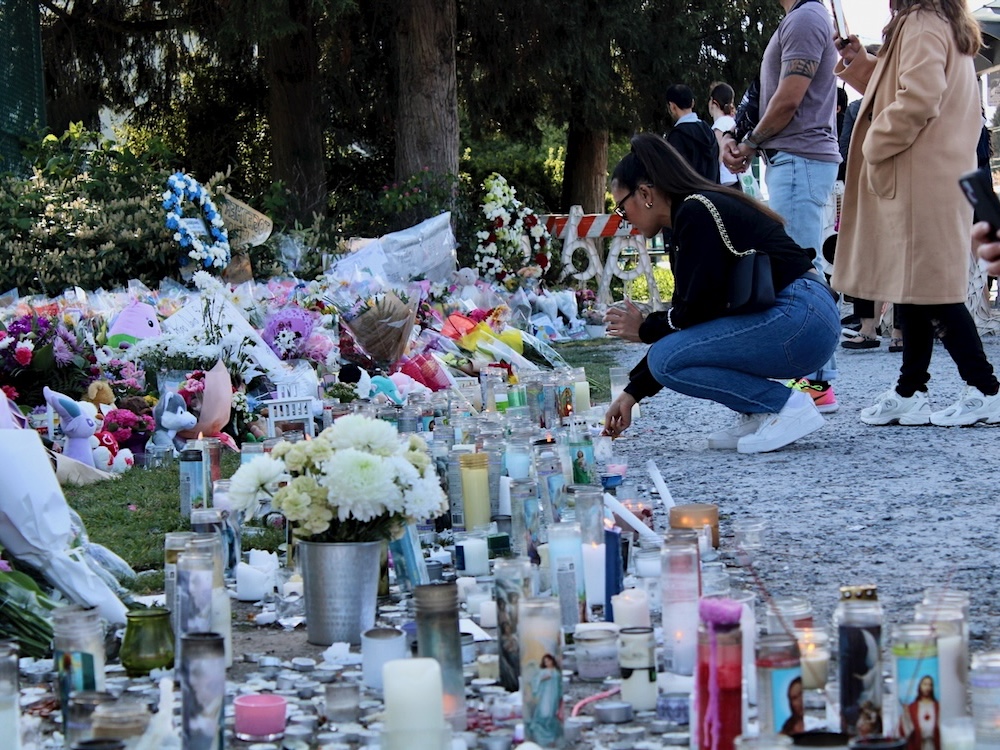
Last week, the Office of the Information and Privacy Commissioner revealed that 36 health-care workers snooped in the files of people hospitalized after being injured in last year’s Lapu Lapu Day attack.
The discovery that patients’ privacy had been violated was disturbing.
Nearly as bad was the revelation that two health authorities wanted to keep news of the snooping from those affected.
All the victims were eventually told of the breach, but only after information and privacy commissioner Michael Harvey recommended that they be alerted. Originally, the authorities argued that they shouldn’t have to tell those affected because doing so “could cause unnecessary stress on these patients.”
In his report, Harvey was generous in reaction to the plea to keep the privacy breach from patients, writing that the health authorities’ position “was not taken lightly, and came from a place of genuine reflection and concern.”
But let’s be clear: this wasn’t a one-off, and good intentions don’t justify this approach.
Learning that one’s private information has been snooped on is undoubtedly distressing, especially when it compounds real-life traumas. It would be understandable if some of the patients affected would prefer to not know their privacy had been violated. But to protect those people, our officials would have to keep all victims in the dark, including those who would want to be made aware that their privacy had been violated.
It also would mean, inevitably, keeping information about the breach from the greater public.
To inform or not to inform, that is the question
When it comes to whether or not to release distressing information, questions about public interest and potential harms go far beyond the current Lapu Lapu Day snooping scandal.
In B.C., similar debates about the release of information have followed devastating wildfires, with some residents scouring video footage to learn whether their homes survived, while others prefer to have the news broken gently by a third party.
Governments cannot satisfy everyone’s differing needs in these tricky situations. But it’s notable how commonly officials tend to favour restricting access to information — and how administrators tend to ignore the larger societal harms that come when government’s default setting is one of secrecy, whether well-intentioned or not.
This issue also came to the forefront during the early stages of the COVID-19 pandemic, when health officials balked at notifying parents after cases had been detected at their children’s school. At the time, chief medical health officer Dr. Bonnie Henry suggested there was a worry that reporting individual cases would cause excess anxiety. In response, some parents and teachers rightly said they deserved to know so that they could make the best-informed choices for their families.
There have also been other privacy breaches where provincial officials have determined that they didn’t need to tell those affected because there wasn’t a “reasonable expectation of significant harm.”
Of course, officials are right to consider the feelings of those affected by the release of information.
But they can’t necessarily accurately gauge what any given individual’s choice to know or not know would be.
And officials rarely seem to consider that their willingness or unwillingness to provide information to the public has a direct and lasting impact on whether people feel they can trust their government, their leaders and their institutions.
An increasing awareness about mitigating distress has led authorities to carefully orchestrate the release of information to the public. Journalists see this across our governmental agencies. It’s particularly notable in the realm of our justice system, where police are now routinely refusing to release the names of murder victims and, sometimes, even the accused.
Obstructing the accountability of public bodies
A paternalistic approach to the release of information can legitimize public distrust of our institutions and shake the very foundations of our democracy.
The approach also affects institutions’ incentives to reform their own practices when they are found lacking.
Harvey made the same argument in his finding about the Lapu Lapu snooping.
“The argument that notification should not occur because it could be stressful can too easily obstruct the accountability of public bodies,” he wrote, adding that patients “deserve to know when that information has been unlawfully accessed and misused.”
Democracy rests upon the trust that people have in the leaders and governments they elect. That trust is not meant to be an obedient or obsequious trust.
Instead, it requires transparency. The public needs information on how their leaders and governments make decisions in order to hold politicians and institutions accountable. This abstract notion manifests itself both in the halls of provincial power and in the corridors of hospitals, schools and municipal halls.
When the public puts its trust in authorities — teachers, nurses, police officers — we do so not because we believe them flawless, but because we believe that wrongdoing will be punished when detected and reforms sought to avoid them in future occasions.
This trust demands that our institutions allow the public to see their failures, and how they are working to prevent future problems.
Our governments can’t say they believe transparency is valuable, then repeatedly err on the side of caution when faced with hard decisions about whether to trust the public with distressing news.
Information can and will create trauma, leave people unsettled and increase anxiety and stress. Keeping information from people might feel like the right thing to do. And certainly, we should seek ways to reduce harm, stress and anxiety where possible.
But sometimes harm, stress and anxiety are reasonable responses to distressing situations. Keeping victims unaware doesn’t address the harm. It only obfuscates it.
Our institutions also need to realize there is a societal cost every time they make the paternalistic decision that the people they serve would be better off kept in the dark.
Most of our leaders are well-meaning, good people who value democracy, cherish its vital institutions and despise the distrust that has riven societies in recent years. But as bad actors and toxic social media discourse have sown that distrust, our governments have often played into their hands by closing the blinds, rather than opening the metaphorical windows.
If our institutions want the public to trust them, they need to remember to trust the people — even with bad news. ![[Tyee]](/design-article.thetyee.ca/ui/img/yellowblob.png)
Read more: Health, Rights + Justice, BC Politics












Tyee Commenting Guidelines
Please note that email notifications for replies are not currently working due to a software issue which may be resolved in a future update.
Comments that violate guidelines risk being deleted, and violations may result in a temporary or permanent user ban. Maintain the spirit of good conversation to stay in the discussion and be patient with moderators. Comments are reviewed regularly but not in real time.
Do:
Do not: