


 SHARE:
There is a lot of controversy over the NDP government’s Bill 15, the Infrastructure Projects Act. It has failed to consult First Nations and local governments while proposing legislation that would make it easier to bypass consultation and existing regulations on future infrastructure projects.
"Trust us," the government is saying to First Nations, municipalities and the public. The bill would give the cabinet the power to bypass not just consultation, but the environmental assessment process.
But it’s not just the NDP government — and private industry — we’re being asked to trust.
This bill would also empower cabinet to give authority to industry hired professionals and sidestep existing government processes and oversight.
This bill would allow a qualified professional, hired by a company, to "issue or provide a certification that takes the place of an approval, permit, licence or other authorization that would otherwise be required under a prescribed enactment."
The language in Bill 15 suggests that the permitting process could be put entirely in the hands of qualified professionals. Section 6 (3) states "if a qualified professional certification is issued or provided under this section, the certification must be considered to be the approval, permit, licence or other authorization that is required under the prescribed enactment and to have been issued or provided under that enactment."
In essence, this gives cabinet the ability to hand one of government’s foundational responsibilities — ensuring industries are following the province’s laws and regulations — to people hired by those industries, removing government oversight entirely.
This gives industry hired qualified professionals the power that is currently in the hands of government statutory decision-makers.
The question that must be asked is who is expected to look out for the public interest?
This is an extension of professional reliance, a model that’s been in place in B.C. since the early 2000s, brought in as part of the BC Liberal government’s push toward deregulation of industry .
At a time when we are witnessing the dismantling of environmental protections in the United States, the BC NDP government is proposing to follow the same path.
The bill does not specify which infrastructure projects would be subject to fast-tracking by cabinet. Premier David Eby keeps mentioning schools and hospitals, but infrastructure projects could include mines, pipelines and LNG producers.
Eby has said it won’t apply to fossil fuel infrastructure, but unless this is written into the law itself, these public statements in no way bind this or any future governments.
"Trust us" isn’t good enough, particularly when it comes to protection of the environment in this province.
Let’s consider how professional reliance has played out in B.C.’s past.
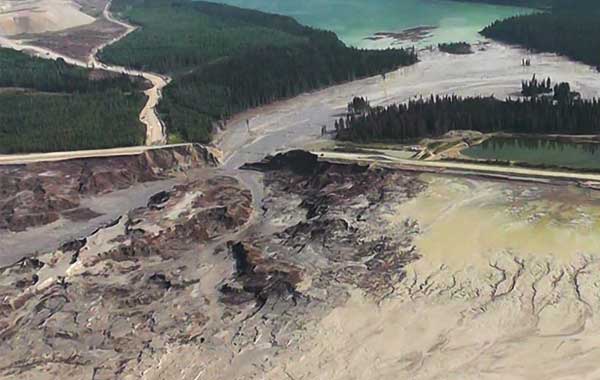
The engineers who were responsible for ensuring that the Mount Polley mine was operating within regulations failed to sufficiently observe and monitor the tailings dam and failed to record their observations. The collapse of the tailings pond, which released 24 million cubic metres of waste into Hazeltine Creek, Polley Lake and Quesnel Lake. In the investigation report, the Chief Mines Inspector identified weaknesses of professional reliance, including the "conflict with client interests."
Qualified professionals do not work for the government, they work for the companies that hired them.
We learned about the flaws of this system in my former home in Shawnigan Lake, when it was revealed that the engineers acting as qualified professionals for a company that had proposed a five-million tonne contaminated landfill uphill from the lake, a drinking water source for 12,000 people, were in fact business partners with the landfill owners. This business agreement had been kept secret from the government, who had relied on the engineers’ reports in their decision to issue the permit.
The people of Shawnigan Lake spent four years fighting to get the permit revoked. A BC Supreme Court judge, in a judicial review of the Environmental Appeal Board’s hearing, stated “the conduct of [the landfill company] and the Qualified Professionals compromised the integrity of the approval process under the [Environmental Management Act].” For the people of Shawnigan Lake, the debacle deeply compromised trust in government to protect the environment and human health.
In forestry, the destruction of riparian areas prompted an Ombudsperson Office investigation into the use of professional reliance. In mining, the Auditor General released a report highlighting failures in compliance and oversight in the mining sector, which specifically noted that the mines ministry was at risk of "regulatory capture".
The NDP seem to think that some projects are just too important for pesky government oversight and we should just trust that the companies will do the job of protecting the environment and public safety.
The act may let some projects move more efficiently through the permitting phase. but it’s not fair to destroy the whole process for the sake of efficiency.
"Trust us," says Eby. Who in turn seems prepared to put all his trust in industry. ![[Tyee]](/design-article.thetyee.ca/ui/img/yellowblob.png)










Tyee Commenting Guidelines
Please note that email notifications for replies are not currently working due to a software issue which may be resolved in a future update.
Comments that violate guidelines risk being deleted, and violations may result in a temporary or permanent user ban. Maintain the spirit of good conversation to stay in the discussion and be patient with moderators. Comments are reviewed regularly but not in real time.
Do:
Do not: