

 SHARE:
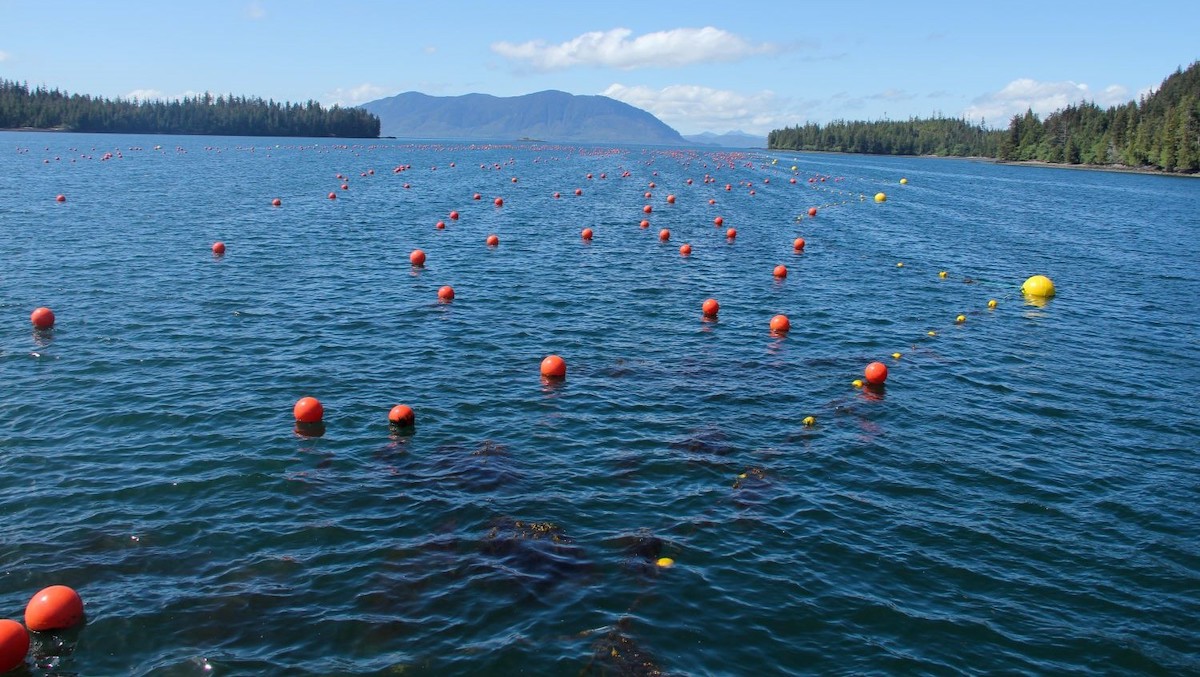
From sea lettuce adorning tidal pools and bull kelp left in windrows at the high tide line to towering underwater forests of giant kelp providing refuge and food for countless species, British Columbia’s seaweeds are both ubiquitously prominent along shorelines as well as hidden from sight in the deep.
With iconic species like salmon, whales and bears dominating popular attention and imagination, B.C.’s seaweeds are often easy to overlook. Now, however, the province’s suitability for growing seaweed is attracting attention at a time when seaweed aquaculture is becoming recognized for its potential to yield many benefits.
Our team recently reviewed how well-suited the province’s existing regulations are for managing the potential ecological effects of a B.C. seaweed aquaculture industry.
What is seaweed aquaculture?
A primary attraction of seaweed is that grows with minimal intervention from people. It requires no fertilization or hormones, no light or temperature control, no warming or cooling and no herbicides or pesticides.
Seaweed aquaculture therefore sidesteps many of the main concerns around conventional agriculture and aquaculture. It can grow remarkably quickly and can be used in a range of products, from food to cosmetics and bioplastics.
Replacing petroleum-derived products with seaweed-based alternatives could yield real climate benefits by cutting greenhouse gas emissions, a rare win-win-win scenario with economic, ecological and climate benefits.
This is particularly relevant for many coastal First Nation communities with limited economic opportunities. With this potential, it’s not surprising that seaweed aquaculture is being promoted for its potential to contribute to both human well-being and global sustainability objectives.
Seaweeds also provide diverse ecological benefits, including reductions in harmful algae blooms and eutrophication.
However, seaweed aquaculture is not without risks. Without safeguards, operations could introduce pathogens and non-native species, disrupt the genetics of wild species and intensify competition for sunlight and nutrients.
The good news is that with the right measures in place, such negative impacts are avoidable.
Gaps in the existing regulations
As the industry in B.C. grows, the patchwork of partially relevant legislation under which it is regulated has exposed several important gaps that need to be addressed.
The first challenge is that although four government agencies are involved in regulating seaweed aquaculture in B.C., none have a specific mandate. This makes existing regulations largely indirect.
B.C.’s Ministry of Water, Land and Resource Stewardship derives its mandate from the province’s Fish and Seafood Act that’s focused on food safety, and so only applies to seaweeds grown for human consumption. However, all mariculture leases require a tenure from the B.C. Ministry of Agriculture.
Federally, Fisheries and Oceans Canada (DFO) and Transport Canada are respectively concerned with the health of fish and fish habitat, and transportation safety. Neither includes the management of ecological impacts of seaweed aquaculture in their mandates. These agencies also collectively consult local First Nation governments when considering seaweed aquaculture tenures in their territories.
Considering that processing seaweeds for non-human uses may represent the most promising pathways , for reducing emissions, the regulatory vacuum for such scenarios will become increasingly important as the industry develops.
There is also the question of who’s responsible for seaweed aquaculture in offshore waters beyond 12 nautical miles from shore, since territorial waters extend only to this point, while Canada’s exclusive economic zone extends to 200 miles. But with no offshore mandate from either the provincial or federal government, the answer, currently, is no one.
This jurisdictional gap may become important in the future. Offshore farms have been evaluated for their potential to yield climate benefits and are being actively researched and promoted in the United States.
When these puzzle pieces are put together, there is one big missing piece – B.C. needs a single entity responsible for managing the growth of the industry, ensuring it benefits coastal communities and preventing potential negative ecological effects. Policy alone will not fill this gap. Updated legislation is needed to support and manage both the potential benefits, and risks of this emerging industry.
A well-managed seaweed aquaculture industry would support the goals of B.C.’s Coastal Marine Strategy, and legislation to enable sound regulation would therefore be consistent with and supportive of the province’s vision for the coast.
The provincial and federal governments have an opportunity to ensure the seaweed aquaculture industry lives up to its potential while avoiding the mistakes of big agriculture. Both levels of government must work together, and in close collaboration with First Nations, to develop legislation to prevent future adverse ecological impacts.
![[Tyee]](/design-article.thetyee.ca/ui/img/yellowblob.png)
Read more: Environment











Tyee Commenting Guidelines
Please note that email notifications for replies are not currently working due to a software issue which may be resolved in a future update.
Comments that violate guidelines risk being deleted, and violations may result in a temporary or permanent user ban. Maintain the spirit of good conversation to stay in the discussion and be patient with moderators. Comments are reviewed regularly but not in real time.
Do:
Do not: