


 SHARE:
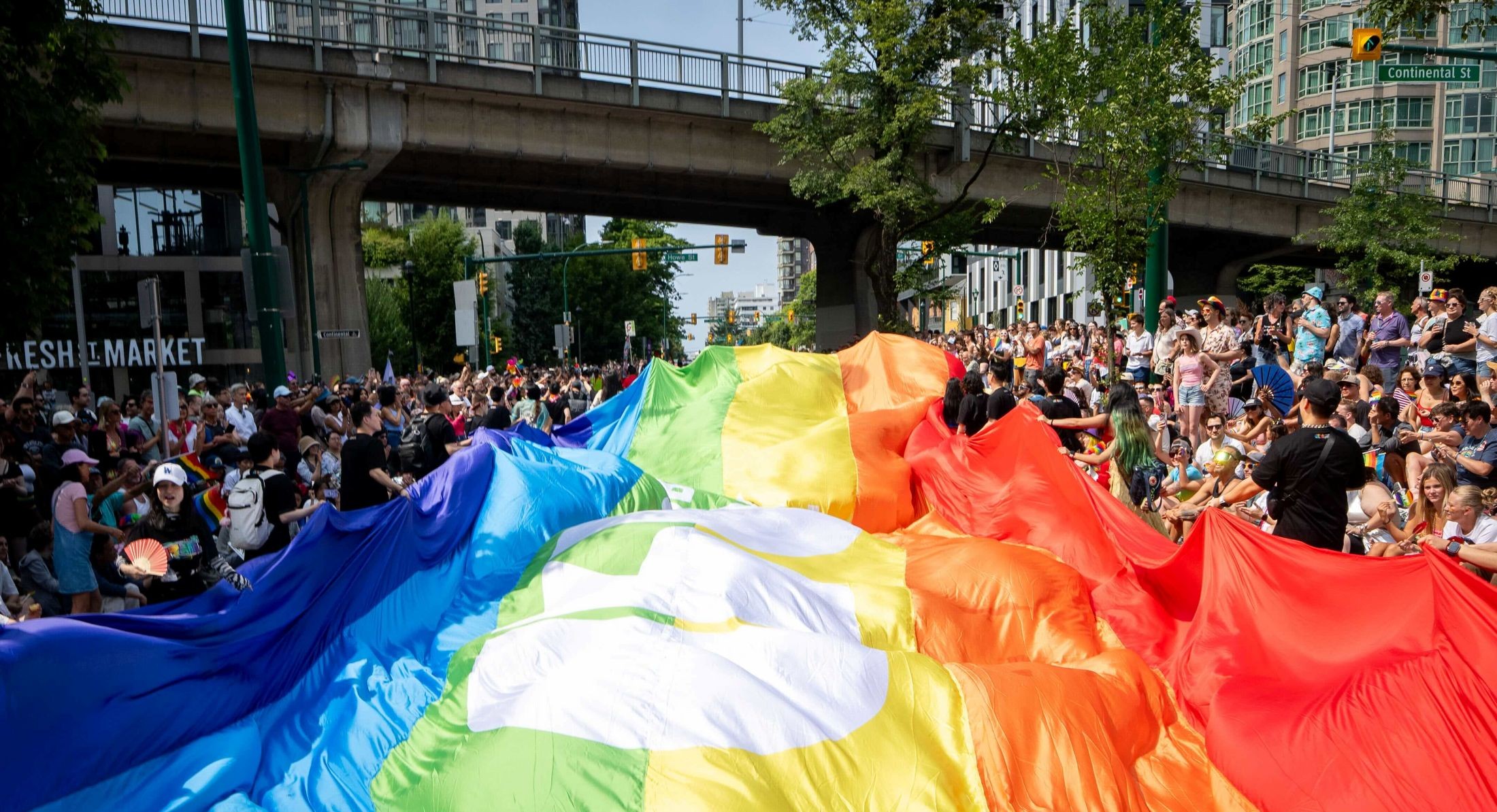
Pride season is here again, and I keep thinking about Jerry Springer.
Let me explain.
In The Jerry Springer Show’s 20th-anniversary special that aired in October 2010, Springer looked back on the program’s most memorable material. The episode featured clips of the show’s best fights, the sexiest guests, the most outrageous guests, the most scandalous family secrets and “the best transsexuals.”
Later, he introduced a montage of “transgender secrets” as “the best of the best.”
This was before “transgender” became part of everyday vocabulary. Back then, the culture lumped everything together: drag queens, female impersonators, transsexual women, cross-dressers, people quietly struggling with gender dysphoria, people trying to survive in secret.
To most of society, it was all the same thing.
Katelyn Burns, a columnist for Xtra and MSNBC, put it plainly: “Trans people, in Springer’s world, were there simply to shock and awe TV audiences.”
And people watched by the millions, apparently.
That’s part of the irony I can’t stop thinking about now when I hear people complain that trans identities are being “shoved down their throats.”
Visibility is not the same as understanding
Society has been consuming gender-diverse people as entertainment for decades. Daytime talk shows. Tabloid TV. Movies. Comedy routines. Talk radio. Endless punchlines.
But something important got lost in all of that.
Those shows often created a carnival or freak-show atmosphere where the audience was encouraged to react to the spectacle rather than listen to the human story underneath.
The mockery, the shock, the uncomfortable laughter, all of it drowned out the reality of what many people lived through.
Behind the makeup and the sensationalized introductions were stories of kids being thrown out of their homes. Stories of homelessness. Stories of survival sex. Stories of rejection by parents, churches, employers, spouses and entire communities. Some were trying to survive at the absolute margins of society with almost no safety net at all.
But television rarely slowed down long enough for people to sit with that. The audience saw the presentation and the spectacle — they rarely saw the loneliness and the fear.
People became obsessed with what made them uncomfortable, but totally missed what had happened to the people at the centre of the spectacle that brought them there in the first place.
I honestly think a lot of viewers absorbed those images without ever realizing how distorted that lens was. Being visible is not the same thing as being understood.
The roots of shame
Looking back now, I think it explains some of my own uneasy relationship with drag and even with Pride itself.
I need to say this carefully because people may hear criticism where there isn’t any. I’m not saying drag shouldn’t exist. I’m not saying people shouldn’t express themselves however they want. That’s not what this is about.
This is about what it felt like growing up trying to make sense of my own gender struggles while living inside a culture that constantly blurred the lines between performance and identity.
Somewhere along the way, I internalized the fear that if I accepted being trans, people would see me as a caricature too. Not sincere. Not real. Just another spectacle.
And honestly, I think that fear stayed with me for years.
Even now, if I’m being completely honest, I still feel a bit uneasy sometimes around drag performances. I probably always will. But over time I’ve come to understand that my discomfort is less about drag itself and more about what those images became associated with in my own mind growing up.
For many trans women of my generation, femininity outside the norm was rarely presented with dignity. It was exaggerated, mocked, sexualized, or treated as artificial. Those images got tangled up with shame and fear and survival.
Many people assume that all queer and trans people immediately feel at home at Pride events. That wasn’t true for me.
‘Too much?’ Or something else?
I didn’t attend a Pride event until several years after my transition. The first one I attended wasn’t even in Vancouver. It was in Charlotte, North Carolina, when I travelled there with Kathy Baldock during one of the protests connected to Michael Brown and the religious right.
I remember feeling uncomfortable almost immediately.
I saw some trans women who, to me at the time, looked overly flamboyant. Heavy makeup. Bright lipstick. Clothing that struck me as exaggerated. And privately, I judged them. I didn’t say anything cruel, but internally I was critical.
I think part of me was afraid that this was what the public saw when they looked at trans women or that this was the image people attached to all of us.
I was afraid of being dismissed the same way other trans people were.
But near the end of the day, I ended up talking to a small group of trans women around my age. Three boomers. One was a truck driver. Another was an auto mechanic. I can’t remember what the third had done, but she was retired.
Once we started talking, everything shifted for me. They explained that Pride was the only time all year they felt safe enough to express this part of themselves publicly. The rest of the year they stayed hidden.
They talked about fear of losing jobs. Fear of violence. Fear of ridicule. Fear of being ostracized. Fear of losing family. Some of them lived in environments where even small signs of femininity could put them at risk.
And suddenly I saw them differently.
Or maybe more accurately, I finally saw them at all.
What I had first interpreted as “too much” started to look like something else entirely. Relief. Release. A lifetime of suppression finally cracking open for a few hours.
And honestly, if someone has spent 40 or 50 years repressing softness, colour, femininity, beauty, self-expression, maybe it makes sense that when the opportunity finally comes, they lean into it hard. Maybe the lipstick is brighter. Maybe the makeup is heavier. Maybe overdo it a little.
So what? That doesn’t make anyone fake. If anything, it may say something about how much had to be buried for so long.
Not performance, but permission
I remember feeling deeply ashamed afterward for how quickly I had judged them. Because the truth is, I had absorbed some of the same cultural messaging that wounded me in the first place.
I had spent so many years trying not to become the caricature that I had unconsciously started measuring other trans women against it too.
That realization has stayed with me, and I think about it now whenever people complain about Pride or say they’re tired of “having this shoved in their faces.”
Because the truth is, many of the same people who now express a disdain for Pride grew up consuming all of this as entertainment. Or their parents did. Society spent decades turning trans lives into spectacle while denying our humanity at the same time.
What has changed is not that trans people suddenly appeared. What changed is that increasingly, trans people started speaking for themselves instead of being reduced to punchlines or shock television. And I think that unsettles some people.
I suspect that what unsettles certain people is not that trans people are suddenly visible, but that we are no longer willing to exist only as spectacle, secrecy or shame. There are voices now that seem to want us erased altogether, or pushed quietly back out of sight again.
There’s a difference between watching someone as a curiosity and accepting them as part of ordinary life; as a trans co-worker, a trans teacher, a trans elder, a trans nurse, a trans woman speaking with authority instead of apologizing for existing.
That shift feels threatening to some people in ways they probably don’t fully understand themselves; perhaps stirring discomfort they cannot easily explain.
And for some of us who are trans, especially those of us who grew up decades ago, there’s still a lot to untangle internally, too.
Some of us avoided Pride because we feared association. Some of us judged others because we were terrified ourselves. And some of us spent years trying to appear respectable enough not to become the next joke.
I understand that now in ways I didn’t before.
That day in Charlotte changed something in me. Not instantly. Not perfectly. But enough for me to start realizing that sometimes what looks flamboyant on the surface is, at its heart, longing. Survival. Delayed freedom. A person finally letting themselves breathe after decades of holding everything in.
And maybe that is part of what Pride really is for some people. Not performance — but permission to be themselves without fear and with heads held high.
Happy Pride. ![[Tyee]](/design-article.thetyee.ca/ui/img/yellowblob.png)
Read more: Gender + Sexuality, Media








Tyee Commenting Guidelines
Please note that email notifications for replies are not currently working due to a software issue which may be resolved in a future update.
Comments that violate guidelines risk being deleted, and violations may result in a temporary or permanent user ban. Maintain the spirit of good conversation to stay in the discussion and be patient with moderators. Comments are reviewed regularly but not in real time.
Do:
Do not: