


 SHARE:
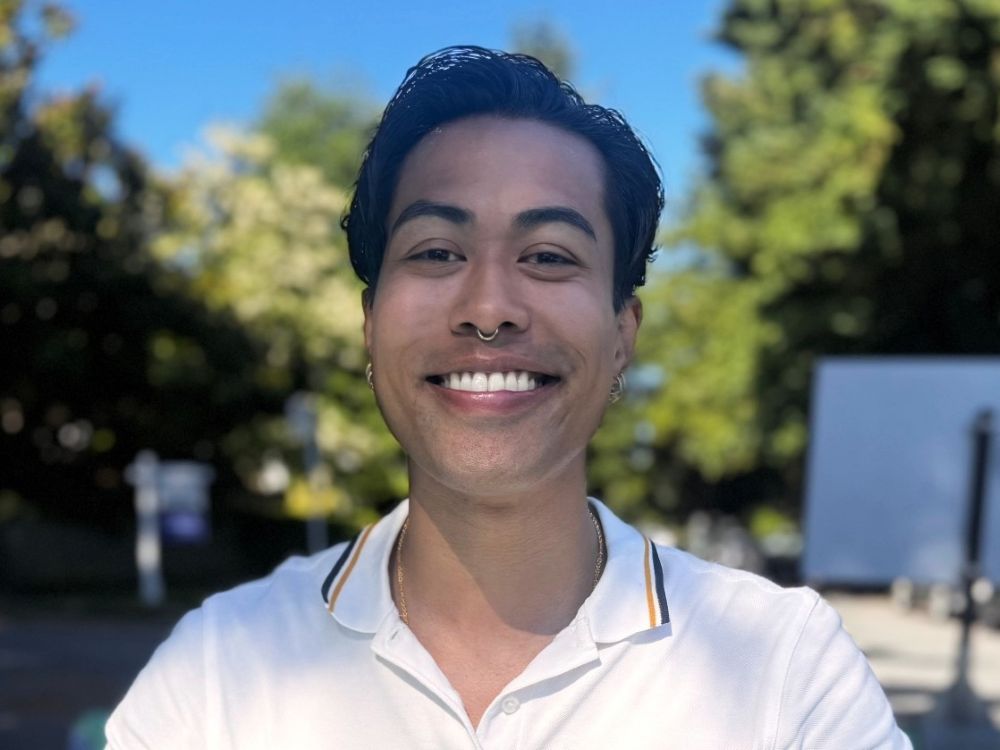
Johnny Phung wants to have a biological child.
As a gay man, he will need an egg donor and surrogate. The process could cost Phung over $100,000 and require years of planning.
So when Phung learned he’d qualified for $19,000 from B.C.’s publicly funded in vitro fertilization program, he was excited.
But his initial elation quickly gave way to disappointment, because many costs associated with donors and surrogates aren’t covered. And for the limited coverage to apply, Phung would have to find a donor or surrogate based in B.C. That severely limits his options and the likelihood of finding a match in time to actually use the funding. On top of that, Phung found out the $30,000 he had already spent on a B.C. egg donation couldn’t be retroactively covered.
Since securing the funding, Phung has been scouring Reddit and Facebook to find eligible donors and surrogates with whom he can partner. If he can’t, he’ll struggle to use the funding, and whatever isn’t spent by the end of October will vanish.
Inclusive in theory, not practice
In vitro fertilization, or IVF, includes four steps: ovarian stimulation to produce eggs, retrieving those eggs, fertilizing the eggs with sperm in a lab, and transferring a resulting embryo into a uterus for a possible pregnancy.
So for Phung to have a biological child through IVF, he needs both an egg donor and a gestational surrogate who will carry the pregnancy and isn’t genetically related to the child.
B.C. launched its long-awaited IVF funding program in 2025. Publicly funded fertility programs have cropped up across the country since 2010, when Quebec began funding up to three IVF cycles. Ontario followed in 2015 with one funded IVF cycle. Nearly all provinces now offer some form of tax credit, reimbursement program or alternative funding.
B.C.’s program is income-tested, meaning applicants must fall within a specific income threshold in order to qualify.
Penny Blesch, who runs an infertility non-profit and helped lobby the B.C. government for funding, described the program as “technically inclusive.” The program website states that sex, gender, sexual orientation and family status are not factors in determining eligibility. But the fine print tells a different story.
“Technically inclusive and practically accessible are two very different things,” Blesch says.
For aspiring parents — especially single men or same-sex male partners — Blesch says the gap between the two is significant.
Most can’t benefit
“Most gay males that I see needing egg donation and surrogacy are not able to benefit from the funding,” says Dr. Beth Taylor, Phung’s fertility doctor at Olive Fertility Center.
The majority of egg donors and surrogates are from outside the province, so the province’s decision to exclusively fund B.C.-based donors and surrogates can be problematic, Taylor says.
Laura Spencer, an IVF advocate and fertility coach who provides mentorship and fertility support, says only funding B.C. surrogates makes a small pool even smaller.
“It cuts down on a lot of possibilities,” she says. “It can be the difference between being able to have a baby and not.”
Even if an intended parent does find a B.C. donor or surrogate, only part of their costs can be funded by the program. Health screening, genetic testing, legal fees and counselling — that is usually deemed mandatory by fertility clinics — are not covered for donors, nor surrogates. Costs associated with travel and accommodation for appointments are also not typically covered.
For a single gay man who requires a donor and surrogate, “uncovered costs can easily reach $70,000 to $100,000, with zero support from the program,” Blesch says.
Searching for a surrogate
There’s a big gap between the number of surrogates and the number of people who need a surrogate.
One factor behind the shortage is that neither donors nor surrogates can be paid in Canada. They can only be reimbursed for a list of eligible expenses. That limits the pool of people interested in carrying a pregnancy for someone else, Taylor says. Johnny has heard of one-to-two-year waits.
Surrogate agencies can make the matching process easier than searching independently. But neither surrogacy agencies nor egg donation agencies are covered expenses under B.C.’s funding program.
Agencies can also be very expensive, with fees ranging from $9,500 to $20,000, according to a cost guide published by Canadian Surrogacy Options.
And even though agencies can help, Phung says they offer no guarantees.
Last year, Phung spent $5,000 with a surrogacy agency that helped him find a potential match.
But Phung says the potential surrogate was rejected once they met with his fertility clinic. The agency had failed to screen the surrogate against typical medical eligibility criteria, including her age, BMI, number of prior pregnancies and of C-sections.
The news put Phung right back at square one.
“That time was taken away from the one year I had to use the funding,” he says.
One embryo
Phung found an egg donor more easily. He says he was lucky to have a donor he knew: a co-worker and friend. But even then, the process is hardly simple.
After the retrieval of his donor’s eggs, they were combined with Phung’s sperm in a lab. The result was one embryo.
A successful pregnancy often requires multiple embryo transfers. With just one embryo, the odds weren’t in Phung’s favour.
According to data from the Canadian Fertility and Andrology Society, there’s a 41 per cent chance of delivering a child following a single embryo transfer. So surrogates prefer working with intended parents who have multiple embryos available for transfer. More embryos generally increase the likelihood of a successful pregnancy.
“When you’re working with a surrogate, it puts a lot of pressure on them,” Phung says.
Becoming a surrogate involves intensive psychological and physical screening, on top of daily hormonal injections during the first 10 to 12 weeks of pregnancy. It’s a process that most surrogates would rather not repeat multiple times with different families.
The only way to get more embryos would be to have more eggs. But when Phung asked his egg donor if she would be open to another retrieval, she was hesitant.
“I didn’t know how invasive or hard it was going to be — and they didn’t either,” he says.
Egg donation generally requires around two weeks of hormonal injections ahead of the procedure, which can be uncomfortable — causing side effects from bloating to mood swings.
One of the main risks post-procedure is ovarian hyperstimulation syndrome. It can occur if the ovaries are excessively stimulated, causing symptoms which range in severity from nausea to, in extreme cases, shortness of breath and death. Ultimately, Phung’s donor wasn’t comfortable going through the procedure for a second time.
Given his donor was from B.C., Phung hoped he could be reimbursed for some of the $30,000 he’d already spent on his egg donor’s hormonal medication, genetic testing, egg retrieval surgery, additional doctor’s appointments and checkups.
But that wasn’t the case. The funding could only be used for new services. And that money would expire quickly: he had just 12 months to use the money once it was approved.
A tighter clock
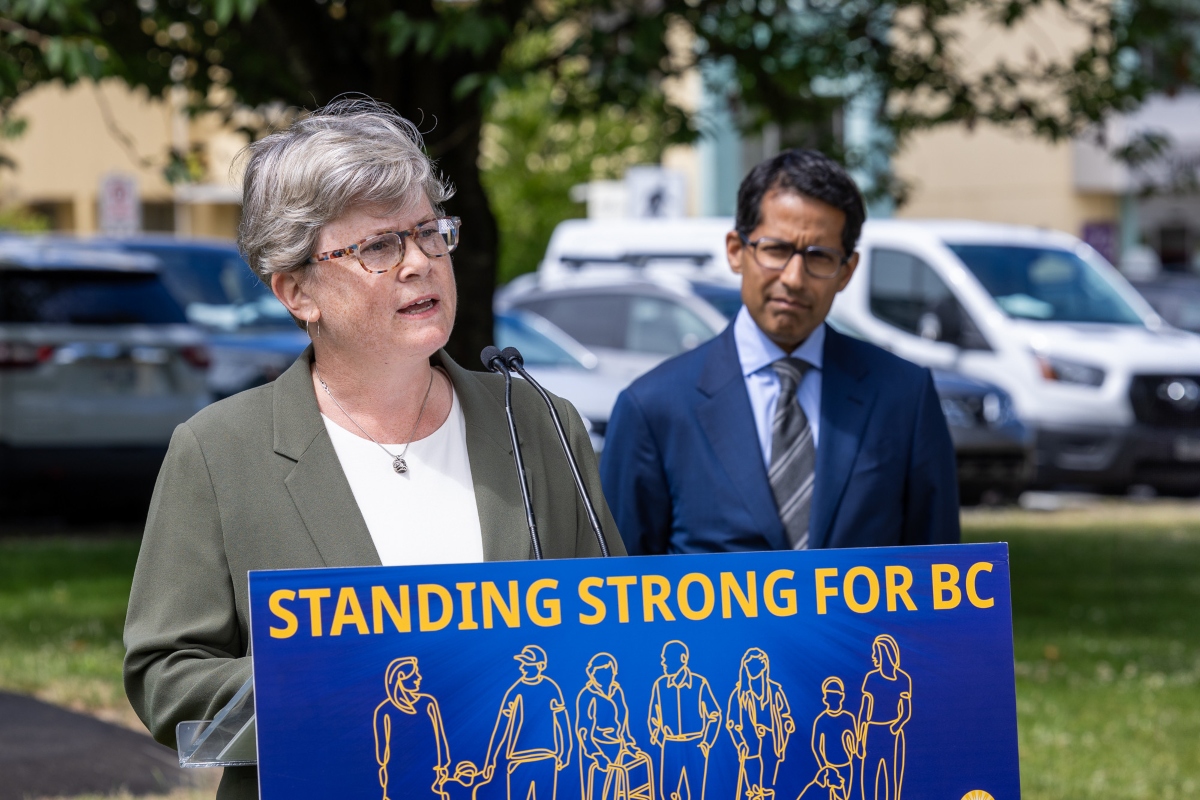
This spring, the government further restricted the rules around IVF funding. Now, eligible treatment must begin within three months of approval, and be completed within six. In an emailed statement, a Ministry of Health spokesperson wrote that some applicants may not be immediately ready for treatment, but that the revised timelines help ensure that “within a limited annual budget, the program can support more hopeful parents in B.C. who are ready to proceed.”
Luckily for Phung, the changes only apply to the newly started 2026-27 program. But others will face even more time constraints.
Taylor and Blesch say the timeline will be too tight for people like Phung who need to find an egg donor and surrogate. Had Phung been approved under these new requirements, he would have had just three months to not only secure a donor or surrogate, but also have them begin treatment.
“Matching with an egg donor and a gestational surrogate typically takes 12 to 18 months, sometimes longer,” Blesch says. “The clock is running before most patients in this situation can realistically be ready.”
A new focus
Phung says he has wound up with two options to use his funding: find another B.C. egg donor for a second egg retrieval, or find an eligible B.C. surrogate and have some of their costs covered.
To find the help he needs, he built a website, handed out business cards and posted his story online in hopes of finding a surrogate and donor.
“I’m in every single Facebook group,” he says, “I’m on Reddit threads. I had a website for myself that was linked to all the posts that I made.”
At a disadvantage
For now, gay men, gay couples and single men are at a disadvantage compared to other groups hoping to use B.C.’s funding, Taylor says.
Blesch agreed. “The program wasn’t designed to exclude Phung, but it also wasn’t designed with his pathway in mind,” she says.
When asked about the current constraints for same-sex and single males, the Ministry of Health acknowledged the program’s limitations. Certain costs related to surrogacy and donor eggs aren’t covered, the ministry says, which is consistent with other publicly funded IVF programs across the country.
In an emailed statement, the ministry described the program as, “an important step towards a more equitable public health-care system and supporting reproductive rights,” and that it continues to monitor and evaluate.
Beyond BC
Phung is now planning to move his entire IVF process to Mexico. While the costs are relatively similar, he says surrogates are compensated in Mexico, so there are more possibilities.
Still, shifting his search outside of the country has been hard to wrap his head around.
“I don’t know the rules. I don’t know the language. You can only trust so many reviews.”
Another one of Phung’s concerns is how he would ship his embryo to Mexico. The transport process can decrease the likelihood of a successful pregnancy. That left him fearful and disheartened.
“I’ve grown a strong attachment to my embryo, much more than I anticipated,” he says. “I have an image in my mind of what the baby could look like.”
Even with his concerns, Phung is pushing ahead with his search outside of the country. He’s not alone in looking abroad. Spencer says she has seen a wave of Canadians travelling for donor eggs.
It’s now common for would-be parents to purchase eggs from clinics in the Czech Republic, Spain, Greece and North Cyprus. She says several of her clients travelled to an American clinic that advertises egg donors at a “fraction” of Canadian prices.
Phung, of course, still hopes to use his funding. At this point, he believes he can get one year of embryo and sperm storage covered. Even if he does, he still estimates he’ll leave $18,000 on the table.
“Getting the funding was such a high,” Phung says. “I was so hopeful that some of these never-ending expenses would be covered. And it’s really sad that up to this moment, I haven’t even touched a single dollar from the grant.” ![[Tyee]](/design-article.thetyee.ca/ui/img/yellowblob.png)
Read more: Gender + Sexuality












Tyee Commenting Guidelines
Please note that email notifications for replies are not currently working due to a software issue which may be resolved in a future update.
Comments that violate guidelines risk being deleted, and violations may result in a temporary or permanent user ban. Maintain the spirit of good conversation to stay in the discussion and be patient with moderators. Comments are reviewed regularly but not in real time.
Do:
Do not: