


 SHARE:
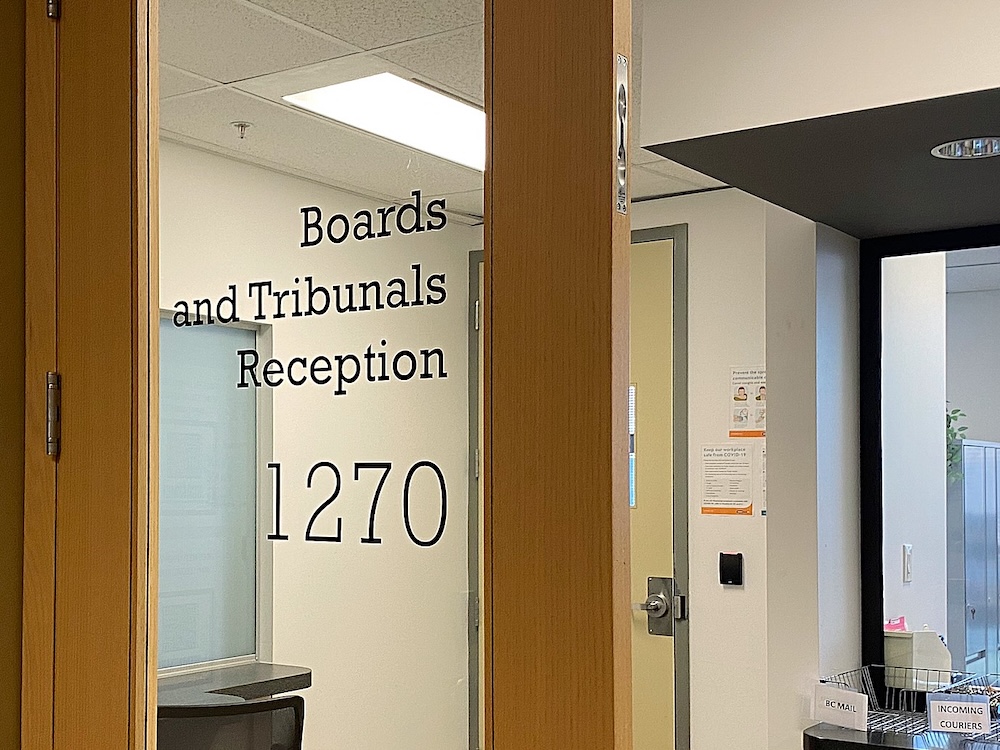
Citing frustrations with a growing caseload and insufficient resources, the chair of the British Columbia Human Rights Tribunal, Emily Ohler, is stepping down two years before her term ends.
“With old roadblocks remaining and new ones ever-arising, I have found it more difficult to find the energy to point out the same pressures, make the same asks, and fight the same fights in the absence of the tools we have needed since the start,” Ohler said in a July 6 statement on the BCHRT’s website.
“As a result, I have made the very difficult decision to step away from the role before the end of my term to focus on other areas of life,” she said.
Instead of staying until August 2028 when her term ends, Ohler plans to leave at the end of this November.
The BCHRT is a quasi-judicial body created under the B.C. Human Rights Code to receive, mediate and adjudicate human rights complaints. The code prohibits discrimination based on various personal characteristics such as age, race, disability, religion and sexual orientation.
At times the tribunal’s decisions have been controversial and aggravated conservative politicians, including Independent Kelowna-Lake Country-Coldstream MLA Tara Armstrong, who in February attempted to introduce a bill in the B.C. legislature that would have repealed the Human Rights Code and abolished the tribunal.
She brought forward the bill following a tribunal decision that fined Chilliwack school trustee Barry Neufeld $750,000 after finding he had violated the code by engaging in discriminatory conduct towards employees, discriminatory publishing and hate speech.
His conduct included making “false claims that the Education Ministry-approved resources and queer and trans teachers are ‘grooming’ children for sexual abuse, that sexual offenders benefit from ‘confusing’ children about gender dysphoria, and that gender-affirming care causes premature illness and death,” The Tyee reported.
Armstrong’s bill was defeated on first reading.
While such controversies have politicized the tribunal’s work, in recent years even supporters have been concerned about its struggle to contain a growing backlog in the time taken to process complaints. Its most recent annual report says that from 2020 to 2023, the early years of the COVID-19 pandemic, it received an average of 2,824 complaints a year but closed an average of only 1,322 a year.
“This left the Tribunal processing the overflow complaints from the previous year while multiple years’ worth of volume continued to come in each successive year,” the report said. “As this carry-over compounded, so did delays. The Tribunal was forced into a state of perpetual backlog without sufficient resources to match the twin demand of increased volume and compounding overflow.”
An increase in funding from the provincial government in 2023 and the adoption of a backlog strategy slowed the growth, but at the end of the fiscal year in 2025 there were some 6,000 complaints open, about twice as many as four years earlier.
Ohler was unavailable by publication time for an interview.
In her statement she said she became chair at a time of unprecedented challenges.
“The Tribunal faced spiking case volumes while resourced at the same level as at its establishment. It was severely understaffed, lacked organizational infrastructure, and had significant gaps in policies, procedures, and systems leaving it ill-equipped to navigate the challenges confronting it.”
She steered through “an endless stream of challenges” and oversaw changes “whose impacts will ripen in the coming years,” she said.
“While the Tribunal itself has stabilized, the challenges facing us have not,” she said, citing rising case volumes and new challenges. “Our resources remain uncertain and insufficient in the face of rising demand, particularly absent Government approvals for functioning, modern technological tools.”
Attorney General Niki Sharma was unavailable for an interview.
“I'm deeply appreciative of Emily Ohler's dedication to human rights over the past 10 years, first as a BC Human Rights Tribunal Member and then as the tribunal Chair,” Sharma said in an emailed statement. “She has played a pivotal role in strengthening the Tribunal and setting it up for future success. Her expertise and leadership will be missed, and I wish her success in her future endeavours.”
Sharma’s statement did not address the concerns Ohler raised. Background from the ministry pointed to increased funding that had allowed the tribunal to implement a backlog strategy and hire more staff.
The director of the Community Legal Assistance Society’s Human Rights Clinic, Laura Track, said Ohler has been a great chair and a real leader on human rights in the province who was always open about the tribunal’s challenges and what it was doing about them.
“With the delays that parties are experiencing and the level of frustration that that causes for parties and their lawyers, that can’t be easy to put yourself into that space where people are so frustrated with the institution that you’re leading,” Track said.
Ohler has worked hard to get appropriate funding for the tribunal so it can do its work, Track said, but it’s clear the challenges remain large.
“Her frustration I felt just kind of emanates off the page when you’re reading her statement,” she said. “You really get a sense reading her statement she feels like she’s been beating her head against the wall for a long time, and I cannot at all blame her for not wanting to do that for another couple of years.”
The process is frustrating for complainants and their lawyers as well, said Track.
“We’ve got kids with disabilities whose needs are not being met at school,” she said. “We’ve got people in their workplace who are facing ongoing discrimination at work. These are cases that need intervention.”
People typically file human rights complaints after they’ve tried everything they can to get their situation resolved, she said. “If you’re a kid in Grade 5 with disabilities whose needs aren’t being met, you could be graduated by the time your case has been heard and decided if it proceeds at the normal pace.”
In many cases delays lead to people dropping out of the process, especially people who are the most marginalized, Track continued.
“It’s the people who are insecurely housed, it’s the people who have precarious immigration status and may not be in Canada in five years, it’s people with mental illness,” she said, adding they are often people who have felt failed by systems throughout their lives.
“They’re in Year 2 or Year 3, they’ve maybe tried a mediation that hasn’t been successful in resolving the case, and it’s still another two or three years before they get before an adjudicator and they just decide to walk away, it isn’t worth the stress and the overwhelm of having that complaint unresolved.”
When Track began working on human rights cases in 2017, it would take no more than six weeks for the tribunal to screen a new complaint and let the parties know it was moving forward.
“Now the screening process takes about 18 months,” she said. “It takes a year and a half if not two years for the tribunal to receive a new complaint, process it, screen it into its system and send it to the respondent.”
By then it can be difficult for everyone involved to remember clearly what happened, she said. “It’s a problem for complainants who are waiting such a long time after filing a complaint for anything to happen, and it’s a problem for respondents, for employers or other service providers who are receiving these complaints often two, maybe even three, years after the events described in the complaint.”
Part of the problem is that the BCHRT’s process remains very labour intensive with case managers communicating directly with hundreds of parties by phone and email, Track said.
“It hasn’t caught up with the technology that’s available,” she said. “That’s no fault of the tribunal. They just simply haven’t been properly resourced to put those kinds of systems in place that would help smooth and streamline the process for them and for the parties that are going through the process.”
Ohler, a lawyer who has worked as a litigator, adjunct law professor and adviser to the United Nations Security Council, was hired to chair the BCHRT in August 2021.
The B.C. Human Rights Tribunal is separate from B.C.’s Office of the Human Rights Commissioner, headed currently by Kasari Govender. The office focuses on root causes of discrimination while the tribunal adjudicates allegations of human rights abuses.
Whoever takes over from Ohler chairing the tribunal will need to continue with the spirit of innovation and willingness to try new things that she brought to the role, Track added.
While Ohler will be missed, she said, her decision to leave is understandable.
“I can’t imagine how frustrating that is as a person who cares about human rights, as a person who’s leading a team of staff who are on the frontlines of the frustration and the impacts of those delays, how demoralizing that must be.” ![[Tyee]](/design-article.thetyee.ca/ui/img/yellowblob.png)
Read more: Rights + Justice, BC Politics








Tyee Commenting Guidelines
Please note that email notifications for replies are not currently working due to a software issue which may be resolved in a future update.
Comments that violate guidelines risk being deleted, and violations may result in a temporary or permanent user ban. Maintain the spirit of good conversation to stay in the discussion and be patient with moderators. Comments are reviewed regularly but not in real time.
Do:
Do not: