


 SHARE:
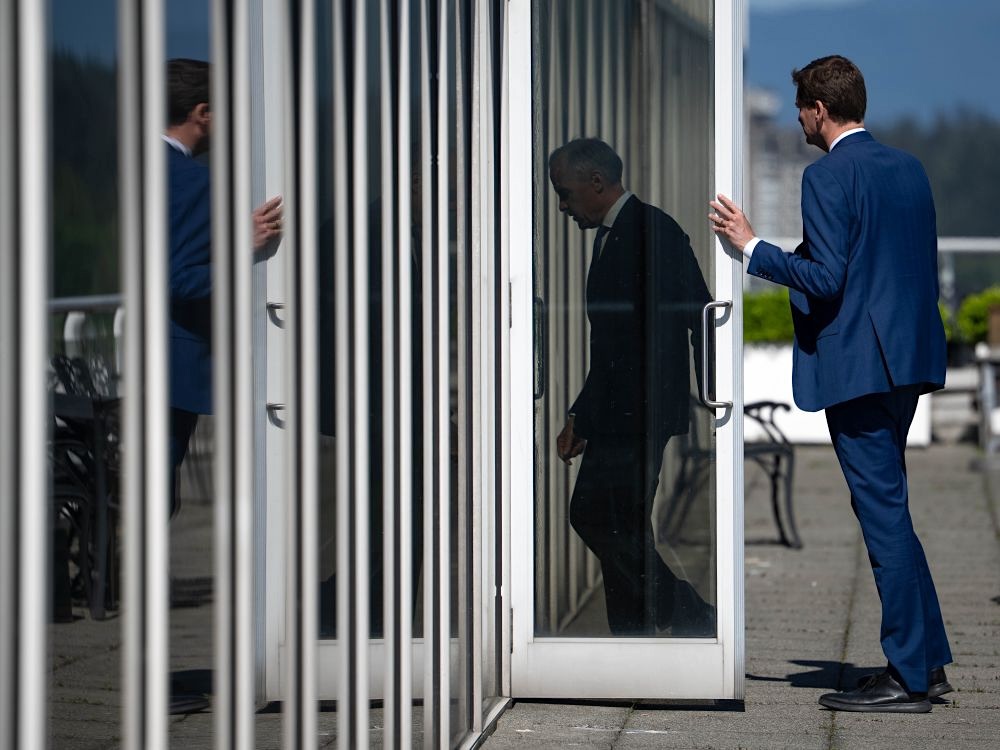
When David Eby became premier of British Columbia nearly four years ago, Norm Leech had much hope for the positive change he believed was coming.
“When we heard that [Eby] was going to be premier, if we had to choose who would be our dream candidate to be premier, he would be at the top of the list,” said Leech, sharing his personal views rather than speaking for any of the organizations he’s involved with.
Leech is the president of the Aboriginal Front Door Society, which provides social services on Vancouver’s Downtown Eastside, and the executive director of Frog Hollow Neighbourhood House. He previously led the Vancouver Aboriginal Community Policing Centre, a role that connected him to many Downtown Eastside organizations.
Before entering B.C. politics, Eby had been a tough advocate on civil rights and social justice issues as a human rights lawyer with Pivot Legal Society and later leading the BC Civil Liberties Association.
Leech never worked directly with Eby but knows many people who did. “I heard a lot of great things about him,” he said. “He came out of the Downtown Eastside, he understands the issues, he worked beside all the people who live and work down there. We thought we’d won the lottery when that happened.”
Four years later there’s disappointment. “The values and principles that shaped David Eby from the start is what we were looking for and counting on,” said Leech. “I think if anything we would offer to help him find those values and principles again, because we don’t know what happened to them.”
Leech pointed to the government’s failure to act on community consultation on improving life in the Downtown Eastside, but also the poor progress more generally on homelessness and affordable housing. There was the pulling back of measures to address substance use and Eby’s failed push to amend the Declaration on the Rights of Indigenous Peoples Act, or DRIPA.
“I don’t know what the political calculations are now,” Leech said. “I don’t know what happens in the backrooms of politics and power, but it seems like they remove the values and principles and the courage to stick by your values and principles.”
It feels like the Eby government bends easily, he continued, often at the expense of the poor, Indigenous people and others with less power and less access to power. “It tends to be in reaction mode and allowing others to set the agenda rather than to rely on the values and principles that got you there to guide the decision-making, to say ‘This is what we stand for,’ and then to stand.”
Recent polls suggest the disappointment in Eby is a feeling others with progressive values share.
While most surveys have found the NDP remains competitive with the opposition Conservatives, a June result from the Angus Reid Institute stood out for showing Eby’s approval rating had dropped to 31 per cent, the lowest since he’d become premier and the second worst among Canadian premiers. Only Doug Ford in Ontario fared worse.
The polling firm observed that Eby’s “government faces ongoing pressure over DRIPA, property-rights concerns, health care and affordability after nearly nine years of NDP government in B.C.”
Perhaps more worrying for Eby, respondents disapproving of the premier’s performance included 41 per cent of past NDP voters. It’s not just the NDP’s traditional opponents who are concerned. In many cases it’s past supporters.
Grappling with a $13-billion deficit
Weak support from the base is definitely concerning for Eby and the party, said Geoff Meggs, who was former premier John Horgan’s chief of staff, but Eby has an opportunity to reset over the summer and in recent weeks has already had some significant successes.
“I think people hoped for and expected a more activist approach from him than they got,” said Meggs. “Part of the difficulty he encountered was the deficit.”
At $13.3 billion when Finance Minister Brenda Bailey presented the budget in February, the deficit was unacceptably high despite some unpopular cuts the government made to try to contain it, he said.
With a large hole from ending the carbon tax, instead of spending more to improve child care, lower rents or other actions an activist government might take, the budget included choices such as cutting funds for social housing and long-term care facilities.
The province’s weak bottom line also means the government has abandoned a promised $1,000-per-family grocery rebate that the NDP campaigned on in the 2024 election, a reneging that some NDP insiders worry will make it difficult for voters to take the party’s marquee promises in future elections seriously.
“The very, very tight budget meant there was no room for the government to do better things for any part of its base,” Meggs said.
“He’s been fighting on issues that were not salient and where the position the government finds itself in is not one that’s making his base happy,” he said. “It’s making them unhappy. He’s got to find his way out of that.”
The DRIPA controversy
Adding to Eby’s troubles were his missteps responding to the B.C. Court of Appeal ruling that the province had incorporated the United Nations Declaration on the Rights of Indigenous Peoples, or UNDRIP, into its laws through DRIPA and that the province’s mineral tenure system, which allows claims to be staked online, was inconsistent with UNDRIP.
After saying it was urgent to amend DRIPA, despite strong opposition from First Nations leaders, and that a vote on it would be a confidence matter, Eby backed down when it became clear at least one member of the NDP caucus would vote against it and it wouldn’t have enough support to pass.
It was a mess of Eby’s own making, said Meggs. “I think it was a major error that he made,” he said. “A big error in judgment. It was foreseeable that there would be these tensions, and in a government with a one-seat majority you try to avoid those deal-breaker conversations.”
The crisis dragged on for weeks, and it became clear the promised amendments were a goal he couldn’t achieve, he said. “Many, many British Columbians who didn’t pay attention to politics were watching that and saw that and it raised doubts in their minds, so all of that contributed to his declining personal popularity, in my opinion.”
The unpopular budget and the DRIPA crisis combined to bring Eby and the government to a low point, Meggs said. “He had a very tough spring. There was no question about it. Probably the worst time in the government’s administration since 2017.”
So far, however, nobody has lined up to push Eby out of his job, and more recently things have been looking up for him.
Chance for a ‘midterm reset’
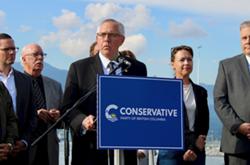
One positive was the Conservative Party of BC picking Kerry-Lynne Findlay as its new leader, said Meggs. “It’s pretty clear already she’s not going to be able to unite the Conservative caucus,” he said, adding that Penticton-Summerland MLA Amelia Boultbee joining the NDP caucus is one of several signs Findlay will fail to unite the right.
Boultbee was elected as a Conservative and has sat as an Independent since last fall when she quit over John Rustad’s “unravelling” leadership.

Then there was the early July announcement with Prime Minister Mark Carney about a deal that includes upholding a ban on tanker traffic on British Columbia’s north coast and $3 billion in federal funding towards replacing the George Massey Tunnel, money that successive B.C. governments have unsuccessfully lobbied Ottawa for, Meggs said.
The agreement also included dollars tied to the North Coast Transmission Line, critical minerals, other infrastructure, health care and child care, along with B.C. saying it won’t fight an Alberta proposal to build a new pipeline to the Lower Mainland, even as some B.C. cabinet ministers signal they remain opposed to it.
The Carney announcement and Boultbee crossing the floor added up to a very good week for Eby, Meggs said. “Either of those were a game-changer on their own. [Them] coming together gives him some brand new avenues.”
Eby’s also at a point midway through the government’s four-year mandate where it would make sense to shuffle the cabinet, he added, plus he will have to figure out what to do with his chief of staff still on medical leave and his temporary replacement coming to the end of her commitment.
“I think the challenge for the Eby team this summer is to go through a midterm reset,” Meggs said, “which gets them on a better track than they were on.”
The public is mostly concerned about the economy, housing affordability, health care and crime, he said. “Those are the topics he has to connect on,” he said. “He’s got new material to work with now on issues that are important to British Columbians, and that is where I assume he’s going to shift his focus.”
There are challenges ahead, starting with the escalating BC Nurses’ Union strike, Meggs added, but overall the government is in a much better position than it was even just a few weeks ago.
Looking for courage
For Leech in the Downtown Eastside, he would like to see Eby return to supporting the vulnerable and fighting the fights he was known for.
“A growing percentage of the population is in need of food banks and affordable housing and social supports, and the gap is widening,” Leech said. “For those of us on the frontlines and on the ground, it seems obvious: tax the profits.”
Business interests, which always push for lower taxes and fewer regulations, seem to have an outsized influence on the government’s agenda and priorities, he said, noting the government appears scared to take them on.
“Now I don’t know that there’s any political party that has the courage to stand up for their principles,” Leech said. “At some point it seems the political calculation comes down to, well, where’s the money going to come from, and those who have the money then get to decide what the priorities and the agenda are.”
Eby needs to offer voters a positive choice, he said. “I would advise, revert to the values and principles that got you there. Then at the very least people know who you are and what you’re supposed to stand for, and people respect that.” ![[Tyee]](/design-article.thetyee.ca/ui/img/yellowblob.png)
Read more: BC Politics







Tyee Commenting Guidelines
Please note that email notifications for replies are not currently working due to a software issue which may be resolved in a future update.
Comments that violate guidelines risk being deleted, and violations may result in a temporary or permanent user ban. Maintain the spirit of good conversation to stay in the discussion and be patient with moderators. Comments are reviewed regularly but not in real time.
Do:
Do not: