


 SHARE:
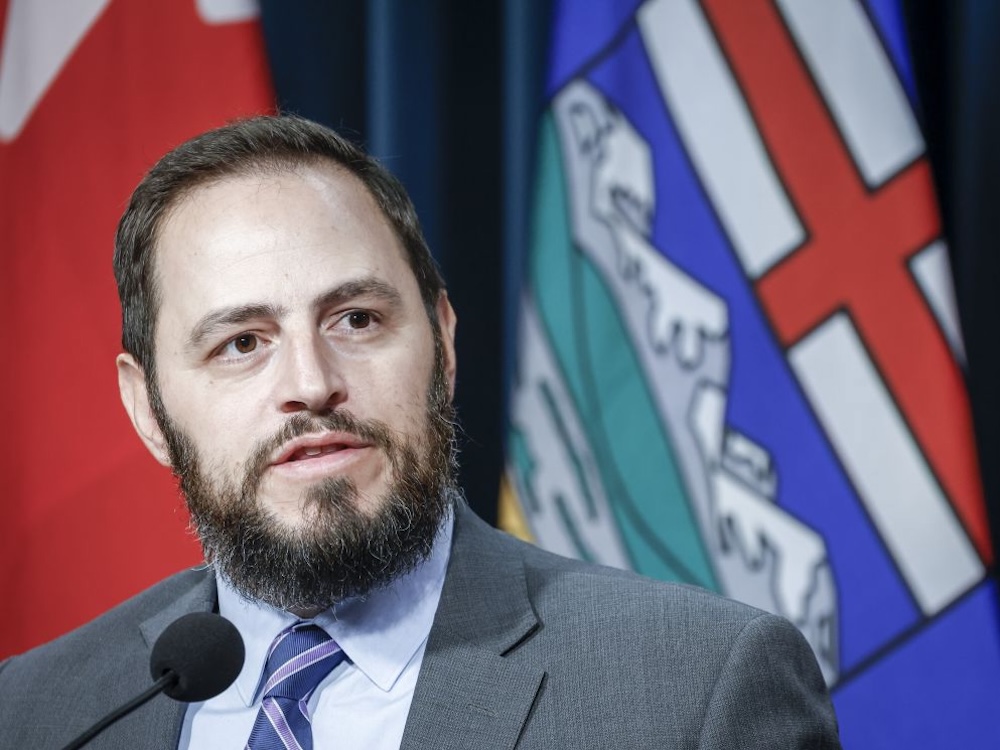
Alberta’s government has imposed a raft of changes on K-12 schools it says are needed to keep “ideology” and “pornography” out of classrooms. The new rules also appear to have blocked child abuse prevention programming and dedicated 2SLGBTQ+ anti-discrimination educators.
Beginning in the 2025 school year, schools were required to have any instruction materials related to human sexuality or sexual orientation and gender identity (SOGI) vetted by Alberta’s education ministry to ensure resources are age-appropriate and align with the curriculum. External groups that present in schools on either subject need to get approval for both the organization and their presentations.
New restrictions on library materials imposed last year required school authorities to review library and in-classroom book collections and remove items prohibited through a 2025 ministerial order.
Combined with curriculum changes and legislation barring ideological or political symbols from classrooms, both expected to be introduced in the fall, some educators have said it’s not clear what’s allowed and which topics are out of bounds.
One child abuse prevention group has taken the unusual step of hiring a lobbying firm to get a straight answer from government officials on what materials they can use in school programs.
Calgary Communities Against Sexual Abuse or CCASA has enlisted consultants from the government relations firm Signal Hill to advocate for greater clarity on permissible materials “to safeguard critical child protection initiatives [and/or] programs,” according to Alberta’s lobbyist registry. In the lobbying filing, CCASA identified three policies creating uncertainty for its educators: Bill 25, An Act to Remove Politics and Ideology from Classrooms; the ministerial order on library materials, and the K-12 curriculum review.
CCASA has developed two programs for children, their parents and professionals who work with kids: “Who Do You Tell?” a child sexual abuse education and safety program for ages 12 and under, and Birch Grove, a youth education program on sexual violence for ages 12 and up.
In 2024, the group saw a fourfold increase in Birch Grove school presentations and its child and youth programming reached more than 5,300 participants in schools and other locations, according to CCASA’s annual report. In 2025, the number of participants in CCASA’s child and youth programs fell to about 2,052.
Alberta Education has approved Birch Grove, and CCASA as a presenter, beginning in Grade 7, according to lists of vetted materials and organizations maintained by the province. The child sexual abuse prevention program hasn’t been approved for any grade.
No groups are approved to present to K-3 students.
“As there are no learning outcomes dealing explicitly with human sexuality or gender identity or sexual orientation in the K–2 curriculum, no instructional resources are required or approved for those grades,” said education ministry press secretary Garrett Koehler.
“Approved resources start at Grade 3 as that is when curriculum content on gender identity, sexual orientation or human sexuality begins,” Koehler said, adding that 25 groups have been approved so far to present in schools and that the ministry continues to review materials as they are submitted.
Content addressing general concepts such as consent as it relates to K–2 curriculum does not require approval by Alberta Education, he said.
Though sex ed doesn’t start until later grades, topics like consent, autonomy and abuse prevention “are foundational concepts that we want to start teaching young people at a very young age and in a developmentally and age-appropriate way,” said Jessica Wood, director of research and policy development at the Sex Information and Education Council of Canada.
“We're talking about things like consent and bodily autonomy in those kindergarten to Grade 3 years. We're talking about things like understanding how to ask for a hug, understanding that you need to ask to have your picture taken or hold someone's hand, respecting ‘no’s,” Wood said.
Woods said the province’s policies create an administrative burden for teachers and organizations and an “intensive barrier to implementing effective sexual health education.”
“When you're talking about organizations that talk about abuse prevention, or talk about gender norms, roles and stereotypes, those are more specialized kinds of backgrounds. and if teachers don't have the resources, and then they don't have the access to the organizational expertise, then the students are not going to be accessing that important information,” she said.
CCASA did not respond to multiple requests for comment.
‘Our free presentations are temporarily unavailable’
Alberta Education says it doesn’t outright reject any group that applies, but works with them to bring their resources in line with provincial standards. For many health educators, the revision and approval process has been difficult to navigate, forcing some to significantly cut back on what they can teach and others to pause their programming in schools completely.
Foundations for Life has been offering health lessons to students in Alberta’s Peace Region since 1985, and has 17 presentations spanning a range of topics and ages.
“Good Pictures, Bad Pictures” teaches K-1 students how to “Turn, Run & Tell when they are accidentally exposed to inappropriate or scary content in person or online.” In an abuse prevention program for Grades 1-3, students discuss the body parts and privacy, including practicing saying no, asking their caregivers the proper names for private parts “should they ever have to ask for help or report an incident,” identifying people they can trust to be on their “safety team,” and learning that secrets don’t have to be kept from safety team members.
Visitors to the Foundations for Life website who try to book these presentations, or classes for later grades on healthy relationship skills or human trafficking awareness, now get the same message: “Due to the recent changes to the AB Education Act, our free presentations are temporarily unavailable until we receive the full approval as a third party presenter.”
Only one of the organization’s programs, an introduction to puberty for Grade 4 students, has gotten the OK from the education ministry.
Foundations for Life did not respond to the IJF’s request for an interview before the time of publication.
‘No specifically 2SLGBTQ+ organizations on that approved list’
Fyrefly in Schools’ rural outreach has been a lifeline for youth and teachers outside of Edmonton and Calgary. The program, run through the University of Alberta's Institute for Sexual Minority Studies and Services, is aimed at reducing discrimination against 2SLGBTQ+ youth through education and normally reaches thousands of students each year, program co-ordinator Star Oldring said.
Fyrefly in Schools doesn’t offer sexual health education, but because its presentations cover sexual orientation and gender identity, the group needed to apply for ministerial approval to continue its work.
“We were given some conflicting feedback, and then we adjusted our application accordingly, and have still not attained any approval,” Oldring said.
“Because of the legislation and those prior approvals, we have gone from supporting thousands of students a year to, at this point, very few,” they said.
The only students Oldring said they were able to directly provide support and resources to last year were in Maskwacis, a community of four First Nation bands south of Edmonton where schools are outside of provincial jurisdiction.
Oldring said that it isn’t just Fyrefly that has been denied status as an external party by Alberta’s education ministry.
“There are no specifically 2SLGBTQ+ organizations on that approved list,” they said.
“I think that we can all see that there are things that are necessary that are not getting approved because they don't meet specific bureaucratic qualifications. But then I think we need to examine why that bureaucratic qualification exists in the first place. What is the motivation behind that?” they said.
While some organizations have been waiting in limbo for months, the province will soon be expanding exemptions to the vetting process to allow some religious organizations to present to students without needing to go through the review process.
The Education Act currently bars school boards from using learning and teaching resources that deal primarily with gender identity, sexual orientation or human sexuality unless they’ve been approved by the minister of education. But this requirement doesn’t apply if the SOGI and sexual health materials “are used or provided to provide religious instruction.”
An amendment included in Bill 25 would make the same exception for external parties that provide religious instruction. The bill has received royal assent and will come into force upon proclamation, anticipated for Sept. 1, 2026.
At least one explicitly religious organization has already made it through the vetting process and presented its abstinence focused program to dozens of classes last year. Edmonton Pregnancy Care Centre or PCC, the operating name of the registered Christian charity Outreach for Life Association of Edmonton, was approved to provide sexual health education to students beginning in Grade 7.
PCC presented its Wait! Let’s Talk sex education program to 1,309 students in 13 schools, according to the group’s 2025 annual report. PCC describes Wait! Let’s Talk as a class covering “healthy boundaries and sexuality with a focus on abstinence outside of marriage.” ![[Tyee]](/design-article.thetyee.ca/ui/img/yellowblob.png)
Read more: Alberta

Tyee Commenting Guidelines
Please note that email notifications for replies are not currently working due to a software issue which may be resolved in a future update.
Comments that violate guidelines risk being deleted, and violations may result in a temporary or permanent user ban. Maintain the spirit of good conversation to stay in the discussion and be patient with moderators. Comments are reviewed regularly but not in real time.
Do:
Do not: