

 SHARE:
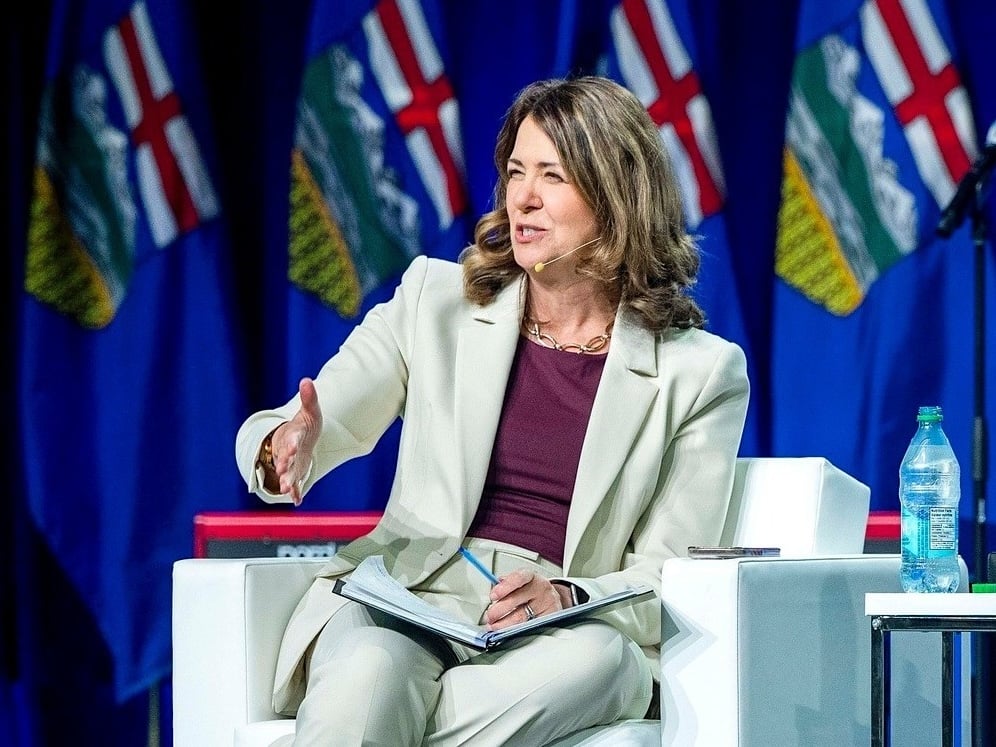
The Supreme Court of Canada recently released its ruling that mandatory minimum sentences for access or possession of child sexual abuse and exploitation material — previously called child pornography — may be unconstitutional in some cases.
The court found that these crimes are uniquely damaging and deserve severe sentences, but faulted how the Criminal Code applies mandatory minimums to “a very wide range of circumstances.”
Certain Canadian politicians have publicly criticized the decision, prompting some legal experts to warn them not to mislead the public by attacking the legal system.
Gender-based violence prevention research shows it’s more effective to address the social conditions that enable people to cause harm than to intervene after the harm has been caused.
While Alberta Premier Danielle Smith stoked outrage about the Supreme Court decision, a closer look at her legislative record reveals a suite of policies that are damaging gender-based violence prevention in the province.
Anti-trans policies in health, education and sport will normalize gender-based inequality for transgender Albertans, girls and women.
Additionally, limits on sexual health education and resources mean that fewer students in Alberta will receive sexual violence prevention education.
Online child exploitation
Online child exploitation describes a number of criminal behaviours. In 2022, there were 9,131 online child sexual abuse material offences, which increased to 16,892 in 2023.
This number includes incidents reported to police, which does not demonstrate the full scope of the problem. Unfortunately, the criminal legal system is not very effective in responding to most forms of sexual violence.
Advocates argue for more legal interventions that focus on prevention and not only prosecution, with a focus on greater accountability for technology platforms.
They also call for alternative forms of justice that centre survivors.
Advocates have been calling on federal and provincial governments to do more to prevent sexual and gender-based violence in all forms.
Understanding gender-based violence
Gender-based violence includes any form of violence based on someone’s gender, gender expression, gender identity or perceived gender.
This includes sexual violence, like child sexual abuse and exploitation materials, as well as hate-motivated violence. If we consider the Alberta government’s definition of gender-based violence, homophobia and transphobia would be included.
It is widely accepted that gender-based violence is rooted in forms of structural violence like racism, sexism and colonialism.
Primary prevention strategies address gender-based violence through education and programs that decrease inequality and address its root causes.
Prevention efforts target the beliefs that normalize violence and address risk factors for offender behaviours to stop victimization before it begins.
Things like traditional gender norms, homophobic teasing and victim-blaming are examples of attitudes and behaviours that contribute to sexualized violence.
School-based programs
Prevention education includes public awareness, training and school programs. School-based comprehensive sexual health education, child sexual abuse prevention education and even gay-straight and queer-straight alliances help prevent violence.
Beyond producing positive health outcomes, comprehensive sex ed teaches human rights, bystander intervention, digital literacy, healthy relationships and more. When sexuality education is comprehensive, it reduces sexual violence. Programs that use queer and trans joy as a framework affirm identities, prioritize care and challenge norms that perpetuate homophobia and transphobia.
Eroding prevention strategies
Despite the evidence supporting primary prevention in schools, Smith’s legislative agenda has thoroughly weakened gender-based violence prevention in schools.
The Alberta government announced a 10-year strategy to end gender-based violence in May, but it cannot be eradicated when the governing United Conservative Party’s policies are based on harmful myths.
Teaching about gender inequality and diversity is an important aspect of primary prevention, but Alberta’s curriculum scores the lowest in Canada on 2SLGBTQIA+ inclusion.
In Alberta, students between kindergarten and Grade 6 have only one opportunity to learn about 2SLGBTQIA+ identities. During Grade 3 physical education and wellness classes, students learn that families can have two mothers or two fathers — but under Alberta legislation, these lessons aren’t universally taught: families must opt their children in.
Alberta has become the only province that requires parent permission for lessons on puberty, hygiene and consent. Experts worry that this means fewer students will have access to sex ed.
In addition to the opt-in policies, Smith’s government now requires prior minister approval for all resources and third-party organizations that support human sexuality education.
Despite being separate from human sexuality, these regulations also apply to sexual assault centres that teach abuse prevention.
As of this month, only four organizations have been approved, leaving significant programming and expertise gaps in schools across the province, especially in rural communities that have higher rates of gender-based violence.
Policy harms
As well, under Smith’s leadership, parent permission and notification is now required for trans youth to use a different name or pronouns at school. This policy denies access to a very reasonable accommodation when it is requested for “trans” reasons.
One study shows that being able to use a preferred name in various contexts — like school — reduces suicidal behaviour by nearly 60 per cent in trans youth.
Saskatchewan’s top court ruled that their province’s name and pronoun policy — which Alberta copied — creates the risk of irreparable harm to youth, including the increased risk of family violence.
Still, the government has legislated that teachers must participate in the harm of their trans students or face disciplinary action.
Smith’s government has also moved to limit gender-affirming health care for trans youth. First introduced in a video titled “Protecting Future Choices of Children,” Smith’s policy bans a number of gender-affirming procedures that are already unavailable under the age of 18.
Smith said her goal was to preserve the future fertility of children until they can make decisions as adults. In other words, Smith believes that someone’s ability to reproduce is a matter of state concern. This belief is rooted in misogyny, especially rigid gender roles that expect women to be mothers and exerts control over their reproductive autonomy. Misogyny is a key driver of gender-based violence.
Bodily autonomy is core to preventing gender-based violence and is strictly limited by the ban on gender-affirming care for trans youth included in Bill 26.
Although the courts granted an early injunction that delayed its implementation, Smith’s government has invoked the notwithstanding clause for the three anti-trans bills to deny rights to trans Albertans.
Effective violence prevention needed
Without effective prevention, gender-based violence will continue to grow and strain the already underfunded and overburdened networks of support for survivors.
If Smith were invested in gender-based violence prevention, her legislative agenda — not just her X account — should reflect as much.
![[Tyee]](/design-article.thetyee.ca/ui/img/yellowblob.png)
Read more: Alberta, Gender + Sexuality










Notice about commenting changes
The Tyee’s commenting system will be moving to a new platform on Nov. 12. If you’re already a Tyee commenter you must register with the new system on or after Nov. 12 with your preferred username.More information can be found here.