


 SHARE:
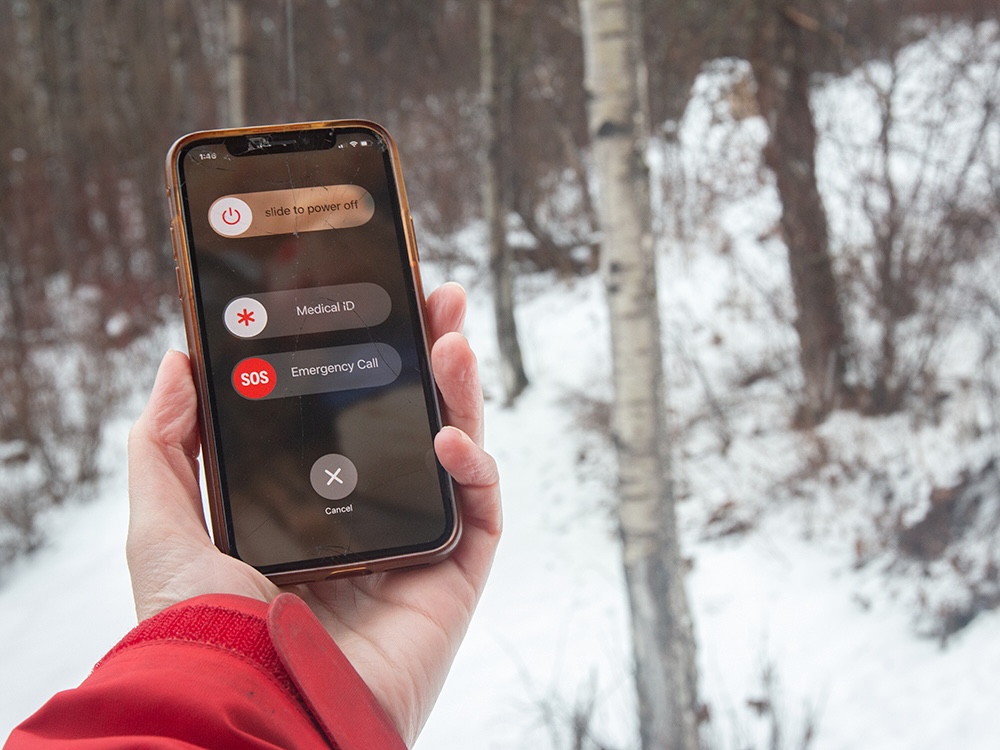
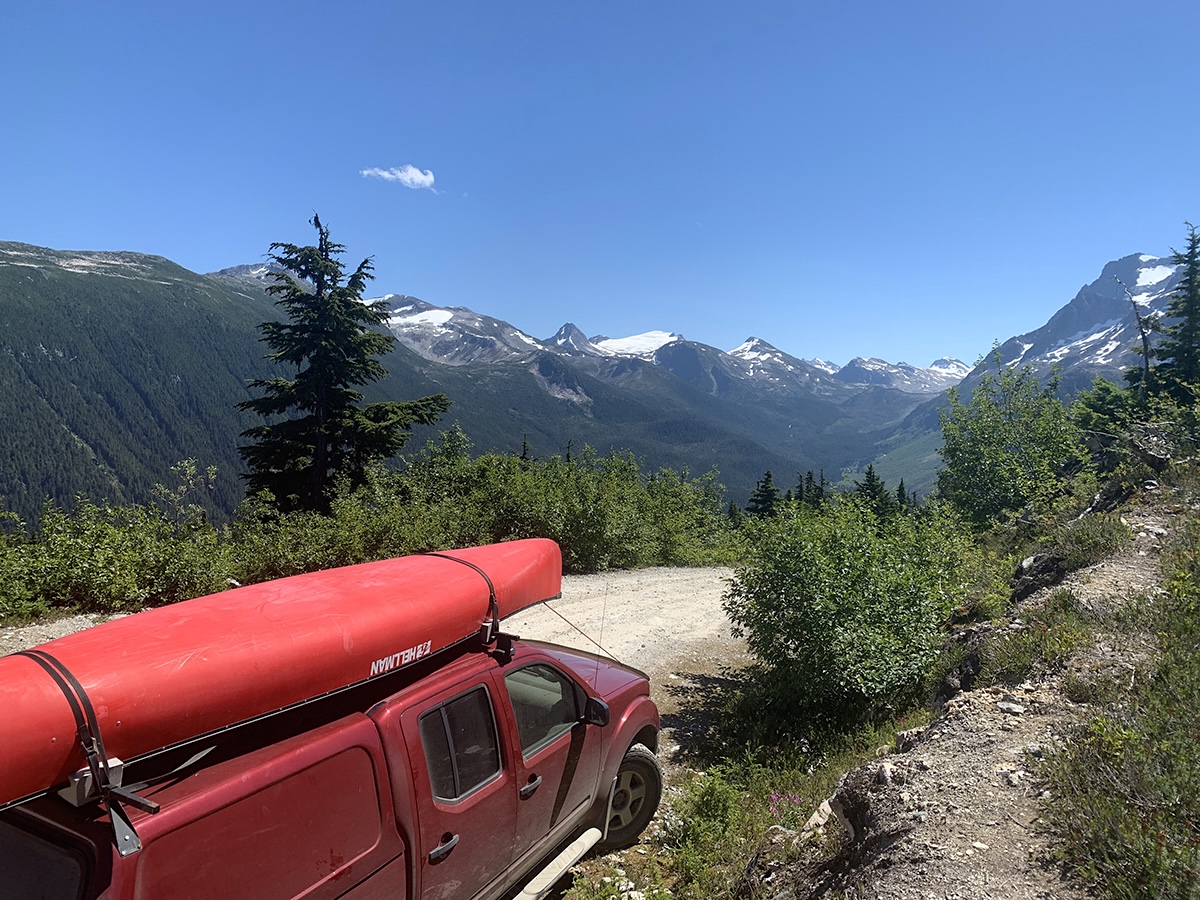
B.C.’s central coast is remote, rugged and sparsely populated.
Over the past year, the Bella Coola Valley has experienced a tsunami warning and a grizzly bear attack. Missing hikers are not uncommon. And as climate disasters become more regular, the number of emergencies is expected to rise.
But if you dial 911, you aren’t guaranteed to reach immediate help.
B.C.’s central coast has no formal 911 service, something that “comes up quite frequently whenever there is an emergency,” Central Coast Regional District chair Jayme Kennedy says. Anyone seeking help needs to have the 10-digit number handy for each emergency responder.
“The numbers are posted around, but when there is an emergency, they become completely invisible. You’re not seeing the little sign on the wall,” Kennedy says. “It’s an emergency, so the adrenaline’s pumping.”
For tourists, the lack of 911 service can be particularly surprising. Kennedy recalls a medical emergency at the lodge she previously owned, where guests instinctively dialed the three digits but couldn’t get through to emergency responders.
The visitors eventually tracked down Kennedy, who called an ambulance. But in a crisis, those delays could mean the difference between life and death.
“It was definitely not ideal in an emergency,” Kennedy says.
In B.C., local governments are responsible for setting up emergency call systems. That has left some smaller and more remote regions like Central Coast Regional District, which have fewer residents and a reduced tax base, struggling to implement the service. The province itself doesn’t know how many residents and communities lack 911 service.
It told The Tyee it cannot provide a list of communities without 911 calling because service availability can fluctuate with cell coverage and “long-standing service and infrastructure limitations in some remote areas.”
Cori Ramsay, president of the Union of BC Municipalities, or UBCM, calls the lack of provincewide oversight “absolutely bonkers.”
“We can't leave communities behind,” Ramsay says. “This is a basic essential for residents of British Columbia that if you are having an emergency, you have the ability to call 911, and someone answers to help you. That’s the expectation, no matter where you are in the province, and that expectation is failing British Columbians, currently.”
UBCM, an umbrella organization that advocates on behalf of local governments, would like the province to step into a leadership role and create consistent service standards across B.C.
Ramsay says the province should place a levy on cellphone bills to help cover the cost of 911. While the charge exists on landlines, the declining use of home phones means that revenue for emergency calling services is decreasing as call volumes and costs are on the rise.
“It’s resulting in a huge funding gap,” Ramsay says. But, so far, “the province has been reluctant to act, despite broad recognition that the current funding model is not sustainable.”
Required upgrade to ‘next-gen’ 911 adds financial hurdle
Central Coast is one of two regional districts in B.C. without 911 service, according to UBCM. The other, North Coast Regional District, does not have region-wide coverage, but 911 is provided by municipalities like Prince Rupert and Port Edward.
There may be additional “pockets” of underserved areas in the Interior, UBCM says.
A map posted by E-Comm, which provides the vast majority of 911 services in B.C., indicates that much of the coast north of Port Hardy, along with the province’s far northern regions, lacks coverage.
The largest single community without coverage is Bella Coola, which is unincorporated and administered by the Central Coast Regional District. The regional district is the only one in B.C. without a municipality. It encompasses several First Nations’ territories and a handful of small, unincorporated communities on the central coast and up the Bella Coola Valley.
If you dial 911 in the area, you may be able to get help with assistance from an operator, Kennedy says. But there can be significant delays as the call is manually routed to the correct emergency responder. The caller’s location is also not automatically shared, making response times slow and unreliable.
The regional district has been working with the Nuxalk and Heiltsuk nations on a plan for implementing 911 calling. But in a large region that is home to fewer than 4,000 residents, costs and patchy cell service pose major challenges.
Last fall, the regional district’s board was presented with three options, with differing costs and scales. They chose to move ahead with the second-most expensive of the three. A report said the new service would facilitate 911 calling with location sharing but won’t include “enhanced” fire dispatch. Instead, fire-related calls would be relayed by 911 dispatchers via telephone.
The service would cost about $167,000 to start, with ongoing annual costs estimated at $35,000. Fire dispatch services will add to the costs, which would be shared among the regional district and two First Nations.
For the Central Coast Regional District, which has an annual operating budget of less than $5 million, the plan offers the “best bang for our buck,” Kennedy says.
She says she frequently hears from local residents, particularly seniors, that implementing 911 calling in the region is a priority. The regional district will be consulting with the public to see if there is support for the extra spending, she says.
She hopes that a portion of the costs will be covered by UBCM grants meant to help communities transition to “next-generation” 911 service.
Canada’s telecommunications regulator is set to require all service providers to upgrade to next-generation emergency calling, or NG911, by next year. That is contributing to the cost for the regional district as it seeks to set up its own 911 service.
NG911 will include the ability to share video and medical information with first responders. The Canadian Radio-television and Telecommunications Commission describes the upgrade as “a shared responsibility between all levels of government and telecommunications service providers.”
B.C.’s Ministry of Citizens’ Services announced in 2023 that it would provide $60 million to help local governments with the cost of transitioning to NG911.
But the funding is available only to those with existing 911 service, Kennedy says. It’s unclear whether the regional district will be eligible for the financial support.
“We weren't eligible for the grants to receive next-gen service because we didn't have the first-gen service,” Kennedy says. “We were just getting left further and further behind.”
Review calls for ‘co-ordinated action’ in emergency response
In November, an independent review of B.C.’s 911 service recommended the provincial government define its role within emergency communications.
Formalizing the province’s role in emergency communication, or considering changes to the service delivery model, is “foundational for co-ordinated action” and especially important given the increase in extreme weather events like heat domes and atmospheric rivers, said the review, which was commissioned by B.C.’s Ministry of Public Safety and Solicitor General.
The province says it is reviewing the recommendations.
“British Columbians can count on our 911 system to connect them to emergency help — any time, anywhere in the province,” Nina Krieger, minister of public safety and solicitor general, wrote in a statement following the report’s release.
The province has made recent efforts to beef up emergency management in response to the climate crisis.
In 2022 — following a deadly heat dome, devastating wildfires and catastrophic flooding — the province created the Ministry of Emergency Management and Climate Readiness to co-ordinate emergency management activities.
B.C. Premier David Eby said at the time that the new ministry was created as “recognition B.C. seems to have been hit harder than many other places in Canada by climate change.” He pointed to examples like forest fires and floods.
The Tyee requested an interview with Minister of Emergency Management and Climate Readiness Kelly Greene to discuss 911 service on the central coast, but the ministry declined.
Instead, the Ministry of Public Safety and Solicitor General, which oversees 911 operations in the province, and the Ministry of Citizens’ Services, which is responsible for connectivity, provided a joint statement. They didn’t commit to additional supports for communities struggling to provide the service, saying only that “providing 911 service is optional” and up to the discretion of local governments.
“Currently there is no federal or provincial regulatory framework that requires 911 service to be provided everywhere in the province,” the ministries wrote. As a result, “service levels vary” due to differences in connectivity and 911 availability.
The ministries say the provincial government is “committed to ensuring high-speed internet connectivity is available for all British Columbians,” including investment into broadband connections that it describes as “the foundation of modern cellular networks.” Since 2017, the province has spent about $7 million on infrastructure projects meant to bridge connectivity gaps in the Central Coast Regional District, it says.
They add that, as satellite technologies evolve, satellite-to-cell services could “extend geographic coverage in rural and remote areas” that lack traditional cell towers.
The Public Safety Ministry also acknowledged that the “growing gap between funding and demand has placed financial pressure on local governments,” including requiring them to cover shortfalls. The ministry says it will “take time to explore what makes the most sense for B.C.”
“It’s too early to say exactly what the future model will look like, but we’re committed to finding a fair and sustainable path forward,” the ministry says, adding that a provincial analysis on a new funding model “will consider regional disparities and financial impacts on local governments to ensure equity is balanced across the province.”
Kennedy confirms that the region has seen improvements in cell coverage. Only a couple of years ago, the 430-kilometre stretch of highway between Hagensborg, in the Bella Coola Valley, and Williams Lake in the Interior was entirely without cell coverage. Today, there is service in communities dotted across the Chilcotin Plateau, she says.
But coverage is far from complete, and patchy cell service continues to make emergency communications difficult near the coast.
Last summer’s grizzly bear attack near the Four Mile Subdivision, a Nuxalk community in the Bella Coola Valley, occurred in one of the region’s most populated areas.
That community still does not have reliable cell coverage, Kennedy says.
“You might get one bar there,” Kennedy told The Tyee. “I think that made it really clear that we need to have emergency services available in the valley, especially in the most populated areas.” ![[Tyee]](/design-article.thetyee.ca/ui/img/yellowblob.png)
Read more: Health, BC Politics









Tyee Commenting Guidelines
Please note that email notifications for replies are not currently working due to a software issue which may be resolved in a future update.
Comments that violate guidelines risk being deleted, and violations may result in a temporary or permanent user ban. Maintain the spirit of good conversation to stay in the discussion and be patient with moderators. Comments are reviewed regularly but not in real time.
Do:
Do not: