


 SHARE:
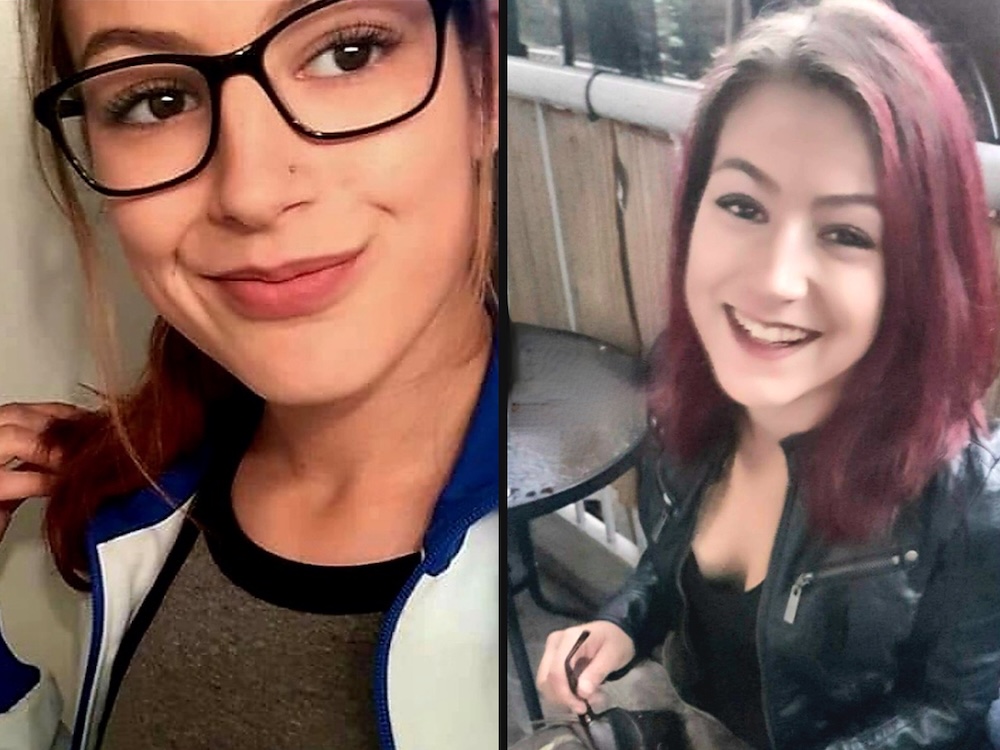
An Office of the Police Complaint Commissioner investigation has found that two Vancouver police officers erred when they did not designate the disappearance of a young Indigenous woman as high risk.
Tatyanna Harrison was reported missing to police by her mother, Natasha Harrison, on May 3, 2022. Her partially clothed body was discovered on a boat at a Richmond marina on May 2, but her body wasn’t identified until Aug. 5 — and only after Natasha Harrison urged police to examine whether the woman found on the boat could be Tatyanna.
Natasha Harrison and advocates have identified problems from the beginning of the police investigation into Tatyanna’s disappearance, to the police and coroner’s investigations into her death.
Last May, B.C.’s chief coroner announced an inquest into Harrison’s death would be held, although a date for the inquest has not yet been set.
The Office of the Police Complaint Commissioner investigated the actions of the police officers who initially assessed and investigated Natasha Harrison’s missing person report.
Retired judge Brian Neal found that the officers did take a number of investigative steps, such as checking local hospitals and interviewing Natasha Harrison as well as youth workers who had interacted with Tatyanna.
Neal wrote that the officers — a male constable and the female sergeant who supervised his work — compiled a history for Tatyanna that showed she was a 20-year-old Indigenous woman who was homeless at the time she went missing. She had a history of using fentanyl, had mental health diagnoses of bipolar disorder and ADHD and had a past history of suicidal ideation.
It was a combination of factors that should have led police to designate her disappearance as high risk, Neal wrote.
Sue Brown, executive director of Justice for Girls, said the ruling is significant.
“Each disappearance is of course different, but the purpose of designating whether a disappearance is high risk really comes down to the risk of harm to that individual and how much attention the police need to give to it,” said Brown, who has worked with Natasha Harrison to advocate for justice for Tatyanna.
“Had her case been designated as a high-risk disappearance, that may have limited or completely eliminated the delay that occurred between when Tatyanna's mother reported her missing and when her remains were ultimately linked to her identity a number of months later.”
In a supplemental disciplinary hearing on Oct. 20, Neal opted against any discipline for the two officers, citing “uncertainty” on Vancouver Police Department and provincial policies on missing persons, particularly young Indigenous women.
Neal also said there was “an apparent lack of training” on provincial and VPD policing standards and “the foundational work” of the Missing Women Commission of Inquiry.
The Missing Women Commission of Inquiry began in 2010 and concluded in 2012. It examined how police failed to properly investigate the disappearances of dozens of women from the Downtown Eastside in the 1990s. Many of those missing women were later found to have been murdered by Canada’s worst serial killer, Robert Pickton.
In his assessment of how Tatyanna Harrison’s case was handled, Neal said the officers were dealing with high workloads, short timelines to complete initial risk assessments and challenges in getting information from other agencies about people reported missing.
Tatyanna Harrison’s death is one of three disturbing cases of Indigenous women and youth who went missing from the Downtown Eastside neighbourhood of Vancouver in 2020, 2021 and 2022. Their bodies were all discovered in a six-month period in 2022, sending shock waves throughout the Downtown Eastside, Indigenous communities and the wider public.
The families of Harrison, Noelle O’Soup and Chelsea Poorman have been pushing for answers from police and the BC Coroners Service, including coroner’s inquests for all three cases.
Natasha Harrison has had to fight every step of the way to get her daughter’s disappearance and death investigated, including demanding that the RCMP perform a rape kit test on the body.
There is also confusion over the cause of death. The coroner initially told Natasha Harrison that Tatyanna’s death had likely been caused by a fentanyl overdose.
But six months later, after an autopsy, she was told the cause of death was sepsis.
An independent pathologist who reviewed those findings at Natasha Harrison’s request found there is not enough evidence to say for sure what the cause of death was.
Brown said it’s very possible that if Tatyanna’s disappearance had been designated as high risk from the beginning, the subsequent investigations may have been more urgent and thorough.
“I think it’s reasonable to assume that the quality of the death investigation conducted by the RCMP would have been strengthened and likely would have looked different had they known that they were investigating the death of someone who was the subject of a high-risk disappearance in Vancouver,” Brown said.
“And that that death investigation may have looked differently and resulted in more investigative steps than we believe took place.” ![[Tyee]](/design-article.thetyee.ca/ui/img/yellowblob.png)
Read more: Rights + Justice









Tyee Commenting Guidelines
Please note that email notifications for replies are not currently working due to a software issue which may be resolved in a future update.
Comments that violate guidelines risk being deleted, and violations may result in a temporary or permanent user ban. Maintain the spirit of good conversation to stay in the discussion and be patient with moderators. Comments are reviewed regularly but not in real time.
Do:
Do not: