


 SHARE:
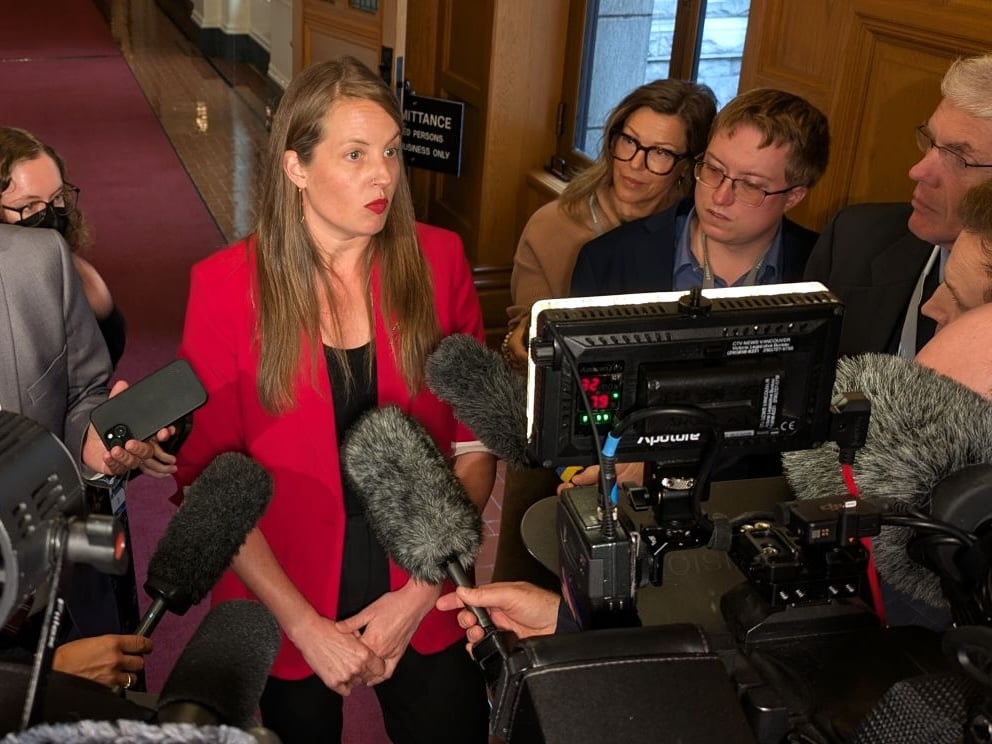
B.C. Housing Minister Christine Boyle says a Canada Mortgage and Housing Corp. report that found vacancies are increasing in the province shows the government’s policies are working.
But the CMHC’s analysis says the shifts in the rental market are part of a wider national trend that’s connected to slowing population growth and economic weakness.
The CMHC, a federal Crown corporation, released its 2025 Rental Market Report last week.
In Vancouver, it said, the vacancy rate for purpose-built rentals had hit 3.7 per cent, the highest it has been since 1988. The average rent for a two-bedroom unit was $2,363 a month, up 2.2 per cent since last year.
For new tenants, who tend to pay more than renters who haven’t moved, there had been a small decline since a year earlier but the city still had the highest rents in the country.
Over in Victoria, the vacancy rate in B.C.’s second-largest metropolitan area had also risen, reaching 3.3 per cent. The average rent for a two-bedroom unit had still gone up 5.1 per cent to $2,120.
In sharing the news, Boyle focused on the increase in vacancies and credited the BC NDP government.
"These results show that our housing initiatives are paying off for renters,” she said.
“Our government got to work cutting red tape and speeding up approvals to get more affordable homes built faster, cracking down on speculators to level the playing field, and turning short-term rentals back into long-term homes so more people can find a place to live. This work is paving the way for thousands of more rental homes that have, and still are, coming online across the province.”
The CMHC provides a more nuanced picture.
Though it doesn’t directly mention B.C. policies, it does say the supply of purpose-built rentals has grown in the province. In Vancouver it credits “favourable zoning policies and cost waivers from the City” and sustained demand that have incentivized developers to build new rentals in the city.
But it also makes note of the role that weakening demand played with fewer potential renters competing for homes.
“Federal policy changes affecting non-permanent residents, such as temporary workers and students, softened demand in the region,” the CMHC said. “Higher youth unemployment and slow wage growth also reduced demand for studio and one-bedroom units. Many young professionals were choosing co-living with roommates or their parents.”
And then there were the effects of a declining population. “British Columbia’s population growth fell sharply in recent quarters, due to a substantial decline in net international migration,” it said. “B.C. saw three consecutive quarters of outflow of non-permanent residents, most of whom were renters. With migration expected to remain lower, vacancies may stay higher in the short term.”
As for new condominiums being rented, that was part of a continuation of a decade-long trend. Existing condos entering the rental market were likely due to “a sluggish resale market,” meaning owners who couldn’t sell their units rented them out.
In the capital, the CMHC said, “Victoria faces similar demographic trends to Vancouver with outflows of international migrants and students, but to a lesser degree. A weak labour market for younger people reduced rental demand.”
The Conservative Party of BC housing critic, Surrey-Serpentine River MLA Linda Hepner, was unavailable for an interview but provided a statement.
“The NDP are trying to take credit for rising rental vacancy rates in British Columbia,” she said. “What's really going on is that working people, especially young people, are leaving our province, in many cases returning to homes overseas or moving to other provinces like Alberta, because our economy is in the tank and homes are simply unaffordable.”
Since the NDP formed government in 2017, she said, CMHC figures show rents for a one-bedroom apartment are up by 29 per cent in Vancouver and 61 per cent in Victoria.
Rules restricting short-term rentals have also contributed to the rising vacancy rate, but not for the reason the government says, Hepner added.
“Many of these properties are vacant because their price and their location are inappropriate for long-term tenants,” she said. “The NDP is taking credit for creating vacant units — at prices that people can't afford and in locations where people do not want to live — and bankrupting the owners in the process. Well-played David Eby, take a bow.”
Whatever credit or blame the provincial government deserves, the trends in B.C. are similar to those playing out across Canada. Nationally, the CMHC said, “historically strong completions of rental units and weaker demand caused by slower population and economic growth were responsible for softening rents.”
Population growth slowed sharply due to the federal government’s changes to immigration policy that reduced the number of new arrivals, it said. “Rental demand also declined as study and work permit holders in the 15-34 demographic, the primary drivers of rental household formation, left the country.”
B.C. and Ontario, the two provinces most popular among international students, were the hardest hit by fewer admissions.
Across the country, the CMHC said, “slower hiring and rising unemployment, especially among younger workers, limited new household formation.”
As in B.C., the full picture on rentals includes both growing supply of available units and weakening demand for them. While that might be bad news for the broader economy, it will be a welcome easing of pressure on renters after decades of low vacancies and rising rents. ![[Tyee]](/design-article.thetyee.ca/ui/img/yellowblob.png)
Read more: BC Politics, Housing









Notice about commenting changes
The Tyee’s commenting system will be moving to a new platform on Nov. 12. If you’re already a Tyee commenter you must register with the new system on or after Nov. 12 with your preferred username.More information can be found here.