

 SHARE:
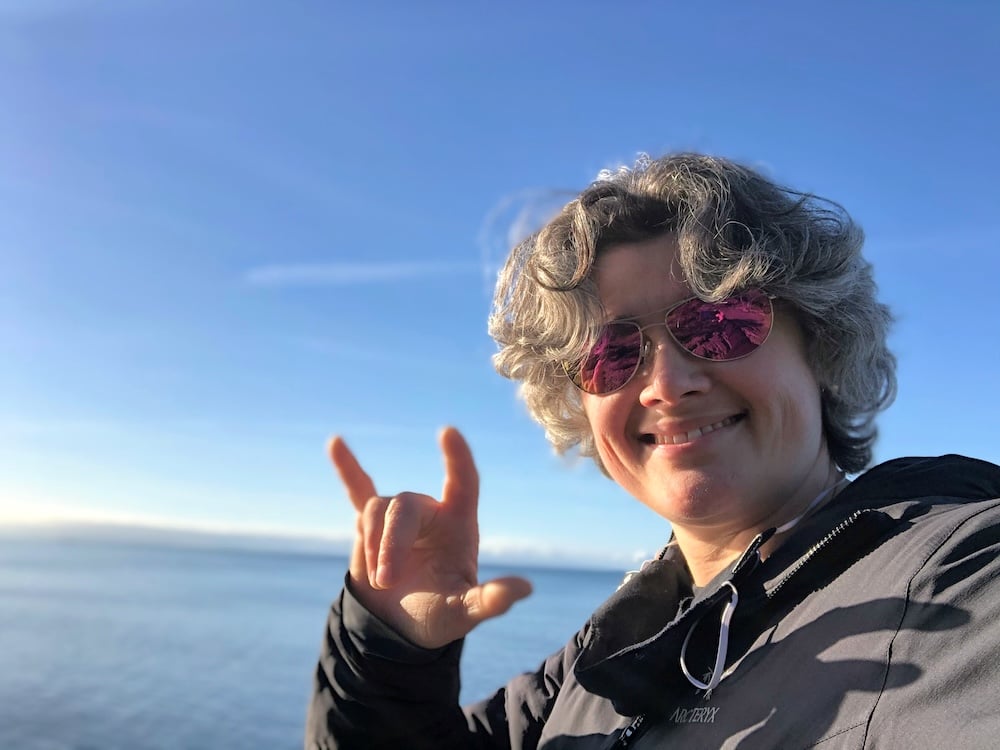
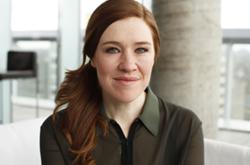
The B.C. government’s delay on improving language services for the families of babies who are born Deaf is deeply personal for Sarah-Anne Hrycenko.
“The Deaf community doesn’t need fixing; we need to be seen and valued,” Hrycenko told The Tyee via email. “Government has listened to everyone except us for too long.”
A professional who works in procurement and management consulting, Hrycenko says she is “someone who was given choices when I was a baby through the Deaf Children’s Society of BC support.”
Born Deaf to Deaf parents, she was exposed from birth to both sign language and spoken language. “I decided to stop wearing hearing aids when I was seven or eight years old,” she said. “I realized I was most comfortable communicating in sign language — where I could express myself freely, connect easily with others and feel clear and confident in my identity.”
That lived experience and her professional background have given her a deep understanding of why language choice and accountability matter for every Deaf child and family, she said. “I am living proof of what happens when parents ensure their Deaf child is offered full language access and genuine choice from the very beginning of life.”
B.C. government decisions are making that kind of access and choice harder to find.
The Deaf Children’s Society that made such a difference in her life announced earlier this month it is closing after 46 years of providing services to Deaf children and their families.
While the organization cited long-term financial strains, the decision came following the provincial government’s recent backtracking on the redesign of language acquisition programs for deaf, hard-of-hearing and deafblind children. The procurement had raised hopes the organization would have a renewed role and could be saved.
Hrycenko described the government’s decision as heartbreaking but sees it and the closure of the Deaf Children’s Society as part of a long-term decline in the choices available in B.C. to Deaf children and their families. She called on the province to appoint a Deaf commissioner who would ensure Deaf voices are part of every government decision that affects their lives.
The following interview was conducted by email. Responses have been lightly edited and some questions were added to provide section breaks.
The Tyee: What are your personal connections to the Deaf Children’s Society?
Sarah-Anne Hrycenko: I was born Deaf and my parents are also Deaf. They believed it was important for me to have access to both modalities. I use American Sign Language, wore hearing aids and learned how to speak. My parents chose the Deaf Children’s Society because they wanted me to have the choice they never had when they were young. Both were born Deaf, but neither started life with access to sign language.
The Deaf Children’s Society played a major part in shaping who I am today and gave me the power of choice. It valued children’s right to language and supported parents in understanding the full benefits of both sign and spoken language. It taught that offering both from the very beginning empowers the child to choose their own path, not one limited by a parent’s choice or a professional’s opinion.
As adults, we are responsible for giving children full access to language, because without it, we become less human. To be human is to communicate, to express freely and to reach our fullest potential. Deaf Children’s Society’s closing breaks my heart and I am deeply concerned about Deaf children.
What does the closure mean for people in the community?
The closure feels like the final chapter in a long systemic saga that continues to shrink and erase the Deaf community rather than empowering it. We’ve already lived through the closure of Jericho Hill School for the Deaf and the loss of Deaf-focused special education.... What was once a provincial Deaf school shrank into a small provincial program within a school district in a hearing school. These changes have deeply impacted our community.
Jericho Hill had over 300 Deaf children who could learn, play and socialize naturally with peers who shared their language. That sense of belonging and identity built generations of Deaf leaders, athletes, artists and advocates. Today, many hard-of-hearing or late-identified Deaf children struggle in mainstream classrooms — isolated by large group settings and constant noise, often eating alone, with one or two friends, or with teachers, educational assistants or interpreters.
For decades, most students who attended Jericho Hill and later BC School for the Deaf came from Deaf Children’s Society. Its programs gave Deaf children a strong foundation in language and identity, helping them enter school ready to learn. The closure of DCS means the loss of that critical early connection.
It’s not just an organization closing. It’s the fading of an entire Deaf ecosystem that once nurtured language, identity and leadership in the B.C. Deaf community. We once had our own Deaf provincial sports teams, theatre groups and strong community network, everything that helped Deaf children grow into proud, connected Deaf adults.
How is the closure connected to the province cancelling the call for responses seeking proposals for early language access services targeted to young deaf, hard-of-hearing and deafblind children?
The call was the Deaf community’s last hope to reverse decades of watching language and the community slowly diminish in B.C. This would have allowed us to rebuild for future generations of Deaf children. It finally recognized the value of providing sign language from the very beginning of a child’s life, treating ASL and English as equal modalities and requiring professionals fluent in both.
It also requires the contractor to host events that include the Deaf community. It introduced real accountability through bilingual assessment tools and clear standards for safeguarding language acquisition.
But instead the province extended a weak, unaccountable contract to 2027 which continues to contribute to declining language proficiency among children entering school.
And it’s part of a wider decline in government support...
Everything is interconnected. The Ministry of Education requires Deaf children to know ASL before enrolling at the BC School for the Deaf, yet the Ministry of Children and Family Development’s weak requirements for early intervention fail to ensure children get that foundation.
The Ministry of Health’s BC Early Hearing Program mentions sign language only a few times on its website and in its FAQ for parents, while heavily emphasizing “auditory,” “hearing equipment” and “hearing clinic locations.” There are no sign language centres or resources listed along with the hearing clinic or equivalent supports that are listed.
It signals a clear systemic bias in values influenced by phonocentrism.
With DCS gone, Deaf leadership continues to fade and the system remains siloed, lacking long-term data, strong and clear collaboration between ministries and meaningful collaboration with the Deaf community.
What does that leave for Deaf children and their families today?
The BC Early Hearing Program does provide some funding for sign language instruction, and the current contractor, the BC Family Hearing Resource Centre, offers sign language services.
Often, however, families are not given the full information they need to make conscious, informed decisions about their child’s language development. Many family doctors and audiologists and speech language pathologists still today recommend speech and listening approaches such as hearing aids or cochlear implants without discussing the true benefits of sign language. The medical professional view and values continue to frame hearing as the “problem” to be fixed, when the real problem is the lack of full and equal access to language.
When members of the Deaf community raise these concerns, we are often rebuffed, told we are “misunderstanding” the government and the system or we’re “overstating” the problem.
But we are the ones living the impact of our parents’ choices. We see the results every day in children entering school with delayed language development and parents who were never told they had another choice. Listening to us should not be seen as confrontation; it should be seen as collaboration.
Whether by long-term strategic design or simply neglect, the result is the same: a phonocentric system that erodes accountability, eventually weakens the justification to keep the Deaf school open and in the long run undermines the Deaf community’s ability to fight for children’s linguistic rights.
Decisions like this don’t just affect one generation — they shape the next generations, silencing language, identity and culture. In other words, it is a slow form of cultural genocide. Cancelling the CFR [call for responses] wasn’t just a decision; it was a step backward from the UN commitment to “facilitate the learning of sign language and promote the linguistic identity of the Deaf community.”
What else do you want the public to know about the government’s decision to cancel the call for proposals on new approaches to Deaf education?
It is a decision that will shape the future of every Deaf child in B.C. It sent a message that sign language and Deaf culture are optional rather than essential, and that’s a dangerous precedent. The public needs to understand that language access is not a privilege — it’s a human right.
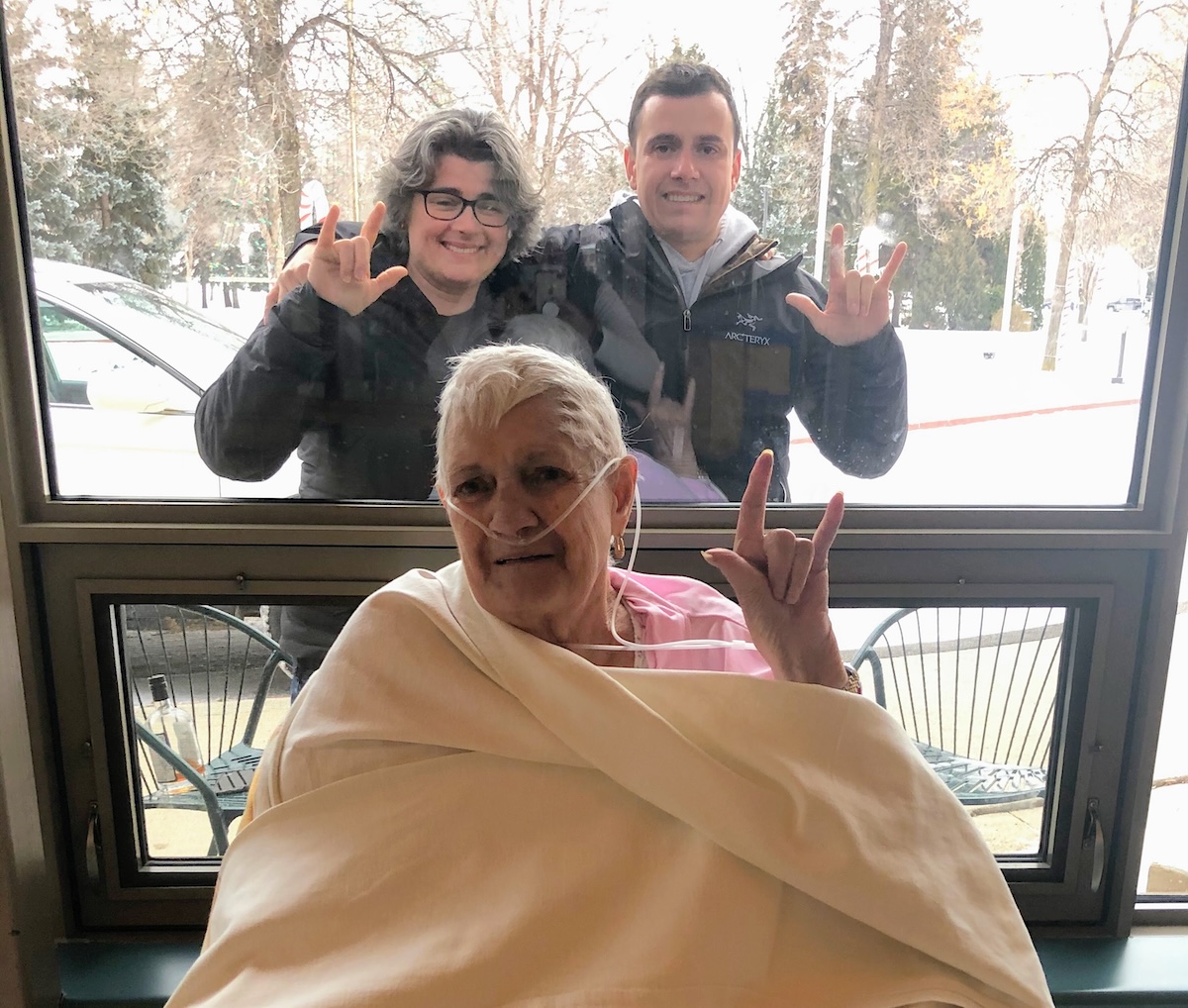
This issue isn’t about hearing level. It’s about language. Anyone, Deaf or hearing, can benefit from sign language. It allows us to communicate across distance, noise, or see through barriers like at a hockey game, across a crowded gala table or even through a hospital window during the pandemic to communicate with my grandmother.
That is Deaf gain — reframing sign language as something broader and rich. Society celebrates baby sign language for hearing infants, yet it’s seen as a last resort for Deaf babies whose futures depend on it. The public should be asking: Why is that acceptable?
What’s a better approach?
Babies deserve access to both sign and spoken language from birth to protect their right to full language and human development.
Yet parents are often guided down auditory paths by their own biases as hearing parents and by professionals whose natural bias is left unquestioned. This bias requires reflection and a willingness to ask hard questions about what “normal” means.
The world is built around sound, but it can be lived fully visually as well. Without Deaf role models and leadership in ministries at senior levels shaping early education and health, families continue to receive advice focused on fixing ears instead of nurturing language and identity.
What else should I be asking you?
I want people to understand that this isn’t just about funding or programs — it’s about the survival of a language, a culture and a community.
For too long, B.C.’s system has been synchronized to treat ASL as a last resort, reinforcing phonocentric values and avoiding real accountability. The call for responses disrupted the cycle by requiring fluency, bilingual assessment and Deaf community involvement.
Cancelling it put everything back into the same pattern that keeps sign language marginalized, and families uninformed.
What’s happening in B.C. is part of a much larger story. Around the world, sign languages are recognized as equal and vital, yet here they’re still treated as secondary.
The Deaf community has been asking for collaboration, not charity; for partnership, not permission. We don’t need people to speak for us — we need them to listen with their heart and eyes open. We are waiting for a meeting with Premier David Eby.
At the heart of all of this is simple: communication and language are what makes us human. The Deaf community has so much to offer, amazing culture and community. As Jane Goodall once said, language is what allowed us to share ideas, build relationships and create culture — it’s what makes us human.
When access to communication and language is limited, we are denied what makes us fully human. ![[Tyee]](/design-article.thetyee.ca/ui/img/yellowblob.png)
Read more: Rights + Justice, Education, BC Politics

Notice about commenting changes
The Tyee’s commenting system will be moving to a new platform on Nov. 12. If you’re already a Tyee commenter you must register with the new system on or after Nov. 12 with your preferred username.More information can be found here.