


 SHARE:
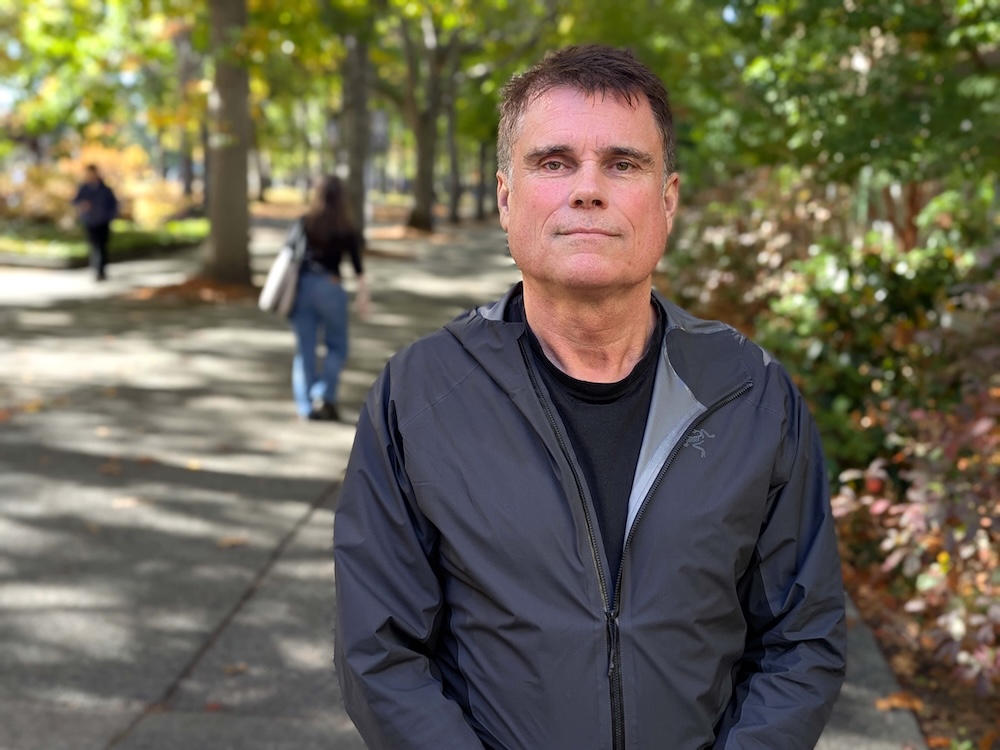
The British Columbia government has cancelled planned changes that advocates say would have made a major advance for deaf and hard-of-hearing children.
In May the Ministry of Children and Family Development issued a 57-page call for responses seeking proposals for deaf, hard-of-hearing and deafblind early language access services targeted to young children.
“When it got posted the deaf community was really excited,” said Nigel Howard, a sign language interpreter and adjunct professor in linguistics at the University of British Columbia and the University of Victoria. “It was this great moment of seeing like, wow, the provincial government finally understands.”
“The deaf community really had a lot of excitement about this because it would have really changed things that previously were actually causing harm,” Howard said on the phone through an interpreter. “This was doing the right thing finally.”
A strong foundation in language is essential so that children are ready when they move into kindergarten and on to high school, he said, but many are not getting that.
Years of effort and consultation had gone into developing the call for responses, he said, and the process had involved deaf professionals, audiologists, speech language pathologists, deaf educators, early educators, other experts and allies.
It had been fully reviewed and was broadly supported, said Howard, so it was a major disappointment to learn this month that the government had cancelled it.
“To now see them say ‘Oh, we’re going to rework this’ is devastating,” he said. “To get rid of that now is really disheartening.”
The minister of children and family development, Jodie Wickens, was unprepared to comment on the cancellation.
Around 100 children are born in B.C. each year with hearing loss, so there are about 500 under the age of five at any given time who need the services.
A spokesperson for the ministry said in an emailed statement that it is a top priority to provide the best services possible for deaf and hard-of-hearing children, youth and their families and that the government understands how important the services are.
There are several providers in B.C. who support children and youth with a hearing difference and many points of view on how best to provide early language services, the ministry spokesperson said. “It’s clear more consultation and engagement is needed with families, those with lived experience and experts to inform an improved model for the delivery of early language services.”
For now, to ensure continuity, the existing agreement with BC Family Hearing Resource Society will be extended until March 2027, they said. “There is no reduction in early language services for children with a hearing difference.”
At the same time, they added, “every ministry has been mandated to review its contracts to ensure that resources are optimized to have greatest efficiency and effectiveness.”
The ministry will open a new competitive process for provision of the services before March 2027, they said.
“We know these services are critical to support language acquisition, accessibility, social/emotional development, and mental health and wellness,” they added. “We’re committed to supporting children and youth with a hearing difference, and to ensuring they can access the specialized services they need, where and when they need them.”
No one from the BC Family Hearing Resource Society had responded to an interview request by publication time. For more than 40 years the non-profit organization and its predecessors have been providing services to children who are deaf and hard of hearing from birth until they enter school.
The current contract for services to children who are deaf and hard of hearing was set to expire in 2025 before it was extended. There is a separate contract with the Canadian Deafblind Association British Columbia to provide services to deafblind children and their families.
The call for responses, which included a disclaimer that it was non-binding and the province would not be obliged to proceed based on it, sought an organization to provide services for three years. The government would have been able to renew for two more terms of two years each.
Howard, whom many would recognize from his sign language translation during B.C.’s updates in the COVID-19 pandemic, is the spokesperson for an ad hoc group that is pressing the government to reverse the cancellation and move ahead with implementing the services as described in the call for responses.
“We feel that this idea that there now needs to be more consultation is actually going to dilute the original work that was done which was acceptable to the deaf community,” he said.
“We want language foundation,” he added. “We need stimulation of language acquisition, language development. We are the same as any other student, as a hearing student, intellectually, but the language is what becomes the barrier, so this [call for responses] addressed all those questions.”
The group has been receiving letters of support and started a petition that has received more than 3,000 signatures within a week.
“What we’re not satisfied with is the status quo,” said Howard. “I’m trying to keep it polite and neutral. I am a deaf person and I have seen the detrimental effects of what has happened for the last decade plus, really so much longer than that.”
“What we know is there haven’t been any measurements or assessments or followup on these deaf children over time historically,” he said. “We want to really make sure they are acquiring language and finding their correct pathways or direction to becoming contributing members of society with a strong sense of identity.”
Howard said it has long been clear to him and others in the ad hoc group that the current system is failing to achieve those goals and that the call for responses was a significant step forward.
“It really emphasized measurements and assessments and having regular assessments every six months to make sure that children were actually developing these language milestones and reaching them so that when they got into K-12 they had the skills that they needed,” he said.
It was rooted in a philosophy that supports using sign language and moves beyond the medical model that sees people who are deaf or hard of hearing as disabled and needing to be fixed, said Howard. “It was very centred on the child to make sure that they had this language. That was the whole intention behind the document when it was released.”
The principles guiding it included that American Sign Language would be treated “as a foundation,” that families would not have to choose one language over another, and that there would be equal access to both ASL and spoken languages.
It was an opportunity to focus on the development of the child so that they could get the individualized services they need instead of having to fit into the current system, Howard said. “The deaf community really had a lot of hope seeing this that things would finally start to shift and there would be more consideration for the language acquisition of deaf children.”
The call for responses would have led to better assessment of what’s working well and where the gaps are. It also would have involved more deaf people in delivering the services and increased the requirements for service providers to be fluent in American Sign Language.
“We have just seen same thing, same thing, same thing, same,” said Howard, “and now we’re getting the answer it’s just going to be the same again when we have this wonderful opportunity for change.” ![[Tyee]](/design-article.thetyee.ca/ui/img/yellowblob.png)
Read more: Rights + Justice, Education






Tyee Commenting Guidelines
Please note that email notifications for replies are not currently working due to a software issue which may be resolved in a future update.
Comments that violate guidelines risk being deleted, and violations may result in a temporary or permanent user ban. Maintain the spirit of good conversation to stay in the discussion and be patient with moderators. Comments are reviewed regularly but not in real time.
Do:
Do not: