


 SHARE:
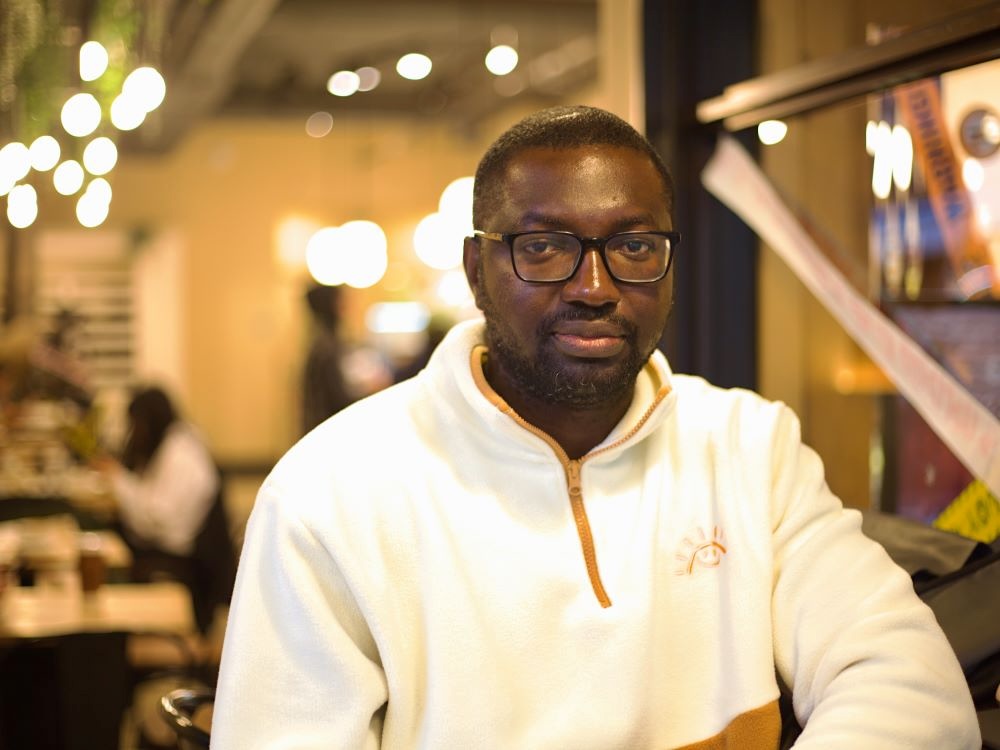
When Oluwafemi Agboola applied for an extension to his international student study permit earlier this year, he thought it would be a relatively straightforward process.
But when the private post-secondary school he was attending allegedly failed to confirm his enrolment with Immigration, Refugees and Citizenship Canada within the allotted 10-day timeline, Agboola’s study permit extension application was cancelled on March 18, 2025.
Agboola had already paid $42,091.75 of the almost $50,000 in tuition for the two-year master of business administration program offered by University Canada West, a private college in Vancouver.
But left without immigration status, stripped of his provincial health insurance and with just one week left in the second-last semester, Agboola was suddenly unable to work or study. That meant giving up a part-time job that was helping Agboola and his wife make ends meet, and a months-long delay in finishing up his MBA.
“I had done some of my exams; I had just one pending exam left,” he said. “I had one term left. If this didn’t happen, I would have finished in June.”
His wife was able to continue working, but Agboola was still forced to drain his savings to cover household expenses during the five months Immigration, Refugees and Citizenship Canada took to process his request to restore his study permit application.
“I was sad. We are creatures of habit; it’s good to have a routine,” he said. Agboola said it was difficult to have “that routine change to: now I’m going to be stuck at home, not knowing what happens next.”
Through the non-profit organization One Voice Canada, Balraj Kahlon has been advocating for the rights of international students attending private colleges and universities since 2019.
This has included everything from directing students to services they may not be aware of, such as help with mental health, to getting tuition refunds for students who allege they were misled by private post-secondaries.
“These situations don’t come up with public colleges,” Kahlon said.
Kahlon does not represent Agboola, nor has he received complaints from other international students about University Canada West.
But speaking generally to the experience of international students attending private schools in Canada, Kahlon said they have few rights.
“No one is taking any responsibility for international students,” he said. “That’s why they seem to fall through the cracks.”
An application process gone wrong
A Nigerian citizen, Agboola had less than two years left on his passport when he moved to Vancouver for school in mid-September 2023. This was before controversial changes to Canada’s international student program were implemented that drastically lowered the number of foreign students. Critics say the changes have made the application process more convoluted for students.
Agboola knew his study permit would expire when his passport did, and that he would have to apply for a new passport while in Canada. Once he received his new passport, Agboola applied for an extension to his study permit on Feb. 1, 2025.
But on March 18, Immigration, Refugees and Citizenship Canada, or IRCC, informed Agboola his application was rejected because University Canada West “did not verify your letter of acceptance within the required timelines,” according to the letter IRCC sent to Agboola. The Tyee has reviewed all the correspondence referred to in this story.
A letter of acceptance is confirmation from a post-secondary school that a student is approved to start a study program at a particular school, and can be used by a potential international student to apply for an initial study permit application to IRCC. Confirmation of enrolment is the school document a current international student would include in an IRCC permit extension application.
In their correspondence with Agboola, University Canada West and IRCC officials used these terms interchangeably.
When Agboola asked school officials why they did not verify his enrolment, they claimed the confirmation of enrolment he had acquired through the school’s online student portal had been out of date. This caused the school to mistakenly cancel the verification of his letter of acceptance, they told him.
By Agboola’s request, University Canada West included this explanation in an official letter to IRCC requesting that it reinstate the verification of his permit application, which Agboola then sent to IRCC.
But University Canada West’s explanation didn’t make sense to Agboola. No one from the school told him they had cancelled his verification until he asked staff about the IRCC letter, he told The Tyee.
“I was still attending classes,” Agboola said. “I took my exams. I was doing pretty good.”
Dissatisfied with University Canada West’s explanation, Agboola communicated via email with the school’s student affairs office, which maintained that the school had responded to IRCC’s request to verify his enrolment on time.
In another email exchange with University Canada West registrar Henrique Gea this past June, Gea blamed IRCC, telling Agboola he was not the only student this had happened to.
“Your case is not new to UCW, as we had previously heard from other students who received a similar answer from IRCC. Other institutions in B.C. also faced the same issue and gave students the evidence that the validation of the LOA [letter of acceptance] was done on time,” reads Gea’s email.
“After that, IRCC requested all institutions to delete the evidence of confirmation and not share it with anyone; otherwise, the institution can lose the DLI [designated learning institution] and not be able to admit more students.”
IRCC disputes University Canada West’s account
In an email exchange with The Tyee, a University Canada West spokesperson declined to comment for this article, citing both student privacy and it being a legal matter.
Agboola has hired a lawyer who is corresponding with the university on his behalf. He told The Tyee he is considering filing a lawsuit against University Canada West but has not begun any legal proceedings.
An IRCC spokesperson also declined to comment on Agboola’s case, citing student privacy. But they did respond to Gea’s claims.
“Immigration, Refugees and Citizenship Canada does not ask Designated Learning Institutions to delete or modify the acceptance, enrolment, or academic information they have on their students,” an IRCC spokesperson told The Tyee via email.
As well, the spokesperson added, it is the provincial or territorial government, not IRCC, that determines whether a post-secondary school is included on the list of schools approved to accept international students.
The Tyee shared the list of allegations with University Canada West before publication to ensure the school had an opportunity to respond.
A university spokesperson responded with a copy of IRCC’s terms and conditions for using its online portal to verify a student’s letter of acceptance, pointing specifically to Section 3(O), about students’ personal information, which reads: “Upon completion of data verification, the DLI is not authorized to retain any information provided through the IRCC Portal and must immediately destroy the information.”
It does not mention removing a school’s designated learning institution status if they fail to comply. The spokesperson did not clarify how this applies to Agboola’s situation.
The Tyee requested an interview with B.C.’s minister of post-secondary education and future skills, Jessie Sunner, but she was not made available. Instead, Sunner sent an emailed statement saying that Agboola’s situation is a federal government issue.
However, the ministry noted private degree-granting institutions like University Canada West are regulated by the province’s Degree Quality Assessment Board.
If he wanted to make a complaint about his experience, Agboola could contact that board or the ministry with his concerns, Sunner’s statement said. But her office has not received “any reports from students on this particular issue.”
Speaking generally, Kahlon has heard of private post-secondaries misrepresenting IRCC to their students when a student has a complaint about the school. “That’s pretty common as an intimidation tactic,” he said.
Asked what the province or federal government could do to prevent situations like Agboola’s from happening again, Kahlon said it’s an example of what happens when a public service like post-secondary education is privatized.
“I don’t really see any evidence that they’re providing education and diplomas that are really valuable in the labour market,” he said of private post-secondary schools in general.
“If they were providing a valuable education, they should be attracting diverse students. They wouldn’t just be relying on migrants from developing countries looking to immigrate here.”
Before the federal government began implementing a series of changes to the international student program in fall 2023, which included a cap on study permits, University Canada West had the highest number of international student permits in the province at nearly 14,000.
According to its website, as of Sept. 17, 2025, University Canada West has more than 7,000 students enrolled from over 100 countries.
Helping future students
Sunner’s office says the province’s education quality assurance policy, which sets expectations for B.C. post-secondary institutions including University Canada West, has new measures to protect international students “by setting higher education quality standards and introducing more rigorous requirements and stronger oversight for institutions enrolling international students.”
The education quality assurance office conducts annual reviews of institutions for compliance with its policy, Sunner wrote, and institutions risk losing their designation if they are not in compliance.
Agboola’s study permit extension was approved by IRCC in August, and he is currently redoing his fourth term at University Canada West. The school refunded the $8,627.75 in tuition he had paid for his interrupted fourth term, Agboola said, not as cash but as credit he could spend only at University Canada West.
Agboola is on track to finish the master’s program in April 2026 and fears retaliation from the school for going public with his experience. But he doesn’t want another international student to go through what he has.
“I’m not acting out of grievance,” Agboola said. “What I’m trying to establish is to prevent this from happening again.” ![[Tyee]](/design-article.thetyee.ca/ui/img/yellowblob.png)
Read more: Rights + Justice, Education








Tyee Commenting Guidelines
Please note that email notifications for replies are not currently working due to a software issue which may be resolved in a future update.
Comments that violate guidelines risk being deleted, and violations may result in a temporary or permanent user ban. Maintain the spirit of good conversation to stay in the discussion and be patient with moderators. Comments are reviewed regularly but not in real time.
Do:
Do not: