

 SHARE:
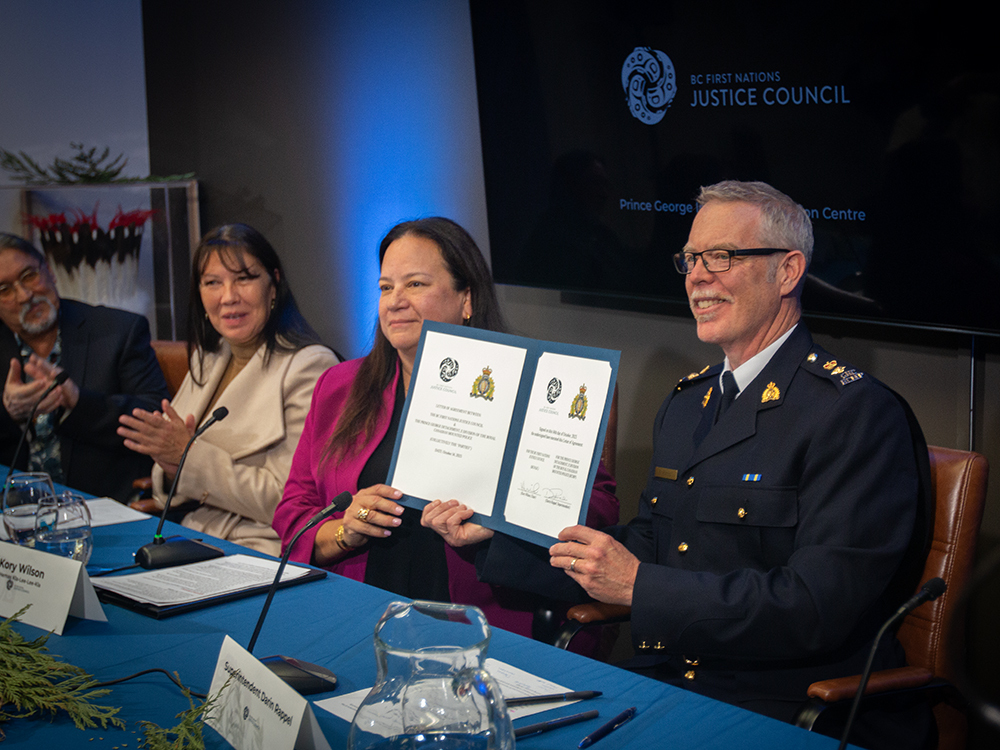
As onlookers crowded into a room at Prince George’s new Indigenous Diversion Centre, the centre’s staff sang and drummed an all-clans song from the Nadleh Whut’en First Nation called ‘Uda Dene about the ancestors that created their traditional systems.
The Indigenous Diversion Centre is the first of its kind in Canada, meant to address the overrepresentation of Indigenous people in the criminal justice system and systemic barriers to justice.
As the song ended, BC First Nations Justice Council chair Kory Wilson became emotional.
“The reason we’re here is to ensure that every Indigenous person can find their song and can play their drum and become who the ancestors made them be,” said Wilson, a member of the Kwakwaka’wakw who holds the traditional name Hemas Kla-Lee-Lee-Kla.
“People often say the system is broken. The system isn’t broken. The system’s working exactly as it was designed,” she said.
“It’s not acceptable anymore,” Wilson said.
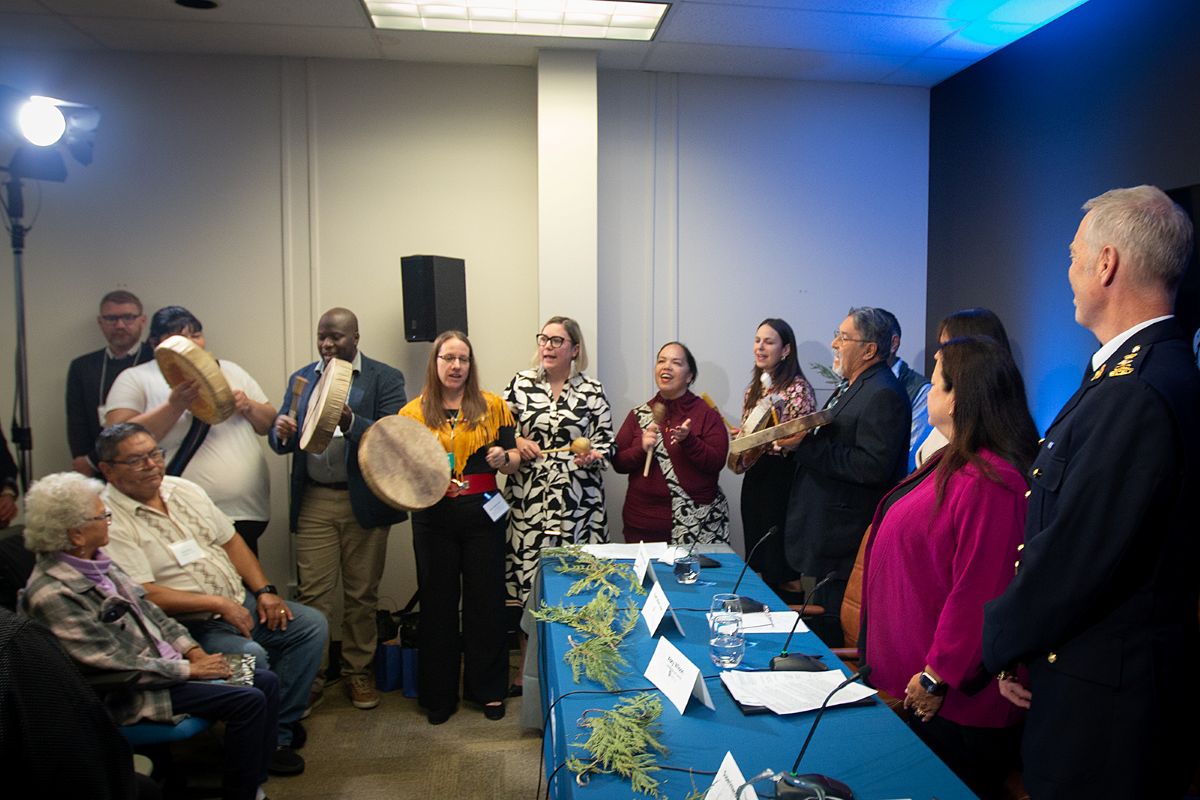
The gathering Tuesday in downtown Prince George, on Lheidli T’enneh territory, marked the official signing of an agreement between the BC First Nations Justice Council and the RCMP. The local detachment has agreed to refer eligible Indigenous people involved in non-violent crimes to the diversion centre rather than recommending charges.
The program is meant to reduce the overrepresentation of Indigenous people in the justice system in a city where 16 per cent of the population identifies as Indigenous but Indigenous people make up 63 per cent of those incarcerated. Provincewide, six per cent of people identify as Indigenous but 36 per cent of incarcerated people are Indigenous.
With the Prince George Regional Correctional Centre currently over capacity, Wilson said there is likely to be “a big wait-list” for the diversion centre as it begins accepting more participants. She said she hopes there will be an opportunity to expand in the future.
Diversion is a key pillar of the BC First Nations Justice Strategy, which was signed between the province and the justice council in 2020 with goals of breaking harmful cycles, decreasing Indigenous representation in jails and helping Indigenous people access culturally appropriate supports.
The diversion centre joins 15 Indigenous Justice Centres that have opened across B.C. over the past several years. These centres offer culturally appropriate support and help Indigenous people navigate systemic barriers to justice by providing legal advice and facilitating access to things like housing, mental health and addictions support and employment services.
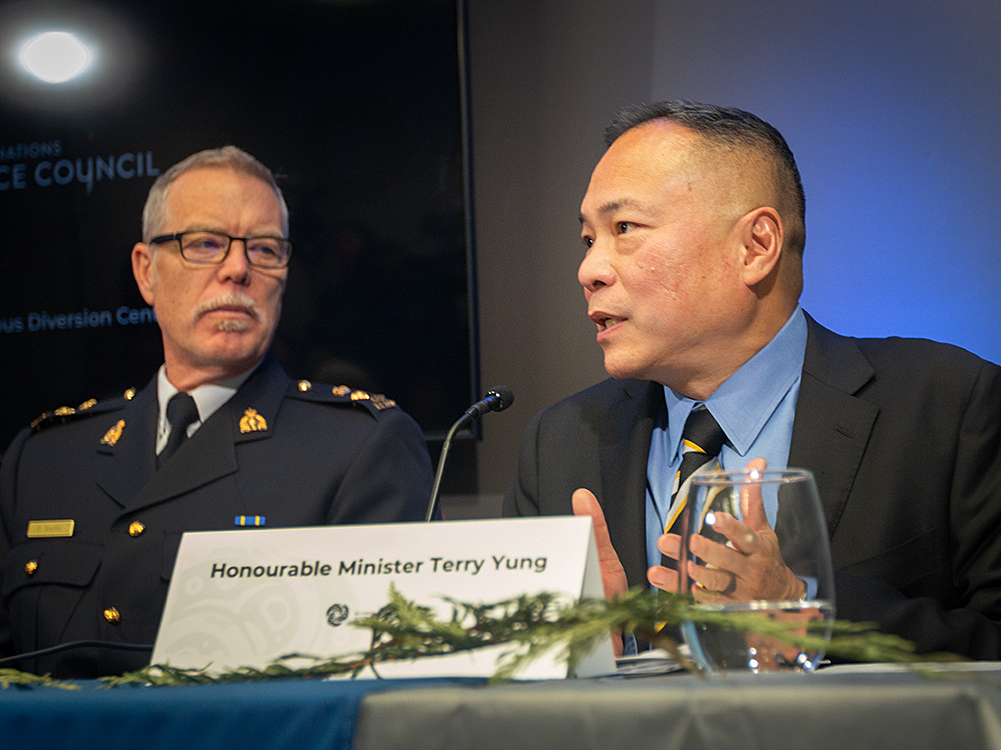
Among those who attended the official opening on Tuesday were Prince George RCMP Supt. Darin Rappel, B.C. Minister of State for Community Safety and Integrated Services Terry Yung and Lheidli T’enneh First Nation Chief Dolleen Logan.
Elder Marcel Gagnon, a member of the Lheidli T’enneh First Nation who spent decades working in corrections and is joining the team at the diversion centre, spoke about his experience being diagnosed with fetal alcohol spectrum disorder, or FASD, later in life.
He described the complexities that lead a person into the justice system.
“That [diagnosis] gave me so many clinical answers to my struggles,” he said. “The relief I felt. Maybe a lot of people won’t feel that relief, but I felt a weight lifted off my shoulders that there was an explanation.
“When they asked me to get involved with this program, I didn’t hesitate for a moment,” he said.
Gagnon believes the centre’s team will be able to successfully focus on rehabilitation rather than incarceration. “The clinical and the ceremonial, or the spiritual if you will, have to work together. I think that’s the part that’s been missing until this program came along,” he said.
Others spoke about the diversion centre’s potential to improve public safety more broadly by breaking cycles that lead to reoffending.
Before Yung was B.C.’s minister of state for community safety and integrated services, he spent 30 years working for the Vancouver Police Department. Yung told the assembled crowd that the program will make everyone safer.
“You see the pain. You bear witness to the sufferings,” he said about working in Vancouver’s Downtown Eastside. “[There’s] nothing more hopeless than somebody who’s cut off by their families, their culture, their community.”
The status quo needs to change, Yung said.
“It’s not easy to change the system,” he added. “We need to have other options.”
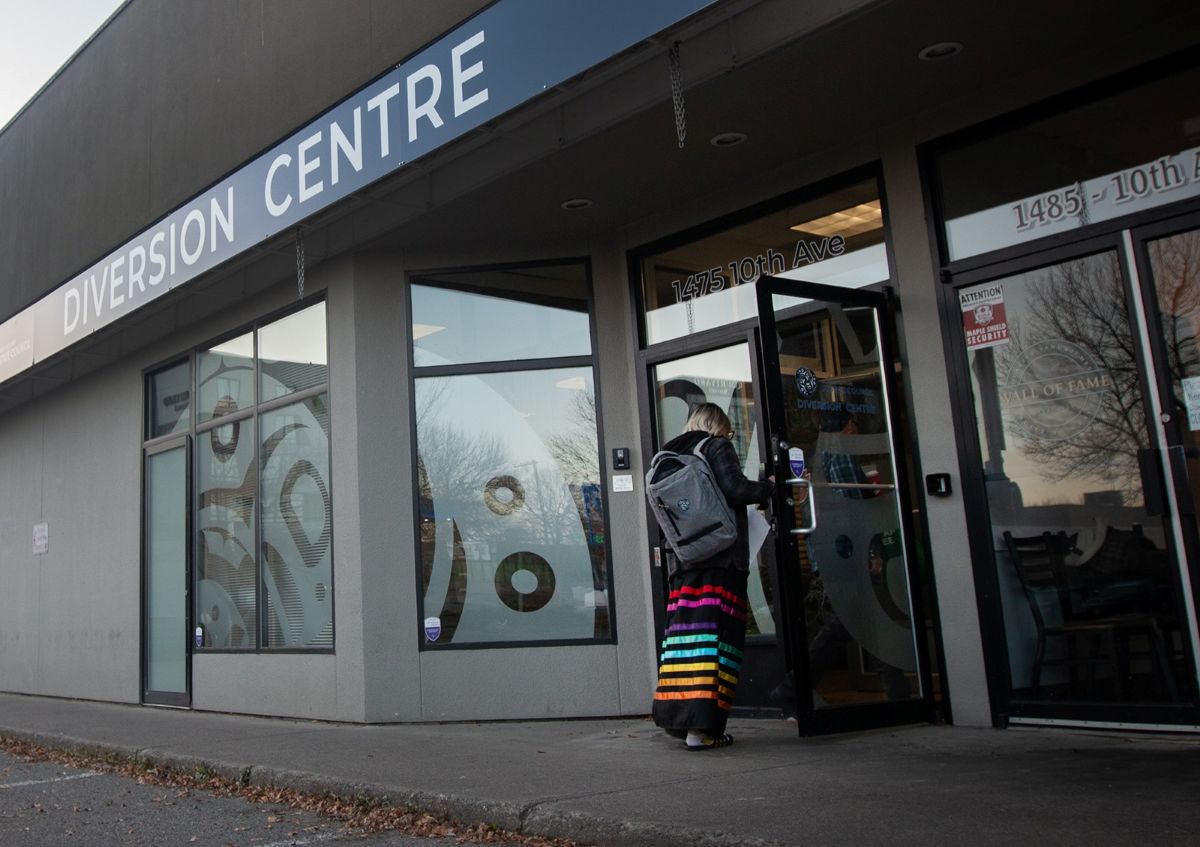
The program, which is funded by Public Safety Canada’s Northern and Indigenous Crime Prevention Fund, accepts participants at risk for incarceration and also those being released from prison, working with other service providers to help them reintegrate into the community.
Its multidisciplinary team designs personalized programs meant to provide long-term healing through things like ceremony, land-based teachings, Elder support, social worker support and counselling.
The diversion centre began accepting participants in July and is already working with 20 people, all of them released from custody and transitioning back into the community.
The centre can accommodate about 60 participants at one time, depending on the number of long-term clients and staff case loads.
Tuesday’s signing marks the start of the team’s work with pre-charge participants — that is, participants who would have been charged with a non-violent crime, but who will now be diverted to the centre instead. This stage of the work starts with training RCMP officers.
That begins Thursday, said Christianne Kearns, director of diversion and community justice programming with the BC First Nations Justice Council. Diversion centre staff will be training RCMP officers during morning and evening watch changes over the next seven days to help them identify and divert potential participants.
“They show up to a scene where there’s been a criminal offence. They would offer diversion [and] seek Indigenous identity,” she said. The referral then comes to the diversion centre team, which has three business days to work with the person on a diversion plan that would take place in lieu of a charge.
“It’s not a get-out-of-jail-free card,” Kearns added. “The person needs to commit to work in the program.”
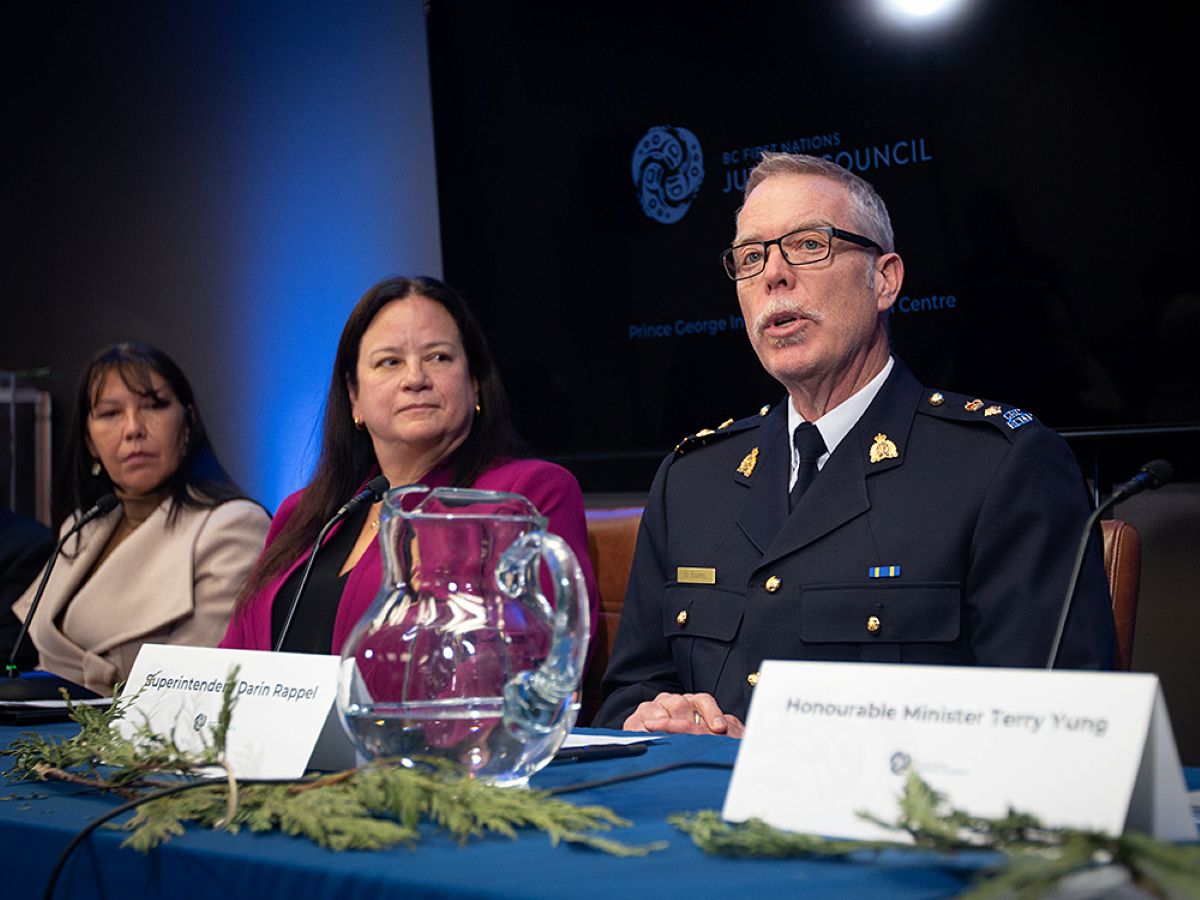
RCMP’s Rappel said he’s been working with the BC First Nations Justice Council on the program for over a year.
“It’s a meaningful step towards community safety, accountability and healing,” Rappel said, giving officers an alternative for certain non-violent crimes. He offered fraud, mischief and shoplifting as examples that would qualify for diversion.
“Our officers see every day that enforcement alone does not solve complex social issues,” Rappel said. “The RCMP remains committed to reconciliation and to supporting approaches that respect Indigenous self-determination, reducing stigma and create lasting positive change.”
Wilson thanked the superintendent for working with the team over the past year, but also acknowledged the at-times difficult relationship with police.
“We know there’s been challenges between Indigenous people and police officers and RCMP over the decades — probably since the beginning, really, let’s be honest,” Wilson said. “But when you work together in bold and courageous ways and have the same goal in mind, that’s how change happens.”
The program has already saved lives, Wilson said.
It has also saved taxpayer dollars, she added, noting that it costs up to $282,000 annually to keep someone incarcerated in B.C.
“But more than that, it’s the right thing to do,” she said. ![[Tyee]](/design-article.thetyee.ca/ui/img/yellowblob.png)
Read more: Indigenous, Rights + Justice










Tyee Commenting Guidelines
Please note that email notifications for replies are not currently working due to a software issue which may be resolved in a future update.
Comments that violate guidelines risk being deleted, and violations may result in a temporary or permanent user ban. Maintain the spirit of good conversation to stay in the discussion and be patient with moderators. Comments are reviewed regularly but not in real time.
Do:
Do not: