

 SHARE:
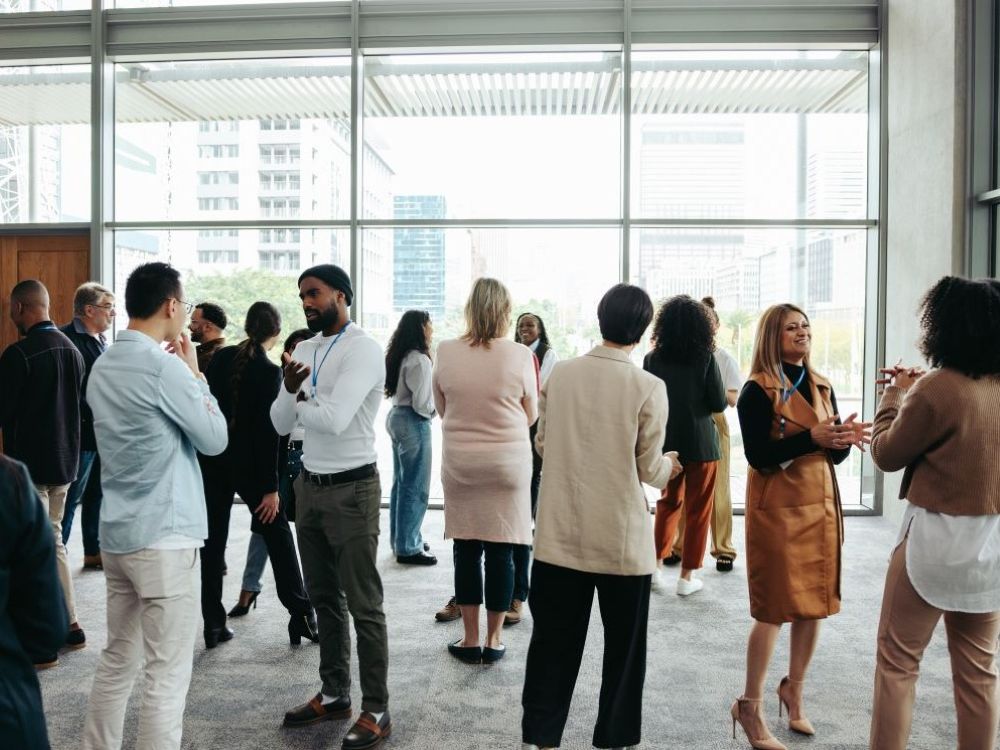
Political conversations are fraught these days, particularly in Alberta where the UCP government seems to introduce a new divisive ideologically based policy every week.
Too often, conversations about key issues facing Alberta are like hostile dispatches from an echo chamber, with both sides implacably talking past each other, unable to hear, let alone consider in good faith, an opposite point of view.
A group of University of Alberta academics and their students are attempting to address this dissonance, as part of a project called Common Ground. Employing conventional surveys, and a completely unconventional approach to focus groups, Common Ground has been helping people understand where Albertans stand on key political issues, where they think their fellow Albertans stand on those same issues, and what causes much of the political disagreement in the province.
Over the past five years, the Common Ground team, led by political scientist Jared Wesley, has surveyed more than 6,500 Albertans, and engaged with more than 700 in focus groups in small and large communities across the province.
Common Ground sought to create a space where people could encounter opposing views and discuss them in an open and non-confrontational way.
Wesley doesn’t know who came up with the idea to have people draw what they think is a quintessential Albertan. But what they found is that Albertans from all walks of life and all political persuasions have a remarkably fixed idea of what an Albertan is, including his name — Average Joe Albertan.
It turns out most of the participants think the average Albertan is a blue-collar white male, who works on a farm or in the oil fields. This is of course far from reality; Alberta is a very diverse province, but for the sake of opening up a dialogue, it serves the purpose well.
“A lot of folks are really reluctant to engage in political discussions,” Wesley said.
“But what they find through the series of activities, is that we’re not actually interested in people’s personal opinions about what they feel on an individual level, about what politics is like, or what politics should be.
“What we're asking them to do is, is to think about what life is like for that typical Albertan. What would that typical Albertans say, do or think in a particular situation?”
The participants are asked to draw a typical Albertan and then they are asked to introduce their Albertan to the rest of the group. The participants are provided with a series of prompts to elicit a backstory about their average Albertan: Where are they from? Where do they live? What do they do during the day? What do they do for fun? What is their family like?
“And you can start to see the light bulbs go off as we go around the table to the third or fourth person, and everybody starts to see the same kind of drawings,” Wesley said. “People then start to engage in a discussion, like someone will ask, for example, ‘Why, in a room full of women, did none of us draw a woman?’”
Wesley said it doesn’t take long for a genuine sense of community to develop. People tend to project their political views through this neutral stick figure — this Average Joe Albertan — and so any disagreement is really more about whether this is what a typical Albertan would think, and what they might do in a specific situation.
Then the Common Ground team introduces a situation that now exists in Alberta. So for example, a person finds out their child is using different pronouns in school, which they were not aware of.
“There is actually a good, deep discussion among participants about what that typical Albertan would do in that scenario,” Wesley said.
“What we found is that by creating these environments, people are very open about sharing those disagreements,” Wesley said. “But they don’t feel like they’re disagreeing with each other so much as coming to consensus on what the typical Albertan would do in that situation.”
Sam Clark is a doctoral political science student who first worked with Common Ground in 2022 and returned to work with the team this summer and fall.
The drawing exercise, he said, has been “very good at getting people to lower their defenses. It is such a simple activity, but it is really instructive, and it tells us so, so much about what the average person would think, say and do in relation to various issues. And people just seem to have a really good time right from the get-go.”
Back in 2022, at the closing of the session, Clark would say, “What would Joe think if he was here and listening to this conversation” and Wesley would say, “Well we have Joe right here. Why don’t we bring him out?” And people would laugh.
But they would also look disappointed when they didn’t bring someone out. Wesley shared this observation with Julian Faid, a doctoral business student, and Faid said, “We have to do a theatre game around this.”
So they built an interactive improv theatre game with Rapid Fire Theatre of Edmonton. Average Joe Albertan became the star of a mock TV show called Joe TV.
Every episode consists of about a 30-second sketch where Joe is placed in a political predicament. Then the audience is encouraged to say what he might be saying, thinking or doing.
“We had drawings of Joe, and that might have been more difficult for people to really get a fix on who he is, what his commitments are,” Clark said.
“But when we created the persona of Joe, his real-life figure, a visceral touchstone, we find that it is a lot easier for participants to then step into his shoes. It gives people an opportunity to get a better fix of his motives and for why he acts and thinks in these ways.”
The theatre work made people more willing to challenge stereotypes.
“When we did the first season of Joe TV, we did one set in Calgary and the entire episode broke down,” Wesley said. “We actually had to stop and just allow people to talk about the difference between stereotypical Albertans and actual typical Albertans.”
The experience has helped the participants to better understand the politics and beliefs of others with whom they fundamentally disagree.
“I think a lot of progressives leave that discussion with a bit more of a perspective on conservative and in many cases, rural Alberta experiences,” Wesley said. “So they go beyond one dimension to actually develop some, and I won’t say empathy, but at least some perspective for conservatives.
“And I think it is interesting to see how conservatives recognize now that they aren’t as marginalized as some of their political leaders lead them to believe.”
After a session in Hanna, a town of about 2,400 people, 300 kilometres southeast of Edmonton, a woman approached Wesley and said, “I bet you didn’t get those kinds of drawings when you were in Calgary last week.
“I pulled out the drawings and showed her and she said, ‘Really, people from Calgary think that this is who the typical Albertan is? People like my son?’
“And so, what we hope is we’re building at least a conversation around what values we share in common, but also breaking down some of those barriers between these different communities.”
Common Ground is bringing Joe back to life on the weekend of Oct. 4 and 5. They’re hoping to recruit up to 100 volunteers in Edmonton to participate in a special series of theatre-style sessions that explore how Joe is navigating his life in today’s polarized times.
Each session lasts about an hour. To sign up, go to commongroundpolitics.ca.
Here is a direct link to the registration form.
If you have any information for this story, or information for another story, please contact Charles Rusnell in confidence via email. ![[Tyee]](/design-article.thetyee.ca/ui/img/yellowblob.png)
Read more: Alberta

Tyee Commenting Guidelines
Please note that email notifications for replies are not currently working due to a software issue which may be resolved in a future update.
Comments that violate guidelines risk being deleted, and violations may result in a temporary or permanent user ban. Maintain the spirit of good conversation to stay in the discussion and be patient with moderators. Comments are reviewed regularly but not in real time.
Do:
Do not: