


 SHARE:

Eleven months into his new job as Athabasca University’s chief financial officer, Dale Mountain had had enough.
Mountain had 15 years of experience in post-secondary administration, including a stint as interim president and CEO of Keyano College in Fort McMurray. He knew how a university was supposed to be managed, and how executives were supposed to be treated.
On Sept. 12, 2024, Mountain became the first senior Athabasca University executive to resign.
“I said, ‘You know what? I quit,’ and I turned in my keys, my laptop and walked out.”
Mountain’s resignation was a tipping point.
“I had two people come to me, very close colleagues, saying that they were working on their exit strategies,” he said.
In a LinkedIn message, a third colleague said Mountain had sent a signal to the rest of the leadership.
“They saw it as a courageous act that showed if he can do it, I can do it,” he said. “I don't need to tolerate this. And there are other opportunities where I will be appreciated and valued.”
Since Mountain’s resignation, at least nine other Athabasca executives have either quit the university or resigned from management to rejoin the AU faculty as professors. Lower-level directors and staff have also quit, including several in the department that manages the university’s communications and image.
The exodus is believed to be unprecedented in the university’s 55-year history.
The list of top executives who left AU includes deputy provost Bailey Sousa, university relations vice-president Jennifer Pascoe, business dean Lisa Watson and Megan Hall, interim associate vice-president of learner experience.
Pascoe’s interim replacement as vice-president of university relations, Jessica O’Connell, lasted just five months before she quit in August.
All landed jobs at other post-secondary institutions.
Provost Matt Prineas, associate vice-president of research Andrew Perrin and associate vice-president of student services Alain May resigned from management and returned to their former roles as professors.
Shawn Fraser, dean of graduate studies, did not have his contract renewed and returned to the faculty.
This story is based on interviews with several former executives. All but one spoke on condition of anonymity because it could affect their current or future employment.
In response to open-ended questions, the former executives uniformly described a dysfunctional management structure. And they said much of the operational authority has been centralized, and is micromanaged, from the president’s office by three people, president Alex Clark, new provost Catherine Swindlehurst and chief of staff Matt McCreary.
Early enthusiasm said to sour
Initially the new executive team was excited by the collegial, inclusive culture Clark was striving to create and his concerted engagement with the community and staff. Clark, who holds a PhD and researches psychosocial effects on health, has co-authored a book titled How to Be a Happy Academic and co-leads workshops on the subject.
“We were very excited because there were all these positions under a new president who had a vision for Athabasca University,” Mountain said. “And we all wanted to make a difference. We wanted to make a positive contribution. I would say it was almost like electric.”
“It probably did feel more stable,” said another executive who recently quit. “Then, once things started to take a turn, it became completely unstable because relationships started to fall apart.
“It became a very toxic work environment — no collegiality, no input from the senior leadership team.”
Every former executive said they resigned because they were excluded from major policy decisions, felt mistrusted and disrespected and eventually saw no point in continuing in their jobs.

Regular senior leadership team meetings stopped, said one former executive, “which came across to all of us that there wasn't an interest in being a team or getting any advice from anyone else around the table.”
“We were unable to make any decisions, move anything forward, everything had to be run through the president's office. We were basically just handcuffed to the point where I wondered, ‘How are we being paid so much to do so little?’”
The three top people in the president’s office demonstrated how intent they were on managing and controlling the university’s image by rewriting basic news releases.
As authority became increasingly concentrated, the president’s office became more “outward facing,” said another former executive who quit the university.
“There was more of a concern about optics and image and wording of communiqués and briefing notes, and what I was doing on my social media, than perhaps what was happening in the running of the university,” she said.
“Operationally, it felt like the actual fundamentals of going about our day-to-day business of being a university came second to the image of the university and the president himself.”
Emails and calls from The Tyee to Athabasca University were not acknowledged.
The UCP’s intrusive power play
The story of what happened at Athabasca University could be a case study of the negative consequences of political interference in a publicly funded institution.
In an increasingly bellicose pressure campaign that played out for months in 2022 and early 2023, former United Conservative Party advanced education minister Demetrios Nicolaides threatened to cut off AU’s funding. He eventually fired the university’s board chair and key board members and replaced them with hand-picked political appointees.
All of this was done to facilitate the firing of president Peter Scott, a world-respected leader in distance learning.
The new board chair appointed by Nicolaides was Byron Nelson, a Calgary lawyer who had run unsuccessfully against Nicolaides for the UCP nomination in Calgary-Bow.
Nelson fired Scott on Feb. 1, 2023, about three weeks after Scott’s wife died from cancer.
AU is Canada’s top distance-learning university, with more than 35,000 students, mostly in Alberta but also across Canada and some around the world. The university’s executives do not live in Athabasca and, according to a recent union report, only three of 188 academics live in the region.
Nicolaides cleaned house to stop the implementation of an operating plan that would have simply codified the remote work model already in place.
The minister instead implemented a policy that was supposed to force at least four senior executives, including the president, and about 30 other staff to move to Athabasca, population 3,000, about 150 kilometres north of Edmonton.
Nicolaides is now Alberta’s education minister. He and Premier Danielle Smith have been generating worldwide headlines, and mockery from Canadian literary icon Margaret Atwood and others, due to a book ban they imposed without consultation on the province’s public schools.
Nicolaides declined to comment for this story, as did the current advanced education minister, Myles McDougall.
As reported by David Climenhaga in his Alberta Politics blog, the UCP government recently reappointed Nelson to a second three-year term as board chair.
Athabasca’s president lives elsewhere
In a press release announcing Nelson’s reappointment, Clark said that “with our new strategic plan, Like No Other, and AU firmly grounded in our home community of Athabasca, the year ahead will be pivotal in realizing AU’s highest contribution to learners and communities near and far.”
Clark’s claim that AU is “firmly grounded in our home community of Athabasca” is scoffed at by the former executives. One called it “performative” and a “charade.”
In an AU video released on Feb. 1, 2023 — the same day Peter Scott was fired — Clark said, “As president with an active residence in the town of Athabasca, I commit to growing AU’s contributions near and far. And to reinforce the foundation that makes this possible.”
Clark’s contract stated he was “required to maintain an active residence” in Athabasca and “within 10 months of the effective date, [Clark] will relocate accordingly.”
The contract also stipulated that Clark was to become a resident of Athabasca within 12 months of the contract’s effective date and “maintain such residency throughout his employment.”
But Clark never relocated to Athabasca and has never lived there as a full-time resident, a fact confirmed by Athabasca Mayor Rob Balay.
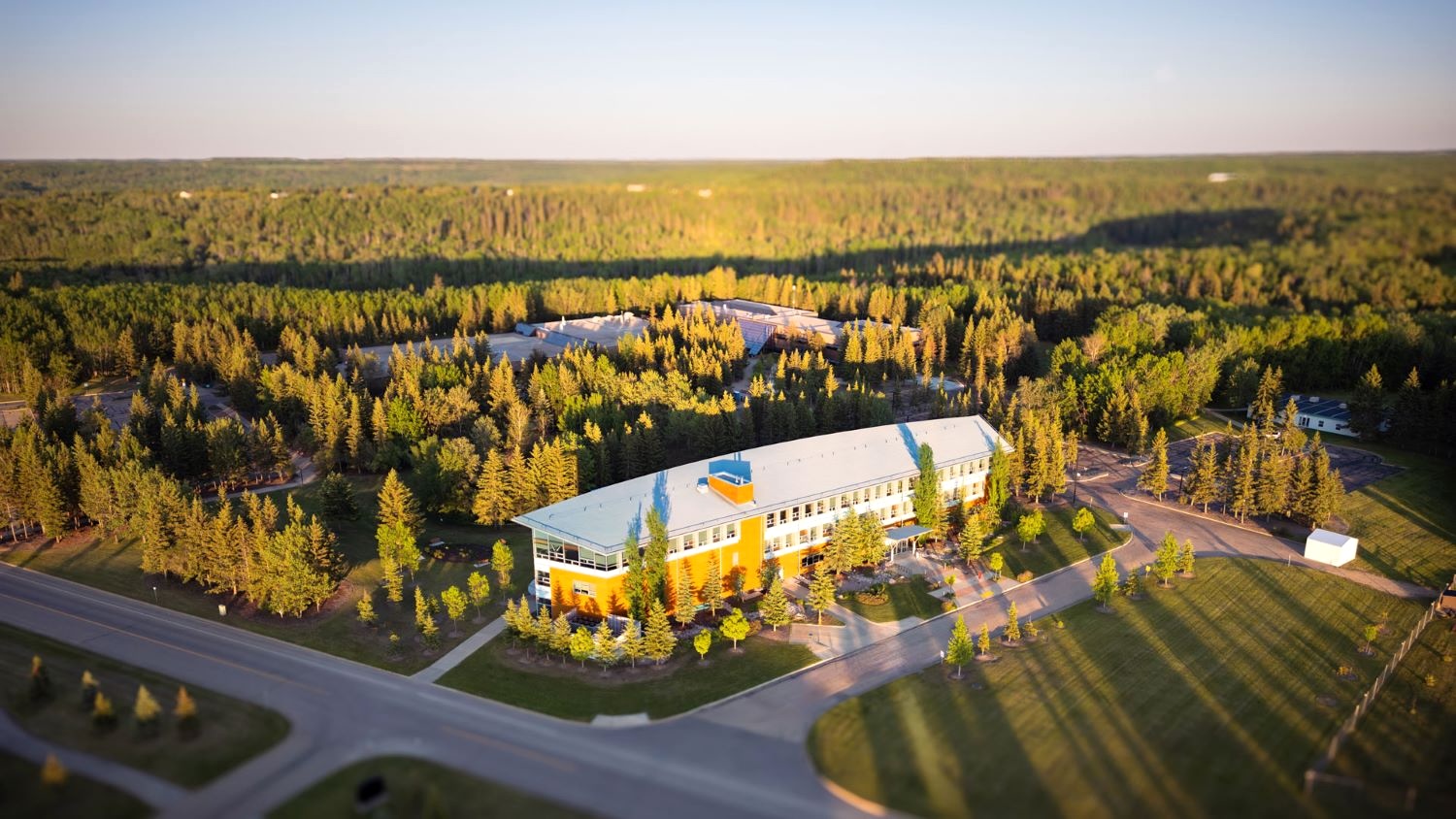
Balay said Clark and provost Catherine Swindlehurst are in town often and stay in a house owned for many years by the university. The house has been renovated to create a separate space for the president and rooms that can be booked by visiting executives and staff.
“I don’t know how you would classify that,” Balay said, referring to Clark’s promise to maintain a residence in the town.
Without exception, every former executive independently said Clark has done nothing to implement the forced-residency policy — which means all the firings, and the months of upheaval and uncertainty for staff and students created by Nicolaides, have been for nothing.
Mountain described a meeting at which the university’s human resources officer outlined a recruitment strategy to encourage new hires to reside in Athabasca. The strategy included moving incentives, signing bonuses and percentage-based salary modifiers.
“It was essentially all shot down,” he said. The only proposal accepted was to ensure job advertisements stressed that candidates willing to move to Athabasca would be given preferential consideration.
Mountain said he was the only executive to move to Athabasca, which he had volunteered to do. He rented a house from the town that had been purchased to facilitate the recruitment of a doctor. He was also the only executive who went into the AU campus office daily.
Clark’s contract stipulated that he work at least 10 days a month in the AU office in Athabasca. Mountain said he saw Clark in the office every other week but he couldn’t say if he met the contract’s monthly requirement.
None of the executives hired by Clark for his new management team were required to move to Athabasca. If that had been a condition of employment, none would have been recruited, several former executives said — which is the point Peter Scott had made before he was fired.
Instead of forcing executives to live in Athabasca, the plan was to maintain a “presence.” To that end, they were asked to spend at least some unspecified amount of time in the town each month.
“The narrative right from the beginning was presence,” said one executive who left AU earlier this year.
“We were going to increase presence and visibility and engagement with the community and the town, and all those things were prioritized over moving there.
“There was never any talk of people moving or having to live in Athabasca.”
While in town they stayed at the university’s house until that became uncomfortable due to the increasingly negative tension between the executives, and Clark and Swindlehurst.
“So a number of us started just staying at one of the hotels” at the university’s expense.
“It was good business for the hotels.”
‘At least we stopped the bleeding’: Athabasca mayor
Gradually, over a few months, only Clark and Swindlehurst were spending a couple of weeks a month in Athabasca.
Even that posed a challenge. Due to an issue with his eyesight, Clark doesn’t drive, so one of the other senior executives had to chauffeur the president from his home in Edmonton to Athabasca.
During Nicolaides’s tenure as advanced education minister, he introduced a policy that tied funding for every post-secondary institution in the province to performance on key metrics. Institutions were required to sign investment management agreements, or IMAs.
Athabasca University’s IMA required it to increase the number of staff residing in Athabasca year over year. The former executives say that it was never enforced by Nicolaides’s successive ministers.
Two former executives independently said Clark and Swindlehurst have lobbied the ministry to drop the residency requirement numbers contained in the IMA.
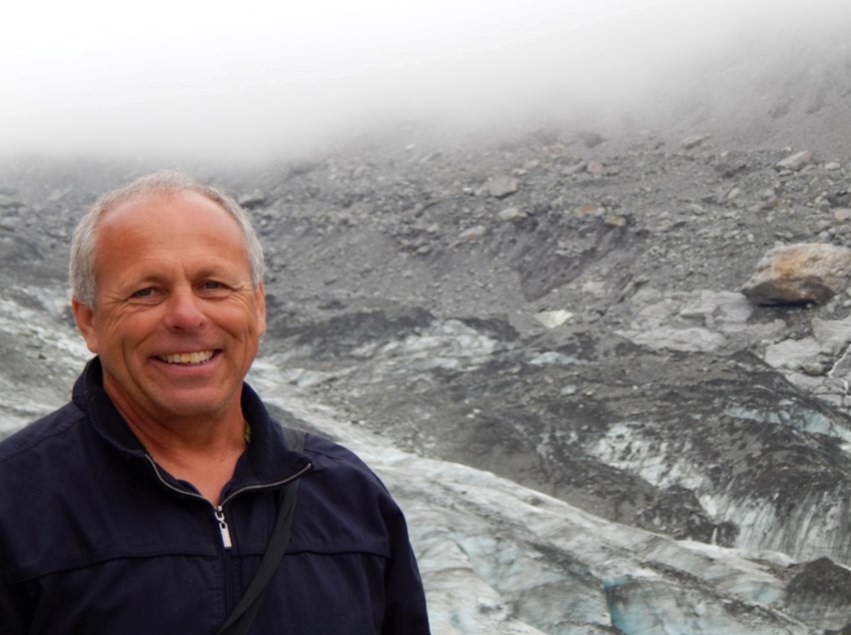
Athabasca Mayor Rob Balay was a vocal proponent of forcing executives and staff to move to his town. He concedes little has changed.
“There are a few that moved here, like the library staff when they hired them, but there has not been a lot that I'm aware of, but there have been a few,” he said, adding later that he has to give the benefit of the doubt to the AU leadership team that they are working to bring more employees to the town.
Balay mentioned a “substantial ask” to the government to fund a “Northern Hub,” composed of a conference and research centre. A former executive with direct knowledge of the proposal said it was “laughed out of the room” by the ministry.
Alberta Finance Minister Nate Horner recently announced the government’s deficit is expected to rise to $6.5 billion by fiscal year-end next spring, an increase of $1.3 billion over the earlier estimate.
Balay defends the town’s hiring of a lobbyist to challenge the university’s plan to have nearly all work done remotely.
He said the first year’s IMA ensured that at least 240 people must reside in the region.
“To get that in the IMA was very important, or we would have continued to lose staff until there were zero that resided in Athabasca.
“At least we stopped the bleeding. Now has it turned around and gone the other way? Not to the extent that everyone would probably like to see.”
But Dave Powell with the Athabasca University Faculty Association said it has been difficult to determine how AU and the ministry define what a full-time resident is. He said it’s not clear if students hired for the summer by AU are being counted.
The IMA for 2024-25 requires AU to have 277 full-time employees residing in the Athabasca region. The association’s calculations show there are about 239.
A plea to stop government meddling
Alex Usher is an expert and consultant in university governance. He said Nicolaides had a right to fire the board members and the president.
“It was disastrous,” Usher said. “But you can imagine drawing this as a genuine policy discussion between ‘Should this be a smaller but more northern-focused institution, or should this be an institution that wants to compete nationally?’”
Usher, who has done consulting work for AU as recently as 2018, said the Alberta government has been telling AU for 30 years that it must compete nationally. He points out that the Advanced Education Ministry had approved the near-virtual strategic plan before the abrupt policy reversal by Nicolaides.
With Nicolaides gone from Advanced Education, Usher suspects the UCP has lost interest in using the forced-residency policy as an economic driver for the Athabasca region.
“The new government actually just sort of quietly let it lapse,” Usher said.
In fact, a former senior political staffer for Rajan Sawhney, Nicolaides’s successor as advanced education minister, told The Tyee that Athabasca University “wasn’t even on the minister’s radar. It was never mentioned.”
One former executive questioned how the university will survive.
“How do you run a university as a team of three? It will eventually collapse because there is no way they can do all of the work that needs to be done, and they certainly can't do it from a position of fear.”
Powell, of the faculty association, said the university is resilient and could thrive if politicians would just leave it alone. Since 2014, AU has had five presidents, including two interim presidents.
“If we had a boring administrator run the place, a mostly work-from-home staff, a modest foothold in Athabasca that hires locals whenever possible, and the government to keep its mitts off of us, we would be just fine.”
If you have any information for this story, or information for another story, please contact Charles Rusnell in confidence via email. ![[Tyee]](/design-article.thetyee.ca/ui/img/yellowblob.png)










Tyee Commenting Guidelines
Please note that email notifications for replies are not currently working due to a software issue which may be resolved in a future update.
Comments that violate guidelines risk being deleted, and violations may result in a temporary or permanent user ban. Maintain the spirit of good conversation to stay in the discussion and be patient with moderators. Comments are reviewed regularly but not in real time.
Do:
Do not: