


 SHARE:
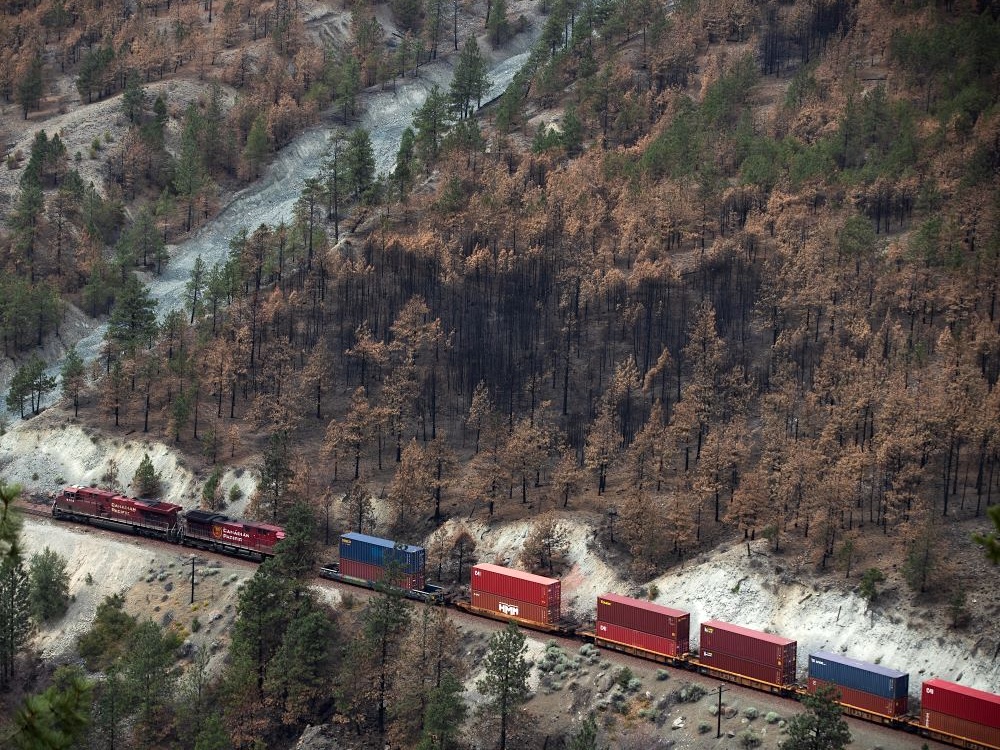
They are some of Canada’s most important speed limits. They are also secret.
Four years ago, following the wildfire that burned down Lytton, Canada’s federal government told railways that they must limit how fast trains travel when temperatures rise. Locals still suspect a train ignited the Lytton fire, though a specific cause for the blaze has never been confirmed.
Last summer, Cook’s Ferry Indian Band, a First Nation located in the Fraser Canyon just east of Lytton, complained after multiple fires started near their community. And during a heat wave this July, a fire erupted south of Lytton, triggering evacuations and more worries. It too started in close proximity to rail lines. Investigators still have not determined the causes of the blazes — and may never do so, given the difficulty in identifying a specific ignition source of many large fires.
The region is once again baking in heat exceeding 35 C this week. But although the federal government requires trains to slow down during periods of extreme heat, Ottawa let the rail companies set their own hot-weather speed limits, and neither the feds nor the rail companies they regulate will reveal what those speed limits are.
Transport Canada, which regulates the railways and says it monitors their activity during heat waves, told The Tyee to ask the railways for specifics on their hot-weather speed restrictions. Canada’s two largest railways, Canadian National, or CN, and Canadian Pacific Kansas City, or CPKC, each responded to initial inquiries by The Tyee but refused to fully answer specifics about their speed limits.
In an email, a CN spokesperson wrote that thresholds come into effect on its main line when the weather reaches 30 C. The threshold kicks in at 25 C on secondary and branch lines. When the temperature reaches 35 C, trains are supposed to slow down even more. But CN refused to say how slow their trains must go in such conditions. CN added that “hot weather patrols are conducted at the same temperature thresholds on the respective lines, except for the B.C. south where they are conducted at 33 C.”
Speed limits for trains in Canada vary from 10 miles per hour (16 kilometres per hour) to 100 miles per hour (160 km/h), depending on the class of track and whether the train is a freight train or passenger train. In the Interior of British Columbia, where passenger service is scarce or non-existent, most trains travel between 40 and 60 miles per hour (about 65 and 95 km/h). Many trains carry oil, and federal rules prohibit freight trains hauling dangerous goods from travelling above 50 miles per hour (80 km/h).
Rail firms have extreme-weather fire risk plans
CPKC spokesperson Terry Cunha, meanwhile, directed The Tyee to the company’s Extreme Weather Fire Risk Mitigation Plan and wrote that “CPKC meets or exceeds all applicable safety and operating regulations.”
Cunha wrote that “CPKC takes wildfire management and response extremely seriously” and said the railway has donated $100,000 to Cook’s Ferry to outfit its fire department following last year’s blazes.
CPKC’s 12-page plan explains how the railway company prevents and responds to fires that start near tracks. The document explains how CPKC monitors the air temperature surrounding its rights-of-way, but it does not reveal the temperature at which trains slow, nor how much they must reduce their speed.
Cunha did not respond when The Tyee asked about his company’s hot-weather speed thresholds. A CPKC worker told The Tyee that trains are limited to 25 miles per hour (40 km/h) when the temperature exceeds 30 C, but The Tyee was not able to confirm that.
CN also has an extreme-weather fire plan. The 18-page document is similar to that of CPKC and details when the railway will reduce or stop maintenance activities that could create sparks. Like CPKC, it has nothing on the federally mandated speed thresholds during periods of hot weather.
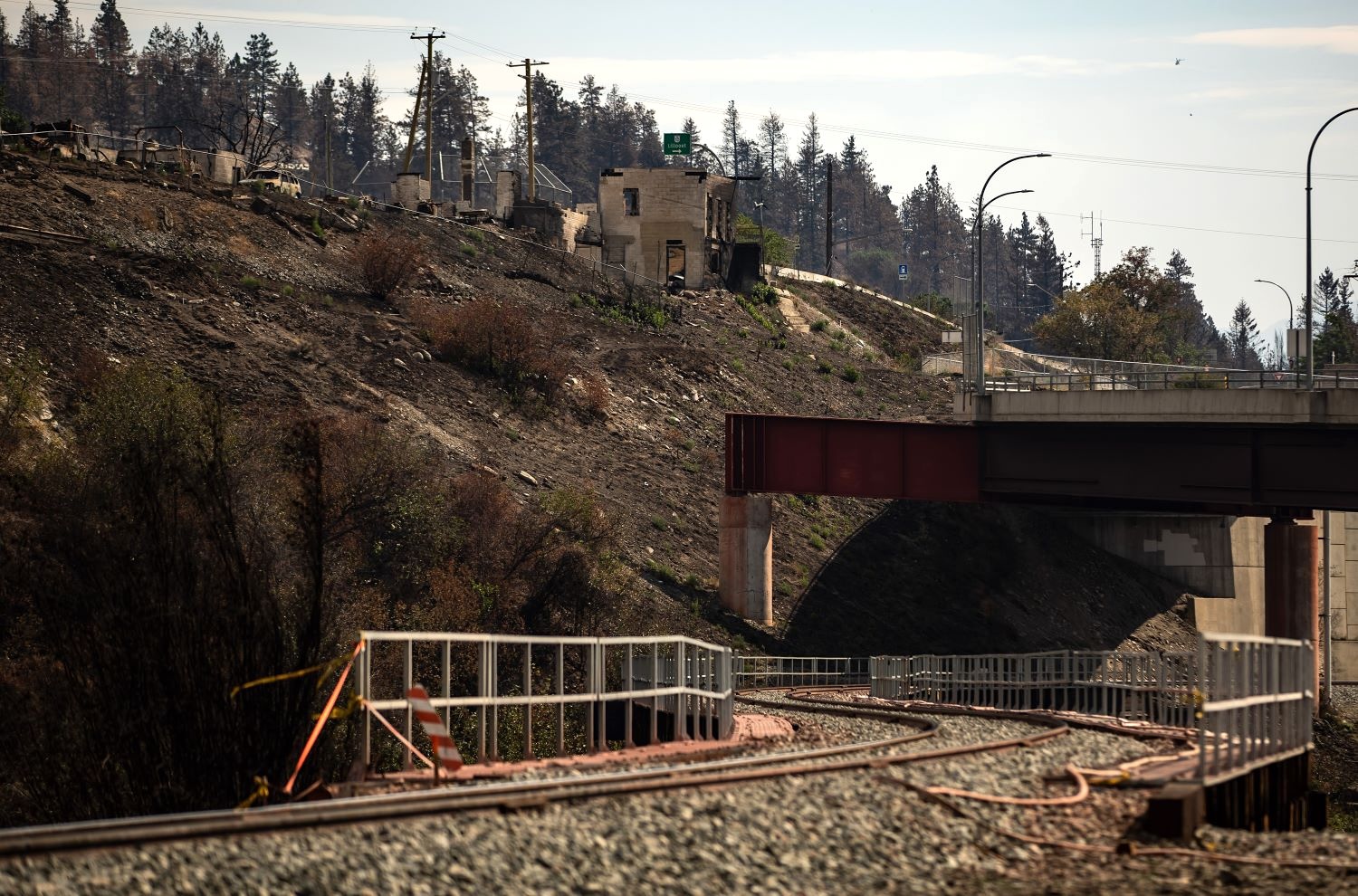
Lytton residents have regularly called for more regulation of trains through their community and oversight and transparency regarding existing rules. Some have called for train traffic to completely stop when fire conditions are particularly extreme. The Transportation Safety Board of Canada allows members of the public to report safety concerns about rail traffic. But the lack of information on train speeds means bystanders have no way of knowing what speeds have been deemed to be acceptable during heat waves.
Trains are known to be a regular source of fires deemed to be “human-caused” — a catch-all term for all fires not ignited by lightning. Trains can start fires when wheels cause sparks, or when hot material from their engines makes its way onto the ground.
It’s unknown exactly how many fires are started each year by trains. Determining the cause of a fire can be impossible because of a lack of evidence. Investigators of the source of the fire that burned Lytton in 2021 found no conclusive evidence that a train sparked the blaze. But neither were they able to determine another source for the flames that consumed the village.
Following the Lytton fire and 2021’s heat dome, the federal government imposed its own train speed restrictions. Those limits were temporary, though, and were replaced in 2022 by a new suite of regulations regarding rail activity during extreme heat and fire danger. Those regulations left most of the specifics to the companies. In addition to requiring the companies to limit train speeds during heat waves, the rules also govern maintenance activities like vegetation management and rail grinding that can send sparks into dry grass and ignite fires.
The federal rules stated that railways must create temperature thresholds to be used to limit speed during hot weather, but they left the speed limits up to the companies themselves.
“In order to protect safe railway operations and the infrastructure during periods of extreme heat, each company must establish temperature thresholds at which train speed restrictions and supplemental track inspection requirements must be adhered to,” the rules read, in part.
Murky details on speed limits and monitoring
The Tyee asked Transport Canada what the thresholds were, if they had been approved by Transport Canada, how the agency deemed them to be appropriate and what it does to ensure companies follow the rules.
The agency confirmed it had approved the rules but refused to disclose the speed limits and how they were created.
“The threshold for reducing train speeds during periods of extreme heat is based on a set of factors, such as ambient air temperature, track infrastructure, and the fire danger level in the area,” a Transport Canada spokesperson wrote in an email. “The railways are in a better position to provide specifics on their respective methods.”
The spokesperson wrote that Transport Canada “inspectors conduct oversight on the field to confirm railway companies’ adherence to performing train speed restrictions and supplemental track inspections when their temperature thresholds are exceeded.”
Like the speed limits, details of inspections — and any failed inspections or penalties — are not publicly available.
Temperatures in Lytton are expected to hit 36 C on Tuesday. That will bring hot-weather speed limits into effect for CN’s trains — and possibly those of CPKC.
But those limits remain a secret, and residents of the Fraser Canyon and other parts of B.C.’s hot and dry southern Interior will have to trust Canada’s rail giants and its federal government that the trains passing by are following rules meant to protect their communities. ![[Tyee]](/design-article.thetyee.ca/ui/img/yellowblob.png)
Read more: Transportation










Tyee Commenting Guidelines
Please note that email notifications for replies are not currently working due to a software issue which may be resolved in a future update.
Comments that violate guidelines risk being deleted, and violations may result in a temporary or permanent user ban. Maintain the spirit of good conversation to stay in the discussion and be patient with moderators. Comments are reviewed regularly but not in real time.
Do:
Do not: