


 SHARE:
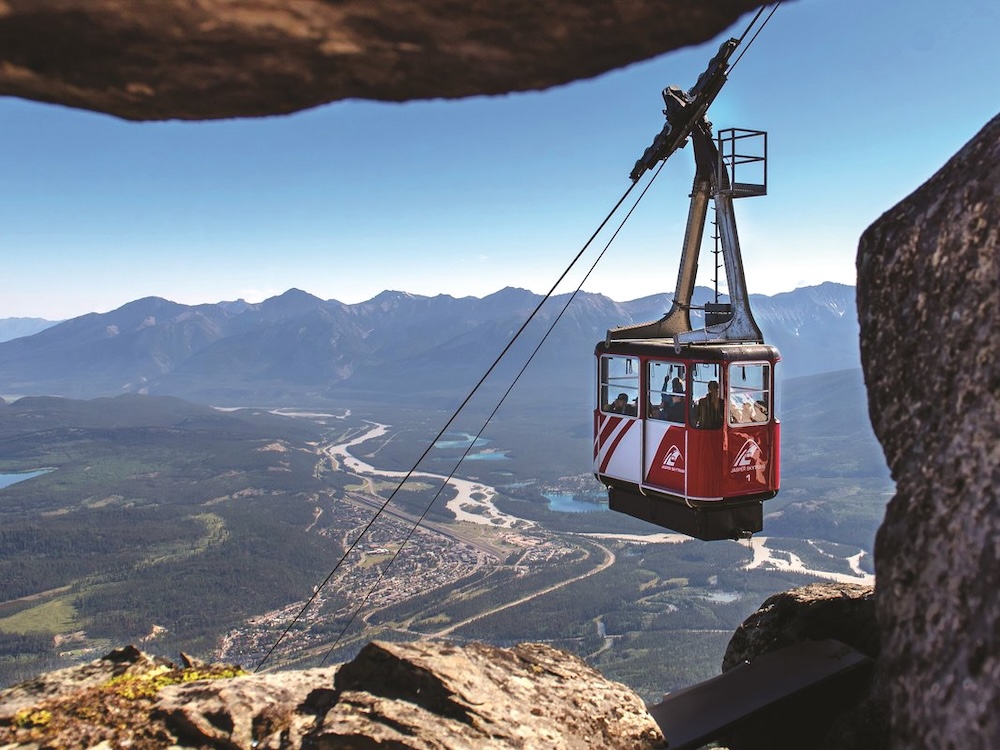
Canada’s Competition Bureau is dropping its probe into a U.S. company’s acquisition of the Jasper SkyTram and its dominance of sightseeing attractions in Jasper and Banff national parks.
Sarah Brown, spokesperson for the Competition Bureau, confirmed that the review of Pursuit’s purchase closed in April.
“After careful review, the bureau found that there was inadequate evidence to conclude that the transaction contravenes the merger provisions of the Competition Act,” Brown said. No further details are available because the bureau is required by law to conduct its work confidentially.
Adam Waterous, owner of Mt. Norquay Ski Resort, filed a complaint last summer against Pursuit Attractions and Hospitality, then called Viad Corp., with only its subsidiary known as Pursuit. Operators of the Lake Louise and Banff Sunshine ski resorts joined the complaint.
Waterous, whose company Liricon is behind a push for an aerial gondola from the Banff train station to Mount Norquay, accused the company of monopolistic practices after it acquired the Jasper SkyTram for $25 million.
Pursuit now owns six of Jasper and Banff’s major sightseeing attractions, including the Banff Gondola, the Columbia Icefield Adventure, the Columbia Icefield Skywalk, Banff’s Lake Minnewanka Cruise and Jasper’s Maligne Lake Cruise.
In addition, the company owns 10 local hotels and the Brewster Express bus line.
Waterous argued this allowed Pursuit to capture all aspects of the visitor experience and its price-bundling strategy restricts the ability for competition to develop and contributes to congestion in the parks.
Pursuit did not immediately respond to a request for comment.
Waterous said he learned in a phone call with the bureau’s lead investigator that it dropped the probe because it believed consumers were able to avoid the monopoly by doing something other than a sightseeing attraction or going to another destination altogether.
He argued going to a restaurant was not a reasonable substitute for a sightseeing experience, and the geographic argument “does not reflect reality.”
“The Competition Bureau made a determination that this monopoly can be avoided, primarily by not even coming to Banff and Jasper,” Waterous said. “I think that is an outrageous conclusion for Canadians.”
According to Waterous, the bureau also wanted to respect the decisions of other agencies, in this case Parks Canada, which approved the purchase of the Jasper SkyTram.
“They simply don’t want to embarrass Parks Canada further by calling out the fact that Parks Canada has aided and abetted the creation of this monopoly,” he said.
In an email, Parks Canada stated it was aware of the Competition Bureau’s investigation and prepared to co-operate fully. It also clarified that while it was responsible for issuing leases and other regulatory documents, it was not involved in or responsible for the private sale of a business.
“All businesses within Parks Canada places are held to the same high standards to ensure they provide exceptional visitor experiences, educational opportunities, and adhere to strict ecological integrity guidelines,” it added.
Waterous said he also believed the federal government wanted to avoid picking fights with the U.S. companies amid the trade war, noting as an example how Ottawa had abandoned the digital services tax.
He added that both Parks Canada and the Competition Bureau having been deferring to one another.
“So, in fact, there’s nobody that’s been looking out for fostering competition, and that’s how we got the monopoly,” he said.
Keldon Bester, executive director of the Canadian Anti-Monopoly Project, said the bureau’s decision to drop the probe was “disappointing rather than surprising.”
“The Competition Bureau sometimes has a tough time comparing goods that people may not consider to be necessities,” Bester said.
He noted, for example, that grocery stores merging would raise questions about how far certain people would have to drive.
“That’s a little more nebulous when it comes to something like a mountain attraction, especially if you’re thinking about people coming from abroad or from different parts of Canada,” he said.
While he wouldn’t call Pursuit’s sightseeing dominance in Jasper and Banff a literal monopoly, Bester argued it was close, considering some were arguing the company had over 90 per cent of the market share. A situation generally got “a little itchy” when one player had 30 to 50 per cent of the market, he added.
Bester said he would be surprised if the U.S. tariff war played any role in the bureau’s decision since it took its independence seriously, but he thought it was possible that the bureau didn’t want to step on Parks Canada’s toes.
“I think the biggest culprit here is probably the way that the bureau thinks about competition, and instead of thinking about Banff or Jasper or even the sort of Canadian Alberta-B.C. Rockies as a market, my guess is that they might have drawn that circle wider to make this local monopoly that’s quite intense look less intense,” he said.
To prevent higher prices and less choice for consumers, Bester said Parks Canada should have a mandate to have competitive options, the Competition Bureau should have more power to reverse acquisitions and government should think carefully about who the next commissioner of competition should be once the current one’s term is up in March 2026.
“But once we’ve allowed a transaction to occur and the Competition Bureau has decided not to engage, it does make it much more difficult if we want to reverse this, and that’s when we probably need to look at Parks Canada, who, again, in this situation, was not a lot of help,” he said. ![[Tyee]](/design-article.thetyee.ca/ui/img/yellowblob.png)
Read more: Alberta

Tyee Commenting Guidelines
Please note that email notifications for replies are not currently working due to a software issue which may be resolved in a future update.
Comments that violate guidelines risk being deleted, and violations may result in a temporary or permanent user ban. Maintain the spirit of good conversation to stay in the discussion and be patient with moderators. Comments are reviewed regularly but not in real time.
Do:
Do not: