

 SHARE:
Because mental health care is unaffordable and inaccessible for many people, it might initially seem less pressing to question its systemic bias.
But what if that bias forms part of why we’re facing a mental health-care crisis in the first place?
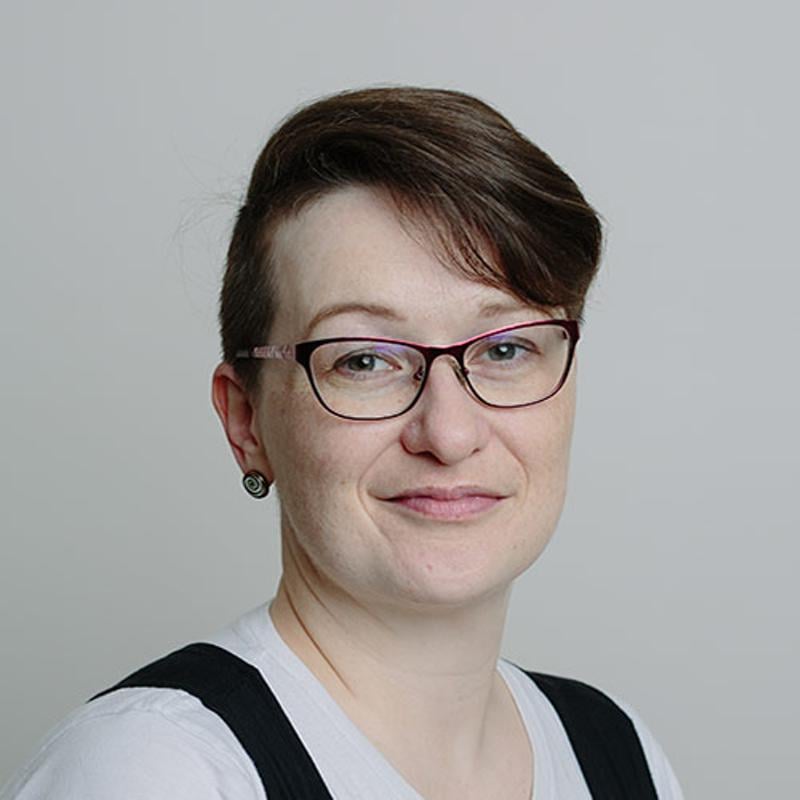
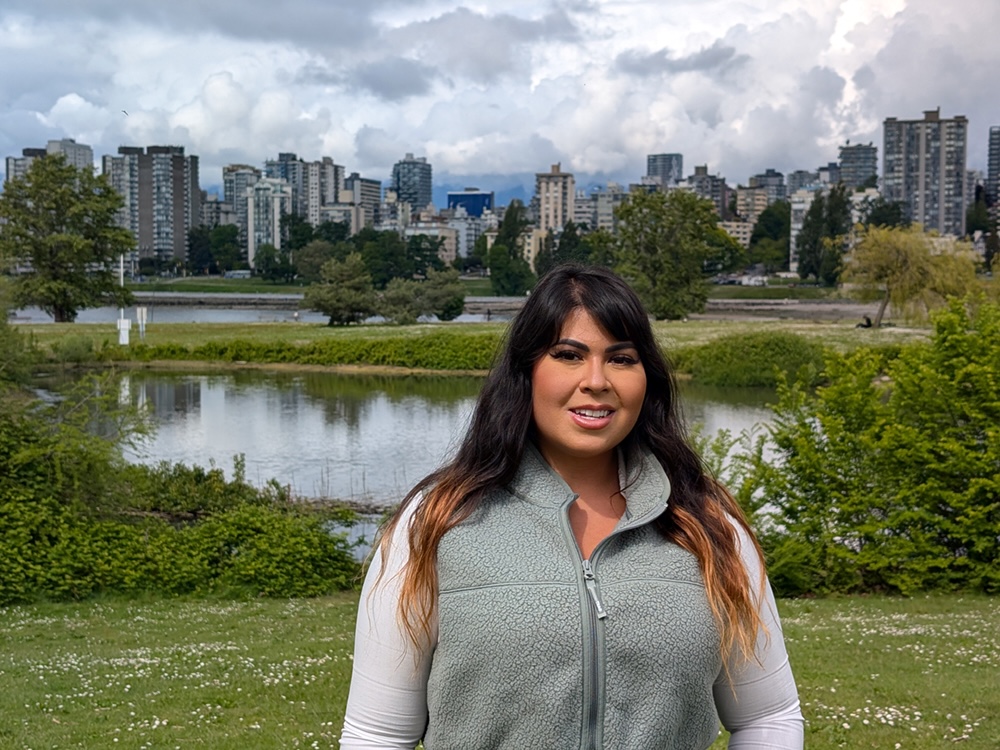
Seren Friskie’s job and her life experience have led her to think about this question. Friskie is Indigenous and multiracial, born to a young mom with chronic health issues. And they also work as the equity and engagement specialist at Foundry BC, a one-stop shop for mental and physical health care for youth in B.C.
Earlier this spring, Friskie, who uses both she and they pronouns, delivered a plenary speech on the topic at the International Association for Youth Mental Health conference in Vancouver.
What if, Friskie asked the conference, mental health systems were designed by the people most marginalized by our society?
And what if, instead of pushing for equity within the mental health system, we sought liberation for everyone and the end of marginalization that is so taxing on mental and physical health?
Indigenous people, people of colour, Black people, women, youth, queer and trans people, and people with disabilities are not well served by our current colonial mental health services, Friskie said.
Indigenous youth, for example, thrive under land-based mental health practices, Friskie said, but there are few free and accessible programs in B.C.
The solution is to build a new, decolonized system, Friskie said.
“When we root our systems in the resilience and wisdom of Indigenous women, we create a future where no youth is left behind. This isn’t just about Indigenous youth, but all youth,” she told the conference.
The Tyee caught up with Friskie to talk about how remaking the mental health system with liberation would work. She spoke to us on her own behalf, not as a representative of the Foundry program.
“Something that I've seen in my own family, also my community, is when people become more connected within their culture, religion, spirituality, community, relationships they build with their neighbours,” Friskie said, “it uplifts them and allows stronger community connection for when they're dealing with difficult things within their own lives.”
This interview has been edited for clarity and length.
The Tyee: How did you become interested in working in mental health?
Seren Friskie: My mom had me at a very young age; she was only 14. My family is mixed ancestry. My grandmother was Cree; she went to residential school. But my grandpa was German. My biological dad is Indigenous, but I don't know him very well.
I definitely looked a little different than my mom and my stepdad. I was a lot more tan, I stuck out a bit like a sore thumb. Growing up in Mission, B.C., was a bit difficult because there were very few kids of colour within my school, in my class.
I struggled a lot with mental health challenges of identity. I had depression, especially as a teen, a lot of anxiety, suicidality, that sort of thing.
Also just having a mixture of intergenerational trauma and societal issues of poverty and disability in my family. Witnessing that for sure made me want to work in either mental health, youth mental health, health care or systems change work.
When did you first realize the way our mental health system is set up is not supporting people marginalized by our society?
It was very clear to me early on. My mom has central sensitivity syndrome — which is a lot of migraines — endometriosis and a lot of invisible disabilities.
Often she would go to the walk-in clinic or the emergency room, trying to relieve her pain or understand where the heck it's coming from. I knew every single pop flavour in that vending machine, every snack, because we had to wait hours to see someone.
When she did see someone, it was someone who was dismissive of her and her health. People look down upon young mothers coming into the emergency room to seek support around their health, which is very unfortunate, because my mom is one of the kindest people, especially to anyone in a health-care setting.
She would struggle to find answers, and cry because she wasn't being heard or because the doctors would think that she's seeking methadone or pain medicine, that she was an addict. No judgment to anyone who is dealing with that. But, she wasn't. She still struggles with advocating for her own health care.
What would it look like to design mental health-care systems around the needs of communities who are being underserved?
To me, it means starting with the most impacted and building up from there. Services would be accessible, trauma-informed, community-led. They would be rooted in cultural safety, ceremony, language and kinship, and not bureaucracy, capitalism and colonialism, which it's currently rooted in.
It would ultimately mean building relationships first and then systems second. Not thinking about systems as separate from relationships to each other.
How would that work in practice?
Building relationships really means just getting to know each other on a human level, rather than a service to service or staff level.
We all have our own stories, our own experiences that got us to this place. And when the system makes it so that we don't actually build our identity into the work that we do, we're often detracted from it.
I think [our identity and our work] are very intertwined. The way in which we do our work is rooted in who we are.
I think peer support does this really well. The whole role is based on identity and lived experience.
Let's say I'm struggling with my own anxiety related to school or family. I'm probably going to relate more to that peer supporter who I know has some lived experience, and can relate to me on a peer-to-peer level, than with someone who doesn't have that experience.
Some hospitals offer Indigenous liaisons, for example. When we have these roles that are more geared towards relational work, that can go hand in hand with the clinical service work that we would like to have someone go through.
Like having a peer support worker and a psychiatrist.
Yeah. Using the example of the Foundry system: first thing you walk in the door, you're probably going to meet a peer support worker, a really awesome first step for someone who's maybe not familiar with a counselling setting or health services. Or someone who's fearful or distrustful of a health-care setting.
You're not going to want to go straight to the psychologist, the psychiatrist or the primary care doctor.
If we have a system that's based more on relational care, that would open a lot of doors for people that feel like it's [currently] a very bureaucratic, top-down approach. I don't feel very connected to the people who give me less than five minutes of their time and then rush me out the door.
What is the difference between creating accommodations in our existing system versus designing a system for everyone?
Accommodations are like retrofits. It's assuming that the current system is really doing the best it can, that it's built with good faith and that it was built for all people. But is that true? Who was it designed for? Who was it designed by? Who did it leave out?
Building a system for everyone can mean starting over, grounded in equity, relationships and hopefully reciprocity towards each other. I don't think it's about adding a ramp to a building that's not equipped for, say, persons with limited mobility or disability. It's about redesigning the whole structure so that it supports people from the get-go.
This might be tough for just one person to solve, but how would you redesign or work from the ground up while still meeting the needs of people requiring mental health services right now?
That's really hard. I think that there is an acknowledgment that the system currently in place wasn't built for certain people. I also think that people have a lot of good intentions, that anyone who goes into health care or mental health work does it because they have some passion or desire for change, to do better and support people who need it most.
It's OK to recognize we can go further than that, and maybe it's not enough to just say that we're doing our best. Anyone who's struggling the most within society would be like, “I don't want to hear that anymore. I want to see some real, actionable, revolutionary change.”
There's a lot of distrust within our systems. And it can get worse from the lack of care: the lack of doctors people are able to see, the higher wait times or the inability to build actual relationships with your care providers.
Because of that, and without that acknowledgment, it can be really difficult to change a current system without being honest and open to the difficulties that even service providers face. It takes a lot of hands and a collaboration, absolutely.
How would you design a system around Indigenous ways of knowing?
Talking to Indigenous youth is certainly at the root. Making sure Elders, knowledge keepers are involved.
The First Nations Health Authority is taking a crack at what this could look like: you honour land, language, story and ceremony as valid and vital forms of healing. You work in partnership and not power over another, in true collaboration and reciprocity.
You centre relationships over efficiency, which is very hard, especially within a capitalist system that values funding and tracking that funding and ensuring it goes a certain way. And community over individualism.
That also means no empire building. Rather than feeling like one system, one approach, one organization is going to do it all, recognizing that's not going to work.
Before we were Canada as it was, time immemorial had many nations working across many different areas, with many different viewpoints.
So not taking that pan-Indigenous approach and really recognizing that nations are very unique: different languages, belief systems, traditions, wisdom, hierarchies, ways of governance. You need to be flexible and support that.
Would that be a way of redesigning the broader system, or should that be reserved for Indigenous people?
We have these unique services available just to Indigenous communities, Black communities, people with disabilities, women, trans folks, whatever it may be, because these communities need it. Because we currently don't have a system that serves people well.
In the future, perhaps we will be at a place where we have built a system that does support everyone in a really good way. But that's really not the way things are right now.
Indigenous systems of care are really powerful because they're rooted in that relational responsibility and respect. I think non-Indigenous people really can learn from these teachings without necessarily co-opting them.
We do that at Foundry: we have an Indigenous staff talking circle. We have unconscious bias training where we separate by racial identity. So we have a white settler caucusing group, as well as an Indigenous, Black and people of colour caucusing group.
That's important because the work is very different. At the same time, there is space for us to also come back together.
I don't know if that could be incorporated, but something where there's a recognition that the work, the services, the unique experiences, identity, community, is going to be different in these communities. At the same time, we all have a lot of similarities and threads that we care for: supporting our community, supporting our family, living a good life — those are things that we can come together in.
In your plenary you mentioned land-based mental health services for Indigenous youth. How prevalent are those in B.C.?
Not very prevalent. I would say that I know very few services that are free or funded for Indigenous young people.
I know, for example, the Vancouver Aboriginal Child [and Family Services Society] support services have awesome programs for Indigenous young people who are either in or were in care. Culturally based, land-based services, whether it's a canoe camp or a trip, salmon canning, whatever it may be. But there's nothing broad that's funded right now.
Even at Foundry, we have our wellness program, which supports funding for any wellness-based activity. It could be like music, getting out onto the land, a kayak trip. But that's from a private donor, not funding from the health-care system.
There are services available on a nation-to-nation basis where a First Nation may have a cultural camp where that happens every year. Squamish Nation, for example, has their own cultural days and events that youth participate in. Do I see that in our broader mental health or health-care system? Not really.
What are the benefits of land-based mental health services for Indigenous youth?
There is a ton of research that supports cultural connection and health, that culture is health in so many ways, and that cultural teachings and getting involved in culture have positive health impacts on young people.
All people can benefit deeply from getting involved in their own identity and roots. For young people, it can showcase more community connection, having more mentors and closeness within the community.
It can build trust within systems, a sense of belonging and identity, and higher self-esteem. They’re more likely to access services when they're connected.
Would funding be a way of making land-based mental health services more accessible, or are there other requirements to making that happen?
Funding is probably the No. 1 thing. There's certainly people out there who want and are willing to lead these sorts of activities. I work with an Elder at Foundry, Elder Bon Fabian, and they run a sweat lodge on the North Shore for Two-Spirit folks.
And so even just something like that, getting into culture and doing a sweat together. How do we support funding for things like that?
People are marginalized by our society through oppression, which is terrible on people's physical and mental health. What are we doing by treating people's mental health symptoms without decolonizing and dismantling oppressive systems?
Overall, we're pathologizing the effects of injustice. We're medicating grief, and we criminalize trauma. We blame individuals for their own pain and the outcomes of their pain.
Without addressing colonization, racism, poverty, violence, we're not really healing. We're often even gaslighting whole communities. I think that when we talk about something like liberation, it could be, overall, a cure for that.
But also, it's hard not to be pessimistic within the current state of affairs, even in Vancouver with the ABC party and the idea of criminalizing trauma. That's exactly what we're doing with people within the Downtown Eastside by shoving them along, by ensuring people are within the shadows rather than out on the street.
All people probably know when we see people struggling on our streets, unhoused, there must be something going on deeper than we know. It's like a manifestation of pain and trauma in a way that's visible to us.
You spoke at the conference about seeking liberation, not equity. What does liberation look like in terms of mental health services?
Liberation often means we’re no longer asking permission to exist as who we are, particularly when it comes to mental health.
It means Indigenous youth get to be creative, joyful and free, not just surviving. People get to be free and happy, luxurious even, and not just the bare minimum of what we get.
For example, if you're on any sort of government assistance — which my mom was when I was younger — the idea that people scoff at the idea of any sort of luxury for anyone on some type of assistance is just ridiculous.
It means mental health is not a system of control, but a practice of something like love and liberation. How do we work within the community to bring that to reality and not hide?
That's really hard, though, because people are just surviving. And so it’s very hard to think beyond my next day or next paycheque, or that rent is due next month. That's something that I've been hearing from young people: it's very hard to think of a future when things are so dire and I'm struggling to make ends meet.
We are witnessing a backlash to decolonization, anti-racism and feminism. If we roll back the work done in these areas, what impact does that have on everybody's mental health?
It's very harmful when we have a “this versus that” rhetoric or discourse around these issues. And I think we'll see increased despair, fear and disconnection from each other, especially among young people. It's going to be a lot of silence and regression, which is really dangerous.
You can't unteach what we've already learned. The backlash is a sign that our movements are powerful, and I think we must keep going towards some type of equity or community that we're happy to be in and we feel proud to live in. Feel proud to be a part of something that supports everyone.
What can people who are the least marginalized by society do to push back against this backlash?
If you have a bit of an ounce of privilege, use it as your tool. Speak up when it’s uncomfortable, fund the work, and follow the lead of those most impacted. Be in community, and not just in theory but really in action, and know that your own liberation is tied to others’.
Designing systems for those most impacted or most equity-denied within our communities, that's like your liberation overall is really tied to mine. Getting trans people access to gender-affirming care and supports within services, within community, is tied to pro-disability gains, for example. All of those things are quite interconnected to each other.
Obviously, it's exhausting doing a lot of this work. In Vancouver, we had a byelection, which a lot of people worked hard on, we saw a win and a gain. And then we were on to the federal election, and then next year we're on to the municipal election again. It's a constant need to work.
Taking care of yourself is important, leaning on your community when you need to and speaking up when you need support.
What keeps you motivated to do this work?
Maybe it's a bit cheesy, but I tend to go back and be like, “What did you need when you were a young person? What did you want to see?” It's motivating to me to think about trying my best to be that person, or be that change that I want to see.
Everyone has burnout sometimes, feels like there's hard days, but I think the work is quite sacred. Manitoba MLA Nahanni Fontaine talked about this person online harassing them, and they shared a post being like, “I know my work is important. My work is sacred. I know it’s sacred to my community.”
I know that this work is important. I know this work helps other people. I know that it’s a good duty to have, and it gives me passion and purpose to support community. So that's definitely motivating. ![[Tyee]](/design-article.thetyee.ca/ui/img/yellowblob.png)
Read more: Indigenous, Health





Tyee Commenting Guidelines
Please note that email notifications for replies are not currently working due to a software issue which may be resolved in a future update.
Comments that violate guidelines risk being deleted, and violations may result in a temporary or permanent user ban. Maintain the spirit of good conversation to stay in the discussion and be patient with moderators. Comments are reviewed regularly but not in real time.
Do:
Do not: