


 SHARE:
The first month of U.S. President Donald Trump’s second term in office has been alarming for LGBTQ2S(IA)+ communities.
South of the border, Trump signed an executive order requiring that “government-issued documents reflect a person’s sex ‘at conception.’” This removed “X” as a gender option and left transgender people seeking documents such as passports in bureaucratic limbo.
Trump has moved to transfer transgender women to men’s prisons, remove transgender people from the military, stop federally funding gender-affirming care to people under 19 and prevent transgender women and girls from playing women’s sports, according to CTV News.
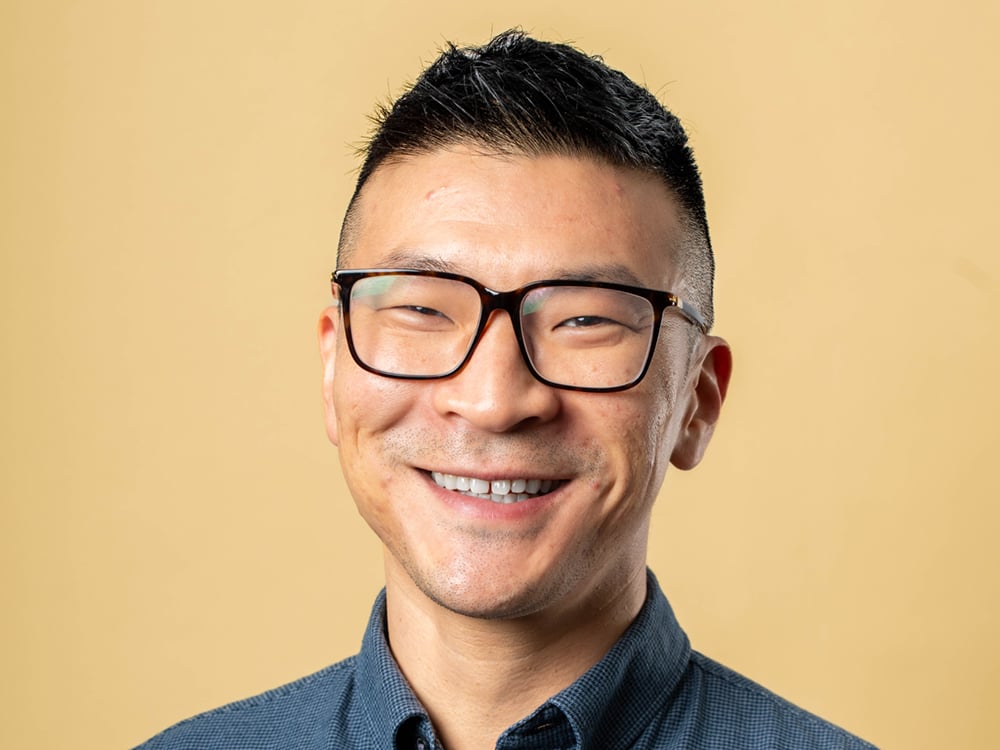
This isn’t the first time LGBTQ+ communities have had to live under hostile governments, says Michael Kwag, executive director of the Community-Based Research Centre, a non-profit charitable organization that has promoted the health of people of diverse sexualities and genders through research and intervention development since 1999.
Members of LGBTQ+ communities have been warning about the far right’s targeting of queer and trans people for years, he said. Social media has allowed misinformation and disinformation to be widely spread, especially with the help of the billionaires who run the platforms, he added.
Which is why Kwag says he’s been keeping a close eye on the “wrecking ball approach” the current U.S. administration is taking towards diversity, equity and inclusion, which will impact all minority or marginalized groups, he said.
“It’s not limited to trans communities. Look at the ways they’re trying to dismantle foreign aid and investments in things like global HIV and AIDS work, which provides access to HIV treatment and prevention for millions of people around the world,” Kwag said.
There’s concern Trump’s actions will influence other governments around the world, including in Canada, Kwag added.
Shortly after Trump began issuing executive orders, federal Conservative party leader Pierre Poilievre was asked if he would “recognize” the existence of trans and non-binary people. Poilievre said, “I’m only aware of two [genders].”
Poilievre made the comment despite the fact the federal government began modernizing its approach to gender in 2018, allowing for a third gender option on passports, and for self-identification in the census. British Columbia has also allowed the X gender marker on ID since 2018.
Politicians in Saskatchewan, New Brunswick and Alberta have also recently passed legislation negatively impacting trans youth.
At the same time, the Community-Based Research Centre has been highlighting the importance of collecting gender, sex and sexual orientation data in health care, advocating better care for mpox and putting together easy-to-navigate resources on available gender-affirming care services across the country.
The Tyee sat down with Kwag to talk about the rise of transphobia in Canada, how politicians are capitalizing on misinformation, and why he’s ultimately optimistic about how Canada will continue to uplift and protect marginalized people. The following interview has been edited for length and clarity.
The Tyee: How are we doing when it comes to protecting and uplifting the health, safety and rights of LGBTQ+ peoples in Canada?
Michael Kwag: We’re in a complicated position to say the least! There are a lot of reasons to be concerned. Just look at the wrecking ball approach Trump and the Republicans are taking towards equity and inclusion for queer and trans people and for all minority and marginalized groups.
We have lots of reason to be optimistic too.
In recent decades there’s been a clear path of progression around inclusion for queer communities and people, recognition of our unique needs and experiences with respect for our health and well-being, support through public policy, and investments in supporting queer communities. Whether that’s through research or frontline programming to support a more inclusive and affirming approach for queer communities across health and social services.
I don’t think that progress can be undone so easily. There’s a lot of strength in the decades of work. We had some pretty hard-won areas of progress and growth for queer and trans communities.
Could you give some examples?
It’s arguable how effective these actions have been, but there’s the 2S/LGBTQIA+ action plan and federal secretariat who advances the action plan.
There’s investments made to support efforts to promote inclusion and equity for queer communities and gender-affirming policies.
Federal programs ask organizations submitting proposals to show how they’re thinking critically about diversity, equity and inclusion around gender, sex and sexual orientation.
There’s good efforts to more meaningfully address the need to recognize queer and trans people in administrative health, which helps capture their experiences and identities so we can leverage that data. If you can’t measure a problem, you can’t really address it. There’s also work to improve access to gender-affirming care, and more health insurance companies including gender-affirming care within their extended benefits program.
We’ve invested a lot of time, energy and resources into making our society more inclusive, equitable and equal. It will be hard to undo that.
The work that makes our systems, services and organizations more equal, more inclusive and more representative is beneficial to us all. How can we eliminate barriers for everyone? How can we work towards a more equal and free society that includes us all?
[But] we’re at a place of uncertainty as we look at a possible change of government.
So why do you think there’s this climate of misinformation and rising prejudice towards trans and Two-Spirit people? Where do you see that coming from?
The uncomfortable reality is that people in our communities have been sounding the alarm about misinformation and disinformation coming from the far right for years. As much as we’ve seen this gradual push towards more understanding, awareness and acceptance of queer people in society, it hasn’t included everyone.
For years now, lobby groups and political groups have been mounting campaigns that spread misinformation and disinformation about queer and trans people, especially on social media. It’s a problem that’s increasingly difficult to get on top of, especially when these programs are actively complicit in contributing to the spread of mis- and disinformation.
They’re spreading really baseless and horrifying things.
Extensive bodies of scientific research debunk many of the things they’re saying but the broader public doesn’t have time to sit and read all of that.
They use a populist, opportunistic way to talk about sex and gender that preys on the fact that most people aren’t experts on the differences in sex and gender. It’s the misinformation playbook: approach these issues in a way that seizes upon gaps in people’s knowledge.
Like Poilievre saying, “I’m not aware of any other genders than men and women.”
Yeah. He knows better. But this preys upon how most people don’t personally know a trans or Two-Spirit person. On a quantitative level they’re a small minority.
So Poilievre is framing it as if the Liberal government has sold out common-sense Canadians by funding a radical far-left agenda that replaces even genders. Which is, of course, such a selective populist reading.
It’s also a convenient way to disregard all the work that underpins trans health and all the areas of research and efforts in different sectors to be responsive to the needs of minorities.
He’s being smug in a way that I think is clearly being empowered by the actions of Trump, who used an executive order to eliminate trans people from public life. Poilievre can assert that because it seems to be working in the U.S. for Trump.
One encouraging thing we’re seeing in the last couple of weeks is Canadians don’t like what is happening in the U.S. There’s a significant portion, maybe a majority, who are concerned with Trump’s attacks on trans people, on minority communities and how he’s trying to dismantle all manner of government aimed at improving communities.
It’s been a bit of a unifying moment for Canadians who don’t want to see a version of Trump get elected here.
So going back to that interview, I think Poilievre may come to regret his smug attitude of “Yeah I can bring Trump here too.”
We have this opportunity to think about how we want to respond to politicians taking up positions that are anti-2S/LGBTQIA+, anti-DEI, anti-woke, and groups trying to dismantle important investments and work that makes our communities, services and society more inclusive for all.
I hope in these uncertain times that we are able to rally behind things we know have made life better for people in our country.
What is the Community-Based Research Centre doing to support trans and queer folks in this moment?
We’re focusing on our mandate and mission. We’re not going to walk away from our work to more meaningfully include queer and trans people across identities. We have a commitment to include them in our research and advocate for their inclusion in research and health-care systems more broadly.
We’re going to continue to do that in the face of increasing transphobia.
We’ll continue to support the work of our partners in health and government to understand the range of needs and priorities across communities in terms of supporting our health and well-being.
How does anti-Black racism show up in Canada for Black queer and trans people?
There’s a similar, parallel set of issues directly targeting efforts to address inequalities, a need for more inclusion and better representation of Black folks in Canada.
We have to respond to these attacks on diversity, equity and inclusion in a more intersectional way. Attacks on 2S/LGBTQIA+ communities include Black, African, Caribbean and Indigenous communities. They include other people of colour, immigrants, newcomers, migrants.
These attacks all come from a common place of trying to not only disregard and dismiss, but also dismantle the entire concept that our society should be more inclusive. That we should be trying to respond to structural racism and discrimination that exists towards Black folks but also other minority communities.
There’s been growing popularity behind the idea that “we’ve gone too far in that direction,” and this speaks to how many Canadians are working to make a country that is a more equitable and inclusive place for all minority groups. We have to push back against the idea that there aren’t certain groups, populations and communities that face these barriers.
It’s important for us not to be siloed in our responses.
And how does that compare, or overlay, with how anti-Indigenous racism impacts queer Indigenous folks?
There’s been efforts to undermine the work of researchers, experts and community groups who have been working to address reconciliation on different levels, or trying to promote more de-colonial approaches to our work. We have been supporting more meaningful responses to historic and ongoing examples of colonization and supporting better inclusion of Indigenous Peoples in all aspects of society.
There’s been efforts to deny the existence of residential schools and to undermine the legitimacy of efforts to promote reconciliation.
We have to push back and our response has to be intersectional. I have to be mindful that these conservative attacks on queer and trans people, on Black communities, on Indigenous Peoples, they’re all connected by this thread of “We should not try to make our society more inclusive and equal.”
This is a moment where we have to stand up for our values and for a vision of a more just, inclusive and equal society. Which is what the work of diversity, equity and inclusion is about, right? It’s not to pander to the needs of a tiny minority and subvert the public good, which is what a lot of the far-right talking points are largely about. It’s about trying to make our society, our systems and services less discriminatory, less harmful to minority groups who, for a lot of different reasons, have not had their needs prioritized.
You’ve been working for the Community-Based Research Centre since 2004. What victories have you gotten to celebrate and what fights are you exasperated to still be having?
I started in 2004 and worked for five years, and then came back in 2017 and have been here since.
There’s lots of examples of concrete and tangible process in terms of support and progress for 2S/LGBTQIA+ health in Canada, some more visible than others.
There’s different ways in which queer people and communities have been considered in different government programs. And there’s important symbolic wins, like the passage of the federal conversion therapy ban. That is an example of the government trying to send a really positive, affirming message about both queer, trans and Two-Spirit identities and experiences, and that any effort to change, deny or suppress our identities is not just morally wrong but actually against the law.
There’s a wholesale effort to be more thoughtful in how we engage with and treat queer people and communities.
That speaks to the slow-burning process of how change happens.
Change happens through some big actions taken by, for example, government banning conversion therapy. But it’s also the less visible work that happens through development and delivery of health and social services and systems. About the ways in which we have sought to make talking about queer people and our experiences more reflective in education. Those things matter, even if the effect is indirect.
One thing that continues to frustrate me is the slow-moving pace of change. There’s the bureaucratic process of trying to make structural change happen. We have multiple levels of government that can’t always get on the same page about what needs to happen, which can also slow change.
As a research organization it’s also frustrating to work with the long time horizon from when we learn something and generate evidence that speaks to a need for change and the amount of time it actually takes to implement that practice. ![[Tyee]](/design-article.thetyee.ca/ui/img/yellowblob.png)
Read more: Health, Rights + Justice, Politics








Tyee Commenting Guidelines
Comments that violate guidelines risk being deleted, and violations may result in a temporary or permanent user ban. Maintain the spirit of good conversation to stay in the discussion and be patient with moderators. Comments are reviewed regularly but not in real time.
Do:
Do not: