


 SHARE:
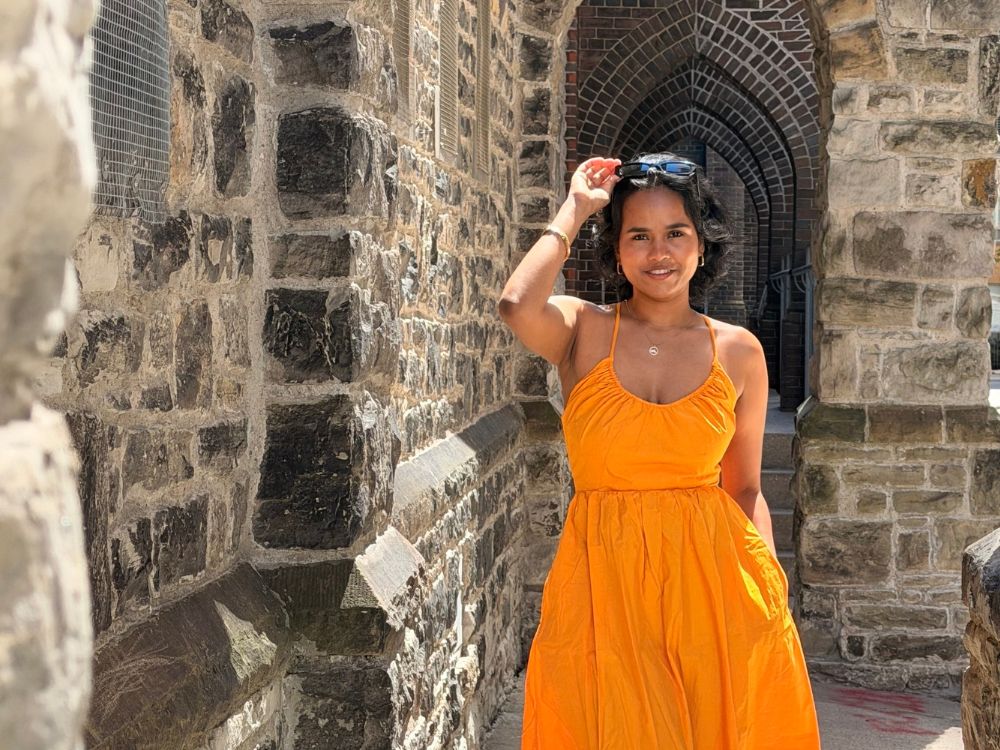
She has been a valued member of The Tyee’s staff for five years, but readers may not be familiar with Shubhalaxmi Patil, our audience development analyst. One of a handful of staff members who works remotely from outside of B.C., Patil helps us keep things moving on a West Coast timeline.
You may not see Patil’s byline on the site. But you’ve definitely seen her work in the pop-up windows that welcome newcomers to our homepage, encourage readers to become Tyee Builders or ask you to participate in a reader survey.
Behind the scenes, Patil uses analytics to track what readers like and what they don’t. She lets us know what keeps readers engaged enough to return to The Tyee.
But outside of her day job, Patil has a growing profile as a social media influencer. On Instagram, TikTok and YouTube, she shares her life as a queer Desi woman in a long-term relationship with her wife, fellow social media personality Dharti Patel.
“I started in 2017 to 2018. My wife actually started earlier, and I was supporting her from the background, behind the scenes,” said Patil.
“My wife started doing it just to destigmatize LGBTQIA relationships and share our struggles in India, what we face. I supported her from behind the scenes, because I didn’t really think of myself as someone who wants to be on camera.”
That all changed when her brother and mother, who didn’t have social media, were informed by a family friend that Patil’s Instagram account had a rainbow emoji, a symbol of LGBTQ2S+ pride, next to her name.
“It was so silly. I didn’t think anyone from my family or my brother’s friend would understand that. But they told my brother, my brother explained it to my mom, and my mom told me to remove that emoji,” she said.
“And I was like, ‘I’m already shrinking myself so much that I’m not in the videos. I’m not publicly out. But you are asking me to remove that emoji, as well?’ I don’t know. It’s like the rebel in me, or I was just done with shrinking myself to make everyone around me feel comfortable. I just started making videos.”
Now living in Toronto, Patil met her wife in India while attending different colleges. They have been together for 13 years, but when they lived in India they had to keep their relationship more private for their own safety.
Imposed during British Colonial rule, a law criminalizing same-sex relationships was struck down in 2018. Another law acknowledging a third gender was passed even earlier in 2014. But much like Canada, stigma, harassment and violence towards queer and trans people remains ongoing in India.
After moving to Canada together in 2019 as international students, Patil and her wife built a life they feel is important to share with other queer people people, whether they live back home in India or abroad. That includes the story of their wedding three years ago, and more recently, becoming Canadian citizens.
“After getting married, I thought there are a lot of LGBTQIA content creators, but not a lot of them have a 13-year-long relationship, gotten married or have a more traditional life,” Patil said.
“We have a good relationship with our family. My mom visits me every year; my partner’s mom visited last year. And that is not something that I have seen on social media. So I was like, ‘I just want to share the positive moments, just destigmatize and show people this is possible, too.’”
In honour of Pride weekend here in Vancouver, The Tyee spoke with Patil about her recent experience marching in Toronto’s Pride Parade for the first time and the importance of seeing yourself or people like you on social media. This interview has been edited for length and clarity.
The Tyee: Before you started posting on social media about your personal life, was it common for you to see people on social media who look and love like you?
Shubhalaxmi Patil: No. My wife was one of the first lesbian content creators in India who was sharing publicly about our relationship, about her struggles. I was the only out person in my college, publicly. And Dharti was the only out person in her college. On social media no one was posting about it. I might have seen gay male content creators, but not in India. And it was uncommon for women to post about their sexuality in India.
Why is it important to see yourself or people like you on social media?
I had not seen anyone like me when I was in college. And for a long time, I didn’t really think I could have a life after 25, 30. I’d never really thought about my future. Because there was no path for people like me to follow. People should know that this is an option, too. This is also what a future can look like. I feel like that is important.
What are the main themes of your posts?
Mostly I just talk about my struggles as a lesbian woman in India. And I share positive moments in my life with my wife. The top performing videos are just me sharing what my wife does for me, the day-to-day life.
How many followers do you have across all the platforms?
On Instagram, I have 5,600. And on TikTok, my wife usually posts our videos, so it’s around 2,000. On YouTube, it’s 3,400. I haven’t been really active on YouTube.
My wife has a lot more followers than me. I feel like it’s because she looks very queer. When people look at me, they don’t really think of me as a lesbian. They see a straight woman. So I feel like that’s why people are not following me. She’s also very entertaining.
Your videos are publicly available. So anyone can go on Instagram and watch them, not just people you have granted permission. Why did you make that decision?
So most of the people I know didn’t openly support it, at that time. They didn’t openly support me. So I didn’t want them to be my audience. It was just for people who are like me.
When I realized I’m a lesbian, I was so scared to meet someone who is exactly like me. Because LGBTQIA communities were portrayed in a very negative way, at that time, in Indian media, movies, anywhere. I just wanted to show that there is a positive experience to this and destigmatize that. So I made it public.
But yeah, it is scary because a lot of people, like the audience group that really hate us, they also get to see those videos.
There was a time when I used to get hateful messages and comments. I was so scared for some time, and I didn’t post anything after that. And there are some of my friends who are also content creators and they said that they get such messages, too. It’s very common. And I was like, ‘Okay, if it’s happening to everyone, and I’ve seen other people, women, being very strong about it,’ that really pushed me. Like, ‘It’s okay, I can just post videos.’
And I try to hide a lot of things. I don’t share my address, I don’t share my exact location, so that helps. But I feel like even if one person sees my video and it helps them to just realize they can have a future too, I feel that that serves the purpose for me.
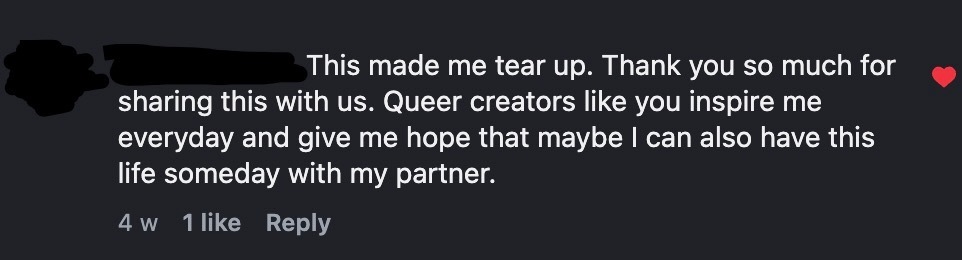
Since you first started posting, a lot has changed in your life. Does your family watch your videos now?
Yeah. My mom and dad, they both watch the videos. But they just say that they like the video, or like my dad engages with each and every one of them. We don’t really directly talk about it. But yeah, they do. Even my family members, my cousins — everyone engages with my videos.
Have you found that that’s had an influence on how they view you and your relationship with your wife?
Yeah, definitely. I feel like my parents and everyone in my family, they just want to see me happy. And before meeting my wife, as I said, I didn’t really imagine my future. So for me, it was like, ‘I don’t have a future. Why would I work for it?’ I was not so good in my school.
But after meeting my wife, I started focusing more on my career. And they do see that it has helped me, and they see how happy I am. I have a successful career. They see I’m sharing positive experiences. So they are very happy for me.
How does the positive feedback impact your decision to keep posting?
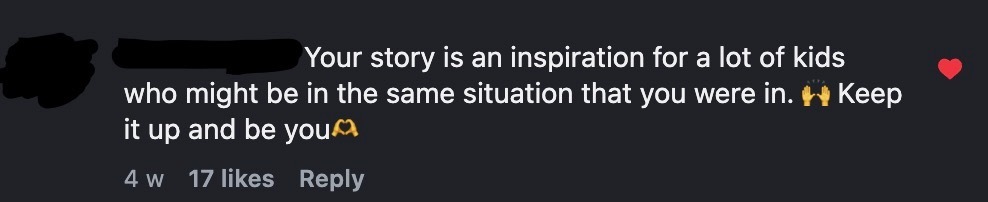
I needed that for a really long time. I felt alone in Canada, even with my wife. We didn’t have a lot. I didn’t know that there were so many immigrant, queer, brown people here.
But because people started to reach out, and after being active in the community, I was like, ‘Oh my god, there are so many people. They all know me and are coming up to me and sharing positive feedback.’
This past June you marched in the Toronto Pride Parade for the first time, and made a video about it for your social media channels. How did that come about?
I always wanted to do it, but it was either like I was not in the town at that time, or I was so busy with work that I didn't even know Pride was going on. So this year I was like, ‘I'll plan accordingly.’
I had outfits planned for each day, and I had some friends I wanted to go with. There was one friend who has a queer South Asian women’s association. She invited me to march with her group. So that was really great, to just march around with all the other brown women.
Why was it important to share that experience on social media?
I felt like it was like a full-circle moment for me because that is something that inspired me to leave India. The first time I left India, I went on a work trip to the U.S.
The event was during a Pride month, and there were people from the community who were speaking, and there were teenagers who came. They had Pride flags, and their parents and friends were with them, supporting them. That really motivated me. I saw that positive energy, and I was like, ‘I want this.’
This year when I went for the Pride parade, I really felt that energy. And I also got citizenship this year.
Everyone was so kind, and people were cheering. We were walking the parade, and I didn’t have to change anything about myself. I was just being my most authentic self, and just celebrating with people around me, my friends. I love that.
Is that a future plan for you and your wife, to march with your moms?
Definitely with my mom. I would love to do it. ![[Tyee]](/design-article.thetyee.ca/ui/img/yellowblob.png)
Read more: Gender + Sexuality












Tyee Commenting Guidelines
Please note that email notifications for replies are not currently working due to a software issue which may be resolved in a future update.
Comments that violate guidelines risk being deleted, and violations may result in a temporary or permanent user ban. Maintain the spirit of good conversation to stay in the discussion and be patient with moderators. Comments are reviewed regularly but not in real time.
Do:
Do not: