


 SHARE:
Consciousness and memory.
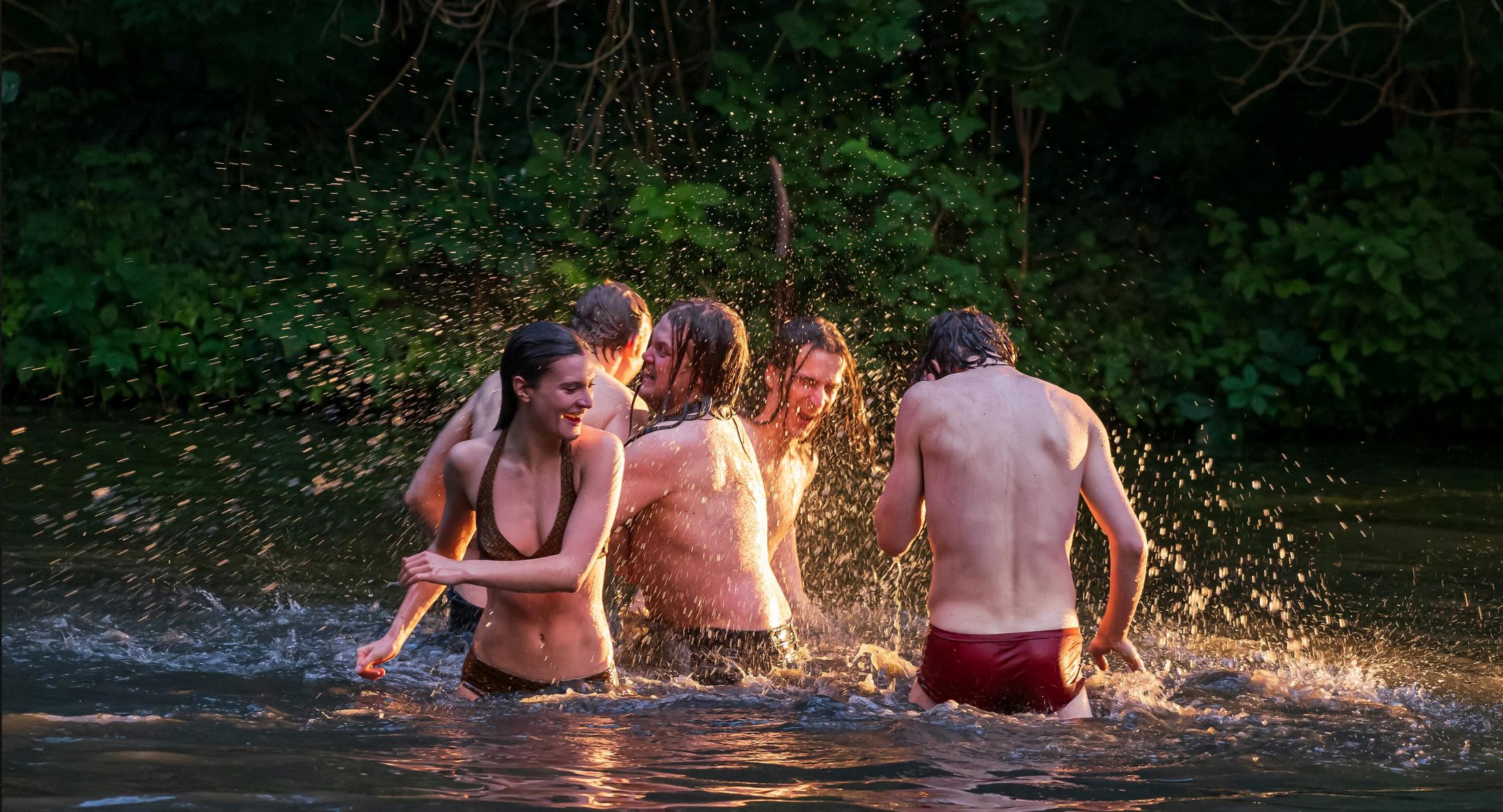
Two new films take these as their subject matter. There are convergences, commonalities and enormous differences in how each work contends with these ideas. But what comes out of the experience is something that approaches transcendence.
Director Ildikó Enyedi’s Silent Friend premiered at the 2025 Venice International Film Festival and picked up the FIPRESCI Prize, an award from the International Federation of Film Critics recognizing new and young cinema.
Victoria, B.C.-born director Sophy Romvari’s debut feature Blue Heron premiered at the Locarno Film Festival and is currently accumulating numerous accolades.
Both Enyedi and Romvari are of Hungarian descent, and both their films are screening this month at the VIFF Centre in Vancouver.
In ‘Silent Friend,’ a wondrous study of loneliness
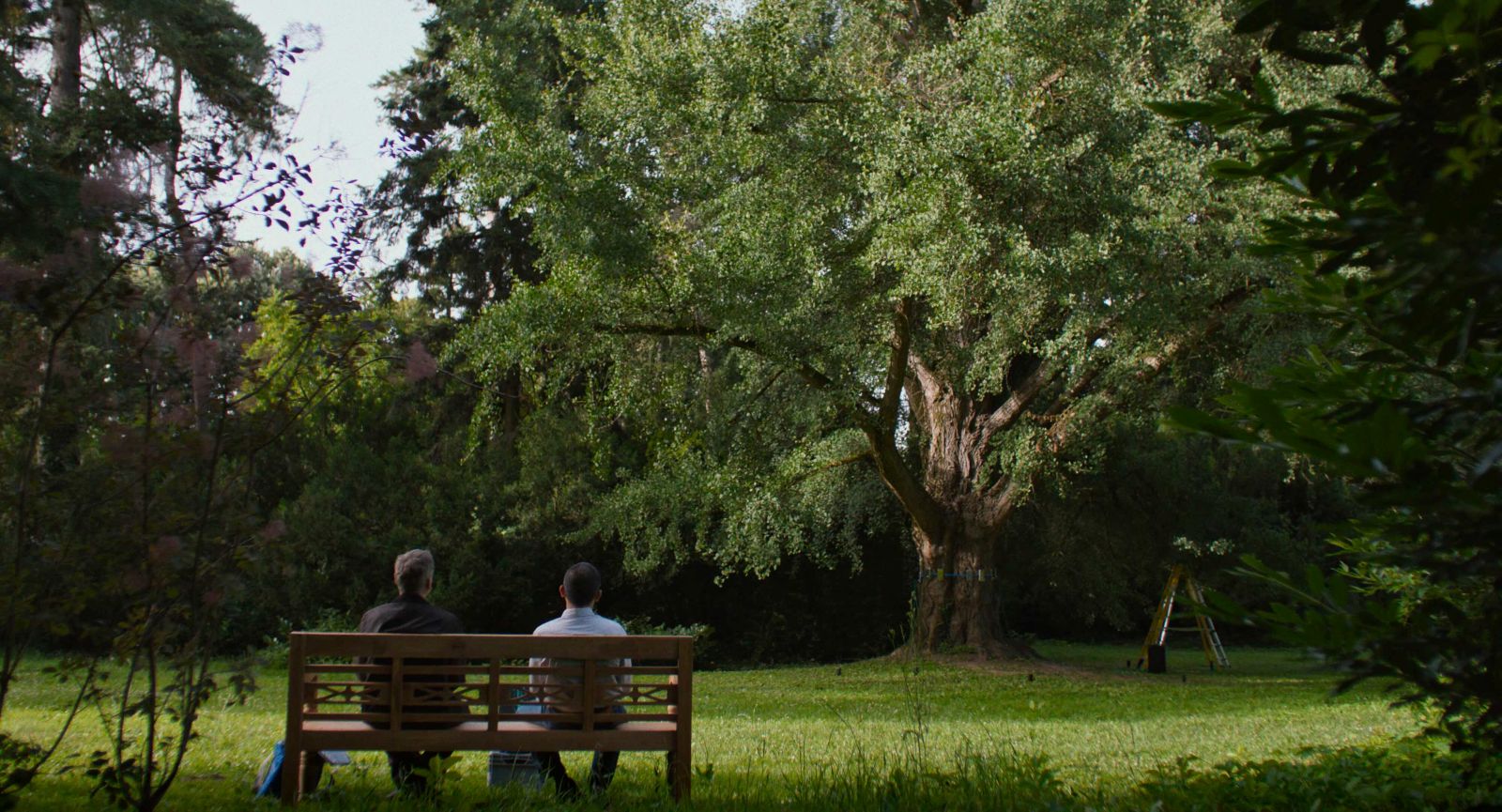
On the surface, Silent Friend is the chaptered story of a magnificent ginkgo biloba tree and the three human lives that come into intimate contact with it.
Housed in the botanical garden in Marburg, Germany, the tree is a remarkable being. An epic presence resplendent with beauty, but also aching with loneliness. So, too are the three different people who seek it out, each sealed hermetically in their own bubble of time.
In the period just before COVID-19 lockdown, Dr. Tony Wong, a professor studying the brain activity of newborn babies, has travelled to the university in Marburg only to find himself trapped there as the world shuts down in the global pandemic.
The only other living soul in the university facility — human, that is — is a surly caretaker.
Separated by language, culture and the uncertainty of the pandemic, the pair circles each other like wary beasts in the empty campus.
Wong (played by Tony Leung Chiu-wai in only his second role in a Western film) brings gravitas mixed lightly with gentle humour to the role. There is a great deal of pleasure to be gained simply by looking at his face.
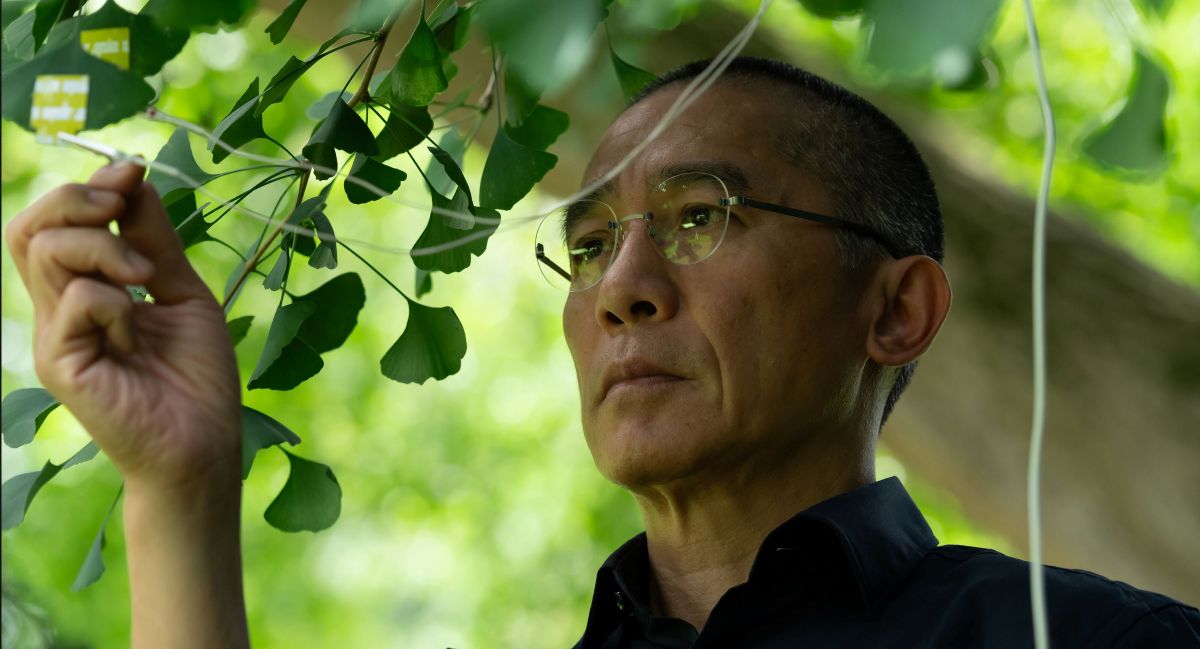
Wong’s research into the nature of consciousness leads him to reach out to another scientist Alice Sauvage (Léa Seydoux) whose work in the communication strategies employed by plants offers another garden path into the intermingling of the natural and human worlds.
Affixing a series of monitors and electrodes to the ginkgo, Wong attempts to forge a form of interspecies communication.
But just as one is settling into the quiet travails of Wong and his research, the film cuts suddenly backwards in time.
Colour falls away and is replaced by chiaroscuro shades of black and white.
The year is 1908, and the university location and the ginkgo remain unchanged. In this chapter of the story, a young woman is seeking entrance to the university’s botanical program. But before she can begin her education as the first-ever female student at the institution, Grete (Luna Wedler) is forced to contend with an all-male panel of elderly academics who seek to embarrass and intimidate her by asking about the sexual habits of plants. Turns out that our botanical brethren are a promiscuous bunch.
In the interview, the young woman holds her ground brilliantly, but after the grilling is over, she flees to the garden, finding solace and comfort in the same ginkgo tree.
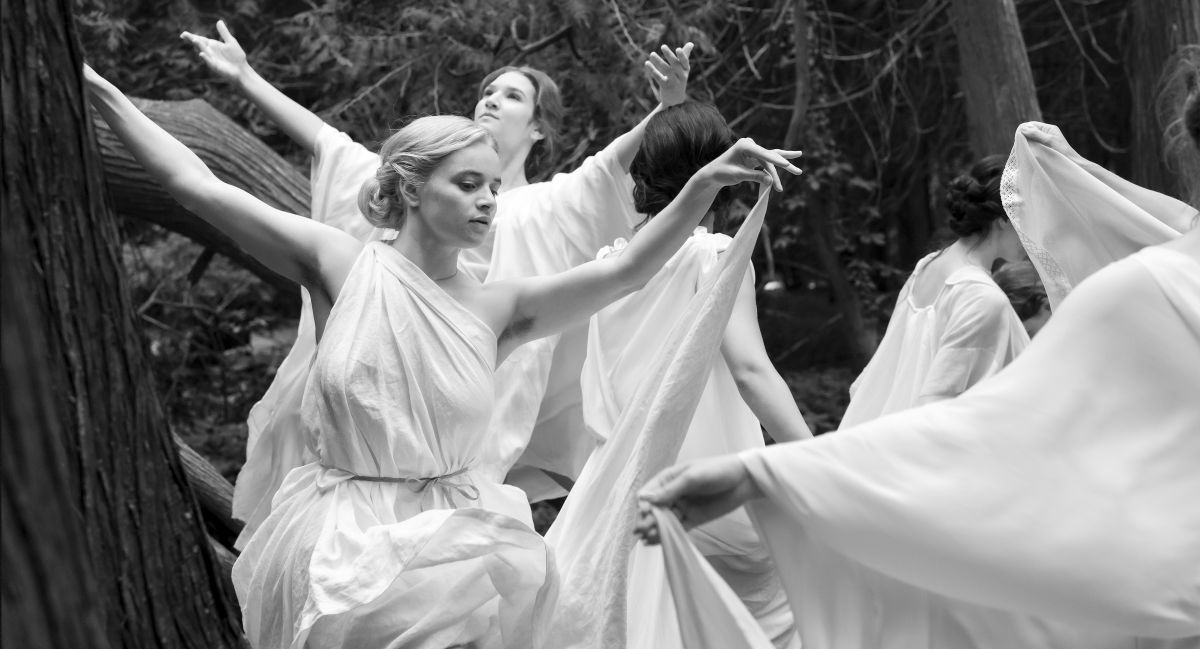
Even after she is accepted into the university, Grete’s troubles aren’t quite over yet. After an early-morning ritual involving a group of young women dressing up in bedsheets and dancing about in a quasi-pagan rite, Grete gets the boot from the conservative family that she is boarding with. She takes a position as a photographer’s assistant, coming into her own as an independent and arguably sensual being.
The third period of the film, set in 1972, involves a student named Hannes, living off campus with Gundula, another student who is studying how plants react to humans. A single geranium is the subject of her research. The palpable attraction between Hannes and Gundula manifests in the young man’s interest in helping her with her experiment. When Gundula heads off on a backpacking trip, Hannes offers to water the garden and oversee her geranium. Soon enough, he is adding improvements to her experiment.
Taken cumulatively, the three stories overlap and intermingle, each tumescent with desire and deep reserves of loneliness. The need for contact and communication are the precipitating elements for both trees and humans.
In the film, the date assigned to the tree is 1832. Whether this represents the time it was planted is never made clear, but what is apparent is that the lone female ginkgo has lived a solitary existence for most of its life.
Ginkgo trees evolved before the advent of flying pollinators, and their reproductive processes rely upon the wind and the proximity of other trees. Supplied with gymnosperm by his fellow scientist, Wong takes it upon himself to fertilize the tree, and involves the only other human around, namely the cranky caretaker.
This coming together of people and tree spirals out in a glorious, almost psychedelic union.
It is a rebirth, in every sense of the word.
In ‘Blue Heron,’ a stunning exploration of love and family
Blue Heron, Sophy Romvari’s semi-autobiographical debut feature, is a world away from Silent Friend’s Marburg botanical garden.
The story takes place on Vancouver Island in the early 1990s, where Romvari grew up. It follows a family moving into a modest new house, and from the outset, it’s clear that all is not well. Unspoken tension simmers just below the surface as the harried parents and their three young children exchange surreptitious glances at the awkward teenager in their midst.
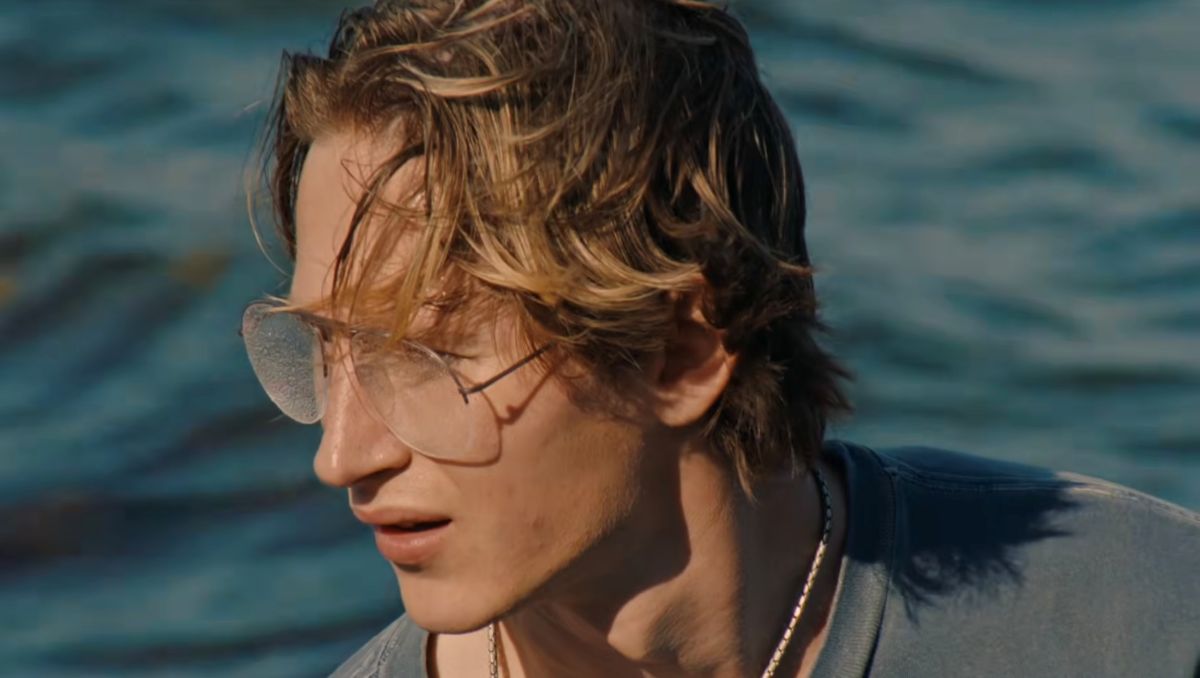
With his flop of straight blond hair, oversize glasses and prominent Adam’s apple, Jeremy (Edik Beddoes) is something of a cuckoo-bird figure, meaning he looks strangely out of place in his family of dark-haired, dark-eyed family members — his biological father is not the same as his younger siblings.
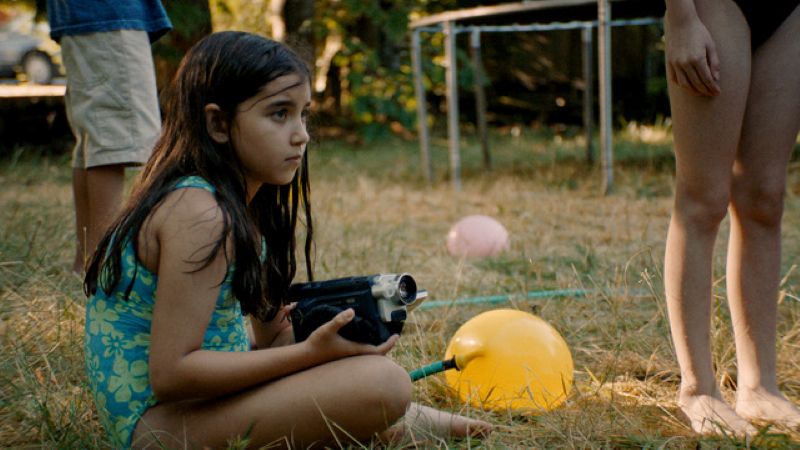
Watching events unfold with the care and caution of an eight-year-old, Sasha (Eylul Guven) functions as the ears, eyes and heart of the story.
The family’s move has something to do with the increasingly erratic and troubling behaviour that their eldest son is exhibiting. Jeremy’s actions range from the benign (purposefully ignoring his mother) to more serious (uttering threats; getting arrested for shoplifting). The disquieting pall that his presence throws over the entire family is palpable.
As Jeremy’s desperate parents look for solutions, condescending therapists and social workers offer little in the way of help. Around this central drama, family life ebbs and flows, like water flowing around a boulder.
Despite the family’s problems, there are moments of beauty and pleasure, a trip to the beach or Jeremy sprinkling icing sugar over his younger siblings. Behind even the gentlest moments, an atmosphere of uneasiness settles like a stone.
The episodic first half of the film moves slowly, witnessed and absorbed by Sasha. As the quiet observer of the action like the ginkgo in Silent Friend, she watches events unfold, unable to act, even as the looming inevitability of tragedy comes into view.
Like Silent Friend, there is a break in the narrative structure, jumping forward many years into the future, to take up with Sasha as a young woman. Sasha (Amy Zimmer) has become a filmmaker, and in this role, she revisits her family’s past, re-entering the period of crisis and re-examining it, looking for answers and some form of resolution.
On the surface, Blue Heron and Silent Friend present two very different stories that might not appear to have much to do with each other. But the connective tissue knitting them together is a stubborn rope.
Neither film is in the business of supplying ultimate answers to the question of what it means to be human. But in parsing the eddies and whirling stuff of grief, love and loneliness, they offer something greater. A kind of solidarity between all living things.
Or maybe attention is a better descriptor. The quest to discover a means of communication is the defining element in both films. How to pierce the veil that separates us and find each other again.
My mother offered the opinion the other day that she doesn’t believe in death. That consciousness once freed from the confines of corporeal form expands out, taking a place in the greater fabric of reality, whatever that is.
Early in Silent Friend, Wong explains his research into the nature of consciousness, comparing the differences of cognition between adults and babies. Whereas fully grown humans practice spotlight cognition, meaning attention is paid to things based on their level of importance, babies make no such distinction. Their brains are paying attention to everything taking place. Lantern-light consciousness takes it all in.
Blue Heron calls up this kind of consciousness, stepping lightly through time and memory to search for and find a species of acceptance. The experience of loss brings both films together. The work of making sense of existence and of mortality, trying to understand and make meaning, is left to the people who remain behind.
Whether it’s an ancient ginkgo tree learning to communicate, or, in the case of Blue Heron, a startling atmospheric occurrence that comes in like a message from the dead, the mysteries of life abide.
‘Blue Heron’ is screening at VIFF Centre in Vancouver until May 21. Tickets and showtimes are online. ‘Silent Friend’ is screening at VIFF Centre in Vancouver from May 22 to 29. Tickets and showtimes are online. ![[Tyee]](/design-article.thetyee.ca/ui/img/yellowblob.png)
Read more: Film







Tyee Commenting Guidelines
Please note that email notifications for replies are not currently working due to a software issue which may be resolved in a future update.
Comments that violate guidelines risk being deleted, and violations may result in a temporary or permanent user ban. Maintain the spirit of good conversation to stay in the discussion and be patient with moderators. Comments are reviewed regularly but not in real time.
Do:
Do not: