



 SHARE:
Amid all the post-apocalyptic dreck offered on Netflix, a new Brazilian miniseries stands out as a truly frightening horror story. It’s made more so because it’s based on a real incident that affected real people almost 40 years ago, in 1987. Far from being dated, Radioactive Emergency is a parable for our own times.
Following historical events closely, the series begins in a working-class, mostly Black neighbourhood in the city of Goiânia, capital of the Brazilian state of Goiás.
Two young men dig a heavy metal tank out of the rubble of an abandoned radiotherapy clinic. They take it to a local junkyard, where the owner bargains good-naturedly with them (they need money for new soccer boots) and finally buys the tank.
That starts a sequence of disasters. From the abandoned radiotherapy clinic, a few grams of cesium-137, a radioactive isotope, move to the junkyard, then across the city — and then all the way to São Paulo, one of the biggest cities in South America.
By chance, a young physicist, Márcio (Johnny Massaro), and his wife are visiting his father in Goiânia. One morning, the next-door neighbour, a doctor, calls Márcio and invites him to look at some perplexing new cases in the local hospital. That leads in turn to a quietly frantic search across the city, tracking the path of the cesium-137 and the people, places and objects it’s contaminated.
Márcio and Dr. Orenstein (Paulo Gorgulho), the head of the national agency for nuclear radiation, push the search while trying to explain to the radiation victims, health-care workers, and politicians that they’re dealing with a threat never seen before.
Nothing like Chernobyl
The Chernobyl Power Plant in the Soviet Union, later Ukraine, disastrously exploded just the year before and everyone’s heard something about it. But that was an enormous nuclear reactor complex, and this radioactive isotope in Brazil is just a handful of powder that glows blue in the dark.
The longer the search goes on, the more contamination the searchers find. The canister containing the cesium-137 sits in the living room of the junkyard owner for days before his wife takes it to a hospital — where it ends up sitting on a chair in a courtyard.
Márcio, Orenstein and their technical helpers understand how serious the problem is, but no one wants to be told they have to leave their homes and live in tents in the municipal stadium until they can be tested for radioactive contamination.
The state governor is alarmed at what the contamination will do to the local economy and his own reputation. It’s not explicit, but Brazilian viewers would know very well that the 21-year rule of a military junta had ended just two years before. The contamination makes civilian government look incompetent.
The contamination also behaves very much like an infectious disease — COVID-19, for example. As Márcio and his colleagues trace radiation across the city, they also frighten everyone they meet.
We, the viewers, are already frightened to the edge of horror. We watch people laughing around a kitchen table as they play with the powder. They carry the canister onto a crowded bus. We watch a little girl eat a snack with powder on her hands.
As in a nightmare, we see awful things but we can do nothing.
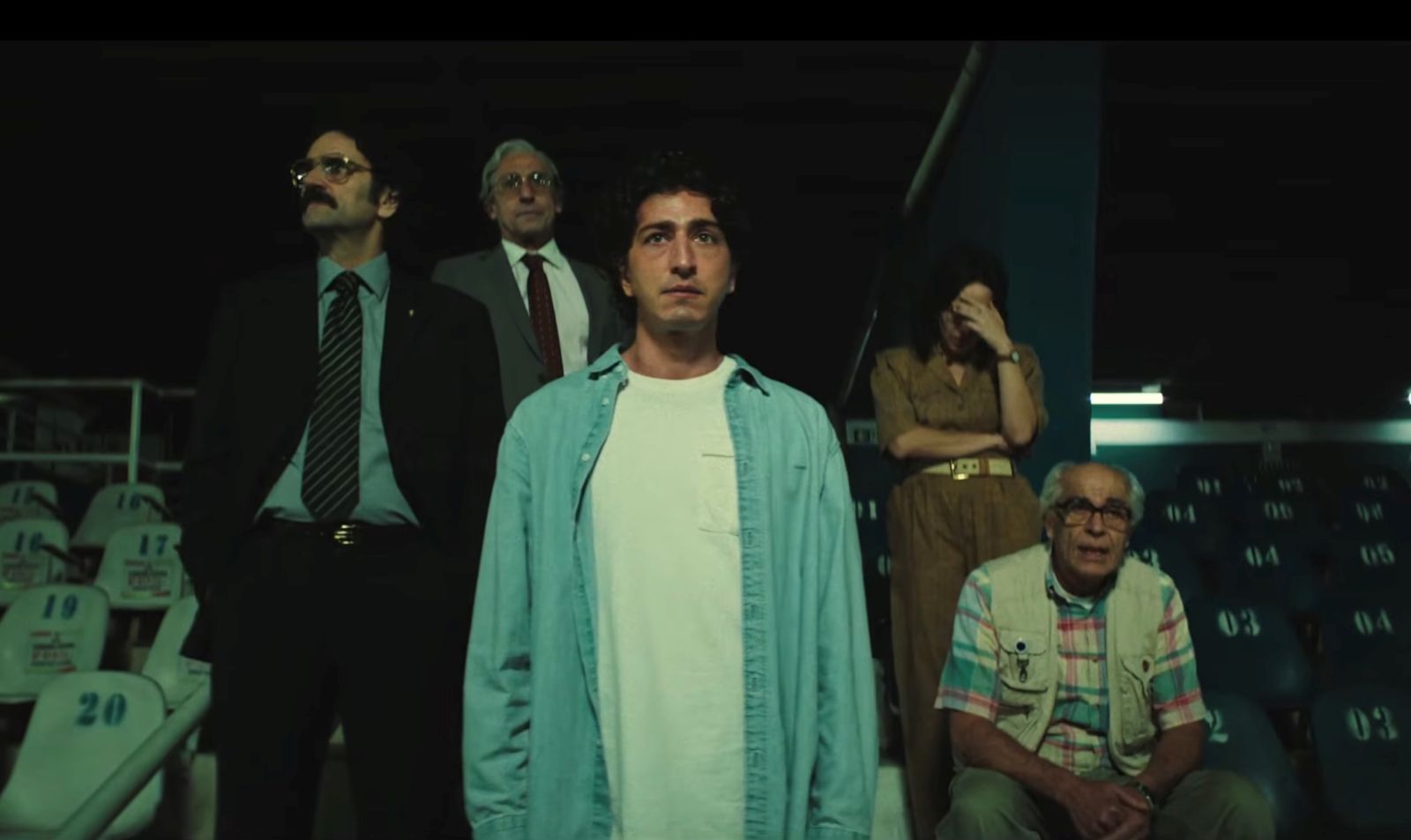
‘Calma! Calma!’
In a feat of detective work, Márcio finds the bus that carried the canister to the hospital, climbs aboard with his Geiger counter, and learns the bus is very much contaminated, and so are all the passengers.
They panic when he tells them they must be screened at the stadium. All Márcio can do is shout “Calma! Calma!” In other words, take it easy. He is talking to himself as much as to the passengers.
The series pivots around a key issue: the experts don’t know how to talk to the people, and can’t even agree among themselves. A Soviet radiation expert, brought in to help, only quarrels with the Brazilians.
Meanwhile, healthy relatives of those exposed to radiation find themselves forbidden to go home or to work. They are stigmatized and shunned by friends and neighbours.
Problems like this have occurred in every recent serious outbreak of an emerging disease.
In the West Africa Ebola outbreak, young men in one town threw rocks at health-care workers, thinking they were bringing the disease.
In another case, villagers murdered eight health-care workers, journalists and government officials who had come to warn them about Ebola.
Ordinary people in Liberia, Guinea and Sierra Leone had no particular reason to trust their governments or foreign experts; they associated hospitals with death, and preferred seeking help from local healers (who died treating Ebola cases, and whose elaborate, crowded funerals spread the disease even further).
One of the radiation cases in Goiânia is hospitalized but escapes — again reminding us of more recent Ebola outbreaks — and is nearly shot before being returned. When the local hospital can’t help the most serious cases, Dr. Orenstein pulls strings to get them transferred to a naval hospital in Rio de Janeiro — but the admiral in charge won’t provide enough beds for all, so the local doctors face an ethical dilemma in choosing who can go.
The disaster also exposes sloppy governance and lack of regulation. Embarrassing facts emerge from a hearing. The radiotherapy clinic was treating cancer patients for free, and had run out of money.
Quarrels arose about the clinic’s lease and money owing to local businesses, and somehow the cesium-137 canister was never recorded as being part of the clinic’s equipment.
And no one had established any guidelines for dealing with radioactive contamination on such a scale.
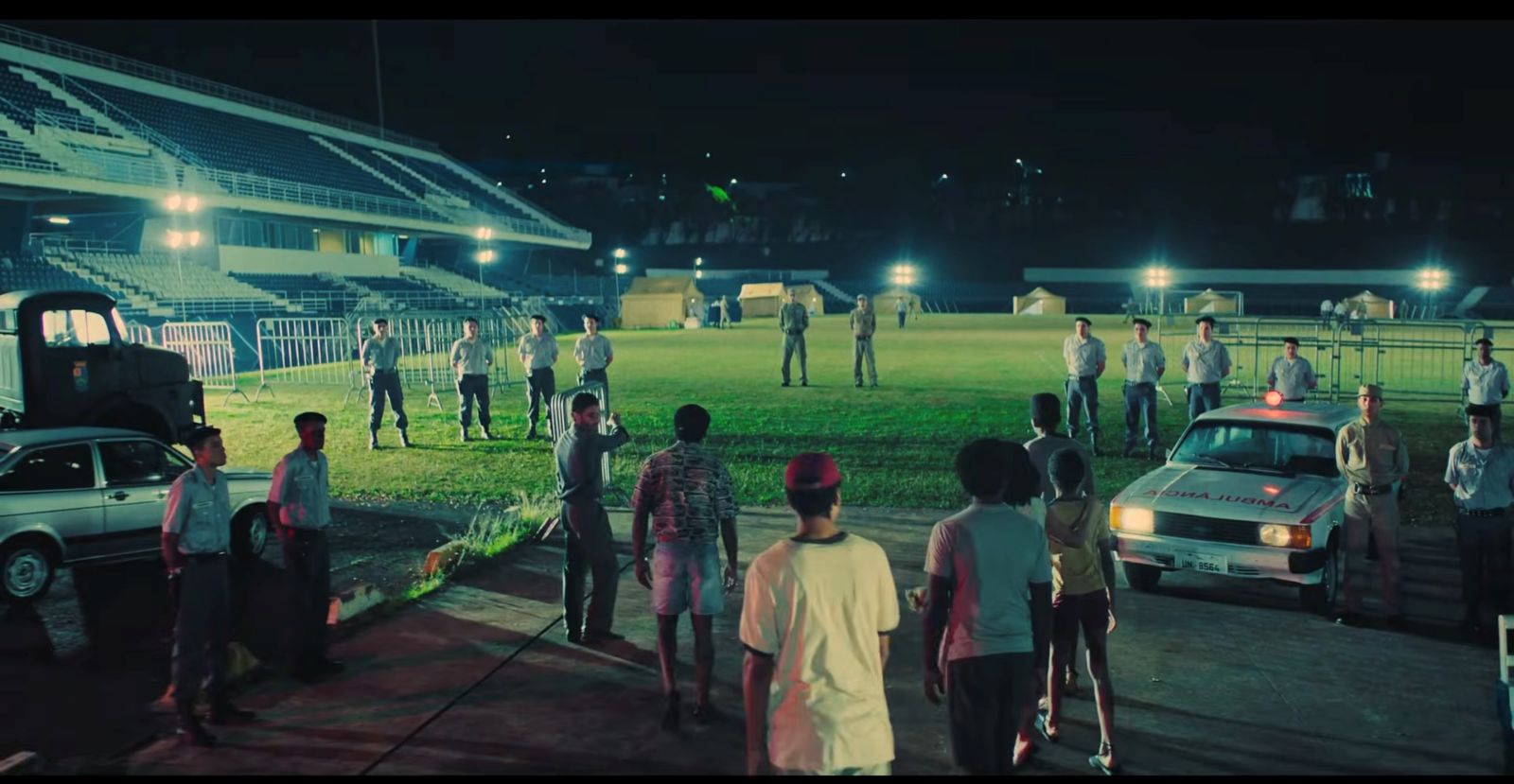
A critique of Bolsonaro
It’s likely that Radioactive Emergency is a critique of the Brazilian response to COVID-19 under the reactionary rule of then-president Jair Bolsonaro. He consistently minimized the pandemic, which caused an estimated 38 million COVID-19 cases and over 700,000 deaths.
The series succeeds because it mostly avoids the easy thrills of melodrama. The working-class people who are exposed to cesium-137 are simply trying to make a living in a rundown community like those I saw in 1950s Mexico when I was a boy.
The doctors and experts feel trapped between their knowledge and their ignorance. The politicians are appalled at what they must do: isolate thousands of people, hospitalize hundreds, demolish homes — and help to create policies to ensure nothing like this ever happens again.
By understating the disaster, the series lets us draw our own conclusions and compare our own communities with Goiânia.
One of its most powerful moments, near the end, shows a woman who has lost her child to radiation poisoning. Returning to her old house to watch it being demolished, she stands very still, her face a blank. We know what she is feeling, because we feel it ourselves.
‘Radioactive Emergency’ is now streaming on Netflix. ![[Tyee]](/design-article.thetyee.ca/ui/img/yellowblob.png)
Read more: Health, Rights + Justice, Media











Tyee Commenting Guidelines
Please note that email notifications for replies are not currently working due to a software issue which may be resolved in a future update.
Comments that violate guidelines risk being deleted, and violations may result in a temporary or permanent user ban. Maintain the spirit of good conversation to stay in the discussion and be patient with moderators. Comments are reviewed regularly but not in real time.
Do:
Do not: