

 SHARE:
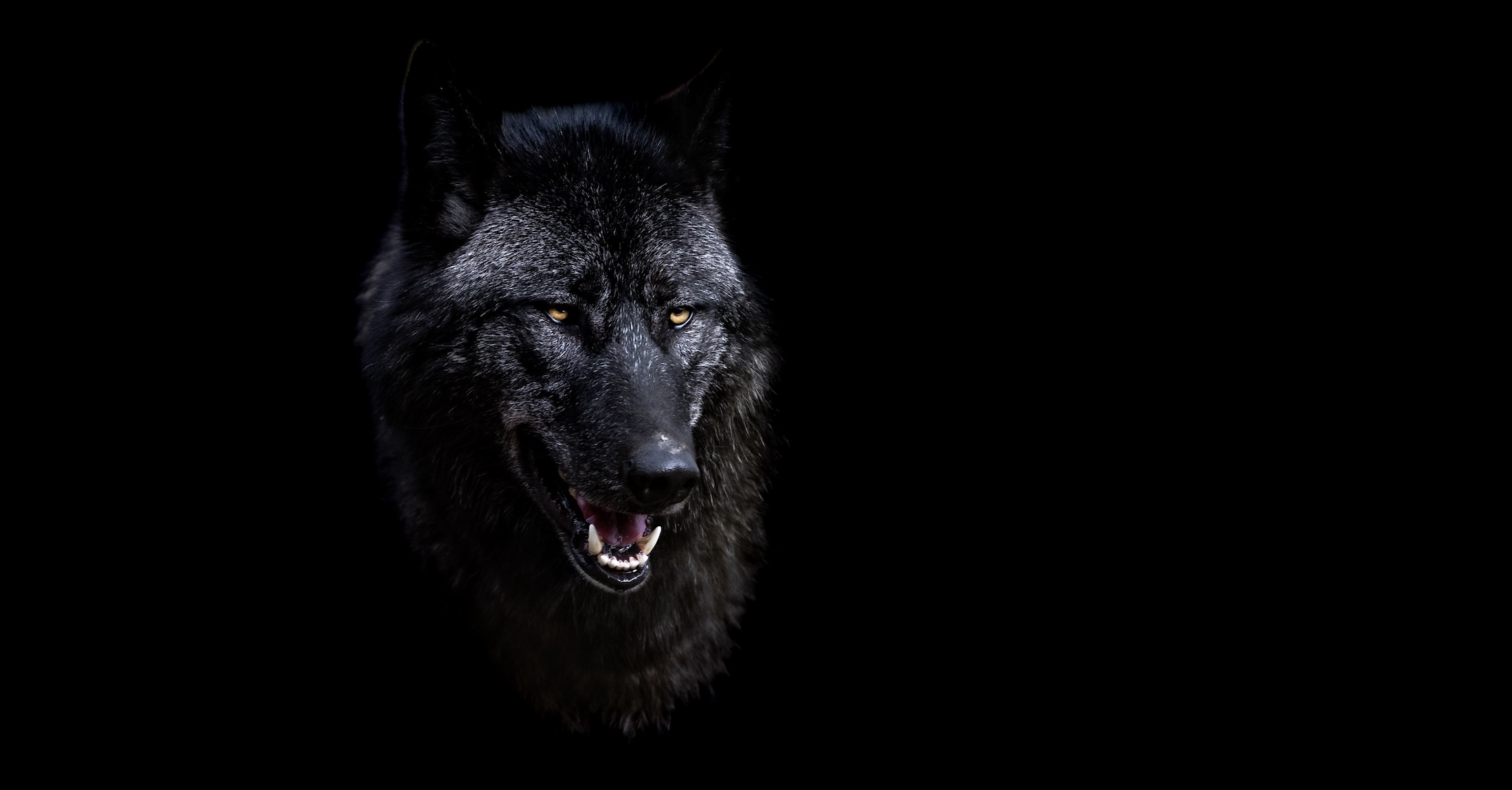
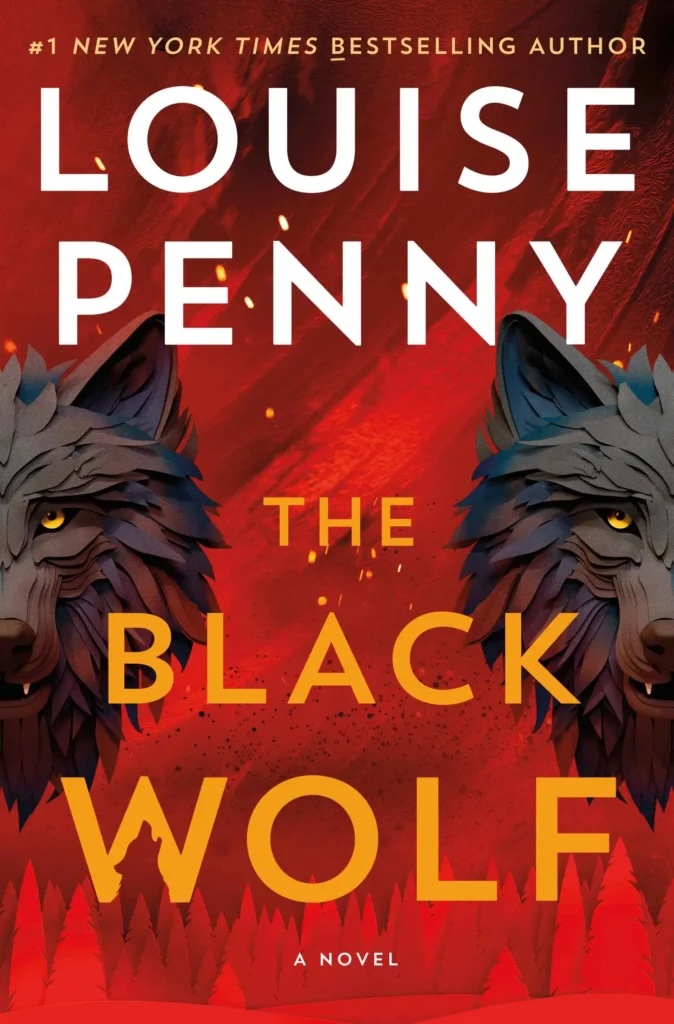
The Black Wolf
Louise Penny
Minotaur Books (2025)
It’s tricky writing about the current state of affairs between the United States and Canada. One moment, it’s “Elbows up!” and the next, it’s power to the people for our southern neighbours. Even the most experienced and far-seeing authors must feel a certain trepidation in digging into the complexities of this relationship.
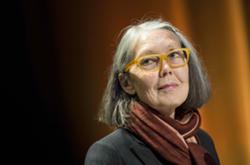
Louise Penny, Canadian author of the international bestselling Chief Inspector Armand Gamache series, is no stranger to the inner workings of the U.S. government. She co-wrote a 2021 political mystery novel with Hillary Clinton, the U.S. secretary of state from 2009 to 2013 and spouse to former U.S. president Bill Clinton. Penny was also one of the first artists to boycott the John F. Kennedy Center for the Performing Arts after the organization’s board and staff were fired and replaced by Donald Trump loyalists.
Penny will be unleashing her most recent work, The Black Wolf, at the Chan Centre for the Performing Arts on Oct. 29. Without sharing too many spoilers, this new book addresses some of the deepest, most elemental fears that Canadians have about their closest neighbour. The Black Wolf picks up where Penny’s last book, The Grey Wolf, left off, with Chief Inspector Armand Gamache of the Sûreté du Québec rooting out a plot at the highest level of the Canadian government.
But cloak-and-dagger stuff is only one aspect of Penny’s work. Another equally compelling element in the Gamache series is comfort, food, family and the tight-knit community of Three Pines, Quebec, home to Gamache, the beleaguered hero of Penny’s 20 novels.
Penny spoke to The Tyee earlier in the fall, prior to heading off to Europe. This interview has been edited for clarity and length.
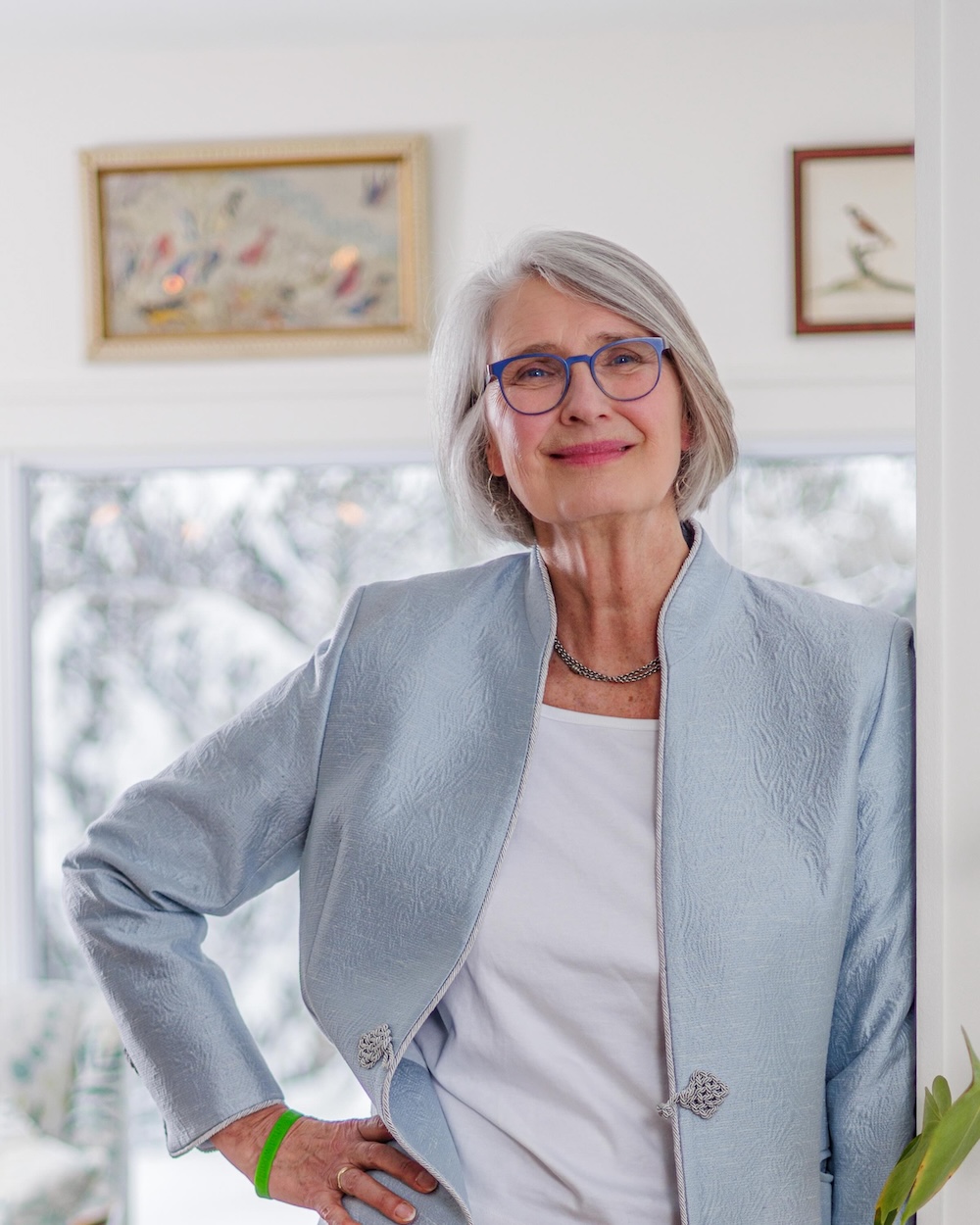
The Tyee: I hadn’t read your books before, I’m embarrassed to say. I’m sorry. I’m coming in thinking ‘OK, who are these people? What's happening here?’ and figuring it out as I go. It’s been a real pleasure, an immersion in this world.
Louise Penny: It’s always great to get a new reader. It’s also very difficult to talk about this book without giving too much away.
That is precisely what I was thinking. I know that books are long in the planning, but this story seems so prescient that it’s downright eerie. There are a number of sections that specifically talk about the use of propaganda, social media and misinformation to create levels of passivity in a population. And that’s pretty much exactly what’s happening right now.
It’s very strange, right? As you know, this was written before Trump was elected and certainly before any of this other “51st state” stuff happened. When I wrote it, I was afraid that I had taken it a step too far, that people wouldn’t follow me down this particular path.
It’s strange when the unthinkable becomes commonplace or a joke. When Kristi Noem visited the Haskell Free Library and Opera House (a place that is featured prominently in The Black Wolf) and kept jumping across the line that divides the U.S. and Canada, I was so incandescent with rage.
When you see these things happening that you once imagined as being unbelievable, but now they have become the reality that we’re living inside of, what does that do to you as the creator of fiction? When do the borders between fiction and non-fiction start to intermingle?
I think it’s becoming more and more difficult to separate fiction and fact. The other thing that I’ve been wondering about and reflecting upon has a lot to do with what has actually happened, even though I thought it was fiction when I was writing it. The best fiction plays with reality. You want it to be believable, and I’m hoping that a lot of my books are like that, where people recognize the situation and the characters’ reactions are how they themselves might react.
In this day and age, when people don’t necessarily want reality to encroach in their entertainment or culture — the real world is bad enough — how do you deal with that?
I hope there’s a bit of a balance. The community of Three Pines is not only about physical safety, but also emotional safety. It’s about community and belonging. It’s about all those things we yearn for and that we have some control over. I have no control over what Mr. Trump does. I have no control over what my neighbour does, but I do have some control over my emotional well-being, and I do that by having a community around me.
Writing is also a kind of control. When you’re in the process of writing your book, do you have to feel it in order to sort of be able to put it onto the page? In reliving some of the things that you’ve imagined, does the sort of horror of that kind of come rushing back?
That’s an interesting question. Even when Biden was [U.S. president] before Trump won, we could see the rage and the polemic that was happening in the United States. What’s happening worldwide with the far right is also happening in Canada. Some of the cracks that have appeared, many of us didn’t realize they were as deep and as real as they actually are.
So, there were wake-up calls. That led me to reflect on and reread Animal Farm, Fahrenheit 451, those nihilistic books from the 1940s and ’50s and ’60s and see how prescient they were. If you read Animal Farm right now, well, it’s terrifying.
I was thinking about you cancelling all your dates in the U.S. and the Kennedy Center, and that very kind of direct takeover of cultural institutions in the U.S., whether it’s the Kennedy Center or the Smithsonian, as a means of destroying empathy, because the arts are still a bastion of thoughtfulness, kindness and grace.
What’s the first thing that dictators and autocrats do? They go after cultural institutions. They go after the universities, after the intellectuals, the writers. And then they rewrite history. That’s dangerous, and that’s what’s happening right now.
When Trump was re-elected, my very first thought was about historian Heather Cox Richardson. It hits home when it's directed at the people that you love and admire. When you’re thinking about the daily news cycle, what are the things that kind of impact you most forcefully?
I think, like everyone else, it’s the what’s happening globally, but also what’s happening here [in Canada].
One response, without sounding too Pollyannaish, is focusing on decency, on optimism, on being hopeful, because as soon as we fall into despair, then we end up being paralyzed. We end up doing nothing.
There is decency, there are good people and strong leaders. And I think that’s something that we have to remember. We can’t go down that rabbit hole. It’s so easy to have decency eclipsed by the darkness. And that’s the blindness.
You can see right-wing forces trying to equate wokeness, which for me is the same as kindness and decency, with weakness. I think this is really, really unnerving on a fundamental human level.
I have no problem standing up and saying, ‘I’m woke, and I would much rather be awake than the sleepwalkers that we see around us.’ I am awake. I am aware. And absolutely, the woke can go too far, just as the others can go way too far as well. We have to be aware of that. I believe in equality. I believe in equal opportunity. I absolutely believe in all of those things that they’re trying to erase.
Putting a book out into the world is such an innately hopeful act because you were pushing back against those forces.
Absolutely. I think it’s vital that we be aware of all the crap that’s out there. But smile at our neighbour. Walk down the street and be kind, be nice. It’s just it sounds so pathetic, like such a pathetic response to the terrible things that are happening.
But what else do we have except the ability to do that?
I was thinking about philosopher Hannah Arendt talking about the banality of evil, but also conversely about how when you see genuine courage, in real life. It’s miraculous, whereas evil is kind of the opposite. It’s so mundane and so petty and gross. With this new book, how do you anticipate that it will be received in this cultural moment?
Well, if I’m absolutely honest, I think the people who voted for Mr. Trump wrote me off in no uncertain terms. Making the decision not to tour in the United States could have an impact on sales, but my publisher, God bless them, has been absolutely supportive, and at no stage tried to talk me out of it, even knowing that they’re going to take a bigger hit than I am.
There’s absolutely a political element to it, but it’s just how human beings react when they’re pushed to the wall. The Americans don’t come off any worse than the Canadians do in this area. It’s about power and greed, and the border kind of doesn’t really exist, because it’s all about human nature.
In Guns, Germs, and Steel, author Jared Diamond makes the case that every single genocide that’s happened in human history is really about resources. It’s always about land or water or rare earth minerals or whatever, despite any ideology that might be kind of imposed on top of it.
I talk about this in the book, obviously the nations that are resource rich, that used to be laughed at and diminished as emerging nations, that were considered less important than countries that are intellectually or industrially rich, are rising to the fore. Canada is chief among them. We are wealthy and we have resources. We can still bugger them up, but we’re still doing better than most.
In the last election, we [Canadians] were much more engaged because we understood there was a consequence. But there is a danger of just becoming passive and also just thinking, I can’t take it.
I have so many of my friends who are politically aware and active are just so tired. They’re beaten down, they’re tired and they just don’t want to know anymore. That’s very dangerous, but also completely understandable. And how many times can you expect someone to go to the frontline before they have burnout?
I was watching some of the interviews that I think you did earlier, a few years ago, where you talk about W.H. Auden’s poem about Melville, so I went and found it and read it.
Thank you for bringing that up! We’re living in a time of terror, but never forget: goodness exists as well.
Louise Penny celebrates her new novel, ‘The Black Wolf,’ at Vancouver’s Chan Centre for the Performing Arts on Oct. 29. Tickets are available online. ![[Tyee]](/design-article.thetyee.ca/ui/img/yellowblob.png)









Tyee Commenting Guidelines
Please note that email notifications for replies are not currently working due to a software issue which may be resolved in a future update.
Comments that violate guidelines risk being deleted, and violations may result in a temporary or permanent user ban. Maintain the spirit of good conversation to stay in the discussion and be patient with moderators. Comments are reviewed regularly but not in real time.
Do:
Do not: