

 SHARE:

Times are tough for Canadian journalists: public mistrust and misinformation, scant job security, brutal social media, and American-made news that sucks up all the air. And while U.S. politics grows dangerously polarized, Canadians are also sorting into hostile camps.
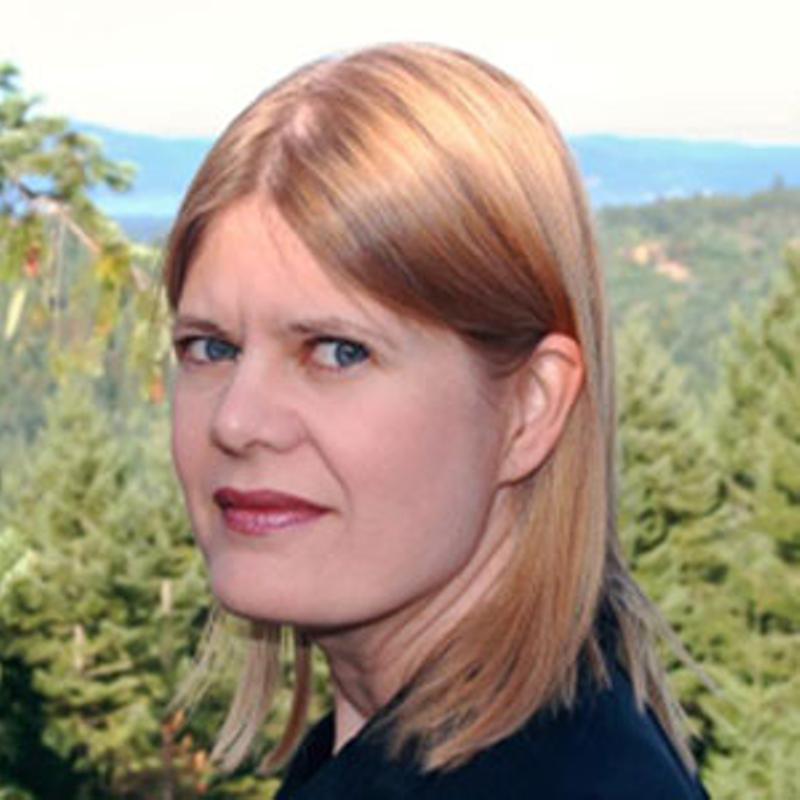
Award-winning veteran journalist Stephen Maher, who has been reporting on Canadian politics since 1989, sees the fragmentation of our media as “both cause and symptom” of this worrying division. Journalists, he says, are also being split into camps, reporting starkly different stories to divided audiences even as the industry shrinks.
On Wednesday, Oct. 8, at 7 p.m., Maher will examine the role reporters play in an ever more atomized society. Maher will give the prestigious Harvey S. Southam Lecture at the University of Victoria, a free public talk organized by UVic’s department of writing.
In this preview he speaks about the way social media has changed everything, the Canadian response to Charlie Kirk’s murder, the problem of “news deserts” and whether future journalists will need rich parents.
Deborah Campbell: Set the stage a bit. What factors in Canada’s journalism landscape do you see as contributing to the sorting of Canadians into opposing camps?
Stephen Maher: The main shift has been the rise of algorithmic social media, which led to the dramatic decline of the mainstream media. Before Facebook, everyone consumed their news from outlets with a shared sense of news values.
Since the rise of the social platforms, the old outlets lost their monopolistic role as clearing houses for advertising. The platforms took the revenue but do not fulfil a journalistic function. In order to maximize user attention, the platforms prioritize emotional content, particularly anger. This has led to an increase in what sociologists call “affective polarization,” where people become more intensely identified with their partisan community, and hostile to those in other communities. This is largely, but not entirely, a rural-urban divide.
This has coincided with a powerful emotional reaction to what many people see as an assault on traditional values and a pandemic where misinformation became more widespread.
This appears to be a ground-up phenomenon, not led by politicians but by shifts in the opinion environment that are then reflected by vote-seeking politicians. It is accompanied by partisan sorting, where people are more likely to align their views on many subjects according to their sense of the views of fellow group members.
This process of polarization has made Canadian politics more ideological and the parties have become less oriented to long-standing traditions of regional, ethnic, linguistic and religious brokerage functions. In the new media environment, outlets are able to tailor their content to narrower communities, helping to intensify the process, so that Canadians increasingly find themselves in information silos.
We should note that journalists, like other Canadians, undergo the same processes as non-journalists.
The shooting of Charlie Kirk ricocheted through Canadian politics. A Canadian journalist, Rachel Gilmore, even became a target of threats. At the same time, opposition to Donald Trump’s threats to annex Canada seemed to bring Canadians together. How much are American politics and media affecting the Canadian journalism landscape?
Most people in the world are affected by American culture, but none more profoundly than English Canada, because we are so similar on the surface. In periods when our political and social direction is the same, it can seem like our differences are trifling and are likely to fade. This is not one of those periods.
Still, Canadians are hugely influenced by whatever is happening in the United States. Polling shows almost half of the supporters of the Conservative Party of Canada approve of Donald Trump, although he wants to annex Canada. Across the partisan divide, Black Lives Matter had a huge impact in Canada.
These U.S. trends always have immediate impact on Canadians, but the environment remains different because we are less divided and we have a well-funded public broadcaster, which plays a crucial role. On the other hand, we rarely have well-funded startups trying different things, as they do in the United States.
You’ve voiced concerns that the U.S. may be at risk of civil war. How seriously should we take Canadian divides?
I think we should take them very seriously. Our history, going back to the American Revolution, is one of group accommodation, seeking ways to avoid political violence. The Americans, in contrast, have a violent and warlike tradition.
It was ugly and worrying to see Rachel Gilmore threatened during the fallout from Kirk’s assassination, but the intensity in Canada is generally lower. I was in the House of Commons when Lethbridge MP Rachael Thomas, a Conservative, spoke movingly about Kirk’s murder: “True progress comes from persuasion, not intimidation. As we grapple with our personal response to this, may we be honourable in our actions, may we fiercely defend the right of our opponents to speak freely, and may we join our hearts with Charlie’s family, his wife Erika and his two young children.”
I thought it was a good sign that all MPs were able to applaud her words, and that she chose them with that outcome in mind, rather than trying to inflame and divide people, as most Republicans are doing.
Do you see a role for Canadian journalism in ensuring our politics have a moderating influence?
It seems to me that journalists with a proper sense of the importance of their role should not needlessly exacerbate and inflame tensions, but journalists also have a role in drawing public attention to issues they think are important, and it is important that they have the legal right to do so, even when I might disapprove or disagree.
Are journalists today more constrained by their employers’ views or by outside pressures, such as public or organized responses?
Social media has changed everything, giving journalists the opportunity to share their work and carry on conversations with their readers — but it also exposes them to public abuse, and creates the opportunity for them to make mistakes by expressing personal opinions that can alienate them from readers. It is tough, but complaining about it is like a sailor complaining about the sea.
We talk about bad journalism as offering ‘more heat than light,’ yet often careful reporting doesn’t get the clicks the way a partisan account might. Is that affecting what gets reported?
As the traditional media loses audience share, space is opened up for hucksters and activists who have no sense of responsibility to the truth or anyone’s reputation. This often leaves reporters on the sidelines, watching as false or misleading stories go viral.
Fake news can circulate in an instant and is often simpler and more emotional than deeply informed reporting, which can be complicated and not easily parsed into competing camps. What can journalists do in such situations?
Journalists can’t reach people who are not listening to us, so our ability to correct the record is limited. Daniel Dale, ex of the Toronto Star, now of CNN, does a fantastic job fact checking Donald Trump, which is useful to CNN consumers. It does not do anything for Fox viewers, of course.
It is wise to recognize the limits of our reach and do what we can to maintain trust with the people who do consume our content. That means be scrupulous about the facts, regardless of what narrative they support, and open and accountable about sources and methods, insofar as that is practical.
Most people now expect the news to be free of charge, which means reporters earn less even as they are squeezed to produce more. How is this affecting what gets covered or how?
I started working as a journalist in 1989 at the Grand Falls Advertiser in Newfoundland. It and the next six papers I worked for are now closed. I later worked for the Chronicle Herald, which was then independently owned. It is now owned by Postmedia and no longer has an Ottawa bureau.
Postmedia, where I next worked, is a shadow of its former self. Maclean’s, which was a weekly with an Ottawa bureau, is now monthly and has no reporters on staff.
This is all in spite of significant federal spending to try to backstop the industry. There are now large news deserts, especially in rural areas. CBC does a lot to provide coverage as the newspapers have faded, but it is limited in resources and has its own ideological and cultural limits.
This means that municipal government and the courts are now just not getting covered in many places. Provincial and federal political reporting is not what it was. It has grim implications for community and democracy, since voters can only judge governments to the extent that they know what government is doing.
What advice do you have for young or aspiring journalists in this landscape?
There are still good opportunities for young and aspiring journalists, but it is important to be aware of the grim realities. I worry that it is becoming a trade best practised by those who do not need to support themselves, nepo babies and people whose partners have good jobs.
There are still good journalism jobs available at the biggest outlets, and while I am not an expert on what is happening in TikTok, I see young people doing interesting things there. Startups are small but offer the opportunity to do interesting work.
It has always been important to be able to get out of your comfort zone and talk to people, to get the facts right, to quickly correct any errors, to know the difference between a story and something that is not a story.
It can be a great career, but you should keep an eye on the exits. ![[Tyee]](/design-article.thetyee.ca/ui/img/yellowblob.png)








Tyee Commenting Guidelines
Please note that email notifications for replies are not currently working due to a software issue which may be resolved in a future update.
Comments that violate guidelines risk being deleted, and violations may result in a temporary or permanent user ban. Maintain the spirit of good conversation to stay in the discussion and be patient with moderators. Comments are reviewed regularly but not in real time.
Do:
Do not: