

 SHARE:
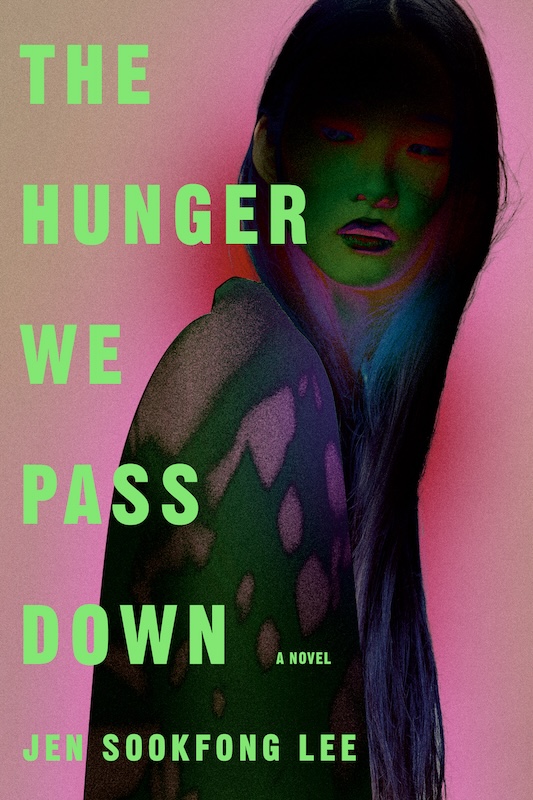
The Hunger We Pass Down
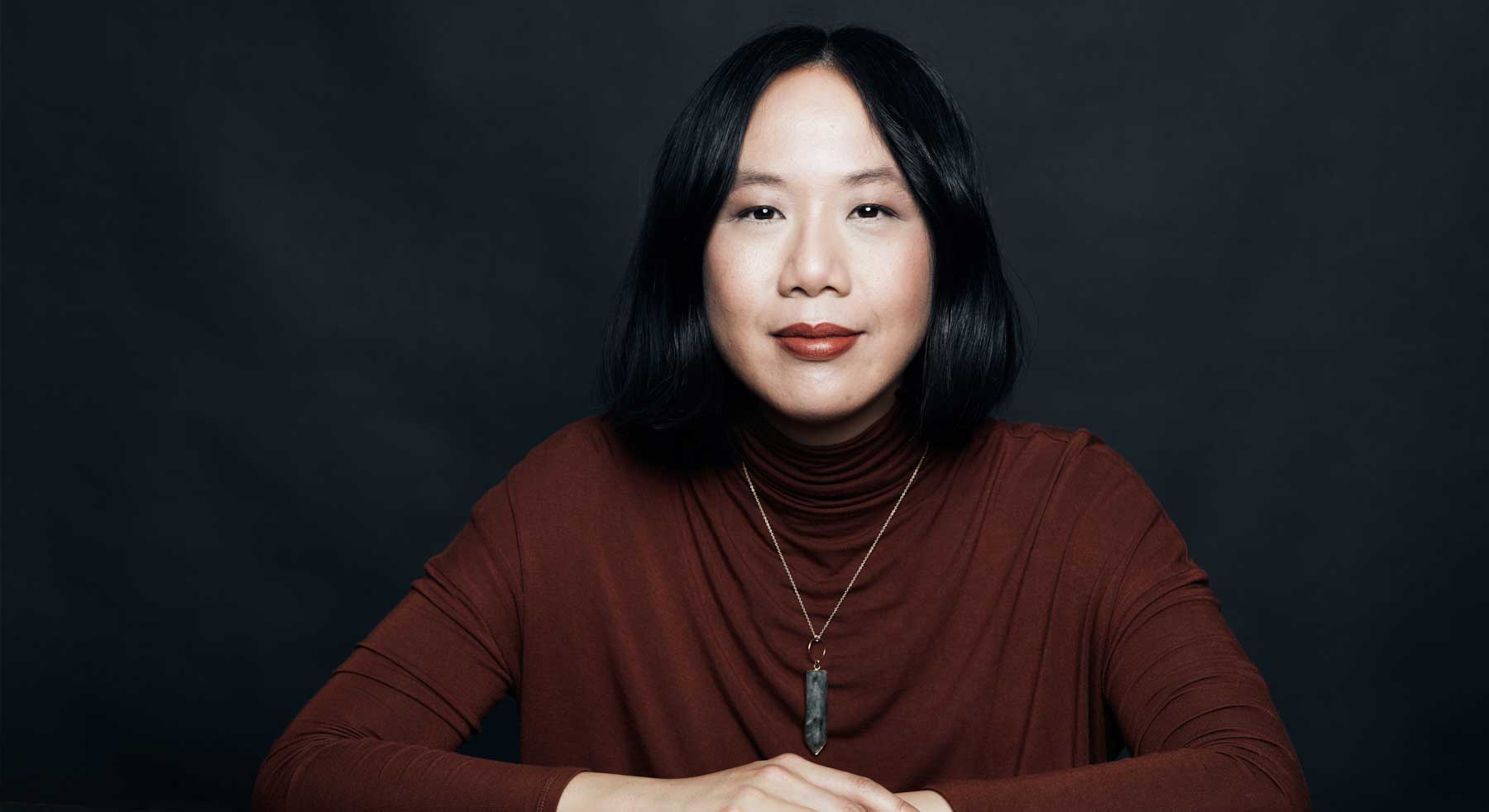
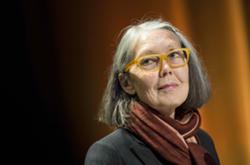
Jen Sookfong Lee
McClelland & Stewart (2025)
Jen Sookfong Lee’s new book is not for the faint of heart.
In The Hunger We Pass Down, the Vancouver author and broadcaster’s first novel in nine years, Chinese-Canadian single mom Alice is haunted by intergenerational trauma and the crushing expectations of motherhood and femininity, especially for racialized and immigrant women. She is also haunted by several self-involved, unhelpful men, plus an actual ghost.
It’s a witty and beautifully written work of fiction, but don’t be fooled. The Hunger We Pass Down is hardly a beach read — unless, perhaps, you’re Wednesday Addams. Lee’s first horror work is bloody, disgusting and brutal.
It’s also part of a larger trend across Canadian literature. The Hunger We Pass Down comes hot on the heels of 2023 bestseller Bad Cree by Jessica Johns; Anuja Varghese’s Chrysalis, a 2023 Governor General’s Literary Award winner; and Alicia Elliott’s And Then She Fell, winner of the 2024 Amazon Canada First Novel Award.
Even before the announcement of Lindsay Wong’s forthcoming Villain Hitting for Vicious Little Nobodies, it was clear that “literary horror” — basically, spine-chillers seen as high art, as opposed to those summarily dismissed as genre fiction — is having a moment, especially among racialized women authors.
“There have been, I would say, in the last five years, more and more of those authors turning to horror as a means of exploring difficult topics like intergenerational trauma, or the realities of being a racialized woman in the world, which truly is a horror show,” Lee told The Tyee, tracing this trend to American writer Carmen Maria Machado, author of 2019’s In the Dream House.
“It’s not really horror,” she said, “But it is horror, right? We're looking at ghosts. We're looking at hauntings. We're looking at unexplainable things. I think, without [Machado], Bad Cree by Jessica Johns would not exist, and I don't think that this book that I’ve written would exist.”
This interview has been edited for length and clarity.
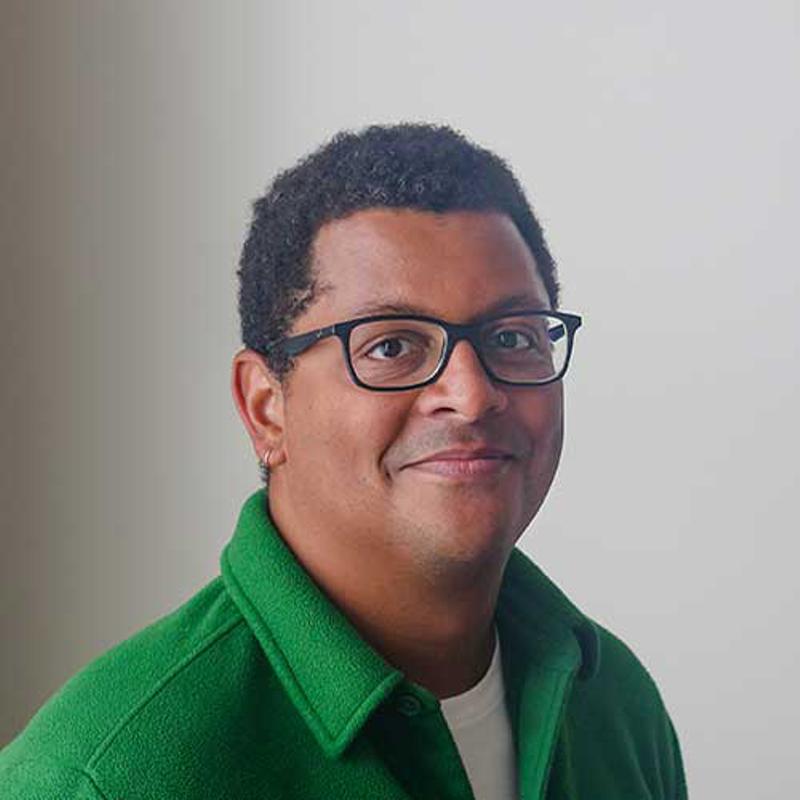
The Tyee: Huge congratulations on The Hunger We Pass Down. I loved it. At the same time, I just hated reading it, because it was so jarring and effective. I give it five out of five vomiting emojis.
Jen Sookfong Lee: Did I actually scare you?
You didn't scare me. You unsettled me, though. You gave me that sick, dreadful feeling that good horror makes you sit in and stew, thinking, why do I like this stuff? And it's a feeling that has really stayed with me. When I think about your book, I feel sick to my stomach. That’s it. That’s the compliment.
That actually makes me feel really good. I never want people to actually be sick. I just want them to feel like they might be sick.
The Hunger We Pass Down is a beautiful title, too. Whenever I encounter something lyrical like that, I expect to find it somewhere in the prose. I thought it was interesting that we never got a formal title drop. Close, but not quite. The phrase that appears is “the hunger for survival that is passed down.” That seems notable to me. I wrote it down. What does it mean?
“The hunger for survival that is passed down” is, I think, more of a comment on the resilience of this family, that particular line. I wanted the title to speak to that resilience, but also the resilience of the hauntings. Because they also continue to be passed down.
We don’t just pass down the good things about ourselves to our children. We also pass down the things that are bad, that are gross. This is something that I wanted this title to really reflect. When the reader sees it, I wanted them to know that I’m not just talking about my son having my nice tanned skin — I’m also talking about my son inheriting my generalized anxiety disorder, and my myopia.
Such gifts.
That’s what I was trying to get at.
I thought so, especially after I read the line: “Women carry everything with them.” It seemed like the key.
When I was writing this book, one of the inspirations, particularly for the character of Pinky… so many women of the Asian diaspora come to North America or Australia or wherever, and they’re the ones who come first [in their families], because they’re the ones who come as nannies or domestic labourers, that sort of thing. And they work for many years, and finally they’re the ones bringing their families over.
They’re also the ones, though, telling their children: this is what our family is. So they carry both the actual, capitalist labour on their backs, but also all that emotional and narrative labour.
Reading your book, as the nature of the evil and your comment on the culture became clear, I found myself worried that there was simply no escape from any of this for these women. We inherit trauma, we carry trauma, we can’t put it down, end of story. Without spoiling where it goes, did you ever imagine a way out for any of these characters?
No.
Yeah, that tracks.
I had a different ending for a while. It was worse before. It was never gonna be okay. I’m so sorry to everybody for that, but it was just never gonna be good.
I mean, you gave it to us straight. “The curse was just a rotten, tortured life.” And readers should know you by now. You've reached this fun point in your career where one can look at the whole body of work and know exactly what Jen Sookfong Lee talks about in therapy. I’m obsessed with your focus on intergenerational trauma, doppelgängers, and the way it’s wrapped up in the immigrant experience.
What I say to people is that I actually have been writing the same thing over and over again. I just keep switching genres. For me, all of that is wrapped up in the experience of motherhood, which, to me, is such a rich, bottomless well to excavate story and all of those patterns.
One of the things that I used to talk about in therapy — and obviously, this is not a secret, everyone knows I’ve been in counselling my whole life, yay for me — but one of the things that I do as an author is write as a way of organizing the chaos of my life in my own head.
Writing fiction, or poetry, a lot of whatever I'm preoccupied with, or whatever trauma I’m working through comes out in that writing. In doing so, it feels like I’m applying a narrative or an order to my life, which means that all of this pain and suffering or whatever is not meaningless. It means something, because it's led me to this space, or it’s led me to write this book.
All of it is false. Everyone's life is chaos. There is no order. However, when you’re looking at intergenerational trauma, and particularly the things that are passed down from mother to daughter and so on, it’s actually quite clear that we do pass things on, that there are patterns of behavior, there are patterns of mental health stuff.
There are patterns in the ways that we parent our children. And that, to me, is a real gift in terms of being able to write about, because that’s why readers read too, right? They also want to make sense of the chaos of the world in whatever way they want to. So, I mean, if life is giving me a pattern that I can write about, I will do it.
Speaking of patterns, the colour green is everywhere in this book. It’s on the cover. The ghost’s emerald dress. It’s a recurring motif. Whenever I read something by an author with different cultural signifiers than I grew up with, I know that I’m missing stuff. So I wanted to ask what green means to you in this work.
Am I using a lot of green?
So much green.
Okay, a lot of green. Personally, as an author, I use a lot of green all the time. Vancouver is a very green place, which is something Vancouverites don’t really appreciate until they travel somewhere else, and it’s not green. In this book, in particular, green is the colour of grossness. The colour of the things that come out of your body and you can’t explain it. In different iterations, green can also be the colour of decay, of rotting. So there’s that.
In Chinese culture, green is actually quite prominent as a celebratory colour. But if something is happy, I’m always going to try to destroy it.
I see what you’re doing there.
There is a Chinese superstition that, if you’re somebody and you’re wearing a green hat, it means your partner is cheating on you.
That’s also really useful, just in terms of green being a colour that betrays you, in a way. A colour you wear but can’t trust. Celebratory in one sense, but if you’re vulnerable, the colour green can turn on you.
It’s an interesting thought, too, because what I just said about Vancouver being very green: that’s something people talk about when they come here, and they love it. To me, I’ve always been really interested in talking about the parts of Vancouver that people don’t celebrate.
In a way, now that you mention it, taking the greenness of Vancouver and making it disgusting is kind of what I’ve been doing my whole career, trying to show people that, actually, Vancouver is also ugly. Vancouver is also upsetting.
There is a juxtaposition between the beauty of the environment and the horror of the experience, especially for a lot of racialized and immigrant women.
Of course. And people who aren’t wealthy.
You mentioned In the Dream House, but what are the other inspirations for this novel?
It’s a book I actually gifted to somebody for Christmas recently, and they were really mad at me because it really scared them: Ling Ling Huang’s Natural Beauty, which came out two years ago. I was in the middle of writing this novel when I read it, and I found it so inspiring, in terms of these sort of inherent horrors of having a female body. And because she's Chinese-American, I really did feel a lot of kinship with the things that she was exploring: respectability politics, intergenerational trauma. That book, for me is, like, of the last five years, chef's kiss, in terms of what people call a literary horror novel.
What about movies? My mind went to The Grudge, especially with its emphasis on this awful haunted house and the unstoppable curse that gets passed down from person to person. And I was reminded of The Ring with its the sins of the past haunting the present, and even The Wailing, which also follows a parent who tries to end a family curse, but he’s in over his head. Did you have any of these works in mind, and is it annoying to have your work compared to a list of exclusively Asian horror films?
[Laughs] Not at all. Asian horror is an amazing genre. To even be included in that conversation is really nice. Certainly, for me, The Ring is really top of mind, not necessarily the narrative, but the visuals, like when she comes out of the TV. With the demon in The Hunger We Pass Down, I was imagining something like that, except with a gross tongue. And then, like, for other films, for me, honestly, it's Get Out, man.
YES.
And also Us, which explores the idea of a doppelgänger. But Get Out because of the racial subtext that's not really subtext, it’s really visible text. That’s really interesting to me, and the way Jordan Peele also uses comedy. I mean, The Hunger We Pass Down isn’t exactly funny, but there are moments where I tried to break that tension a little bit. I think Judy, Alice's mom, is actually quite funny.
She is funny, but only if you’ve had that sort of mom and learned to laugh through the pain. The line between horror and comedy is razor-thin.
Horror as a genre is inherently a little bit funny, because there is such outlandish stuff happening, right? The demon that has a long, tubular tongue and eats spiders and stuff, that's inherently amusing, in a way, because it’s so out there. I don’t think you can buy into horror without also buying into sort of the humour of it.
Here’s what I found funny: The Hunger We Pass Down is focused primarily on women, but it has this wonderful undercurrent of disdain for men. There are “helpful” men around, but they're actually never that helpful. The old man helps Gigi, but only after not helping her for all that time in Nam Koo. Grant comes to help, but he’s driven by jealousy and entitlement. Jas is the love of Grace's life, so to speak, but he’s also a rejection-sensitive dick. The last time we see Luna, she’s swooning over a dude, but at that point, honestly, all the reader feels is dread, because men — at least in the world of this novel — are the worst.
What did my editor say? Something about how, as a writer, I don’t really have a lot of interest in men. And I don’t. Whenever I write a male character, generally in fiction, it’s kind of a joke. They're a type of guy that we all know, different types, and I’m not-so-gently making fun of them and exploiting their foibles for, like, narrative gain. And I feel fine with that decision.
I grew up in a household of all women. Four older sisters and my mom, and my dad died when I was young. So it’s not that my understanding of men is lower. I think that my interest in men is just lower, in terms of writing them as characters.
Female-led story is the thing that I am most interested in. Men, for me, in these books, are the tools to get the women to make a decision, or the tools to get the women to realize that their men suck. They serve very specific plot purposes.
The men you write really do come off as the sort of real men we've all met and had to deal with, or even had to fight. It was funny when you switched to Grant’s perspective for a minute, and right away he tries to fight someone. Like, Grant, stop, it's not that kind of book.
I had originally named Grant “Todd”, and late in the game, I changed his name, because Todd just so happens to be my ex-husband's name.
I would never have guessed.
So I changed it to Grant. And I didn’t realize that I had used the word “toddler” so many times in the book, and all the toddlers became Grantlers. And I was, like, why is that so appropriate?
Last question: while you were writing, did you ever freak yourself out? I feel like I would be working late at night, conjuring all these weird images, you know, pulling them from my own traumatized mind, like, wouldn’t it be so scary if she didn't have a face, just a caved-in cavity, but sometimes a frickin’ gross tongue came out? And then I’d have to look behind me.
I did not scare myself. I delighted myself. ![[Tyee]](/design-article.thetyee.ca/ui/img/yellowblob.png)
Read more: Books, Gender + Sexuality






Tyee Commenting Guidelines
Please note that email notifications for replies are not currently working due to a software issue which may be resolved in a future update.
Comments that violate guidelines risk being deleted, and violations may result in a temporary or permanent user ban. Maintain the spirit of good conversation to stay in the discussion and be patient with moderators. Comments are reviewed regularly but not in real time.
Do:
Do not: