


 SHARE:
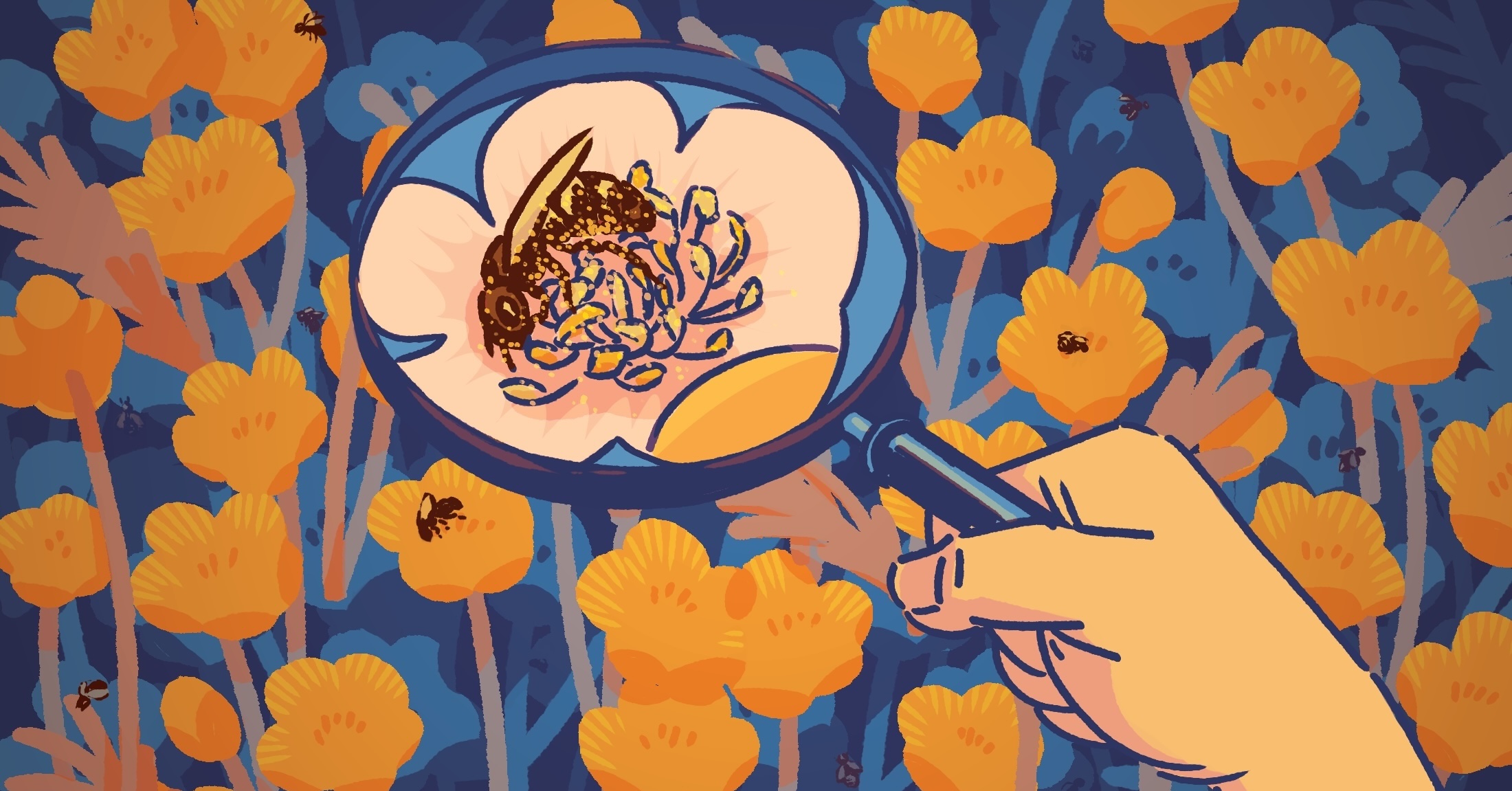
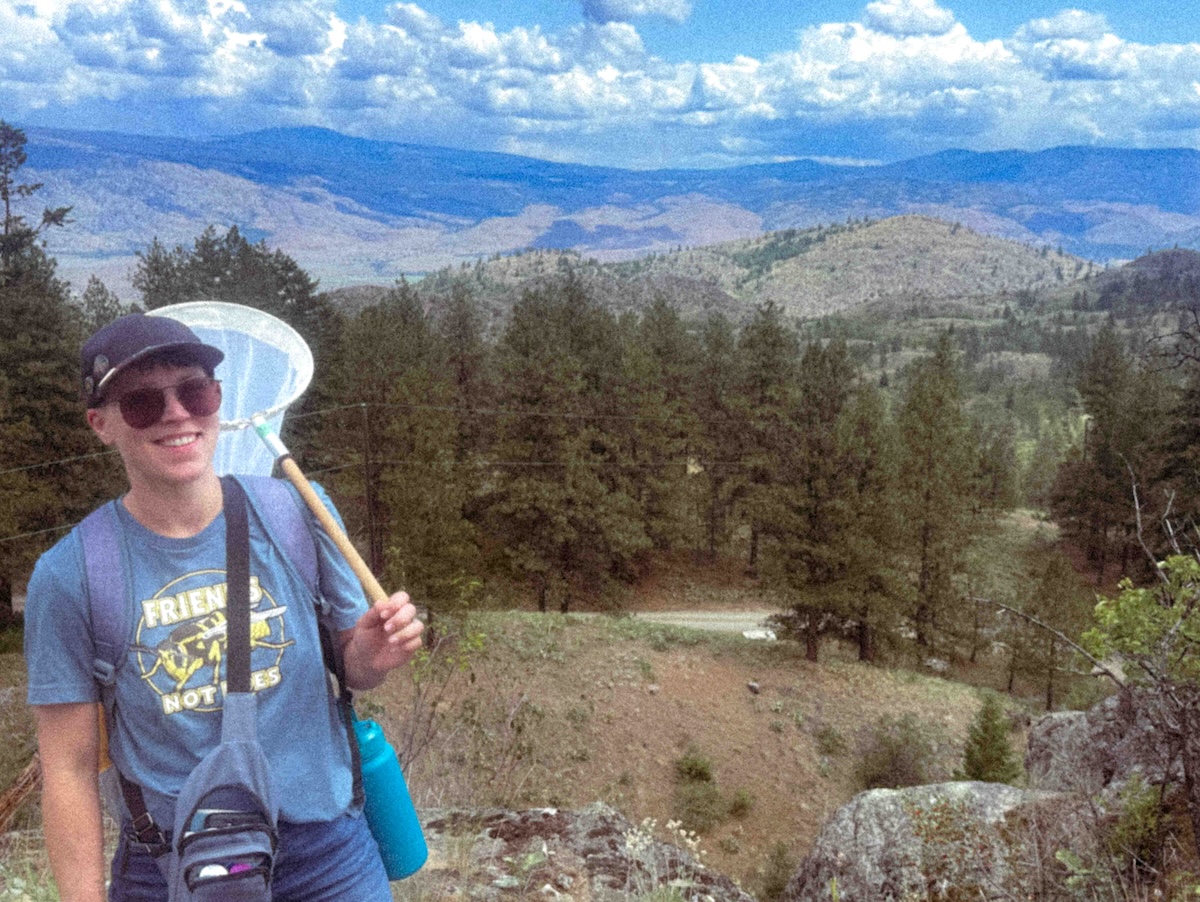
On a spring morning in 2023, Jade Lee packed up her gear and headed out for the trails that connect the Cowichan Valley — the lush, rolling region of Vancouver Island that she and her family call home. It was the beginning of her second season volunteering as a bee surveyor for the Native Bee Society of BC, and she was on a mission to collect specimens of local bees and their host plants. Lee isn’t a scientist, but she is a longtime naturalist. Protecting native bees had recently become a part of her life’s work.
As most field days go, this one appeared slow and uneventful on the surface. She walked the familiar trails, scanning them for early spring plants like snowberry, dandelion and buttercup that are known to attract bees.
Some days, Lee spends up to three hours in front of one plant, patiently waiting for bee activity. On that spring day, however, coming up to a marshy area, something was already abuzz. The dandelions were in full force, and the buttercups were nearly in bloom.
Orbiting them was a swarm of low-flying bees — a species she didn’t yet recognize.
Making figure-eight motions with her net, Lee captured 10 bees. She then transferred them into what are called “kill jars,” vials that have been charged with ethyl acetate, which humanely euthanizes the bees.
After taking clippings of their host plants, she carried on, assuming the specimens in the jar were nothing out of the ordinary.
Lee didn’t realize it then, but the bees she’d just collected belonged to a species previously undocumented on Vancouver Island. Her discovery marked a win both for bees and for citizen science.
Native bees: Not well known, but key to our ecosystem
When most people think of bees, they think of honeybees, those black and amber striped workhorses that sweeten our coffee and assist in putting food on our tables.
But honeybees are not native to North America. They are what’s known as an introduced species, which means that settlers brought them over from Europe nearly 400 years ago for agricultural purposes.
Less known across North America are native bees, bees that originated here, and of which there are over 3,600 species. These species vary greatly in appearance, with bodies ranging from robust and fuzzy to small and brightly coloured.
Native bees work alongside honeybees to pollinate roughly one-third of our crops. They also play a critical role in the broader ecosystem. In North America, 75 per cent of plant species rely on insects for pollination, a responsibility that falls primarily on native bees.
Not only are native bee species more numerous than those that have been introduced, but many are also specialists, meaning they collect pollen from specific native plants. This makes them especially effective pollinators. They are important to our ecosystem, but native bees are still largely understudied.
According to the “Wild Species 2020: The General Status of Species in Canada” report, 65 per cent of British Columbia’s bees — the majority of which are native — are considered unrankable, meaning there isn’t enough information available to know if some species are secure.
With populations now experiencing the effects of climate change, widespread pesticide use and ongoing habitat loss, such gaps in knowledge have become a cause for concern.
“We could have species that are playing very important ecosystem roles, and are in decline, and we don’t even realize it,” says Bonnie Zand, a registered professional biologist who leads the BC Bee Atlas, a community science initiative dedicated to documenting bees in B.C.
To protect our native bees, Zand says, the first step is to catalogue what’s already here. This is the goal of the BC Bee Atlas — started by the Native Bee Society of BC in partnership with Oregon State University — to document the diversity, distribution and floral hosts of B.C.’s bees. What began as a team of just a few people has since grown to include over 60 volunteer surveyors across the province.
Most are not working scientists, but the BC Bee Atlas volunteers are serious about bees. All surveyors receive training through Oregon State University’s master melittologist apprentice program, designed to equip citizen scientists with the knowledge and skills to collect and curate bee specimens. On top of studying, some surveyors, like Lee, might spend multiple days per week in the field.
It’s passionate work that requires time and resources. Zand says that while “great data can be, and is, collected by paid professionals,” B.C. is a huge province, and funding for the ecological sciences is scarce.
Because surveyors live all over the province and are willing to spend money to travel to prime locations, the beauty of the BC Bee Atlas project is its ability to collect precise, rich data from many different localities.
“The way we collect the data is intensive,” Zand adds. “One of the powers of this is that people are doing it on their own time because they’re excited about it.”
For Lee, it’s been easy to get excited about surveying. As a kid she had dreams of becoming a scientist, but she was never able to formally pursue them. Instead, she’s engaged with science in her own way, teaching herself all about the worlds of mushrooms, spiders, wasps and, now, bees.
Her work on the BC Bee Atlas team is a continuation of that lifelong curiosity.
An unfamiliar species
Following that spring 2023 day in the field, Lee set to work identifying the unfamiliar bees. She studied their long, slender bodies through her microscope, but couldn’t find a match in her key. Then, turning to the internet, she found a bee that appeared identical to her specimens. Its name is Chelostoma florisomne — also known as the sleepy scissor bee — a species commonly found in Europe.
At first, neither Lee nor Zand thought it was a likely match, but the possibility that it was continued to nag at Lee. It wasn’t until winter, when surveyors handed over their identifications to Zand for verification, that her suspicions were confirmed.
“We were both sure that I was wrong,” says Lee, “and both pleasantly surprised to find out that I was right.”
Lee has since spent countless hours observing this species — a buttercup specialist known to nest in the holes in wood — throughout the Cowichan Valley. She and Zand hypothesize that it was likely introduced to Canada by way of a pallet, shipping container, piece of furniture or other wooden item.
Although it’s not a native species, Lee says having this data on Chelostoma florisomne “is invaluable.”
They will now be able to track its whereabouts; so far, this species has also been observed in Nanaimo, where surveyor Sherlene Wong also unknowingly collected it around the same time as Lee. Zand says this data might also contribute to understanding the threat Chelostoma florisomne may pose to native bee populations, as well as how bees and other insects spread across landscapes and their rates of invasion.
But perhaps most exciting is that these findings are intended to be shared. Lee recently assisted Zand in writing a scientific paper about the discovery, where people will be able to learn more about this species and its ecology.
All the data collected by the BC Bee Atlas team will also soon be made public on the Global Biodiversity Information Facility, or GBIF, making it readily available for anyone who might require information on B.C.’s bees.
“A lot of times there’s gatekeeping in the academic community and people don't want to put their data on GBIF,” says Lee. “So being able to say that all our data is going to be publicly accessible is a really big deal.”
The work of the BC Bee Atlas team is also a testament to the power of citizen science, demonstrating how you don’t need a degree to make a meaningful contribution to the ecological sciences.
“To be a community scientist and make a discovery like that — it’s amazing,” says Zand. ![[Tyee]](/design-article.thetyee.ca/ui/img/yellowblob.png)
Read more: Science + Tech, Environment









Tyee Commenting Guidelines
Please note that email notifications for replies are not currently working due to a software issue which may be resolved in a future update.
Comments that violate guidelines risk being deleted, and violations may result in a temporary or permanent user ban. Maintain the spirit of good conversation to stay in the discussion and be patient with moderators. Comments are reviewed regularly but not in real time.
Do:
Do not: