


 SHARE:
The English playwright Alan Bennett once noted, “There is no period so remote as the recent past.” The sentiment applies especially well to media.
The meteoric rise and vertiginous fall of the Vice Media empire is a lesson for our age of information overload. The rascally energy that spawned the original magazine is captured in granular detail in a new documentary Vice Is Broke.
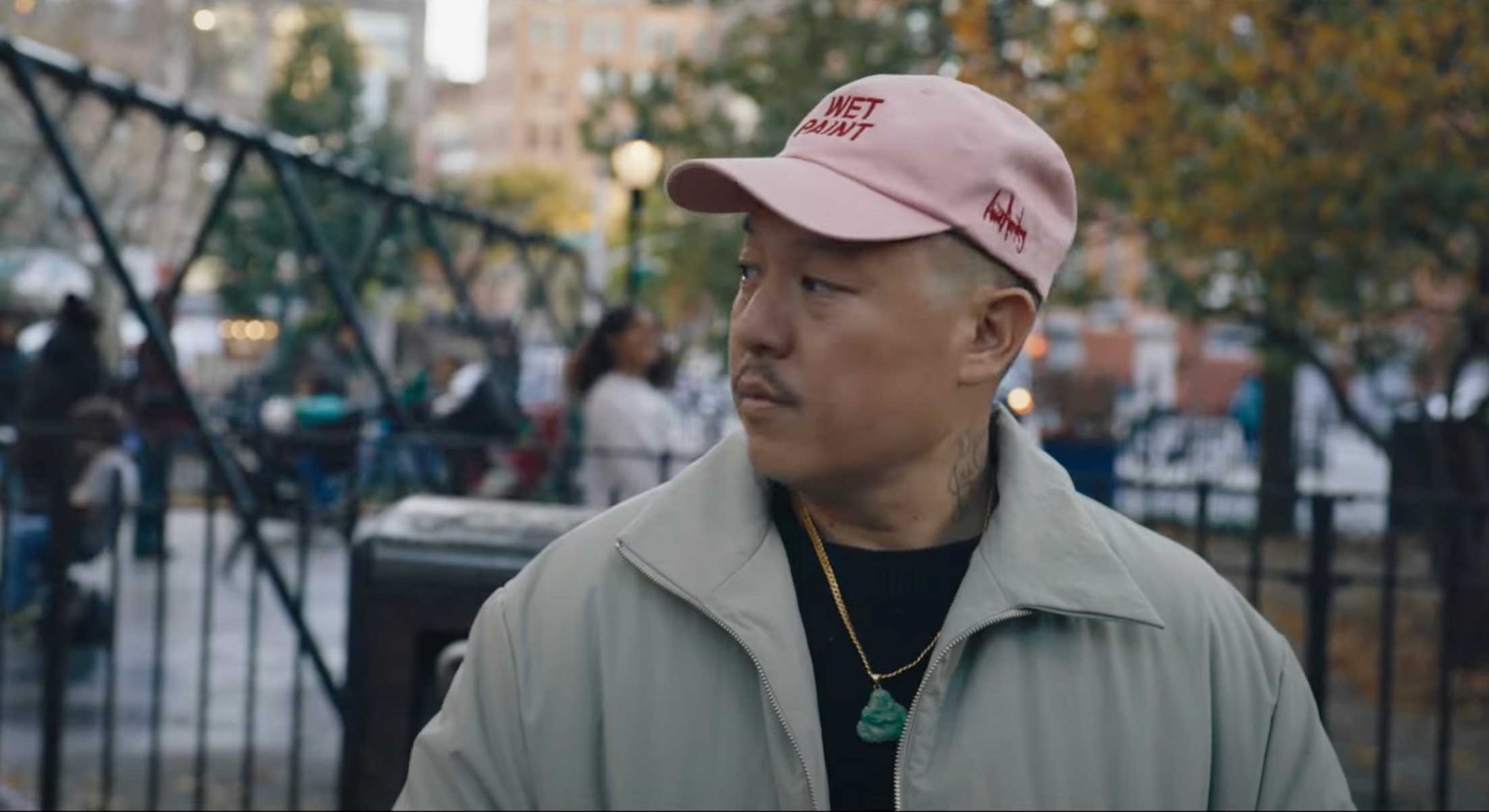
The title, with its intentional double entendre, is the brain child and personal quest of Eddie Huang. He’s an interesting figure: designer, chef, memoirist, media personality, Huang was around almost from the outset of the Vice experiment and is still hanging about, kicking at the carcass.
Huang’s 2013 memoir Fresh Off the Boat was adapted into a 2015 network sitcom of the same name. He notes in the Vice documentary that even though the show was among the first American network television shows to feature an all-Asian cast, Huang felt it did a disservice to his book, relegating diasporic complexities to the margins and front-lining the conventional tropes of the American dream.
Huang decamped from the production with a series of essays critiquing the show. This initial immersion in Huang’s biography is necessary to establish why he was drawn to the underdog, outsider aspects of the Vice gang.
I use the term “gang” advisedly, as the trio of founders — Gavin McInnes, Shane Smith and Suroosh Alvi — formed something of a three-headed monster. They stole their publication’s name from Voice, a non-profit magazine dedicated to helping the diasporic Haitan community in Montreal. The Vice gang dropped the letter ‘O,’ and it was off to the races.
In the documentary, Smith relates this founding factoid to filmmaker Spike Jonze. “That’s fucked up,” Jonze replies.
It’s a fitting beginning for what followed.
Look who’s talking, too
From its outset in 1994, Vice’s naughty pose appealed to a generation looking for something of their own. After re-locating in 1999 from Montreal to Williamsburg, a too-hip neighbourhood in the New York City borough of Brooklyn, the seeds of the future media empire were sown.
The original sin of bad-boy media onanism gave rise to a plethora of manifestations, including broadcast television, documentary filmmaking, hard news and digital offerings, as well as a few other less-than-savoury things.
Huang happily rode the first wave of Vice momentum, parlaying his outlaw chef persona into a cooking segment entitled Huang’s World that featured him travelling the globe in search of edible adventures.
Huang’s guiding light in cooking and media was none other than Anthony Bourdain, and the film is dedicated to Bourdain’s memory. Huang’s World explored similar turf as Bourdain’s various travel and food programs, but the fundamental differences in approach are rendered explicit in the Vice coverage of the country and culture of Liberia.
As Huang admits, almost ruefully, Bourdain always saw the beauty, generosity and humanity of the people who lived there, whereas Vice treated everything as the butt of a puerile joke.
That Vice Is Broke largely resembles an actual Vice media piece is no accident. The shambolic approach gives Huang’s documentary a certain shaggy authenticity. As the narrative meanders along to Vice’s end days, you come to realize that this studied approach is quite performative.
“I’m sure there’ll be an Alex Gibney-esque documentary full of people sitting on stools that cuts this story into bite-sized pieces for mouth-breathers like it was about WeWork or Enron,” Huang states.
“But Vice was different because at one point it meant something to people.” Cue up a series of talking-head interviews that eschew the usual stools for leather couches, card games and outdoor restaurant tables. But the end result is the same.
When outrage runneth over
Before we get to the end, we must start at the heady beginning, when the writers and creators built their brand on how-to articles about the finer points of everything from anal sex to cunnilingus. I’m sensing a theme here. One interviewee explains how she wanted to write for the magazine after reading the work of the magazine’s female sex columnist who turned out to be Gavin McInnes, one of Vice’s three male co-founders. This is just the entry point to the insanity that ensued.
Even as Vice was expanding exponentially, the price of sustaining the brand’s level of outrage and provocation demanded greater and greater risks. The conceit of sending so-called correspondents into war zones in distant countries or interviewing proponents of donkey bestiality soon codified into a recognizable format, so much so that Huang mocked it openly in one of his cooking and travel segments.
Chief naughty boy McInnes set the tone for Vice, including office nudity and editorials that lampooned other magazine tropes. After leaving the magazine in 2007, he became something of a media pundit before starting his kingdom of dunces otherwise known as the Proud Boys.
A later segment in the film features Huang interviewing and baiting McInnes, trying to get the openly racist founder of the Proud Boys to admit that his schtick is just that: a monetizable position that has little to do with what McInnes may or may not feel.
Following McInnes’s departure, Vice pitchman Shane Smith began to take a more prominent role, casting himself as something of a Svengali of the media world.
Although Smith is not interviewed in the film, he appears obliquely in a written exchange with Huang, as the latter accuses the former of withholding money that was rightly earned when Huang was still working for Vice. With a brand-new baby, Huang admits that he is also broke and in desperate need of cash.
Oddly enough, Vice co-founder Suroosh Alvi is almost nowhere to be found in the film, but other media personalities like Josh Ostrovsky, a model who also goes by the moniker the Fat Jew, are given prominent placement and allowed to speak with impunity.
No one gets out clean in the film and to his credit, Huang also questions his own involvement.
The house of cards collapses
There are a number of clips from Huang’s World that reveal Huang’s misgivings about the show’s increasingly extreme approach, including an extended sequence apparently taking place in a Florida swamp with a crew of tattooed weirdos, semi-naked young women and a whole lot of guns. The segment takes a hard swerve into dangerous territory, when the cameraman almost gets shot and Huang is sufficiently horrified that he lectures the leaders of the swamp encampment about their life choices. The irony is rich on the ground.
Meanwhile, Smith was busily inflating the Vice brand into fabulist new realms (it was valued at US$6 billion at one juncture). But the real numbers did not lie, and eventually the house of cool cards that Smith built collapsed. Folks like Huang were left hanging and owed many thousands of dollars in residuals.
There is a lot packed into the main story, including some of the more dubious ways that Vice attempted to stay afloat as the debts mounted and internet traffic stalled.
In addition to Huang’s experience, the film offers interviews with many of the people who cut their media teeth working for Vice including Amy Kellner, Lesley Arfin, David Choe, Taylor Lorenz (interviewed while paddling about in a giant swan boat) and Simon Ostrovsky, an actual journalist who was captured and tortured while covering the conflict between Russia and the Ukraine in 2014 and 2015.
Ostrovsky’s story is particularly riveting and perhaps emblematic of what could have been if Vice had grown into a more serious media organization. Thankfully, creepier folks like Jim Goad are not featured in the film.
If there are greater conclusions to be drawn from the Vice story, it’s probably that if you act and behave a certain way for long enough, the line between real and imagined begins to blur and then ultimately disappear.
Founder McInnes’s racism and misogyny may have begun as a pose before ossifying into an identity. And Huang’s youthful posturing and outsider persona belies the fact that he is fully grown man with a family and responsibilities. This is a reality that becomes clear when Huang’s friend and former colleague tells him let go of the past and go home to his wife and child.
As a cautionary tale, Vice Is Broke offers up a few object lessons. But it’s more interesting for how it offers viewers a return to a cultural moment in the 1990s through the 2010s, when outrage became cool and more importantly, profitable.
The repercussions of this continue to ripple out to this day, both culturally and politically. While it’s probably not fair to blame Vice for the current state of cultural chaos (fuckery) that we’re enjoying, they’re not innocent, either, of contributing to a media landscape that values clickbait and high jinks over more serious fare.
‘Vice Is Broke’ is streaming exclusively on Mubi starting Aug. 29. ![[Tyee]](/design-article.thetyee.ca/ui/img/yellowblob.png)










Tyee Commenting Guidelines
Please note that email notifications for replies are not currently working due to a software issue which may be resolved in a future update.
Comments that violate guidelines risk being deleted, and violations may result in a temporary or permanent user ban. Maintain the spirit of good conversation to stay in the discussion and be patient with moderators. Comments are reviewed regularly but not in real time.
Do:
Do not: