

 SHARE:
Sitting at a feast in my home community of Laxgalts’ap, before food is served, we all bow our heads for a prayer. An elder walks to the front of the hall and starts praying. I understand very little of what he says, but at the end, clear as day, he thanks Jesus Christ. I look around the hall, and I spot a few other young Nisga’a looking unsure as we end the prayer by saying aamhl dim wilt.
Hearing a prayer to Jesus in Nisga’a from an Elder is not an uncommon experience in the feasts and funerals of the Nass Valley, but it’s not something you will hear repeated by younger members of the community.
Christian culture is a rare area of Nisga’a life where the practices of Elders are not deferred to by younger members of the community. Over time, a generational gap has emerged. And sometimes, youth have a hard time understanding why their elders hold fast to religious traditions.
An example of this, in my family, is my great-grandfather’s house. When I was a child, every inch of my ye’e Johnny’s house was taken up with framed and unframed photos of family, alive and passed on, whom he knew throughout his 87 years of life. But then in the winter of 2023, to improve his ailing health, a care team recommended to my family that his house undergo a thorough deep cleaning, scrubbing the buildup of cigarette smoke and time from the walls.
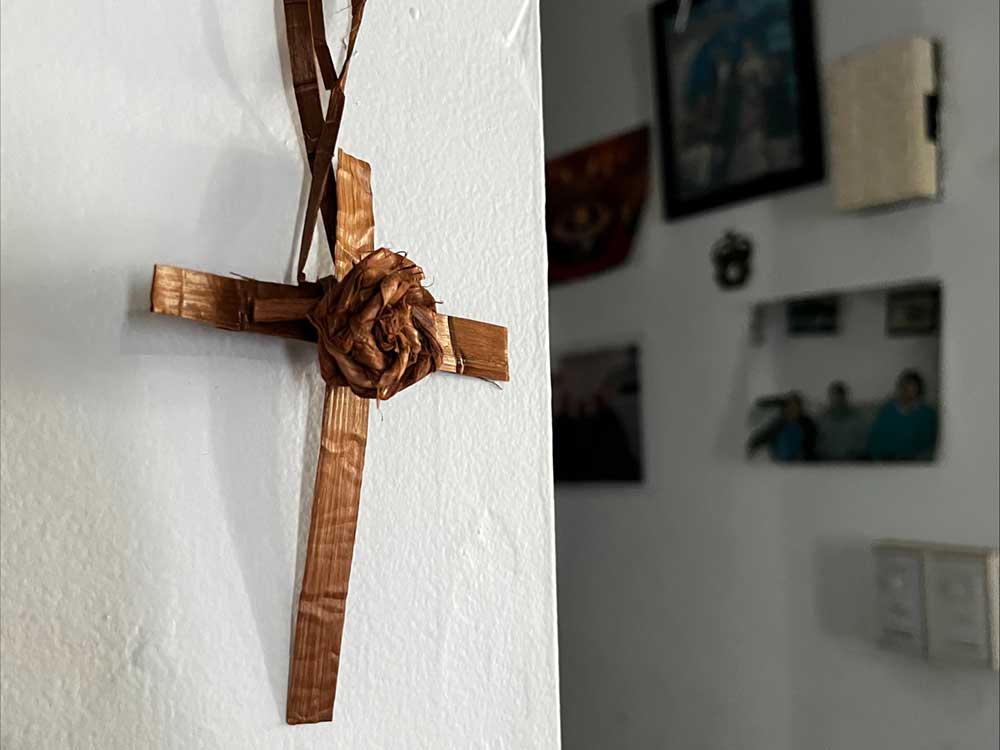
By the last time I held my ye’e Johnny’s hand, his walls were white, and his home felt different. But it wasn’t only that photos were gone from the walls. Over time, numerous rosaries, crucifixes and printed psalms had found a home alongside them.
It always confused me, especially after I learned about my ye’e’s experiences at St. George’s Residential School in Lytton. He was removed from his family at a young age and taken 800 kilometres away from the Nass Valley. How did it come to be that my grandfather, who had suffered at the church’s hands, chose to adorn his house in its symbols?
As members of the Nisga’a Nation have gradually reclaimed and revitalized numerous cultural traditions since the 20th century, Elders have also maintained Christian traditions.
We sing gospel music during a funeral; children are often baptized; during feasts, someone offers a prayer to Sim'oogit Laxha, the chief of heaven, and his son Jesus Christ.
There’s a longstanding, if uneasy, truce between Christian and Nisga’a traditions, rooted in colonialism, cultural preservation and almost a century of sustained missionary activity along K'alii-Aksim-Lisims, the river which unites the four Nisga’a villages.
The relationship between the Nisga’a and the Anglican Church has been well-studied — including by E. Palmer Patterson, John Barker, and Nicholas May, who collected oral histories from Nisga’a Elders. And it’s a complicated affair. For example, May’s interviewees note that Nisga’a communities often asked for missionaries to come and stay in their villages, despite early opposition to other colonial entities and their entry into Nisga’a territory.
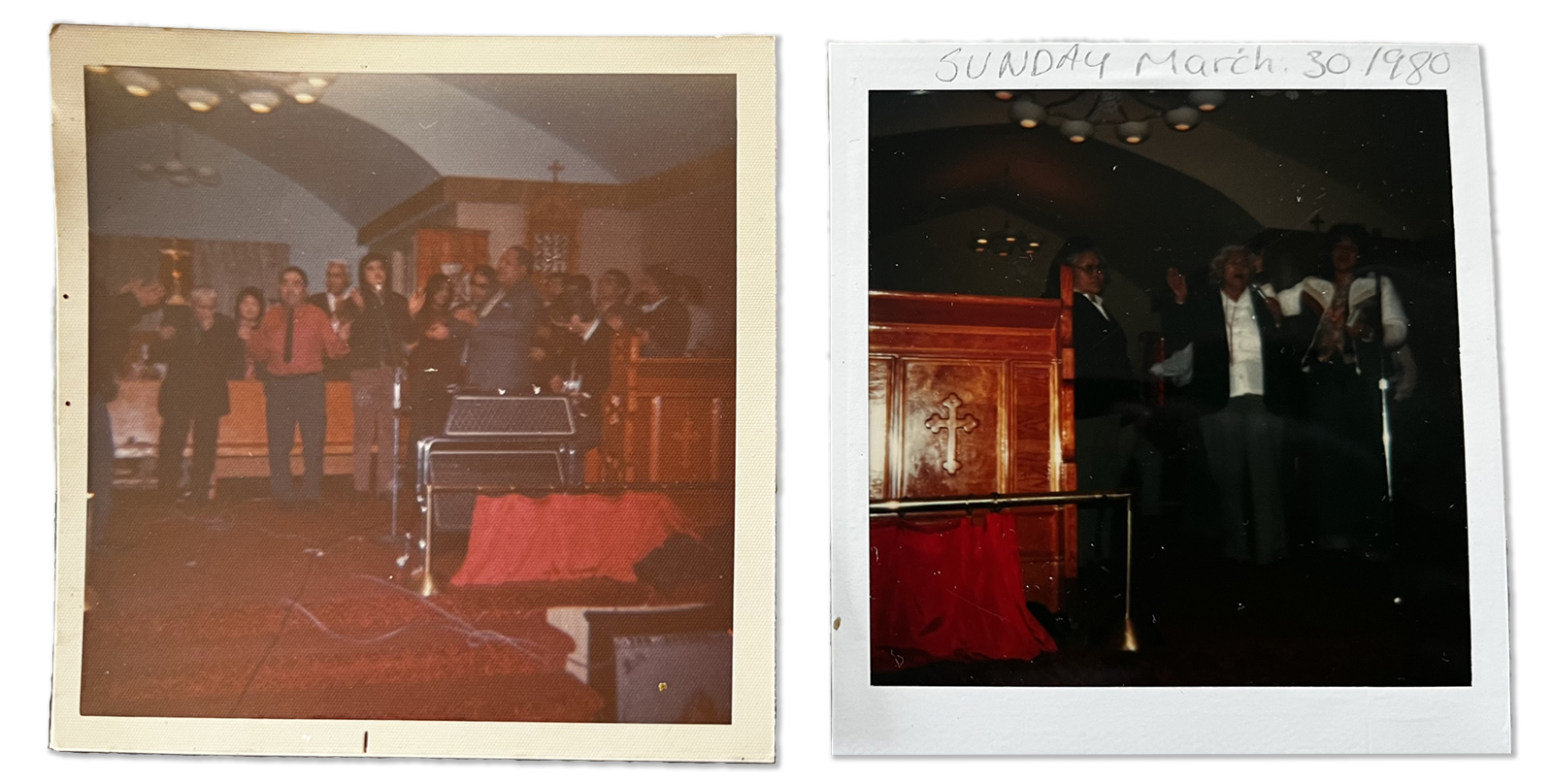
Christianity kept its place in Nisga’a culture strong through both the residential school system and community-centric organizations such as Church Army and the Anglican Women’s Auxiliary. There were also tensions — from the 1940s to the 1970s, the churches in the Nass Valley were in a state of neglect and decline, coinciding with the residential school period.
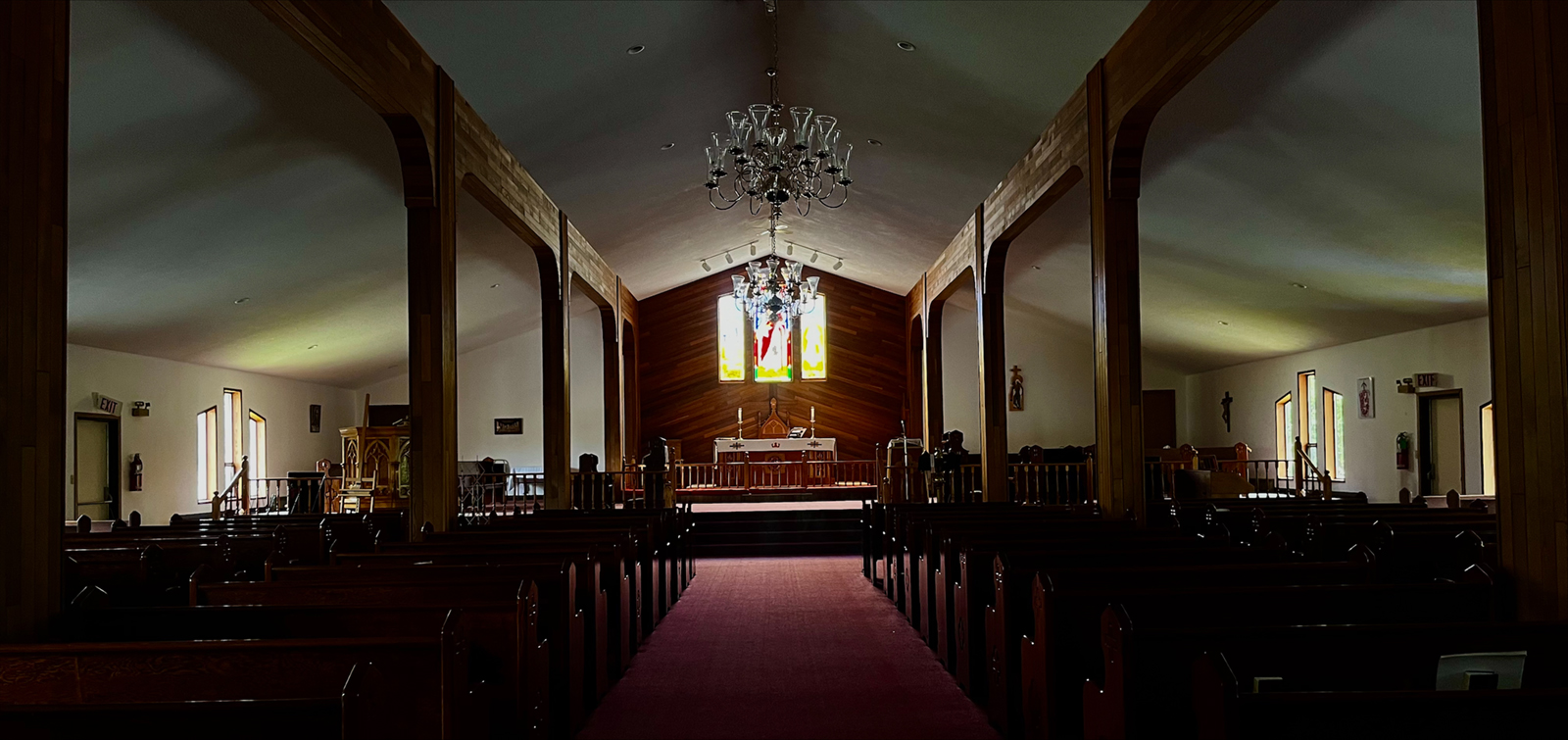
But Christianity stuck around. The church here in Laxgalts’ap, St. Andrew’s, was constructed and funded by a Nisga’a-led committee, Sayt-Hahlals, in the 1980s and 1990s.
At the same time as they built St. Andrew’s, many community members were deeply engaged in the negotiations surrounding the Nisga’a Land Question, fighting and hoping for the Nisga’a Treaty that would be activated in 2000.
But the history, long and complex as it is, also only explains how the church came to persist in the Nisga’a Nation — not what to make of it.
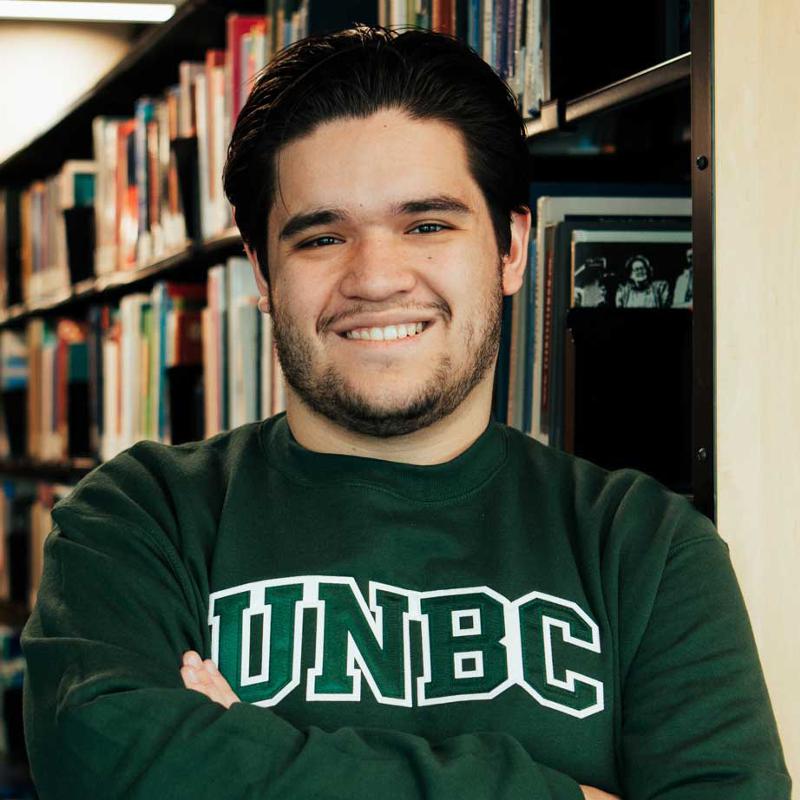
For young Nisga’a such as Mya Sampare, Kamgokhl Kutkunukws of the Laxsgiik tribe, the persistence of Christianity causes some confusion.
“Christianity is stuck — embedded — in our culture,” says Sampare, a recent high school graduate. “I think that the youth here aren’t as interested as they should be in our culture, but I don’t see them going to church either.”
“I always think it’s confusing… when I hear about Jesus in a feast, because there’s also K’amligihahlhaahl, and our elders know about him too.”
“I think that praying [to Jesus] is just something that they’re used to,” she adds. “I’d like to see more of our culture practiced, with our youth, to make them used to it, instead of all the Christian stuff.”
Eighty-six-year-old Willard Martin is hereditary chief Sim'oogit NiisYuus and a residential school survivor. He sees the relationship between the Nisga’a and Christianity differently.
“Look at our life edicts and the 10 commandments, they’re exactly the same,” he says, comparing Christian and Nisga’a teachings.
“We are consistent in our teachings about God, Sim'oogit Laxha. God intends for you to be compassionate, to walk with equality. The core of all Nisga’a beliefs is that we are all equal, no one is above anyone. These are important intersections.”
“While we struggled with our lives, as well as our land claims, we never forgot our religious life as we fought for our treaty,” he adds.
“If you ask the young people where they stand, lots of them will use the residential school as an excuse for not being faithful,” Martin says.
“God did not turn against us, it was our fellow human being. We adopted Christianity because it was so alike our own beliefs, it works with our tradition. The church, now, blesses and includes our practices in their daily life.”
Thirty-one-year-old Ashinna Rai, Anhluutukwsim Neekhl of the Gisk’aast tribe, feels similarly to Sampare, though she also tries to understand where Elders are coming from.
“We want to amplify who we are, and we don’t want to have to do it under the guise of the church, and it doesn’t have to be like that,” Rai says.
“The church was supposed to take away who we are, and I don’t think we can walk beside it anymore.”
“It’s not taboo to be Nisga’a anymore,” she adds. “But I also understand the fear that Elders feel… and the important structure that Christianity gave to our people through history. For them, being Christian is part of being Nisga’a. We know that the church brought [them] up, but we’re also going to ask [them] about the times when it didn’t.”
While Nisga’a youth, like youth across Canada, are less attached to religion than their parents and grandparents, a longing for cultural transmission from Elders to youth, which many see as impeded by Christianity, has exacerbated the generational divide.
Youth want Elders to be more forthcoming with information about Nisga’a culture, Rai says.
For my part, Christian traditions will always be attached to the memory of my eldest family members.
They’ll serve as a testament to the resilience and ingenuity of a generation that forged the Nisga’a Treaty and enabled the post-treaty children of the Nisga’a Nation to reclaim Nisga’a culture on our own.
Christian songs, dances, and prayers may fade — or not — from Nisga’a cultural life, but the memory of my great-grandfather’s walls, and the crosses woven from cedar in houses across the Nisga’a Nation, will remain. ![[Tyee]](/design-article.thetyee.ca/ui/img/yellowblob.png)
Read more: Indigenous





Tyee Commenting Guidelines
Please note that email notifications for replies are not currently working due to a software issue which may be resolved in a future update.
Comments that violate guidelines risk being deleted, and violations may result in a temporary or permanent user ban. Maintain the spirit of good conversation to stay in the discussion and be patient with moderators. Comments are reviewed regularly but not in real time.
Do:
Do not: