

 SHARE:
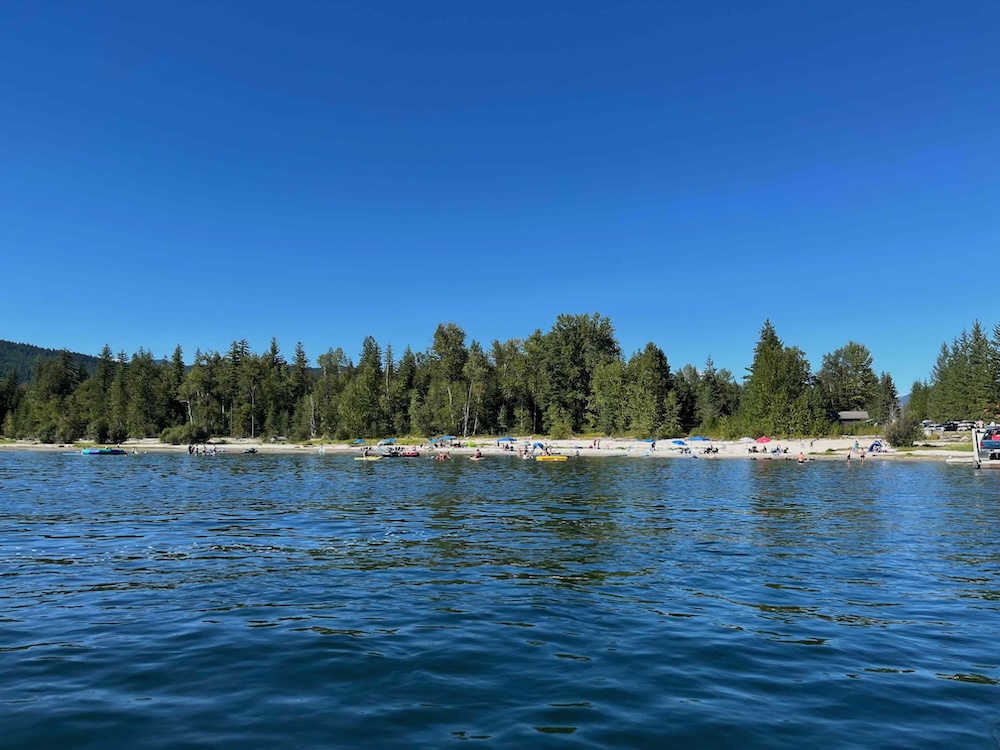
It’s spring in the lakeside community of Seymour Arm in the B.C. Interior. The water is calm like a sheet of ice that mirrors the stone-grey sky. Snow still clings in patches on the mountain ridges that flank the northernmost end of Shuswap Lake. Besides the call of loons and the odd boat motor, it’s quiet. The kind of quiet that comes during the off-season, when summer dwellers still have their boats buttoned up and docks pushed out.
The quiet is one of the reasons why the 90 or so year-round residents have chosen to live so remotely at the end of a rough 50-kilometre logging road in a community where there’s no power and few services. That, the towering cedars, the glaciated mountains and the interconnected web of neighbours who lean on each other like family.
As an outsider who comes to Seymour Arm to holiday, there’s much to admire about the residents and their way of life. Resilience is built into every act — overcoming isolation, the lack of services and extreme weather. And for those who’ve embraced the necessary self-sufficiency that comes with an off-grid lifestyle, they don’t want to leave.
That’s how Ageing With Ease, or AWE, began.
Twenty years ago in 2005, a woman named Dorothy Marks didn’t want to leave her home in Seymour Arm to receive the health care she needed. Marks was quadriplegic and had multiple sclerosis. She was able to afford a live-in caregiver.
Her dream was to enable that for others — to have friends and neighbours become caregivers and support other seniors to stay longer in their homes.
"She was trying to feel her way to being the person she knew she could be," said Lois Bradley, a life-long resident of Seymour Arm and director of AWE.
"And AWE was the tool she chose."
'We’re stepping in at the level a family would'
Of the people who live in Seymour Arm year-round, the vast majority are over the age of 65.
"To get to town, to a hospital, to anywhere where you can get medical help is a big ordeal," said Lorraine Thomson, who has lived in Seymour Arm since 1978 and has also been involved with AWE from the beginning.
Like most seniors, they would prefer to stay in their community where they’ve lived for decades rather than leave what’s familiar to access health care in a bigger centre.
"The longer we can help keep people in their own homes or in Seymour Arm, the happier those people are,” said Thomson.
Dorothy Marks passed away in her home in 2015 and her vision for AWE has become her legacy. Over the years, AWE has helped at least 23 permanent residents continue to live in Seymour Arm for longer than they otherwise would have.
The program has also supported dozens of others, usually seasonal residents, with temporary levels of support; for example, people who are recovering from surgery or a short-term medical condition.
With regular fundraisers and a partnership with Interior Health, AWE been able to hire and pay a small group of employees. Currently there are six employees who work mostly part-time and five volunteer directors.
Employees provide safety checks, act as compassionate companions, help with meals and housekeeping, pack in potable water to homes where people may be housebound, fill and pick up prescriptions or medical equipment and advocate for people who need support navigating the health care system. None of those things require any special medical training beyond basic first aid and a criminal record check.
Thomson described one neighbour who is completely housebound.
"He has no Internet, no phone, no services, he can’t make a doctor’s appointment, he can’t organize his prescriptions, he can’t buy dog food," she said.
He’s able to stay in Seymour Arm because of the employees who work with him and manage those situations.
"I think there’s a handful of people who receive services from AWE that just would not survive if they lived in town. And they more than survive here," said Thomson. "They thrive."
"I would say we’re stepping in at the level a family would," said Bradley.
"When the family is not physically in the community, I think we cover that, and it often becomes quite an affectionate bond."
'A more generous community'
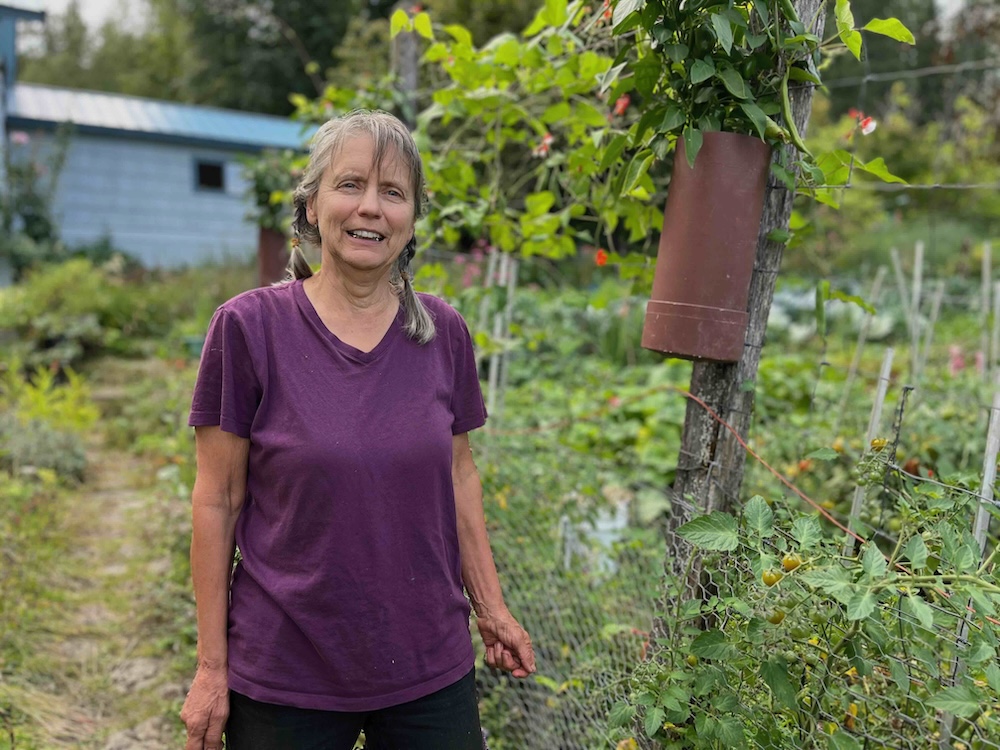
Bradley moved to Seymour Arm when she was 10 years old and never left. She has a home that is accessible only through boat access, where she keeps chickens and tends a garden that feeds her all year.
At this time of year in the spring, the primroses and daffodils are blooming, and she’s doing the hard work of replacing her fence posts around a large veggie garden to keep out the deer.
"To go back to Dorothy Marks," Bradley said, "one of her visions was actually improving health care by having volunteers, often in the younger senior group, stepping up and making the system work better by volunteer work."
And while volunteers remain a fundamental part of managing AWE, it’s estimated that the program has brought in one million dollars in revenue to employees and services since it began.
"That’s huge for this little community," said Bradley.
Bradley and Thomson also credit the program for changing the actual feeling of the community. While the setting is certainly idyllic, Seymour Arm has endured the same challenges any small remote community would — its wild remoteness attracts a whole variety of individuals almost like the characters in the TV series Twin Peaks without the crime drama at its heart.
There are multimillionaires and people who are living in poverty. There are those who moved to the community to live close to nature and some who want to escape the confines of society. There are artists, doctors, carpenters and lawyers — a wide spectrum of humanity.
Back in 2005 the tiny community made national news after 16 people were arrested in connection with a marijuana drug bust that RCMP called a major operation.
That was then. Today Bradley describes how AWE goes beyond the practical fact of helping individuals.
"It has made the whole community different. It is a kinder, more generous, more connected community," she said.
The local health authority is paying attention. Jennifer Anderson is the clinical operations manager with Interior Health.
"[AWE] supports seniors stay in their homes safely… and our experience with AWE has been very positive and successful," she said. The partnership between Interior Health and AWE has also resulted in residents being able to use some of the health authority’s services like a food hamper program.
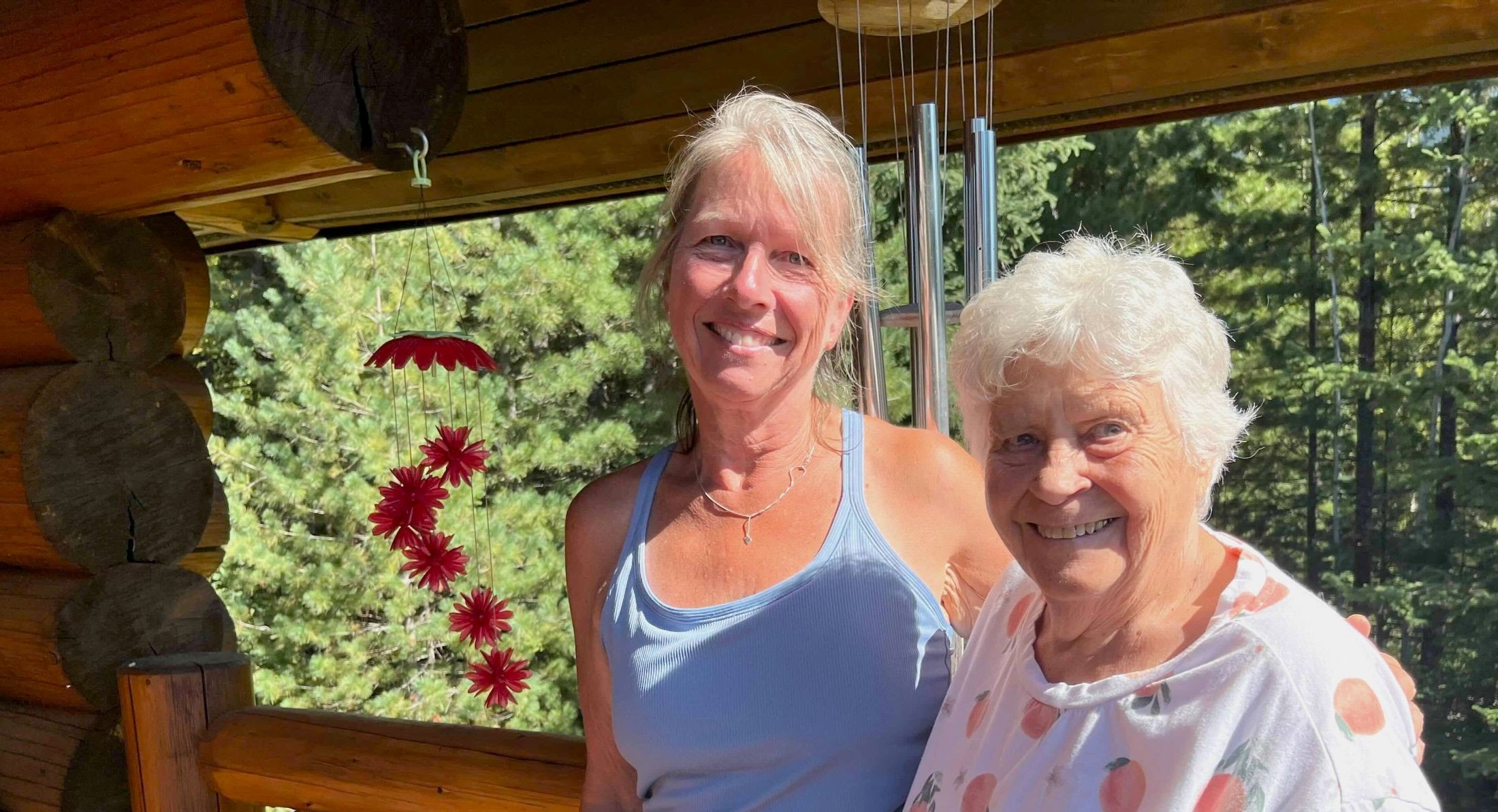
Late last summer, I tagged along on an AWE visit with employee Susan Howie. We met at the community-owned wharf. Howie is exactly the kind of person you would go to if you needed help. She exudes equal parts warmth and know-how. She’s one of eight first responders in the community and has a background in wilderness first aid. We hopped in her side-by-side — a small two-seater ATV that handles the bumps of the dirt roads and winding driveways that bisect this small community.
"AWE is unique in that I don’t believe there is any other organization in rural areas that has this opportunity that we have," Howie said. Beyond that, she and others believe AWE could serve as a model for other rural communities.
"I think it would save our health care system an enormous amount of money," she said. "By people staying in their homes longer, it doesn’t put the strain on the medical system."
In her role with AWE she teaches yoga, helps fill and pick up prescriptions. She also checks blood pressure and oxygen levels on a weekly basis for the people who need it and performs safety checks.
We bump along the dusty dirt road passing kids riding bikes with flip flops and holding inflatable toys headed for the beach. We’re off to visit Judy Reimer, who first came to Seymour Arm in 1979 and never really left.
As we pull up to the Reimers' home, it’s easy to understand why. Judy’s husband Bob designed and built a grand log home that took 14 years to complete perched on five acres of land.
Judy recalls scraping, scrubbing, bleaching and painting every single log. "It was a real labour of love," she said, joking that the cost of living in Seymour is all the labour involved.
The result is something out of a fairy tale. Wind chimes and hummingbird feeders hang from a deck and before the trees grew up so tall they had a direct view down to the lake.
Bob Reimer was the manager of the local water user’s community for 23 years and according to Judy, he loved the lifestyle provided in Seymour Arm.
When we arrived, Bob was sitting on his front porch in a lawn chair with a gentle smile. He developed a condition that led to fluid in his brain. When he first became ill, AWE stepped in to stack firewood, mow the lawn and most importantly, visit Judy so she had people to confide in and speak with.
When Judy opens the front door, she greets Susan Howie like she would a daughter. They start in on a conversation they hadn’t finished from a day or so ago.
Once we’ve settled down at a table in the kitchen, Judy spreads her hands out across the tablecloth, and I pick up on a sadness.
We talk about her log home and I ask what it is that kept the Reimers in the community for so long. “My house, and the people," she said.
Judy breaks into tears. "This is home."
It’s then I realize that after 45 years, the Reimers are making plans to leave Seymour Arm. It’s come to the point where Bob needs more intensive care, which they can receive in the city of Salmon Arm, about two and a half hours away.
"It’s hard, but we just have to make that transition," said Judy. "AWE has been a lifesaver for me. We’ve stayed at least three years longer than we otherwise should have."
Howie offers a correction: "I wouldn’t say should have. I would say that you stayed three years longer because you were able to."
It’s clear that Howie has been a fundamental support for the Reimers. Judy describes how she’d phone Howie:
"I’ll say 'Susan', and I’ll pause, and she’ll say, 'Are you okay?' I’ll say 'No', and then five minutes later she’s up here," she said, "and I get a big hug."
For her part, Howie said, "I’ve never lived in a place where I felt so comfortable being around the people in the town and feeling like a family. We’re a family in Seymour Arm, and sometimes the family, like most families, don’t get along, but when push comes to shove, they are there."
I think back to something Lorraine Thomson said, that giving back to the community fulfills something personal in her. "It sounds so hokey, but I get back as much as I give," she said. "I like to be able to make a difference and I think AWE makes a huge difference in this town."
Several months after our September visit, Judy’s husband Bob died in early April 2025. Judy now lives in Salmon Arm but hopes to spend much of the summer in Seymour Arm with support from AWE.
Howie hopes when she gets older someone will take care of her so she can stay in her home longer. "Because I love this rural community," she said, noting that the residents of Seymour Arm use solar energy and batteries to power themselves in the community, and operate their own water system.
"We are pretty much self-sufficient for most things. I love everything about Seymour. I love how we run our town." ![[Tyee]](/design-article.thetyee.ca/ui/img/yellowblob.png)
Read more: Health





Tyee Commenting Guidelines
Please note that email notifications for replies are not currently working due to a software issue which may be resolved in a future update.
Comments that violate guidelines risk being deleted, and violations may result in a temporary or permanent user ban. Maintain the spirit of good conversation to stay in the discussion and be patient with moderators. Comments are reviewed regularly but not in real time.
Do:
Do not: