

 SHARE:
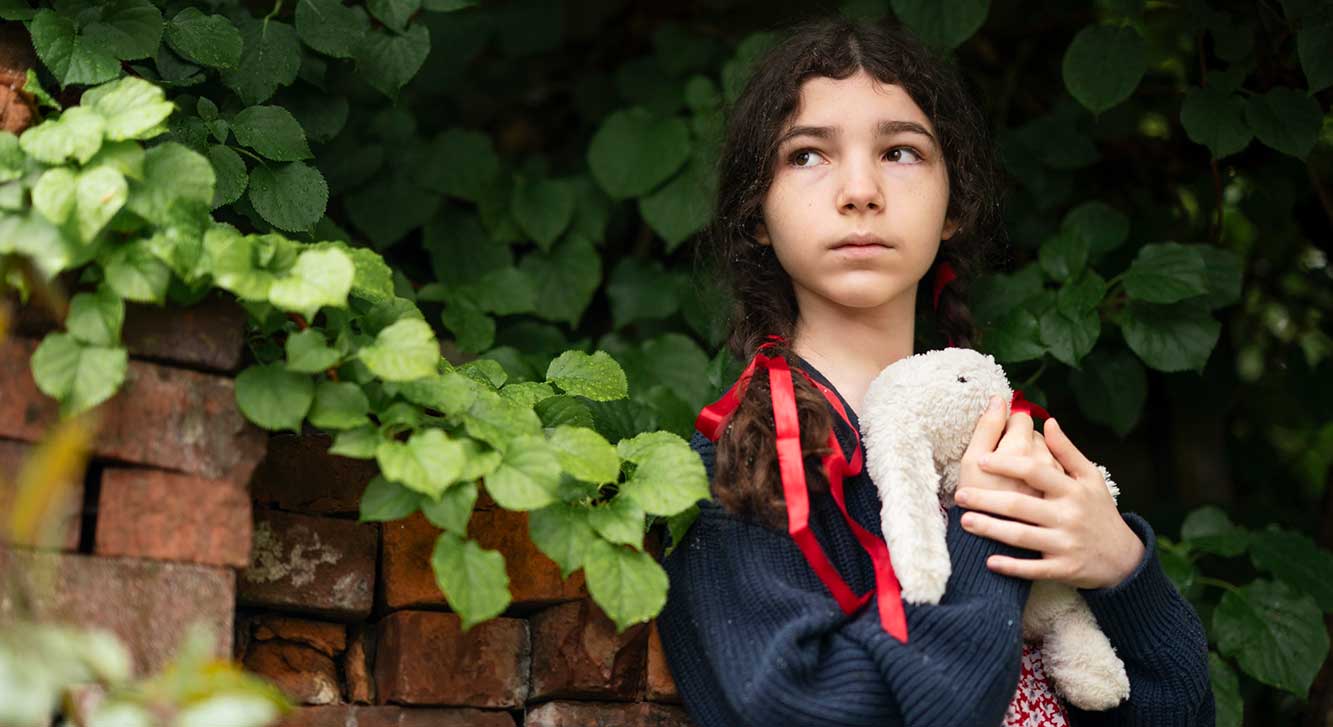
On a grey Friday afternoon at Simon Fraser University’s Goldcorp Centre for the Arts in downtown Vancouver, operatic action is unfolding. Rehearsals are underway for City Opera Vancouver’s new production of Sophia’s Forest.
The studio is crowded with the performers, the director and the conductor. Everyone is carefully watching the scene, trying to find the best way to combine the music with the stage directions.
Sophia’s Forest is somewhat removed from the scale and glamour of bigger productions, but that’s the point. Chamber opera is meant to be intimate and immediate, a different kind of experience from the heady heights of grand opera like Giuseppe Verdi’s Aida with its live elephants, or Richard Wagner’s Ring cycle, wadded full with dragons, giants and warring gods.
Sophia’s takes as its informing idea the experience of real people in the real world. It is the story of a single family faced with an impossible decision.
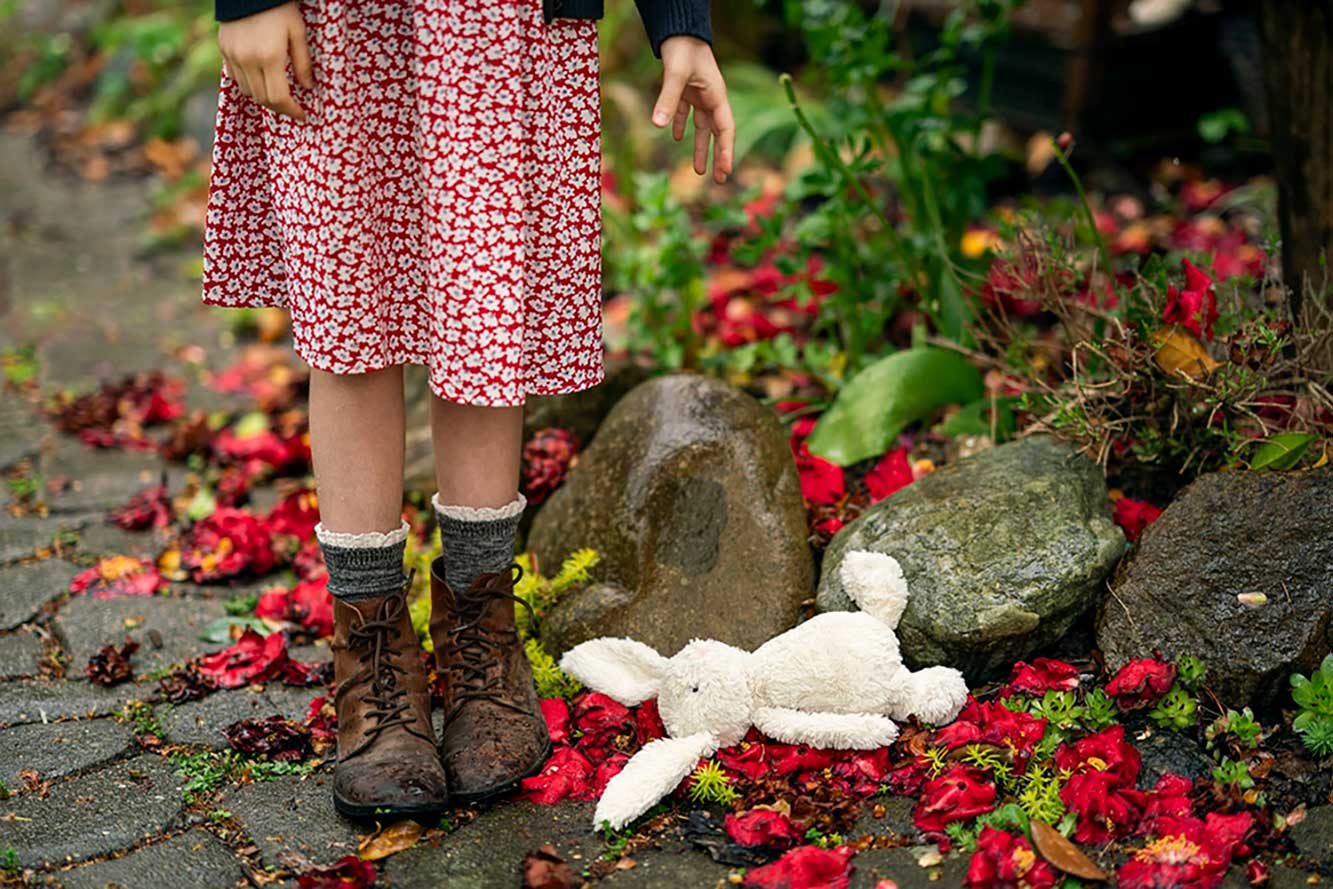
After the death of her mother, the title character is forced to daylight the traumatic experiences that shaped her early life. Along with her sister Emma, Sophia uses fairytales, imagination and fantasy to mitigate the harsh realities of growing up in a country riven by conflict. But as violence and fighting inch closer, Sophia and her family face an impossible choice: flee in hopes of finding a more peaceful place to call home, or stay and face the threat of war and death.
It’s a very real choice that parents and children around the globe contend with daily. For all the immediacy of the story, it is also a situation that has marked large sections of the previous century.
In the press materials for the production, Sophia’s Forest librettist Hannah Moscovitch described the origins of the work: “In 1908, my Romanian great-grandparents, Chaya Yankovitch and Chaim Moscovitch, left Bucharest and travelled across the ocean to Halifax, Canada. They left because Eastern European Jews were being massacred in a vicious wave of pogroms. In Canada, my great-grandparents thrived. They had children who had children who live today. The branch of my family that remained in Romania, however, all died. For my family, one journey marks the border between life and death. That journey is imprinted on my psyche and over the years it has taken on a mystical quality in my mind.”
Opera being the intrinsically dramatic form that it is, there’s a fair amount of emotional freight that needs to hefted and carried. There are only five roles in Sophia’s Forest to do the heavy lifting, accompanied by a string quartet and percussion, as well as sound sculptures.
On this particular afternoon, the performers are blocking out a scene that involves the family’s decision to leave their home. There’s some complexity with figuring out how to get parents and kids out the door, complete with scarves, backpacks and coats. Although the opera is sung in English, it makes me realize how dependent I’ve become on supertitles used by larger productions to translate lyrics from the languages (Italian, French and German) that a great deal of operatic repertoire is performed in.
Even though Sophia’s is sung in English, I find myself constantly looking up over the heads of the singers, expecting to see words spelling out the action.
As City Opera Vancouver’s artistic director Gordon Gerrard and I find a quiet place to chat, I note that the last time I sat through an opera rehearsal, it was Charles Gounod’s Faust. Gerrard laughs, “That’s quite a different opera from this one.” Although the Faustian bargain still holds true.
Gerrard explains that he was attracted to the story because of its relevance to the reality that people are facing around the world as refugee crises continue to dominate the news cycle.
Opera might seem an odd vehicle to examine the most pressing issues of the day. But one thing has remained the same since the time of Verdi and Giacomo Puccini: opera remains a potent vessel for social commentary and political content.
An engine of empathy
The combination of music and narrative is a powerful one-two punch that can bowl you over. Verdi’s Nabucco, banned in 1840s Italy for its pro-nationalist ideas, might be the most well-known, but even old chestnuts like Verdi’s La traviata, based on Alexandre Dumas’s play about a consumptive courtesan named Violetta, came under fire for its empathetic portrayal of a sex worker.
Gerrard agrees that throughout its history, opera composers have used the form to contend with everything from class conflict (Mozart’s Le nozze di Figaro/The Marriage of Figaro) to the dangers of political corruption (Verdi’s Un ballo in Maschera/Masked Ball).
“Opera’s messages have rarely been straightforwardly communicated and received: music and spectacle have together proved ambiguous, unstable and resistant to control. Nevertheless, opera has frequently been used as a tool of propaganda, or conversely as a rallying cry,” wrote professor Sarah Hibberd, the Stanley Hugh Badock Chair of Music at the University of Bristol, in her essay “Opera as Politics.” “It has offered a barometer of society’s beliefs and anxieties, even acquiring new meanings when performed in new circumstances.”
An even more critical aspect is music’s ability to act as an engine of empathy, leaping lightly over the intellect and landing right in the heart.
Sophia’s Forest’s composer Lembit Beecher’s story echoes that of librettist Moscovitch. “I grew up with stories about Estonia: my grandmother was born there in 1922 and her stories described how she survived both the Soviet and Nazi occupations of Estonia and immigrated to the United States as a single mother of two,” Beecher notes in materials for the production. “These stories were intense and dramatic, and in repeated retellings acquired the sheen of legend.”
In addition to the conventional instrumentation and vocals, Sophia’s makes use of sound sculptures that evolved out the composer’s need to bring to life the interior experiences of the titular character. Humble materials like wine glasses and a bike wheel are used in unusual fashion to summon a fully realized world of sound.
Another feature of chamber opera, unlike larger-scale productions, is that audiences are up close with the performers. Under the direction of Julie McIsaac, Sophia is played by two performers who embody the character as both child and adult. Canadian soprano Elena Howard-Scott plays Sophia as an adult, and actor Arya Yazgan is Sophia as a child.
The careful attention paid to the details of the scene in which family decides to flee makes sense, given the intimacy of the production. In a smaller venue, as Gerrard explains, “you can see facial expressions,” which also means that the performers are called upon to act as much as they sing.
Sophia’s Forest premiered in 2017 in Pennsylvania. City Opera’s production marks its first presentation in Canada. It’s part of City Opera’s initiative to present work that frontlines the stories and experiences of people new to Canada, and the company has committed to a number of such productions in the coming years. Given the sensitive, close-to-the-bone nature of the subject matter, talkbacks are planned to take place following the performance.
Has there ever been art without politics?
This commitment to tackling the toughest, most intractable social problems through the crucible of art brings up a larger question, as culture comes under increased scrutiny as the nexus point for social change and upheaval. Both the right and the left have staked their positions and are duking it out on stages and in art galleries, museums and cultural centres.
A recent article in a national newspaper made the argument that attendance was down in major cultural institutions because of an emphasis on political content. Leaving aside the idea that any creative endeavour worth its salt doesn’t have a perspective is just plain goofy. The most famous artists throughout history would like a word, please.
The idea presented in the article is that no one likes being lectured or proselytized to, and that the purity politics of the left have leeched out the entertainment factor of the arts, replacing it with a gruel of agreed-upon positions.
The main contention is that this approach doesn’t always make for interesting or enjoyable work. It’s easy to take this “stay in your lane” argument apart. Great art doesn’t need to wade into such a silly exchange, it can simply do what it does best. Present the complexity, challenges, struggle and beauty that make up life, and let audiences judge for themselves.
‘Sophia’s Forest’ runs through June 1 at SFU’s Goldcorp Centre for the Arts. Get tickets online. ![[Tyee]](/design-article.thetyee.ca/ui/img/yellowblob.png)
Read more: Media









Tyee Commenting Guidelines
Please note that email notifications for replies are not currently working due to a software issue which may be resolved in a future update.
Comments that violate guidelines risk being deleted, and violations may result in a temporary or permanent user ban. Maintain the spirit of good conversation to stay in the discussion and be patient with moderators. Comments are reviewed regularly but not in real time.
Do:
Do not: