


 SHARE:
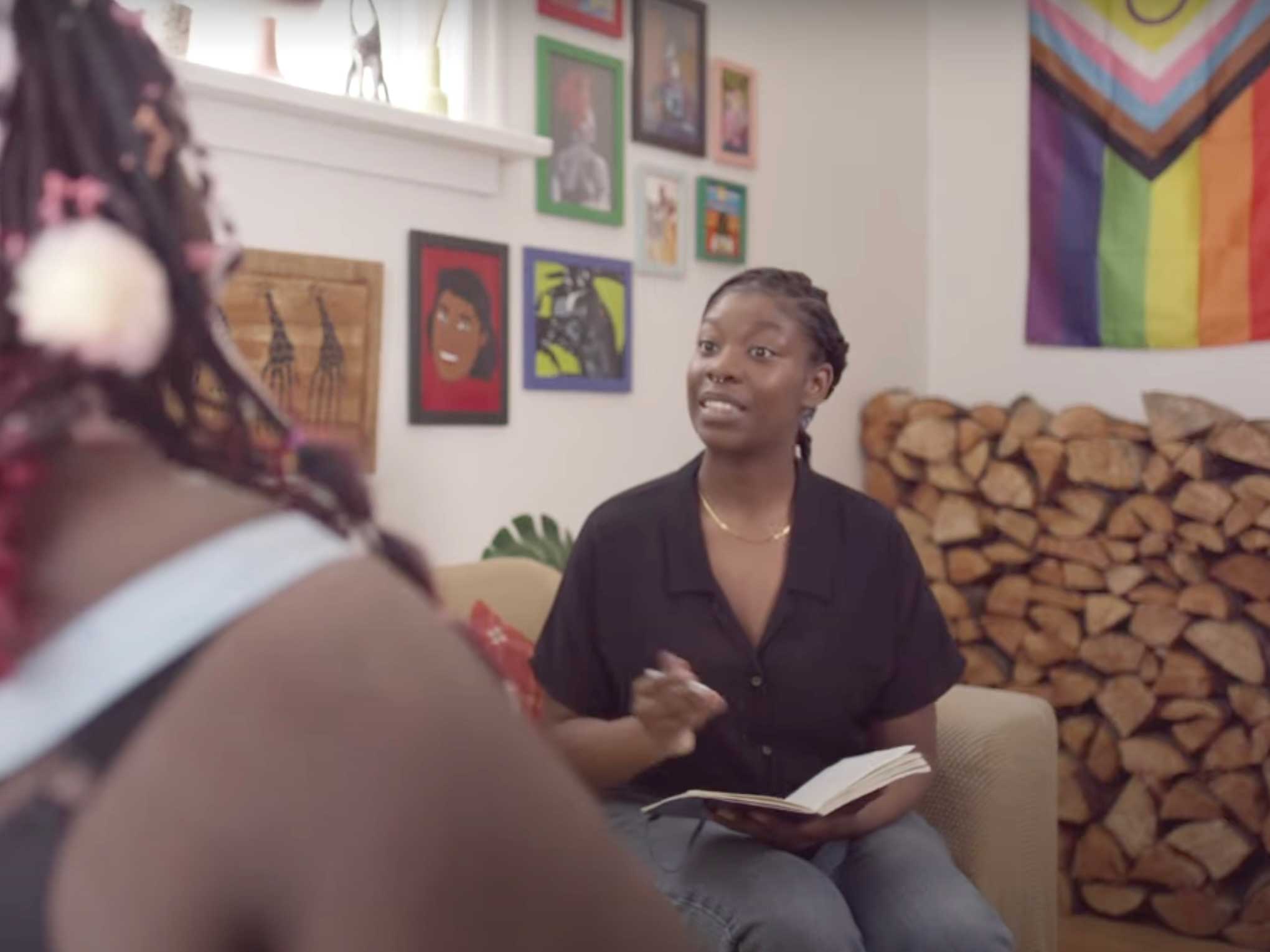
In the opening of a mid-season episode of the made-in-Vancouver web series Novelette Is Trying, the protagonist appears to have just emerged from a daydream.
In the dream, Novelette sits on a chair in a neon-pink-lit room while one of her closest friends, Dominique, dances for her seductively. Novelette stares longingly at Dominique, biting her lip.
Novelette returns to reality, and suddenly she’s holding a vibrator that appears shiny and wet.
Novelette heads to the bathroom and in a routine fashion washes her vibrator with water and soap. She places it down on a towel. She looks in the mirror in a moment of self-reflection.
Perhaps Novelette, 30, is reflecting on her sex life. After her boyfriend dumped her for not “having her shit together,” she is forced to split her Vancouver rent with her new roommate Audre, a personal trainer and influencer whose regular, casual (and loud) hookups contrast sharply with Novelette’s lack of a sex life.
Something ordinary stands out about this scene: an inconsequential depiction of using a sex toy and washing it afterward in the harsh, post-orgasm light of the bathroom. This mundane sexual hygiene task isn’t typically depicted on television screens.
Novelette Is Trying offers a fun meditation on those unsexy, in-between moments of life itself. A breath of fresh air for a generation that lives on the pristine curated content of social media apps, Novelette is an unapologetic work in progress. The series interrupts our shiny entertainment binges to remind us that we don’t have to have everything figured out.
Nearing the end of the season, Novelette interviews for a job as a back-of-house chef at a vegan Jamaican restaurant. She gets a job “on prep,” with potential to move up the ladder. While it seems our protagonist has found some joy and peace, Novelette-style hijinks continue.
The end of the series leaves us curious about Novelette’s next steps in life, but series writer, director and producer Giselle Miller said she isn’t sure whether there will be a second season. She’s currently investing her energy toward her first feature film, a movie she said is about Black women and their relationship to the spiritual realm. Miller and her co-producer have partnered with a U.K. producer to increase financing options.
The transition from a series of 10-minute webisodes to larger-scale projects seems fitting in a time when streaming services have upended the entertainment industry and flipped storytelling on its head. Shows like Broad City and Insecure got their start as web series and are now some of the most critically acclaimed comedies on television.
In the film world, A24, for example, “is more than just a film studio,” Hollywood Insider’s Emma Gladstone wrote last week. “It’s a name that associates a sense of trust, an unwavering stamp of quality in the eyes of cinephiles and casual moviegoers alike.”
The success of independent powerhouses like A24 remind us why independent storytelling matters: it provides a platform for writers, directors, actors, producers and other creatives who aren’t part of massive, monopolistic entertainment studios.
That’s why it’s exciting to see something like Novelette Is Trying find success. Straight from Miller’s brain — she couldn’t afford a writers’ room, but dreams to one day — to the script to the production, Miller’s project proves that stories resonate when they’re born of a place of authenticity.
We checked in with Miller after Novelette Is Trying was released on streaming platforms. This interview has been edited for length and clarity.
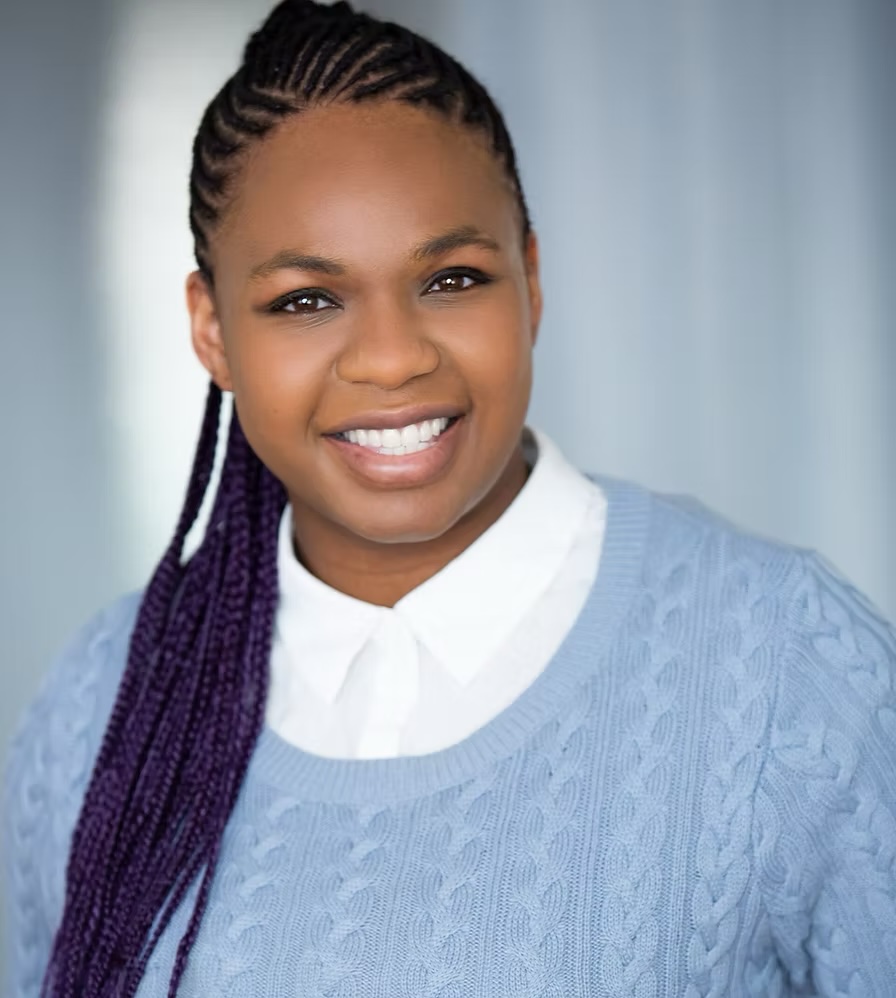
The Tyee: You’ve said that Novelette Is Trying is Vancouver’s first Black and queer web series. Did you find breaking this barrier to be challenging?
Giselle Miller: I found there was an eagerness for it. On Pride weekend I [was] trying to get people to watch our trailer, and people were just like, ‘I would love to watch this, the trailer looks dope.’ People who are making [those mainstream] shows think [they know] what the audience wants. It’s like — are you even in tune with what the audience wants? Because folks will respond to things that are authentic, reflective and specific.
Sexuality is a big theme in the show. It represents the specifics of bisexual femme experiences, which are rarely seen on TV, at least from my experience, as well as polyamorous lifestyles being normalized. Did you set out to make queerness and sexuality such a big part of the show, or did it just kind of happen without trying?
It started with the characters. I wanted to create [three] very distinct characters in terms of who they are, where they’re going, what aspect of queer identity they represent. Obviously, it’s not encompassing of all of them, but it’s three very specific ones — one is masculine presenting, the other more femme. Not to reduce them to that, though — there are fuller lives present in the series itself.
I wanted to create characters who were queer but also fully realized people in the world who have contradictory behaviours, flaws and conflicts, and are not just reduced to struggles in the queer community. Things that reflect more of the human experience and how we relate to one another and build community.
In the series, Novelette must start a new job at her mother’s environmental non-profit workplace in information systems management — her mom hilariously assumes she got to be a “manager” right away, but it’s just a data entry gig. Novelette calls the job “cow shit” and reminds her mom she has no intention of staying at this job long. With the rise of quiet-quitting, self-employment and the “I don’t dream of labour” sentiment among young people right now, what role do you think centering on Novelette’s job search plays in a coming-of-age story today?
That’s another reflection of my own journey. I’ve been doing the nine-to-five office job; I've done all kinds of jobs I knew, deep down, were not fulfilling. There came a time when I had to say, ‘I can’t keep doing this, because I feel part of myself dying. I have to pursue writing full-time otherwise I feel my purpose is not being fulfilled.’
Is that something Novelette realizes? We try to put that in from episode one [when] she’s at home in the kitchen cooking. We infuse that in each episode to the point where, when she finally does find her dream career, it feels natural. She's suddenly happier and joyous.
We spend so much of our time on this earth working, if we’re doing something that isn’t fulfilling to us, it’s detrimental to our spiritual health but also physical health. So, embracing the thing that makes you happy, and finding a way to do it as a career, if you can, is a big part of the show as well.
I know old sitcoms used to have some rule like, ‘there has to be three jokes per page,’ or, like, ‘a joke every other line,’ whereas now you’re just representing real people so fulsomely — I think that’s why it resonates much more with audiences. In that same vein that comedy naturally comes up, these tender moments come up. I was heart-warmed and smiling when Dominique and Novelette were laughing about the “two-rule Black woman rulebook.” Did you intentionally make space for those gentle moments, or did they arise naturally?
They arose naturally. I have some beautiful Black women in my life and my family. We can have a serious conversation, and it suddenly turns into something else. It just happened organically in terms of thinking of the scene and what kind of tone I wanted it to have. I’m a Black woman, and I’m around Black women almost all the time, so I just feel that presence and I kind of hear those voices when I’m writing.
Some Black, femme, coming-of-age stories have seen some hit contemporary shows recently — I May Destroy You comes to mind; Insecure comes to mind. How do you think these stories have occupied the Canadian entertainment space so far, and what do you hope Novelette Is Trying contributes to that space?
Those shows have certainly been influential to me. Lena Waithe has a show Twenties, [which] ran for two seasons. Those kinds of shows are influences for me because those are the things that I see [as a] contemporary reflection of my life.
Canadian audiences watch American media closely, but we need our own specific shows that reflect our communities, the conversations we have, how we relate to each other. There is a space for those kinds of contemporary shows rooted in a Canadian voice and mindset — not to say that Canadians are one monolith.
I have a friend who got funding around the same time I did, who’s making a niche Nelson Creek community sketch comedy show. There’s so many small towns or communities in bigger cities we can create shows about.
The specificity and authenticity of the show will attract people because they’ll recognize certain nuances that they don't see in their own lives, but then also relate to the characters and their experiences as human beings.
This show was released in the aftermath of President Trump's return to the White House, a trade war and general feelings of hopelessness coming up again. What do you think viewers can get from seeing these kinds of slice-of-life stories of Black and queer joy, laughter and levity depicted on their screens?
Just the resiliency of spirit. Chaos can be happening all around us, but we’re resilient. Community is resilient. I saw a video where Laverne Cox was talking about the fact that she was ‘Going to just get together with my trans girlfriends and laugh, drink, share stories, support each other, love each other and be thankful for the presence of one another in our lives.’
That’s really what it comes down to: a choice to show up with love, be there for one another and know that we're not alone, we’re deserving of being here, of taking up space and being loved. That's really what my message is.
At the Oscars this year, the director of Anora, Sean Baker, highlighted the importance of independent cinemas in his speech when his film won Best Picture. What do you think is the moment we're in right now for independent storytelling?
There’s probably an increasing demand for it. Sean Baker’s success is super inspiring. It’s not the first independent story to make it to mass audiences — stories that break the mould of what we typically expect in terms of, ‘this is the formula of what a good film is and what the audience should want.’ When Everything, Everywhere, All at Once came out, I was like, ‘what is this… But I'm into it.’ It was the first film I'd ever paid to see two times in theatres.
I’m enthusiastic, hopeful and looking forward to what independent film will continue to be. The reality is, if it’s just big-budget, studio films, people will get tired of it. I think people already are.
Independent film, for me, reflects the heart of a filmmaker, of a storyteller. That’s what people are drawn to, because your heart has a truthfulness and authenticity that human beings are drawn to.
All episodes of 'Novelette Is Trying' are streaming now on OUTtv, Amazon Prime and Apple TV. ![[Tyee]](/design-article.thetyee.ca/ui/img/yellowblob.png)
Read more: Gender + Sexuality, Media











Tyee Commenting Guidelines
Comments that violate guidelines risk being deleted, and violations may result in a temporary or permanent user ban. Maintain the spirit of good conversation to stay in the discussion and be patient with moderators. Comments are reviewed regularly but not in real time.
Do:
Do not: